Outdoor Furniture Matchmaker
Answer these three questions to find your perfect outdoor furniture match.
Teak Wood
The Gold Standard for Durability
Based on your preference for high durability and willingness to invest in quality, Teak offers a lifetime of service with minimal effort.
Key Features:
- Natural water resistance
- Lasts 20+ years
- Ages gracefully
Your personalized recommendation will appear here after you complete the quiz.
Picture this: it’s a crisp July evening in Mississauga. The air is warm, the neighbors are out, and you’re ready to relax on your patio. But then you look at your chairs. They’re faded, wobbly, or worse-rusting right before your eyes. You didn’t buy them to be an eyesore; you bought them to enjoy. So, what went wrong?
The truth is, not all furniture is created equal. What works perfectly fine indoors will rot, warp, or rust within a single season outdoors. Choosing the right **outdoor furniture** isn't just about aesthetics; it's about survival against rain, sun, snow, and temperature swings. If you want pieces that last more than one summer without looking like they’ve been through a war zone, you need to understand materials.
Understanding the Elements: Why Indoor Furniture Fails Outdoors
Before we pick winners, let’s talk about why your indoor sofa dies outside. It comes down to three main enemies: moisture, UV radiation, and temperature fluctuation.
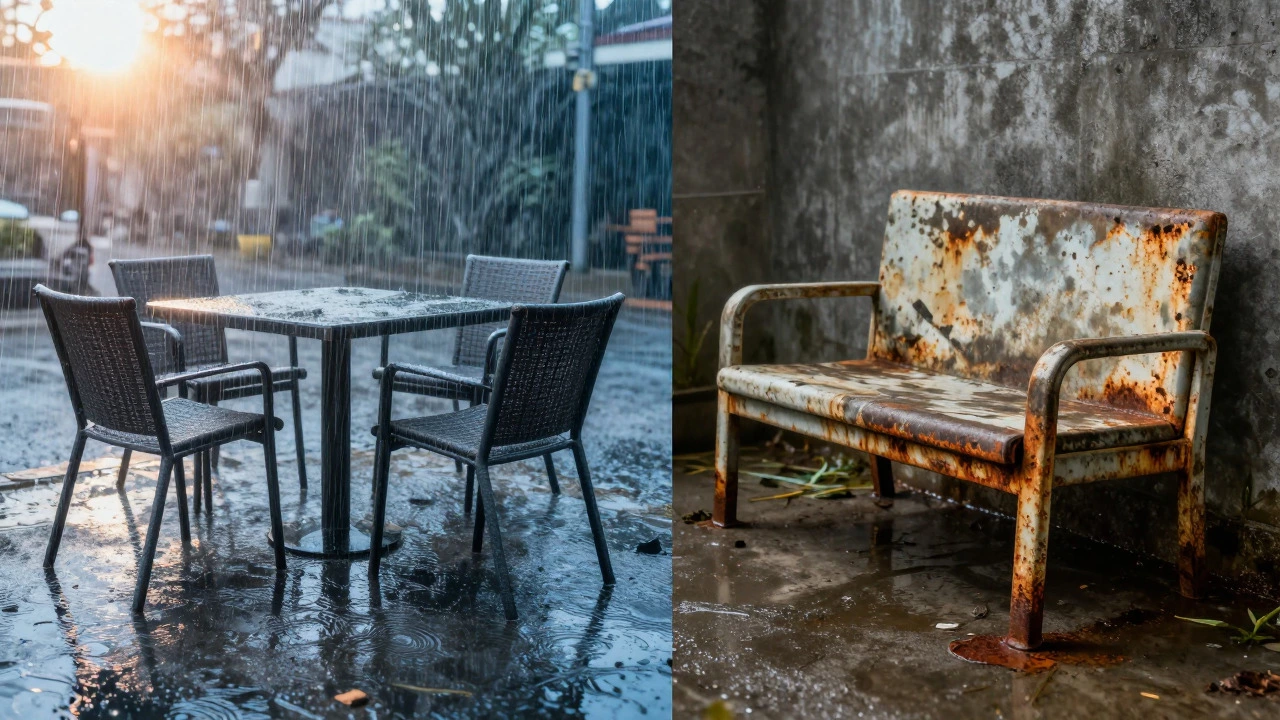
- Moisture: Rain and humidity cause wood to swell and metal to oxidize (rust). Standard fabrics trap water, leading to mold and mildew.
- UV Radiation: Sunlight breaks down chemical bonds in plastics and dyes. This is why white plastic chairs turn yellow and bright cushions fade to beige.
- Temperature Swings: In places like Ontario, we go from freezing winters to hot summers. Materials expand when hot and contract when cold. If a material can’t handle this flexing, it cracks or snaps.
To survive these conditions, outdoor furniture needs specific engineering. We aren't just looking for 'pretty'; we're looking for resilience. Let’s break down the best materials that stand up to the test of time.
Teak Wood: The Gold Standard for Durability
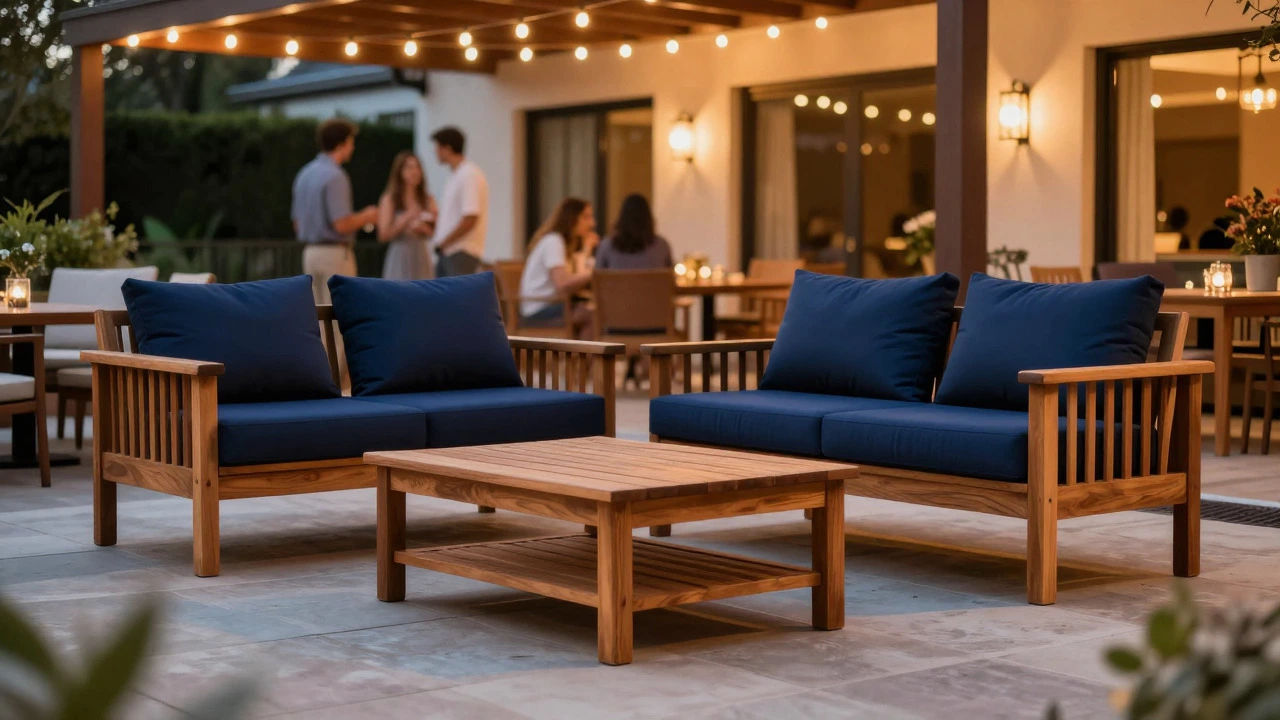
If you walk into any high-end garden center, you’ll see Teak wood is a dense hardwood known for its natural oils and silica content, making it highly resistant to decay and insects. It’s often called the king of outdoor woods, and for good reason.
Teak contains natural oils that repel water. Unlike pine or oak, which need constant sealing, teak can sit in the rain and just shrug it off. Over time, untreated teak turns a silvery-gray color. Some people love this rustic look; others prefer the honey-brown finish. If you want to keep that golden hue, you’ll need to apply teak oil annually, but even if you don’t, the wood won’t rot.
Pros:
- Extremely durable (can last 20+ years).
- Natural resistance to termites and fungi.
- Ages gracefully with a beautiful patina.
Cons:
- Expensive upfront cost.
- Heavy, so moving it around isn’t easy.
- Can be prone to cracking if not maintained properly in very dry climates.
For those who view their garden as a long-term investment, teak is hard to beat. It’s the material that passes down through generations.
Aluminum and Wicker: Lightweight and Rust-Proof
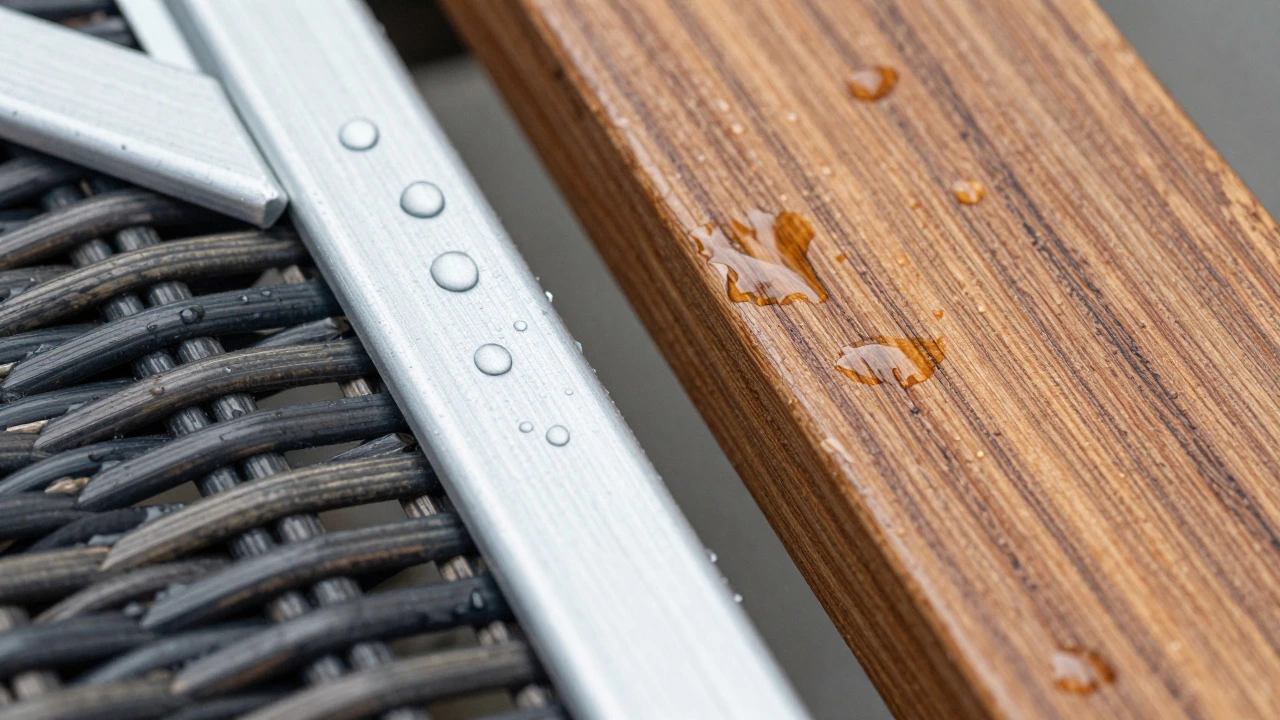
If teak is too heavy or pricey, consider Powder-coated aluminum is a lightweight metal frame treated with a durable polymer coating to prevent rust and corrosion. Unlike wrought iron, which can rust if the paint chips, aluminum naturally resists oxidation. When combined with a powder-coat finish, it becomes nearly indestructible against the elements.
Often, aluminum frames are paired with synthetic wicker (usually HDPE resin). This combination gives you the classic look of traditional rattan without the fragility. Real rattan rots quickly outdoors, but synthetic wicker doesn’t care about rain or sun.
Pros:
- Lightweight and easy to move.
- Rust-proof and weather-resistant.
- Modern aesthetic with many style options.
Cons:
- Cheaper aluminum sets can feel flimsy.
- Synthetic wicker can crack in extreme cold if knocked.
- Not as 'warm' feeling as wood.
This is a great choice for balconies or smaller patios where space is tight and you might need to rearrange seating frequently.
HDPE Plastic Lumber: The Low-Maintenance Hero
You’ve probably seen it-it looks like wood, feels like wood, but it’s actually made from recycled plastic bottles. This is HDPE plastic lumber is a composite material made from high-density polyethylene, designed to mimic wood grain while offering superior weather resistance.
HDPE (High-Density Polyethylene) is incredibly tough. It doesn’t splinter, it doesn’t rot, and it doesn’t need painting. You can hose it down after a barbecue, and it’s good as new. It’s particularly popular for benches, picnic tables, and poolside loungers.
Pros:
- Zero maintenance required.
- Eco-friendly (made from recycled materials).
- Won’t splinter or harbor bacteria.
Cons:
- Can get hot in direct sunlight.
- Limited color options compared to painted wood.
- May not have the same premium feel as solid teak.
If you hate the idea of sanding and staining every year, HDPE is your best friend.
Fabric Matters: Don’t Ignore the Cushions
You can have the sturdiest frame in the world, but if your cushions are soaked with mold after one rainy week, you’ve lost. The fabric is just as important as the structure.
Avoid standard cotton or polyester blends meant for indoor use. Instead, look for solution-dyed acrylics. Brands like Sunbrella are famous for this. Solution-dyeing means the color is embedded in the fiber itself, not just printed on top. This makes it highly resistant to fading from UV rays.
Key Fabric Features to Look For:
- Water Repellency: The fabric should bead up water rather than absorb it.
- Mold Resistance: Treated fibers prevent mildew growth.
- UV Stability: Rated for high sun exposure without fading.
Even with the best fabric, I recommend bringing cushions inside during heavy storms or storing them in a waterproof bin during the winter. No fabric is truly invincible against months of neglect.
| Material | Durability | Maintenance Level | Price Range | Best For |
|---|---|---|---|---|
| Teak Wood | Very High (20+ years) | Low (Optional oiling) | $$$ (High) | Long-term investment, luxury look |
| Aluminum + Wicker | High (10-15 years) | Low (Wipe clean) | $$ (Moderate) | Balconies, modern spaces |
| HDPE Plastic | High (15+ years) | Very Low (Hose down) | $$ (Moderate) | Poolside, playgrounds, low upkeep |
| Wrought Iron | Moderate (Rust risk) | High (Paint touch-ups) | $ (Low-Moderate) | Shaded areas, traditional styles |
Protective Measures: Extending the Life of Your Furniture
Even the best furniture needs some TLC. Here are a few simple steps to ensure your investment lasts.
- Cover It: Buy high-quality, breathable furniture covers. Plastic tarps can trap moisture underneath, causing mold. Breathable canvas allows air circulation while keeping rain off.
- Store Smart: If you live in a region with harsh winters (like Canada), store lightweight items in a shed or garage. Heavy teak or stone can stay out but should be covered.
- Clean Regularly: Dirt and bird droppings can stain surfaces over time. A mild soap and water wash once a month keeps everything looking fresh.
- Check Connections: Tighten screws and bolts at the start of each season. Wind and movement can loosen hardware, leading to wobbly chairs.
Final Thoughts on Choosing Outdoor Furniture
There is no single "best" material for everyone. It depends on your budget, your climate, and how much work you want to do. If you want set-it-and-forget-it durability, go with HDPE or aluminum. If you want timeless elegance and don’t mind occasional care, teak is unmatched. Just remember: cheap furniture costs more in the long run because you replace it every two years.
Invest in quality materials, protect them from the worst of the weather, and you’ll spend less time worrying about your furniture and more time enjoying your outdoor space.
Is teak wood really worth the high price?
Yes, if you plan to keep the furniture for more than five years. Teak is incredibly durable and requires minimal maintenance. While the upfront cost is higher than pine or eucalyptus, teak lasts decades without rotting, making it cost-effective in the long run.
Can I leave my outdoor furniture out in the winter?
It depends on the material. Teak and powder-coated aluminum can withstand snow and ice if covered. However, cushions, synthetic wicker, and cheaper metals should be stored indoors or in a dry shed to prevent cracking and rust.
What is the difference between wrought iron and cast aluminum?
Wrought iron is heavy and strong but prone to rust if the paint chips. Cast aluminum is lighter, naturally rust-resistant, and often coated for extra protection. Aluminum is generally better for outdoor use due to lower maintenance.
How do I clean mold from outdoor cushions?
Mix a solution of mild detergent and water. Gently scrub the affected area with a soft brush. Rinse thoroughly and let the cushion air dry completely in the sun before putting it back. Avoid using bleach unless recommended by the manufacturer, as it can weaken fibers.
Is HDPE plastic safe for the environment?
Yes, HDPE is often made from recycled plastic bottles and is fully recyclable at the end of its life. It reduces the demand for virgin timber and doesn't require toxic paints or sealants, making it an eco-friendly choice for outdoor furniture.