Sofa Value Calculator
Stop guessing if a premium sofa is worth it. Enter your situation to see the real long-term value.
Your Situation
Ready to Analyze
Enter your details on the left and click "Calculate Value" to see which sofa tier offers the best return on investment for your specific needs.
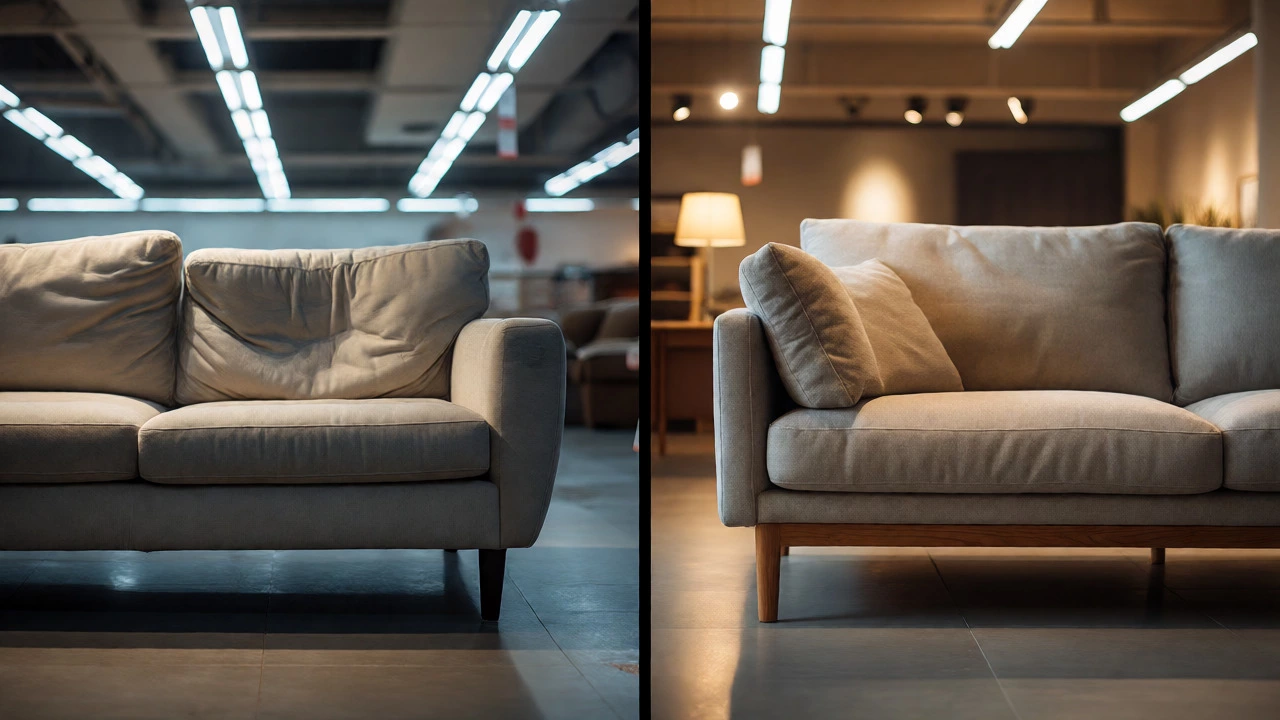
You walk into a furniture store, and the price tags hit you like a physical force. One couch costs $400. The next one, which looks almost identical from across the room, is $2,500. It’s tempting to grab the cheaper option and run. But here’s the uncomfortable truth: that $400 sofa might be dead within eighteen months, while the expensive one could last you fifteen years.
So, should you spend a lot of money on a sofa? The answer isn't a simple yes or no. It depends entirely on how you live, what your budget actually allows, and whether you value comfort over aesthetics. Let’s break down where your money actually goes when you buy a couch, so you can decide if the premium price tag is worth it for your specific situation.
The Anatomy of Price: What Are You Actually Paying For?
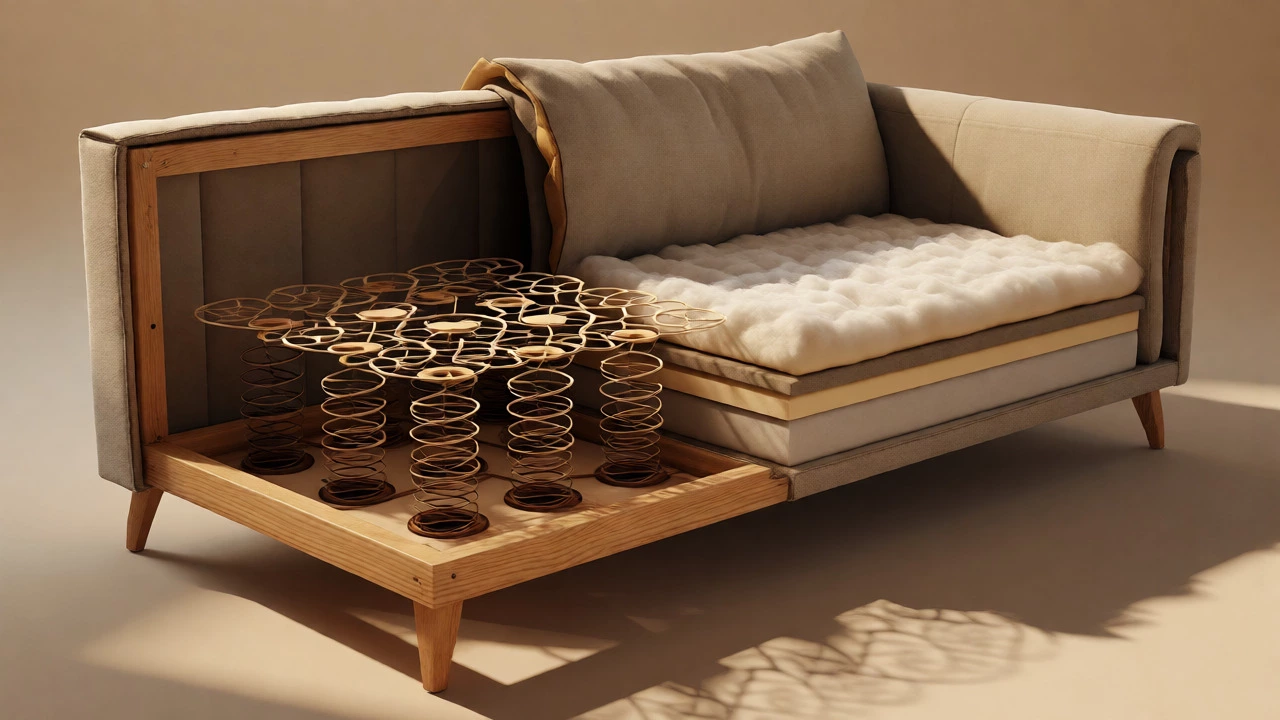
When you look at two sofas side-by-side, you’re seeing the upholstery. But 80% of the cost is hidden inside. The frame, the suspension, and the fill determine whether a sofa is a five-year rental or a ten-year investment. If you want to know if a high price is justified, you need to look past the fabric.
A cheap sofa usually uses a particleboard or plastic frame. These materials warp under weight and humidity. In contrast, a quality sofa uses kiln-dried hardwood, like oak or maple. This wood has been dried in an oven to remove moisture, preventing warping and cracking over time. That process adds cost, but it ensures the skeleton of your couch doesn’t snap when your kids jump on it.
Then there’s the suspension. Cheap couches use sinuous springs-zigzag metal wires stapled to the frame. They work fine until they start squeaking or sagging after two years. High-end sofas often use eight-way hand-tied springs. Each spring is tied to its neighbors with twine in eight directions. This creates a uniform, durable surface that resists sagging. If you sit on a sofa daily, this difference is massive.
| Component | Budget Option ($) | Premium Option ($$$) | Why It Costs More |
|---|---|---|---|
| Frame Material | Particleboard/Plywood | Kiln-Dried Hardwood | Hardwood lasts decades; particleboard fails in humid climates. |
| Suspension System | Sinuous Springs | Eight-Way Hand-Tied | Hand-tying requires skilled labor and provides superior bounce. |
| Cushion Fill | Low-Density Foam | High-Resilience Foam + Down | Dense foam retains shape; down adds luxury feel but needs fluffing. |
| Upholstery | Microfiber/Thin Leather | Top-Grain Leather/Linen | Natural fibers breathe and age better than synthetics. |
The Durability Math: Cost Per Year of Use
Let’s do some quick math. Imagine you buy a $600 sofa from a big-box retailer. It looks great in the showroom. Six months later, the cushions flatten. Two years in, the frame wobbles. You replace it every three years. Over nine years, you’ve spent $1,800 and dealt with three deliveries and three disposals.
Now, look at a $2,000 sofa with a hardwood frame and high-density foam. It’s more comfortable from day one. After five years, it still holds its shape. After ten years, maybe the fabric shows wear, but the structure is solid. You keep it for twelve years. Your total cost is $2,000. While the upfront hit is bigger, the annual cost is lower, and you didn’t have to deal with the hassle of replacing furniture twice.
This calculation changes based on household traffic. If you live alone and rarely watch TV, a mid-range sofa might suffice. But if you have three kids and a dog, the "cheap" sofa becomes the most expensive mistake you make. Pet claws shred thin synthetic fabrics quickly. Kids’ jumps stress weak frames. In high-traffic homes, durability is non-negotiable.
Comfort vs. Style: Where Does Value Lie?
People often confuse style with quality. A sleek, modern sofa with thin cushions might look expensive but offer zero support. Conversely, a bulky, overstuffed sectional might look dated but provide cloud-like comfort. Spending more money doesn’t automatically mean better style; it often means better engineering.
If you prioritize back support, invest in lumbar design. Look for sofas with adjustable headrests or built-in lumbar pillows. These features are common in higher-priced models because they require complex tailoring. Cheap sofas rarely offer ergonomic adjustments because they rely on generic molds.
However, if you care about aesthetics, you can find stylish pieces at lower price points by choosing simpler designs. Ornate details, curved arms, and custom piping drive up labor costs. A clean-lined, rectangular sofa in a neutral fabric will always be cheaper than a tufted, velvet chaise lounge. You can save money on style without sacrificing structural integrity if you stick to simple shapes.
Material Matters: Fabric Choices and Longevity
The outer skin of your sofa dictates how it ages. Synthetic fabrics like polyester are cheap and stain-resistant, but they pill easily and trap heat. Natural fibers like linen and cotton breathe well but wrinkle and absorb stains. Top-grain leather is expensive but develops a patina that many people love.
Here is a rule of thumb: if you have pets or children, avoid light-colored natural fabrics unless you plan to reupholster them. Darker microfibers or performance velvets are practical choices that hide dirt. If you want longevity, top-grain leather is unmatched. It can last 20+ years if conditioned properly. Split leather (the cheaper kind) peels and cracks within five years.
Consider the rub count, a measure of fabric durability. Anything under 15,000 double rubs is decorative only. For a living room used daily, you need 30,000 to 50,000 double rubs. Premium sofas often use fabrics tested for 100,000+ rubs. Check the spec sheet before you buy. If the salesperson can’t tell you the rub count, walk away.
When to Save and When to Splurge
You don’t need to max out your credit card for every piece of furniture. Here is a decision framework to help you allocate your budget wisely.
- Splurge if: You use the sofa daily for watching TV, working from home, or hosting guests. You have heavy users (large adults, active kids). You plan to stay in your current home for 5+ years. You value ergonomic support.
- Save if: The sofa is for a guest room used once a year. You rent your apartment and move frequently. You prefer changing styles every few years. You have a strict budget ceiling and refuse to go into debt.
There is also a middle ground. Many brands offer "investment-grade" construction at mid-range prices by simplifying the aesthetic. You get the hardwood frame and dense foam but skip the designer label and fancy legs. This is often the sweet spot for value-conscious buyers.

The Hidden Costs of Cheap Sofas
Buying a cheap sofa isn’t just about the purchase price. There are hidden costs that add up. First, disposal fees. Old sofas are bulky and hard to get rid of. Municipalities charge for large-item pickup, or you pay junk removal services $50-$100 per trip. Second, repair attempts. Replacing cushions on a broken frame is often impossible or more expensive than buying new.
Then there’s the environmental cost. Fast furniture ends up in landfills. A $300 sofa that lasts two years generates more waste than a $1,500 sofa that lasts twelve. If sustainability matters to you, the higher upfront cost aligns better with eco-friendly values. Quality furniture is repairable; cheap furniture is disposable.
Final Verdict: Is It Worth It?
Yes, spending more on a sofa is usually worth it if you use it regularly. The difference between a $500 and a $2,000 sofa is not just brand markup-it’s physics. Better materials resist gravity and time. You sleep better, sit more comfortably, and avoid the frustration of sagging seats.
But don’t overspend for status. A $5,000 designer sofa won’t make your life significantly better than a $2,000 well-built one. Find the point of diminishing returns. For most households, that lies between $1,200 and $2,500. Below that, you’re renting the furniture. Above that, you’re paying for art or exclusivity.
Before you swipe your card, sit on the sofa for ten minutes. Not thirty seconds. Ten minutes. Check the seat depth, the arm height, and the firmness. If it feels amazing now, imagine how good it will feel when you realize you don’t have to replace it for another decade. That peace of mind is worth every penny.
How long should a good sofa last?
A high-quality sofa with a hardwood frame and high-density foam should last between 7 and 15 years with regular use. Budget sofas typically last 2 to 4 years before showing significant signs of wear like sagging or frame loosening.
Is leather really worth the extra cost compared to fabric?
Leather is worth it if you want durability and ease of cleaning. Top-grain leather can last decades and resists stains better than fabric. However, it can be cold in winter and hot in summer, and it scratches easily if you have cats. Fabric offers more color options and softness but may require professional cleaning.
What is the best material for a family sofa?
Performance fabrics like Crypton or Sunbrella are excellent for families because they are stain-resistant and durable. Microfiber is a budget-friendly alternative that hides pet hair well. For ultimate longevity, choose dark-colored top-grain leather, as it withstands wear and tear better than most textiles.
Can I negotiate the price of a sofa?
Yes, especially on floor models or during holiday sales events like Black Friday or Memorial Day. Independent furniture stores are often more flexible than big-box chains. Always ask if there are discounts for cash payments or bundle deals with other furniture pieces.
Does a higher price guarantee better comfort?
No. Comfort is subjective. A very expensive sofa might be too firm or too deep for your body type. Higher prices usually guarantee better construction and durability, not necessarily personal comfort. Always test the seating position yourself before purchasing.