Ergonomic Stool Transition Planner
Picture this: You’re working from home, trying to stay productive. You’ve heard that sitting on a stool might be better for your posture than slouching in a deep armchair or a standard office chair. So, you swap out your cushioned seat for a hard, backless perch. After two hours, your lower back feels like it’s been twisted in a knot. Did the stool hurt you? Or did you just use it wrong?
The short answer is no-sitting on a stool isn’t inherently bad for your back. In fact, for many people, it can significantly reduce lower back strain compared to traditional seating. However, the devil is in the details. A stool forces your body into an active sitting position, which engages your core and keeps your spine aligned. But if you sit on one incorrectly, or if you have specific mobility issues, it can exacerbate existing problems.
Why do people switch to stools for work?
Many professionals switch to stools to combat the lethargy of traditional chairs. Standard office chairs often encourage passive sitting, where the backrest supports the spine but disengages the core muscles. Over time, this can lead to weakened abdominal muscles and poor posture. Stools, particularly saddle stools and kneeling chairs, force the user to maintain an upright posture by engaging the core and opening the hip angle. This active engagement promotes better blood flow and reduces the pressure on the lumbar discs.
How Stools Change Your Posture
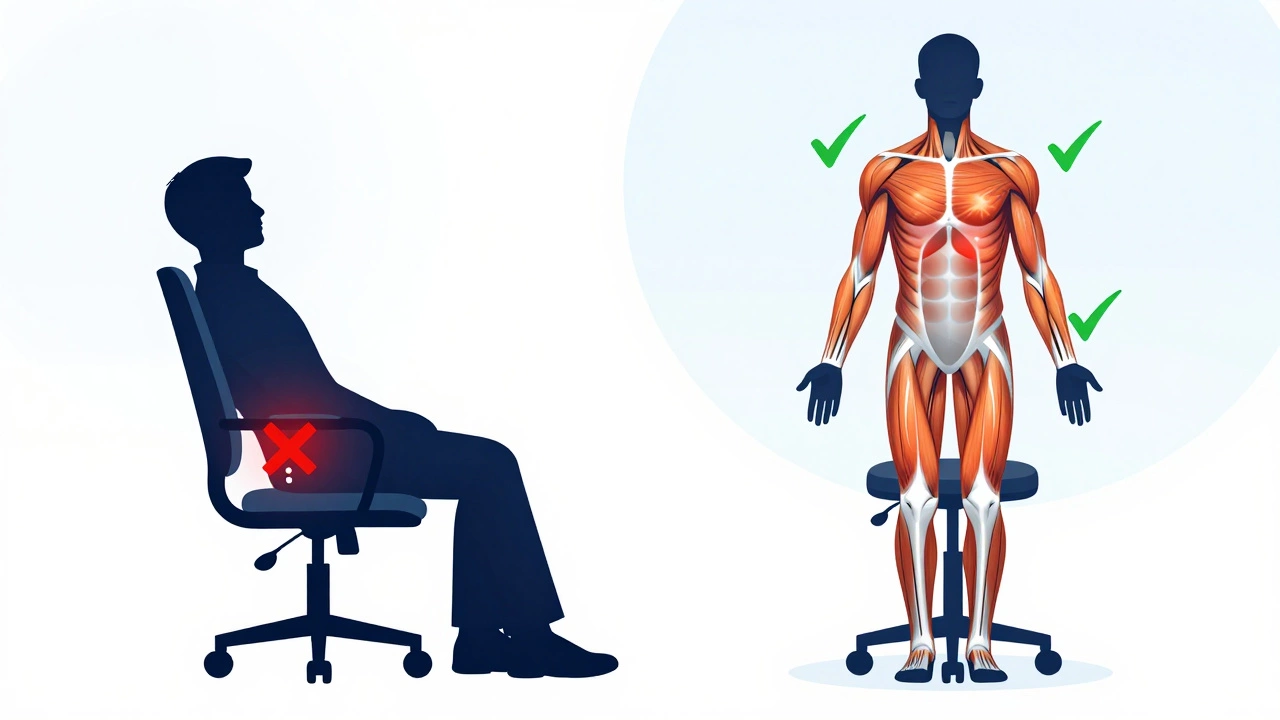
To understand why a stool might help-or hurt-you need to look at biomechanics. When you sit in a standard office chair with a 90-degree hip angle, your pelvis tends to tilt backward. This posterior pelvic tilt flattens the natural curve of your lower spine (lumbar lordosis). If you slouch further, you compress the spinal discs unevenly, leading to pain over time.
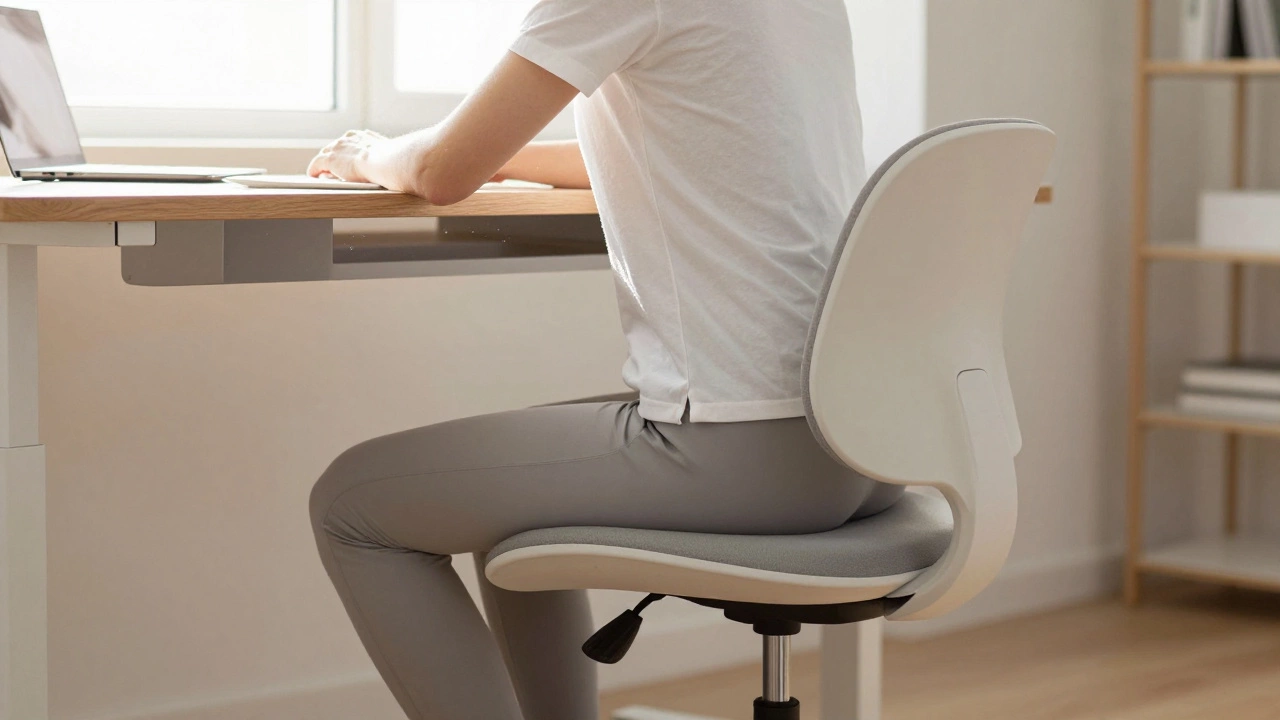
A stool changes this dynamic. Because most stools are backless, you cannot lean back. To stay balanced, your body naturally adjusts. Your hips open up to an angle between 100 and 135 degrees. This anterior pelvic tilt restores the natural S-curve of your spine. It puts less pressure on the intervertebral discs and encourages your core muscles to work continuously to keep you upright.
Saddle Stools are a type of ergonomic seating designed to mimic the riding position of a horse. They feature a tilted seat surface that helps maintain the natural curvature of the spine.However, this benefit comes with a trade-off. Active sitting requires energy. Your muscles are doing work that a backrest usually does. If your core strength is low, or if you try to sit on a stool for eight hours straight without breaks, fatigue sets in. When your muscles tire, your form breaks down, and you start to hunch or sway, which can cause more damage than sitting in a supportive chair would.
The Risks of Improper Use
So, when does sitting on a stool become bad for your back? It happens when the tool doesn't match the task or the user's physical condition. Here are the most common pitfalls:
- Prolonged Static Sitting: No seat is designed for eight hours of continuous, unmoving use. Stools demand movement. If you sit still on a stool, the lack of support leads to rapid muscle fatigue and increased pressure on the tailbone (coccyx).
- Incorrect Height: If the stool is too high, your feet dangle, cutting off circulation and increasing pressure on the thighs. If it’s too low, you hunch forward to reach your desk, straining your neck and upper back.
- Lack of Foot Support: Without a footrest or proper floor contact, your legs swing or press against each other, reducing stability and forcing your back to compensate for balance.
- Pre-existing Conditions: People with severe sciatica, herniated discs, or limited hip flexibility may find the open hip angle of a stool painful rather than relieving.
| Feature | Standard Office Chair | Ergonomic Stool |
|---|---|---|
| Hip Angle | ~90 degrees (Closed) | 100-135 degrees (Open) |
| Core Engagement | Low (Passive) | High (Active) |
| Spinal Pressure | Higher on lumbar discs if slouched | Lower on discs, higher on muscles |
| Blood Flow | Restricted by thigh compression | Improved due to open hips |
| Best For | Long periods of static focus | Dynamic work, short bursts, standing alternatives |
Choosing the Right Type of Stool
Not all stools are created equal. If you want to try stool sitting without hurting your back, the design matters immensely. There are three main categories you should know about.
Backless Perch Stools: These are simple, round seats. They offer minimal guidance. While they allow for some movement, they provide little structural support for the spine. They are best used as a temporary alternative to standing desks, not as a primary work seat.
Saddle Stools: As mentioned earlier, these mimic a horseback riding position. The front part of the seat is slightly elevated, pushing your knees down and opening your hips. This is generally considered the most ergonomic option for back health because it actively maintains the lumbar curve. Look for models with a wide, padded base to distribute weight evenly across your sit bones.
Kneeling Chairs: These hybrids include a small seat and a pad for your shins. They force your torso upright by shifting your center of gravity forward. While excellent for posture, they put significant pressure on the knees. If you have knee issues, avoid these. They are also harder to get comfortable in than saddle stools.
If you are new to this, start with a saddle stool that has adjustable height. Ensure it has a non-slip base so it doesn’t wobble while you type. Stability is key; if you’re constantly micro-adjusting your balance, your muscles will tense up, leading to shoulder and neck pain.
How to Transition Safely
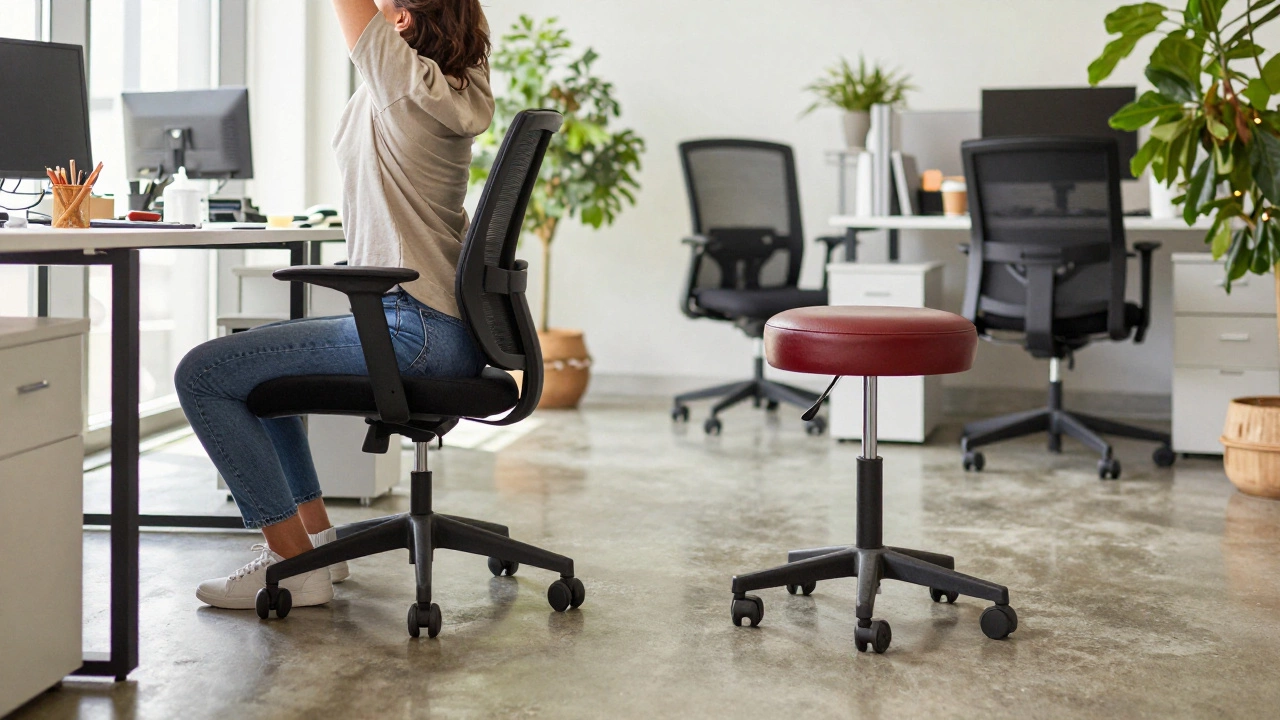
You wouldn’t run a marathon without training, so don’t expect your body to adapt to active sitting overnight. The transition needs to be gradual. Here is a practical plan to integrate a stool into your routine without causing injury.
- Start Small: Begin with 15 to 20 minutes per day. Use the stool during tasks that require less intense concentration, like answering emails or reviewing documents.
- Check Your Desk Height: Your elbows should be at a 90-degree angle when typing. If your desk is too high, raise the stool until your forearms are parallel to the floor. If your feet don’t touch the ground comfortably, use a footrest.
- Mix It Up: Alternate between your regular chair, a standing desk, and the stool. Aim for a cycle of 20 minutes sitting, 8 minutes standing, and 2 minutes moving/stretching. This "movement snacking" prevents any single muscle group from fatiguing.
- Listen to Your Body: Mild muscle soreness in your abs or glutes is normal-it means they’re working. Sharp pain in your lower back, neck, or knees is a warning sign. Stop immediately and return to a supported chair.
One pro tip: Place a small wedge cushion under your sit bones if the stool feels too hard. This can help tilt your pelvis slightly forward, enhancing the ergonomic benefits without requiring as much core effort initially.
When to Avoid Stools Altogether
Despite their benefits, stools aren’t for everyone. You should stick to a high-quality ergonomic office chair with lumbar support if you fall into any of these categories:
- Chronic Lower Back Pain: If you have acute disc issues or severe arthritis, the lack of support can aggravate inflammation.
- Pregnancy: As your center of gravity shifts, maintaining balance on a backless stool becomes difficult and potentially risky.
- Balance Disorders: Conditions like vertigo or neuropathy make active sitting dangerous.
- Weak Core Muscles: If you struggle to hold a plank for 30 seconds, your core likely isn’t strong enough to support your spine on a stool for extended periods. Build strength first.
Can I sleep on a stool?
Absolutely not. Stools are designed for active, upright sitting. Sleeping on a stool would place extreme stress on your joints, spine, and circulatory system. Always use a bed or a recliner designed for rest.
Do saddle stools help with scoliosis?
Saddle stools can help manage symptoms of mild scoliosis by encouraging symmetrical posture and core engagement. However, they are not a cure. Individuals with scoliosis should consult a physiotherapist before making significant changes to their seating arrangements.
How often should I adjust my stool height?
You should adjust your stool height whenever you change tasks or feel discomfort. Ideally, your feet should be flat on the floor or a footrest, and your thighs should slope slightly downward. Re-check this alignment every few hours, especially if you shift positions frequently.
Is a kneeling chair better than a saddle stool?
It depends on your priorities. Kneeling chairs force a more upright posture but put pressure on the knees. Saddle stools are gentler on the knees and allow for more natural movement. For most people, saddle stools are a more sustainable long-term option for back health.
What exercises complement stool sitting?
To maximize the benefits of stool sitting, strengthen your core and glutes. Planks, bird-dogs, and bridges are excellent exercises. Additionally, stretch your hip flexors regularly, as tight hips can counteract the open-angle benefits of the stool.
Can children use ergonomic stools?
Yes, but only if the stool is appropriately sized. Children’s growing spines benefit from good posture, but their core muscles are still developing. Start with very short sessions and ensure the stool allows their feet to rest firmly on the ground.
Does sitting on a stool burn more calories?
Yes, slightly. Active sitting engages more muscles than passive sitting, which can increase calorie expenditure by a small margin. However, it should not be viewed as a weight-loss strategy. Its primary benefit is postural and circulatory health.
How do I clean a fabric saddle stool?
Most fabric saddle stools have removable covers. Check the manufacturer’s label for washing instructions. Typically, machine washing on a gentle cycle and air drying is recommended. For vinyl or leather stools, wipe them down with a damp cloth and mild soap.
Are there tax deductions for ergonomic stools?
In some jurisdictions, ergonomic equipment purchased for a home office may be tax-deductible as a business expense. Consult a local tax professional to determine eligibility based on current laws and your specific employment situation.
What is the lifespan of an ergonomic stool?
High-quality ergonomic stools can last 5 to 10 years or more with proper care. Look for models with robust gas lifts and durable upholstery. Regular maintenance, such as tightening bolts and cleaning the seat, extends their usability.
In the end, sitting on a stool is neither a miracle cure nor a hazard. It’s a tool. Like any tool, its value depends on how you use it. By understanding your body’s needs, choosing the right design, and transitioning slowly, you can harness the power of active sitting to protect your back and boost your energy. Just remember: movement is medicine. Whether you’re on a stool, a chair, or standing, never stay still for too long.