Queen Elizabeth II's Wardrobe Tracker
Select a category to discover where these items ended up.
Royal Archives & Tower of London
These garments are considered part of the Crown Estate’s cultural heritage. They are stored in climate-controlled vaults similar to priceless art collections.
- Location: Royal Archives / Tower of London
- Maintenance: Funded by the Sovereign Grant
- Access: Researchers only (strict supervision)
When Quentin Melbourn looks at a closet full of clothes, he sees fabric, zippers, and memories. But when the world looked into the closets of Queen Elizabeth II, who was the former monarch of the United Kingdom and other Commonwealth realms, they saw something far more complex. The question "what happened to Queen Elizabeth's clothes after she died?" isn't just about fashion; it is about protocol, privacy, and the massive logistical puzzle of managing a lifetime of state appearances.
You might expect a giant public sale where anyone can buy a pair of her iconic pearl earrings or a bright yellow coat. That’s not how it works. The reality is a mix of strict royal tradition, private family decisions, and high-security storage. Most of her wardrobe didn’t go on eBay. It went into vaults, archives, or stayed with her children.
The Immediate Protocol: Securing the Wardrobe
The moment Queen Elizabeth passed away in September 2022, Operation London Bridge was activated. This wasn't just about moving bodies; it was about securing assets. Her personal effects, including her extensive wardrobe, were treated with extreme sensitivity.
Royal experts note that the immediate step was inventory and security. Staff from Buckingham Palace and Clarence House worked quickly to catalog everything. Why? Because these items are part of the Crown Estate’s cultural heritage, even if they aren't technically "crown jewels." You have to think about this like a museum curator locking down a priceless collection overnight. No one touches anything without authorization.
There was no public announcement of a "clearance sale." In fact, the opposite happened. The focus was on preservation. Many of her outfits were worn for specific historical events-state openings of parliament, visits to foreign heads of state, and national celebrations. These garments carry historical weight. They are documents in fabric form.
Where Are the Clothes Now? Storage and Archives
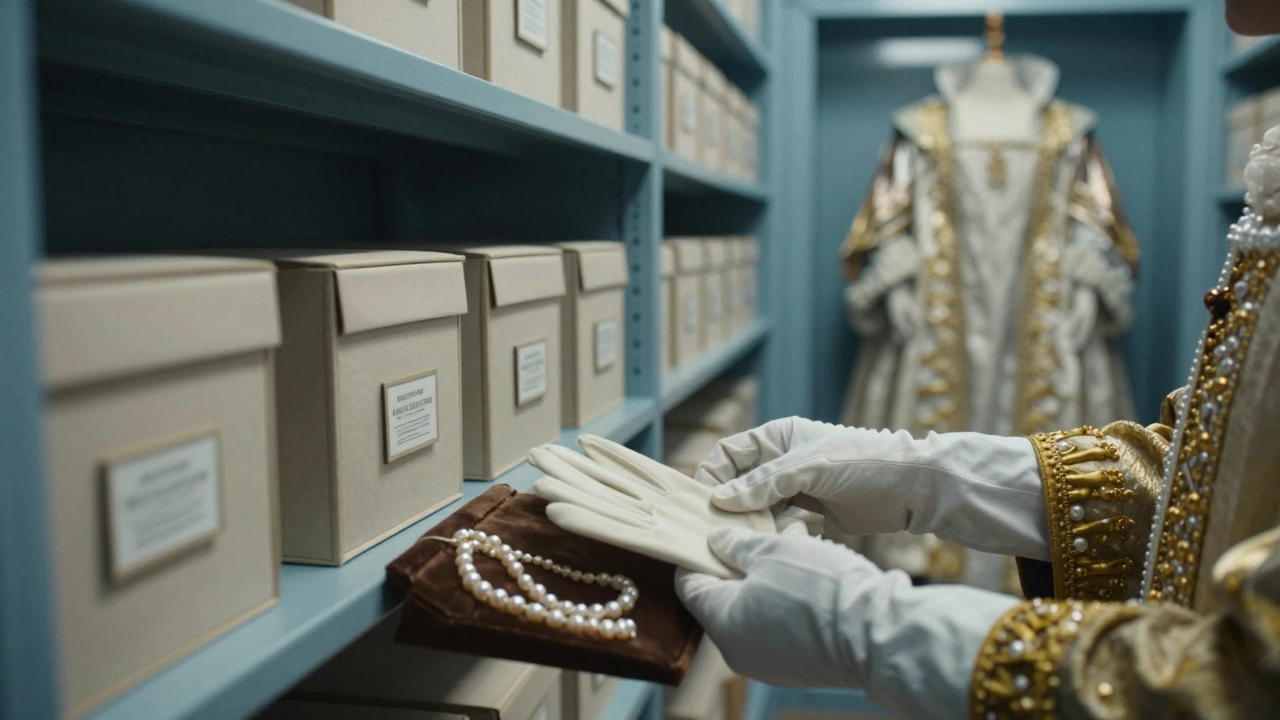
If you want to know where Queen Elizabeth's clothes are today, the answer is mostly "in storage." But "storage" sounds boring, so let’s call it what it is: climate-controlled archival vaults.
Windsor Castle, which served as a historic royal residence in Berkshire, England, likely holds a significant portion of her later-life wardrobe. The castle has extensive facilities for storing art, tapestries, and textiles. Her clothing would be stored similarly to her husband Prince Philip’s uniforms or her own ceremonial robes.
Some items may have been transferred to the Royal Archives. These archives hold millions of documents and objects related to the monarchy. While the public rarely gets to see them, researchers and historians do. If you’re writing a book about 1950s royal fashion, you might get permission to view a Dior dress from that era under strict supervision.
It’s important to understand that "storage" doesn’t mean "forgotten." These items are maintained. Silk needs humidity control. Wool needs protection from moths. Pearls need occasional polishing. The cost of maintaining this wardrobe is covered by the Sovereign Grant, which funds official duties and maintenance of royal residences.
Family Distribution: What Did the Children Keep?
Not everything stays in the vaults. Some items were distributed among her children and grandchildren. This is standard practice for any large estate, but with royals, it’s done quietly.
King Charles III, who is the current monarch of the United Kingdom, likely retained items of sentimental value or those useful for his own duties. For example, certain formal robes or accessories that are part of the regalia might remain in use. However, Charles has his own style preferences, so he probably didn’t keep many of her colorful day coats.
Prince William and Prince Harry may have received personal gifts from their mother. Think of small items: jewelry, scarves, or perhaps a favorite handbag. These are private matters. The palace does not publish lists of who got what. Speculation runs wild online, but there’s little evidence to back up claims that Harry took a specific dress or that William inherited a particular hat.
Duchess Camilla, now Queen Consort, has also been seen wearing some pieces that belonged to Elizabeth. This is a sign of respect and continuity. Wearing a predecessor’s jewelry or accessory is a common way for new consorts to show connection to the past. It’s subtle, but powerful.
The Myth of the Public Auction
You’ve probably seen headlines claiming "Queen Elizabeth’s clothes sold for millions!" Let’s clear this up. There was no public auction of her personal wardrobe.
In 2023, Sotheby’s held an auction of items from the *former* Duke of Edinburgh’s effects, but that was separate from the Queen’s wardrobe. Any rumors about her dresses being sold to the highest bidder are false. The monarchy protects its image fiercely. Selling off a dead queen’s clothes to random collectors would be seen as disrespectful and commercially exploitative.
However, there is a nuance. Some items *were* sold in the past. During her life, Queen Elizabeth occasionally donated or sold lesser-used items to charity auctions. But post-death, the strategy shifted entirely to preservation and private distribution. If you see a "Queen Elizabeth dress" for sale on Etsy or eBay, it’s almost certainly a replica or a stolen item. Be skeptical.
Historical Significance: Why Preserve Them?
Why bother storing thousands of dresses? Why not recycle them? Because each outfit tells a story.
Consider the famous blue dress she wore to meet Pope John Paul II in 1980. Or the green coat from her 1976 visit to the US. These aren’t just clothes; they are diplomatic tools. Colors were chosen carefully. Fabrics were selected for comfort during long flights. Hats were designed to be visible from helicopters. Every piece had a purpose.
Preserving them allows future generations to study royal diplomacy, fashion history, and textile technology. Scholars can analyze how British manufacturers evolved over 70 years. Designers can see how trends were adopted (or rejected) by the crown. It’s a living library of 20th-century style.
| Category | Destination | Access Level |
|---|---|---|
| Ceremonial Robes | Royal Archives / Tower of London | Restricted (Researchers only) |
| Day-to-Day Coats & Dresses | Windsor Castle Storage | Private (Royal Family) |
| Jewelry (Personal) | Distributed to Family | Private |
| State Gifts | Royal Collection Trust | Public Exhibitions |
Designers and Brands: Who Made Her Look?
To understand the wardrobe, you have to understand the people behind it. Queen Elizabeth worked with some of the most famous designers in history.
Norman Hartnell, who was a prominent British couturier known for designing royal wedding dresses, created her wedding gown in 1947. He remained her primary designer for decades. His work is characterized by elegance, modesty, and intricate embroidery. Many of his pieces are now considered national treasures.
Later in life, she worked with Hardy Amies, who served as Master Dressmaker to the Queen from 1956 to 1997. Amies understood the need for practicality. He designed suits that could withstand long days of travel and still look impeccable. His archive is another key part of the preserved collection.
In recent years, younger designers like Bruce Oldfield and Zuhair Murad contributed to her wardrobe. Their pieces reflect a modernization of royal style, while still adhering to traditional expectations. These contemporary pieces are also preserved, showing the evolution of taste over time.
Can the Public Ever See Them?
Here’s the good news: yes, sometimes. The Royal Collection Trust regularly hosts exhibitions. While they don’t usually display everyday clothes, they do feature ceremonial items and significant historical pieces.
For example, the exhibition "Elizabeth & David: The Love Story Behind the Crown" featured personal artifacts. Future exhibitions might include more wardrobe items, especially if they tie into major anniversaries or historical events. Keep an eye on the Royal Collection website for announcements.
Museums like the Victoria and Albert Museum (V&A) in London also hold royal fashion. While they may not have Queen Elizabeth’s personal items, they have pieces from the same era and designers. Visiting these museums gives you a sense of the context in which her wardrobe existed.
Did Queen Elizabeth's clothes go to auction?
No, there was no public auction of Queen Elizabeth II's personal wardrobe after her death. Items were secured, archived, or distributed privately among family members. Rumors of sales are unfounded.
Where are Queen Elizabeth's dresses stored?
Most of her wardrobe is stored in climate-controlled facilities at Windsor Castle and possibly Buckingham Palace. Some ceremonial items are held in the Royal Archives for research purposes.
Did Prince Harry or Prince William get any of her clothes?
While not officially confirmed, it is likely that both princes received personal items of sentimental value, such as jewelry or small accessories. Large garments were likely kept for archival purposes.
Can I buy a Queen Elizabeth dress online?
Any Queen Elizabeth dress sold online is likely a replica or a counterfeit. The monarchy does not sell her personal wardrobe to the public. Be cautious of scams.
Who designed Queen Elizabeth's most famous outfits?
Her early career outfits were largely designed by Norman Hartnell and Hardy Amies. Later in life, she worked with designers like Bruce Oldfield and Zuhair Murad.