Living Room Layout & Feng Shui Analyzer
Enter your room's details below to get a personalized recommendation for your sofa orientation.
Layout Recommendation
Face the Front Door
Best for Security & FlowWhy this works:
Watch out for:
Walk into a living room where the main seating is turned completely away from the entrance, and you might feel a subtle disconnect. It’s like sitting with your back to a party while everyone else chats near the entryway. This specific dilemma-whether to orient your couch toward or away from the front door of the home-is more than just an aesthetic choice. It touches on ancient design principles, psychological comfort, and practical traffic flow.
If you are rearranging your space or buying a new piece of furniture, especially a large corner sofa, this decision sets the tone for how the room functions. Let’s break down why direction matters, what the experts say, and how to make it work for your specific floor plan.
The Psychology of Sightlines and Safety
Human beings are wired to monitor their environment. In evolutionary terms, having a clear view of the entry point meant safety. When you sit on a couch facing the front door, you have what designers call a "commanding position." You can see who is entering without turning around. This reduces subconscious anxiety and makes the space feel more secure and welcoming.
Conversely, if your back is to the door, you might find yourself constantly shifting or feeling uneasy when someone walks in. This is particularly true in open-concept homes where the living area flows directly from the foyer. A couch facing the door acts as a visual anchor. It invites guests in rather than blocking them off. Think about it: if you’re hosting friends, do you want to watch them arrive, or do you want to stare at a blank wall while they navigate around your furniture?
Feng Shui Principles: Energy Flow and Positioning
In Feng Shui, the arrangement of furniture is critical for the flow of Chi (energy). One of the core rules is that the main seating should face the door but not be directly in line with it. Being directly in line creates "rushing energy," which can feel aggressive or disruptive. However, being angled toward the door allows positive energy to enter and circulate through the room.
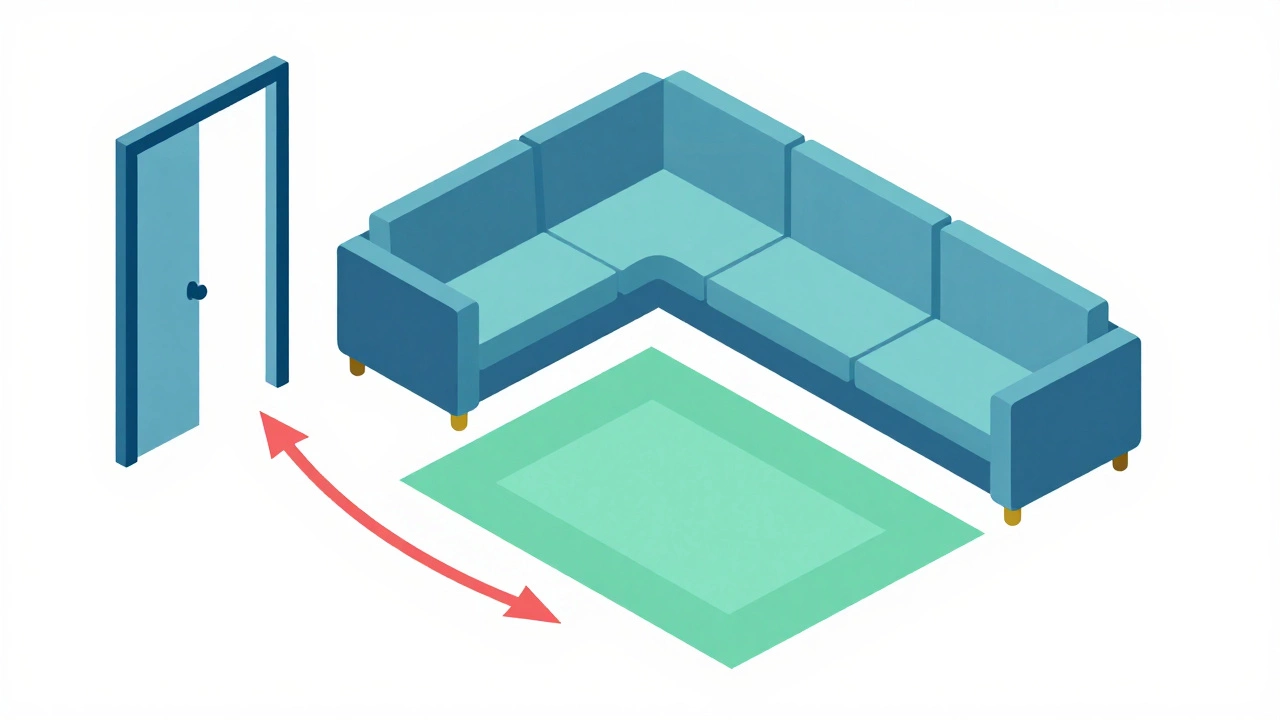
This principle applies heavily to corner sofas. Because these L-shaped units take up significant space, their orientation dictates the room's energy map. If a corner sofa blocks the path from the door, it creates stagnation. If it faces the door while leaving a clear walkway, it promotes harmony. Many practitioners suggest placing a rug under the seating area to ground the energy and define the zone separate from the entry traffic.
Practical Traffic Flow and Room Dimensions
Beyond philosophy, there is pure geometry. Your living room likely has multiple entry points: the front door, hallways to bedrooms, and perhaps a sliding glass door to the garden. The goal is to create a "loop" rather than a dead end. A couch facing the front door often helps establish this loop by defining one side of the conversation area.
Consider the width of your pathways. You need at least 36 inches (about 90 cm) of clear walking space. If facing the couch toward the door forces you to squeeze between the armrest and a bookcase, you’ve created a bottleneck. In smaller rooms, a compact sectional placed against a wall parallel to the door might work better than one perpendicular to it. Measure your space before moving heavy furniture. Use painter's tape on the floor to mark out the footprint of the couch and test the sightlines.
The Role of Focal Points: TV vs. Conversation
Most modern living rooms have two competing focal points: the television and the front door (or a window). This creates a conflict. If the TV is on the wall opposite the door, facing the door means your back is to the screen. If the TV is on the side wall, you might have to twist your neck to see both.
Here is a practical rule of thumb: prioritize the primary activity. If your living room is primarily for watching movies, the couch should face the TV. If it is primarily for socializing and entertaining, face the door. For many households, a compromise works best. Place the couch slightly angled so that you can glance at the door while still seeing the screen comfortably. Corner sofas excel here because their chaise section can be positioned to face the TV while the main seating faces the room’s center.
Lighting and Visual Balance
Natural light plays a huge role in how a room feels. If your front door is next to a large window, facing the couch toward that axis brings light into the seating area. Sitting with your back to a bright window can cause glare on screens and make conversations difficult because people’s faces are in shadow. Conversely, facing the window (and often the door) ensures your face is lit, making interactions warmer and more engaging.
Artificial lighting also needs consideration. If you face the couch toward the door, ensure there is adequate ambient light near the entryway so you aren’t walking into a dark void. Floor lamps placed behind the couch can illuminate the pathway and highlight artwork, creating depth. Avoid harsh overhead lights directly above the seating area; instead, use layered lighting to keep the mood relaxed.
Comparing Layout Options
| Orientation | Pros | Cons | Best For |
|---|---|---|---|
| Facing Front Door | Enhances security, welcomes guests, aligns with Feng Shui | May conflict with TV placement, requires careful spacing | Social hubs, formal living rooms, entry-adjacent spaces |
| Back to Front Door | Creates a cozy nook, maximizes wall space for media | Blocks sightlines, can feel isolating, disrupts flow | Small rooms with limited walls, media-heavy spaces |
| Angled/Diagonal | Compromises between TV and door, dynamic look | Harder to fit accessories, may waste corner space | Open-plan layouts, versatile multi-use rooms |
Working with Corner Sofas Specifically
Corner sofas are popular because they maximize seating capacity in a single footprint. However, their L-shape makes positioning trickier than a standard three-seater. The key is to determine which leg of the "L" serves as the primary seating and which serves as secondary lounging.
If you place the long side of the corner sofa facing the door, you create a strong visual barrier that defines the living zone. This works well in rectangular rooms. If you place the short chaise side facing the door, it can act as a gentle guide rather than a block. Always ensure the corner itself doesn’t protrude too far into the walkway. A common mistake is pushing the entire unit into the corner of the room, which can make the space feel cramped and uninviting. Floating the sofa slightly away from the walls adds breathing room and makes the area feel larger.
Troubleshooting Common Layout Issues
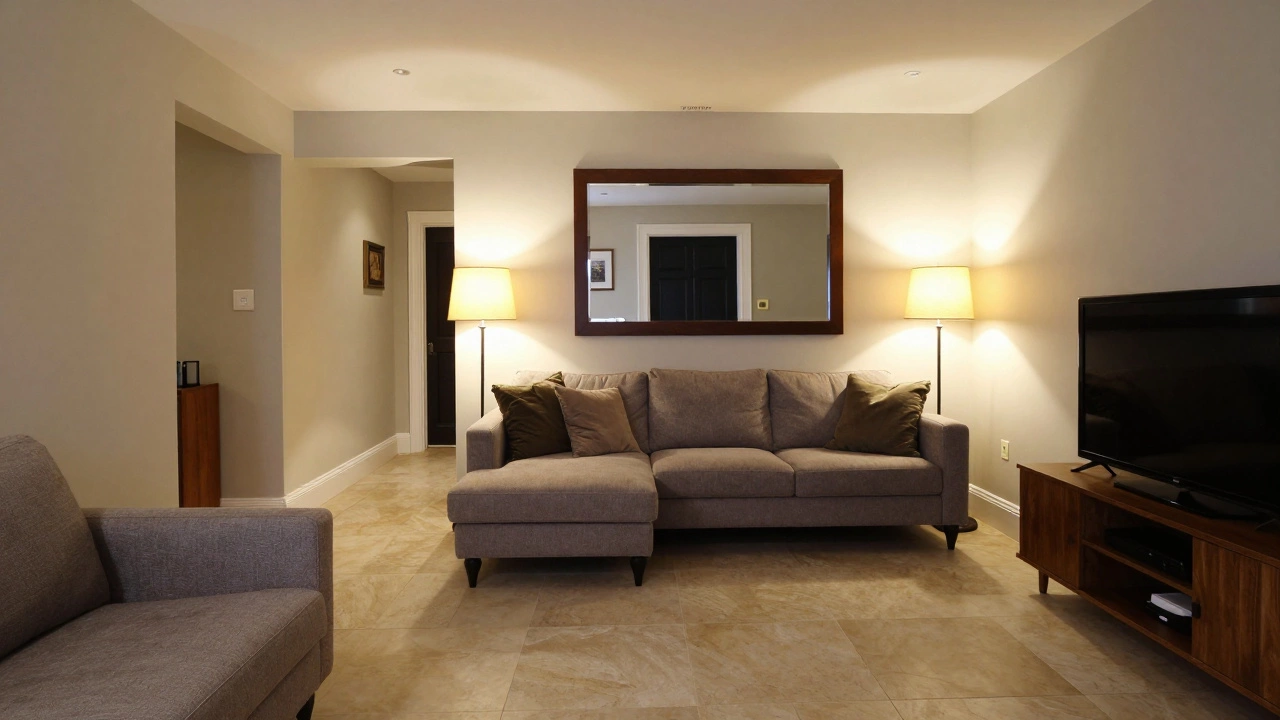
What if your floor plan simply doesn’t allow the couch to face the door? This happens often in apartments with odd shapes or narrow hallways. In these cases, use mirrors. Placing a large mirror on the wall behind the couch reflects the entryway, giving you the visual connection without physically turning the furniture. This tricks the eye into feeling connected to the rest of the house.
Another solution is to use low-profile furniture. If you must put your back to the door, choose a couch with a lower backrest. This allows people standing in the doorway to see over it, maintaining visual contact. Additionally, ensure the pathway is wide enough that you don’t feel like you’re intruding on the seating area when you walk past.
Finally, consider the scale. A massive leather sectional in a small room facing the door will overwhelm the space. Stick to proportional pieces. If the room is small, a loveseat or a compact corner sofa might be sufficient, allowing you to arrange other chairs to face the entrance. Flexibility is key. Modular furniture lets you reconfigure as needed, adapting to whether you’re hosting a dinner party or binge-watching a series.
Is it bad Feng Shui to have your back to the door?
Yes, in traditional Feng Shui, having your back to the door is considered unfavorable because it leaves you vulnerable and disconnected from incoming energy. It is recommended to sit in a "commanding position" where you can see the door without being directly in line with it.
How much space should I leave between the couch and the front door?
You should maintain at least 36 inches (90 cm) of clear walking space. If the couch faces the door, ensure there is enough room for people to pass comfortably without bumping into the armrests. Ideally, leave 48 inches for a more spacious feel.
Can I face my couch to the door if the TV is on the opposite wall?
It is challenging but possible. You can angle the couch slightly so that you can glance at the door while still seeing the TV. Alternatively, use a swivel chair for additional seating that can rotate between the two focal points. Prioritize based on whether the room is used more for socializing or entertainment.
Do corner sofas work better facing the door or against a wall?
Corner sofas work best when they define a conversation area. Facing the door (or angled toward it) helps integrate the seating into the room's flow. Pushing them entirely against a wall can make the space feel static. Floating the sofa slightly away from the walls improves circulation and aesthetics.
What if my living room is very small?
In small rooms, prioritize traffic flow. If facing the door blocks movement, turn the couch toward the largest window or the TV. Use mirrors to reflect the door and maintain a sense of openness. Choose a smaller-scale sofa or a loveseat to avoid overcrowding the space.