Sofa Lifespan & Cost Analysis Calculator
Analysis Results
Cost Per Year Breakdown
You sit on it every single day. It’s the anchor of your living room, the spot where you watch movies, nap after work, or host friends for dinner. But have you ever stopped to wonder how long that piece of furniture is actually supposed to last? The short answer is: it depends heavily on what you paid for and how hard you live.
According to data from the U.S. Consumer Product Safety Commission (CPSC) and various home furnishing surveys, the average homeowner keeps a sofa for about seven to ten years. However, this number is misleading if you don’t look at the quality tier. A budget-friendly sectional bought online might give out in three years, while a high-end, solid hardwood frame with premium leather can easily survive twenty-five years or more.
The Quality Tiers: Why Your Sofa Dies Sooner Than Expected
Not all sofas are created equal. The lifespan of your seating is directly tied to its construction materials. If you’re trying to figure out why your current couch is sagging after just four years, look at the build quality.
| Tier | Price Range (CAD) | Average Lifespan | Key Materials |
|---|---|---|---|
| Budget / Fast Furniture | $500 - $1,200 | 3 - 5 Years | Plywood frames, foam fill, synthetic fabrics |
| Mid-Range | $1,200 - $3,000 | 7 - 10 Years | Solid wood components, higher density foam, durable upholstery |
| Premium / Heirloom | $3,000+ | 15 - 25+ Years | Kiln-dried hardwood, sinuous springs, top-grain leather or natural fibers |
Budget sofas often use particleboard or low-grade plywood for their frames. These materials swell and weaken over time, especially in humid climates like here in Mississauga during our damp summers. Mid-range options usually introduce kiln-dried hardwoods, which resist warping better. Premium pieces invest in corner-blocked joints and hand-tied springs, distributing weight evenly so one side doesn’t collapse before the other.
The Frame and Foundation: What Actually Breaks First?
When a sofa fails, it’s rarely the fabric that gives up first-unless you have pets. The structural integrity comes down to two main components: the frame and the suspension system.
Wooden Frames are the skeleton of any sofa, typically made from hardwoods like oak, maple, or ash. Softwoods like pine are cheaper but prone to cracking under stress. High-quality manufacturers use mortise-and-tenon joints reinforced with screws and glue. Cheap ones rely solely on staples or weak adhesives. If you lift your sofa and it feels surprisingly light, that’s a red flag. A sturdy sofa should weigh between 100 to 200 pounds depending on size.
Next is the suspension. There are three common types:
- Sinuous Springs: Continuous wire loops that provide firm support. Common in mid-range sofas.
- Hand-Tied Springs: Individual coils tied to the frame. This allows each spring to move independently, offering superior comfort and longevity. Found in premium furniture.
- Foam Only: No springs, just layers of foam. This is common in cheap recliners or modern minimalist designs. It compresses faster than spring-based systems.
If your sofa starts making squeaking noises when you sit down, your suspension system is failing. This is usually the precursor to a permanent dip in the seat cushions.
Cushion Fillings: Foam Density Matters More Than Thickness
Many people think thicker cushions mean better quality. That’s a myth. The key metric is density, not thickness. Cushion fillings generally fall into three categories:
- Low-Density Polyurethane Foam: Often found in budget sofas. It has an ILD (Indentation Load Deflection) rating below 1.8. It feels soft initially but flattens out within 1-2 years because the cells collapse permanently.
- High-Density Foam: With an ILD rating above 2.4, this foam retains its shape longer. It’s firmer but lasts significantly longer. Look for "high-resiliency" (HR) foam labels.
- Down and Feather Blends: Luxurious and moldable, but they require fluffing daily. They don’t wear out structurally, but they lose loft if not maintained. Pure down is rare; most are blends with polyester fiberfill for structure.
If you press your hand into your cushion and it takes more than 10 seconds to bounce back, the foam has lost its elasticity. At this point, the sofa isn’t broken, but it’s no longer providing proper support for your spine.
Upholstery Wear: Fabric vs. Leather
The visible wear on your sofa tells a different story than the internal structure. Fabric choices drastically change how long you’ll want to keep the piece.
Natural Fibers like Cotton and Linen are breathable and comfortable but show wrinkles and stains easily. They typically have a rub count (Wyzenbeek test) of 15,000 to 30,000 double rubs. For heavy-use households, aim for at least 50,000 double rubs.
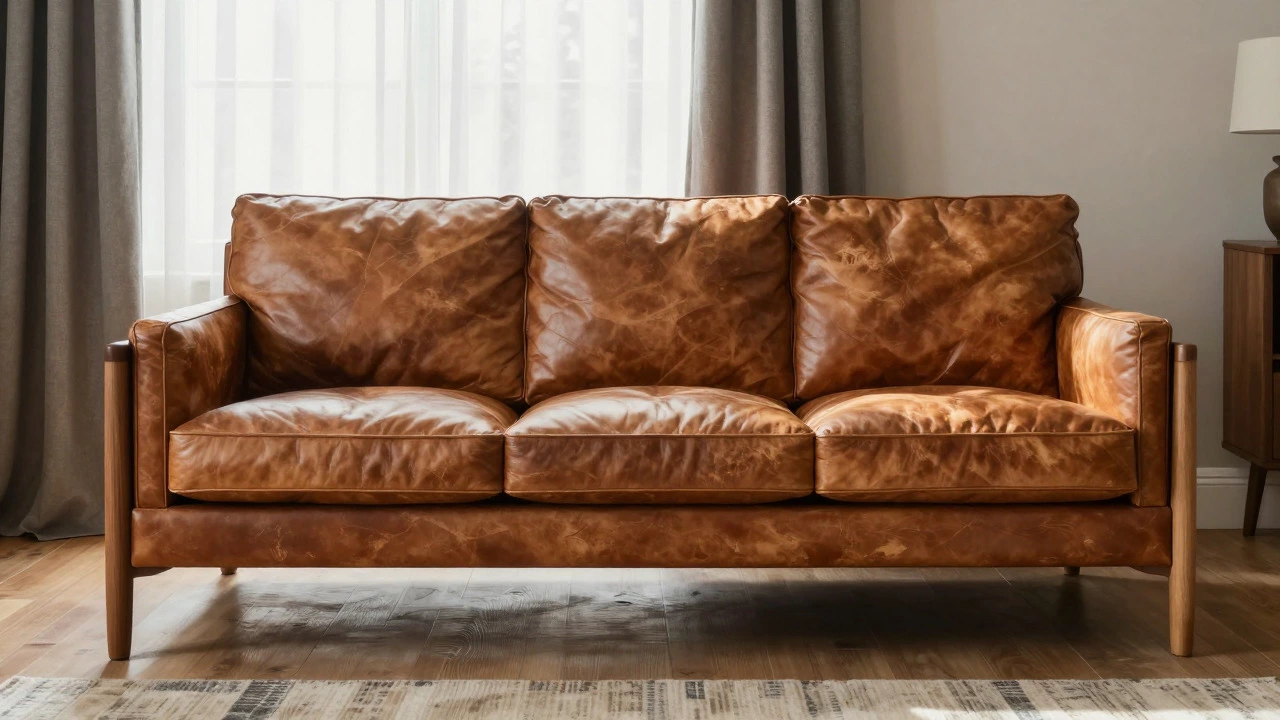
Synthetic fabrics like microfiber, polyester, and acrylic are tougher. They resist stains and fading better, making them ideal for families with kids or pets. Leather, particularly top-grain or full-grain leather, ages beautifully. Instead of wearing out, it develops a patina. However, bonded leather (a mix of leather scraps and polyurethane) peels and cracks within five years, mimicking the lifespan of cheap fabric.
In Canada, where we spend a lot of time indoors during winter, indoor air quality affects upholstery too. Dry heat from radiators can dry out leather, causing cracks. Using a humidifier in your living room during October to April can extend the life of leather sofas by several years.
Signs It’s Time to Replace Your Sofa
Don’t wait until the legs snap off. Here are the concrete signs that your sofa has reached the end of its useful life:
- Visible Sagging: If there’s a permanent dip in the middle of the seat that doesn’t recover after standing up for an hour, the core support is gone.
- Noises: Creaking, squeaking, or popping sounds indicate loose joints or broken springs.
- Back Pain: If you wake up with lower back pain after napping on the sofa, it’s no longer supporting your body correctly.
- Stains and Odors: Deep-set pet odors or smoke smells often penetrate the foam and frame, making cleaning ineffective.
- Leg Damage: Wobbly legs suggest the frame is compromised. Replacing legs is easy, but if the attachment points are rotting, the whole frame is suspect.
Cost-Benefit Analysis: Repair vs. Replace
Before buying a new sofa, consider if reupholstering or replacing cushions makes sense. In Mississauga and the Greater Toronto Area, labor costs for skilled upholstery work are rising. A professional re-upholster job can cost between $1,500 and $3,000 CAD, depending on the complexity and fabric choice.
If your sofa has a high-quality wooden frame and good suspension, reupholstering is worth it. You preserve the structural integrity while updating the look. However, if the frame is particleboard or the springs are shot, repair costs will exceed the price of a new mid-range sofa. In that case, recycling the old one and investing in a better-quality replacement is the smarter financial move.
Also, consider the environmental impact. The average Canadian household generates significant textile waste. Extending the life of your sofa by even five years through proper care (vacuuming weekly, rotating cushions monthly, using protective sprays) reduces landfill contribution. Check local e-waste or bulk item pickup schedules in Peel Region to dispose of old furniture responsibly.
Extending the Life of Your Current Sofa
You can double the lifespan of a mid-range sofa with simple maintenance habits:
- Rotate Cushions: Every month, flip and rotate seat cushions to ensure even wear. This prevents the "dip" in the center where people usually sit.
- Vacuum Regularly: Dust and crumbs degrade fabric fibers over time. Use the upholstery attachment weekly to remove debris from seams.
- Use Protective Covers: If you have pets or kids, slipcovers or throws protect the main fabric. Wash these covers regularly instead of deep-cleaning the entire sofa.
- Avoid Direct Sunlight: UV rays fade fabric and dry out leather. Use curtains or blinds during peak afternoon sun hours.
- Level the Legs: Uneven floors cause uneven stress on the frame. Use adjustable glides to keep the sofa level, preventing joint strain.
FAQ
How many years does a good quality sofa last?
A good quality sofa, defined as having a hardwood frame, high-density foam, and durable upholstery, typically lasts between 10 to 15 years with normal use. Premium heirloom-quality sofas can last 20 to 25 years or more.
Is it better to buy a cheap sofa and replace it often or invest in an expensive one?
Investing in a higher-quality sofa is usually more cost-effective in the long run. While the upfront cost is higher, you avoid the recurring expense of replacements, delivery fees, and disposal costs. Additionally, better sofas offer superior comfort and health benefits due to proper spinal support.
Why does my sofa sag in the middle?
Sagging in the middle is caused by compressed foam or weakened suspension springs. Low-density foam collapses quickly under repeated weight. Lack of cushion rotation also accelerates this process. If the frame is intact, replacing the foam inserts can fix the issue.
Can I reupholster an old sofa to make it last longer?
Yes, if the frame and suspension are still strong. Reupholstering replaces the fabric and sometimes the foam, giving the sofa a new look and feel. However, if the wooden frame is cracked or the springs are broken, reupholstering is not cost-effective compared to buying new.
What is the best fabric for a sofa with pets?
Microfiber and tightly woven synthetics like olefin are excellent for pet owners. They resist claws, hide hair better than smooth fabrics, and are stain-resistant. Top-grain leather is also a good option as it’s easy to wipe clean and doesn’t trap pet dander.
Does climate affect how long a sofa lasts?
Yes. High humidity can cause wooden frames to swell and fabrics to mildew. Extreme dryness, common in heated homes during winter, can crack leather and weaken adhesives. Maintaining consistent indoor humidity levels (40-60%) helps preserve furniture materials.