
Accent Chair Color Matcher
Identify your gray couch's undertone to discover harmonious accent chair colors, recommended materials, and styling tips.
Step 1: Identify Your Gray Undertone
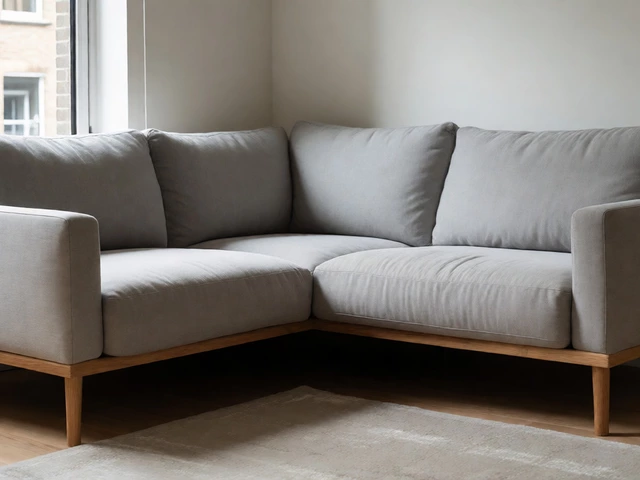
Hold a pure white piece of paper next to your couch cushion in natural light. What does the gray look like against the white?
Visual Preview
Previewing Navy Accent Chair with Cool Gray Sofa
Step 2: Select Recommended Colors
Click a swatch below to see how it pairs with your selected sofa tone.
Recommended Material & Style
Velvet, Leather, or Boucle. Adds depth without shouting.
Colors to Avoid
Warm yellows or oranges can clash with cool bases.
Styling Pro-Tips for Cohesion
Texture Contrast
If your sofa is smooth leather, choose a fuzzy boucle or shaggy sheepskin chair. If your sofa is nubby linen, go for smooth velvet or polished leather.
Shape Balance
Boxy modern sofa? Add a curved accent chair. Traditional rolled arms? Try a geometric wire-frame chair.
Repetition
Don't let the chair sit alone. Add two pillows on the sofa in the same fabric/color as the chair to tie the room together.
You bought the perfect gray couch because it was safe, versatile, and matched everything in your house. Then you stared at that empty corner for three weeks, wondering what on earth to put there. You’re not alone. Gray is the chameleon of the furniture world-it disappears into the background, which is great until you realize your living room looks like a hospital waiting area. The fix isn’t buying another sofa; it’s adding an accent chair that brings the space to life.
Here’s the thing about gray: it has undertones. And those undertones dictate whether your new chair will look intentional or like you grabbed whatever was on sale at the clearance bin. Before you swipe your credit card, we need to talk about why some combinations scream "designer" while others just scream "confused." This guide cuts through the noise to tell you exactly which colors work, which ones clash, and how to pick the right texture so your room doesn't feel flat.
The Undertone Test: Is Your Gray Warm or Cool?
Most people think gray is just gray. It’s not. In Mississauga, where I see a lot of homes with north-facing windows, cool grays are common. But if your living room gets warm afternoon sun, that same fabric might read as beige or taupe. Grab a piece of pure white paper and hold it next to your couch cushion. If the couch looks bluish or greenish against the white, you have a cool gray. If it looks yellowish, brownish, or pinkish, you have a warm gray.
This distinction matters more than the actual color name. Why? Because color theory relies on harmony. Mixing warm and cool tones without a plan creates visual vibration-a subtle discomfort you can’t quite name. Once you know your undertone, choosing an accent chair becomes less about guessing and more about balancing energy.
Top Color Choices for Cool Gray Sofas
If your couch leans blue or slate, you want to complement that crispness. Avoid warm yellows or oranges here; they’ll fight against the cool base and make the room feel disjointed. Instead, lean into other cool tones or high-contrast neutrals.
- Navy Blue: This is the safest, most sophisticated bet. Navy adds depth without shouting. It creates a monochromatic vibe that feels expensive. Pair it with silver or chrome accents in your side tables to keep the theme consistent.
- Emerald Green: Want something bolder? Emerald pops beautifully against slate gray. It’s rich, jewel-toned, and works well in mid-century modern setups. Just ensure the green isn’t too limey; stick to deeper shades.
- Crisp White: High contrast is your friend. A white leather or boucle chair breaks up the monotony of dark gray. It brightens the room instantly. Warning: white shows dirt faster, so consider performance fabrics if you have kids or pets.
- Teal or Turquoise: For a playful twist, teal bridges the gap between blue and green. It energizes a cool gray room without clashing. Use this if you want a coastal or eclectic vibe.
Best Matches for Warm Gray Sofas
Warm grays (often called greige) pair naturally with earth tones. Since these sofas already have a hint of brown or red in them, introducing warm accent chairs creates a cozy, inviting atmosphere. Think autumn leaves, not winter ice.
- Rust or Terracotta: These burnt orange hues are trendy for a reason. They add warmth and personality to a neutral gray base. Rust works exceptionally well with industrial-style metal legs on chairs.
- Mustard Yellow: Yes, really. Mustard adds a retro pop that contrasts nicely with warm gray. It’s cheerful and draws the eye. Keep the rest of the room neutral so the chair remains the star.
- Olive or Sage Green: Unlike emerald, olive has yellow undertones. It harmonizes perfectly with warm gray, creating a grounded, natural look. This combo is ideal for boho or rustic interiors.
- Blush Pink: Soft pinks soften the masculinity often associated with gray. Blush adds a gentle touch without being overwhelming. It’s particularly effective in smaller rooms where heavy colors might shrink the space.
| Gray Undertone | Best Accent Colors | Avoid These Colors | Recommended Material |
|---|---|---|---|
| Cool (Blue/Green) | Navy, Emerald, Teal, Crisp White | Orange, Brown, Beige | Velvet, Leather, Boucle |
| Warm (Brown/Yellow) | Rust, Mustard, Olive, Blush | Purple, Ice Blue, Stark White | Linen, Wool, Suede |
| Neutral (True Gray) | Black, Charcoal, Bright Red | Clashing Neons | Any Texture |
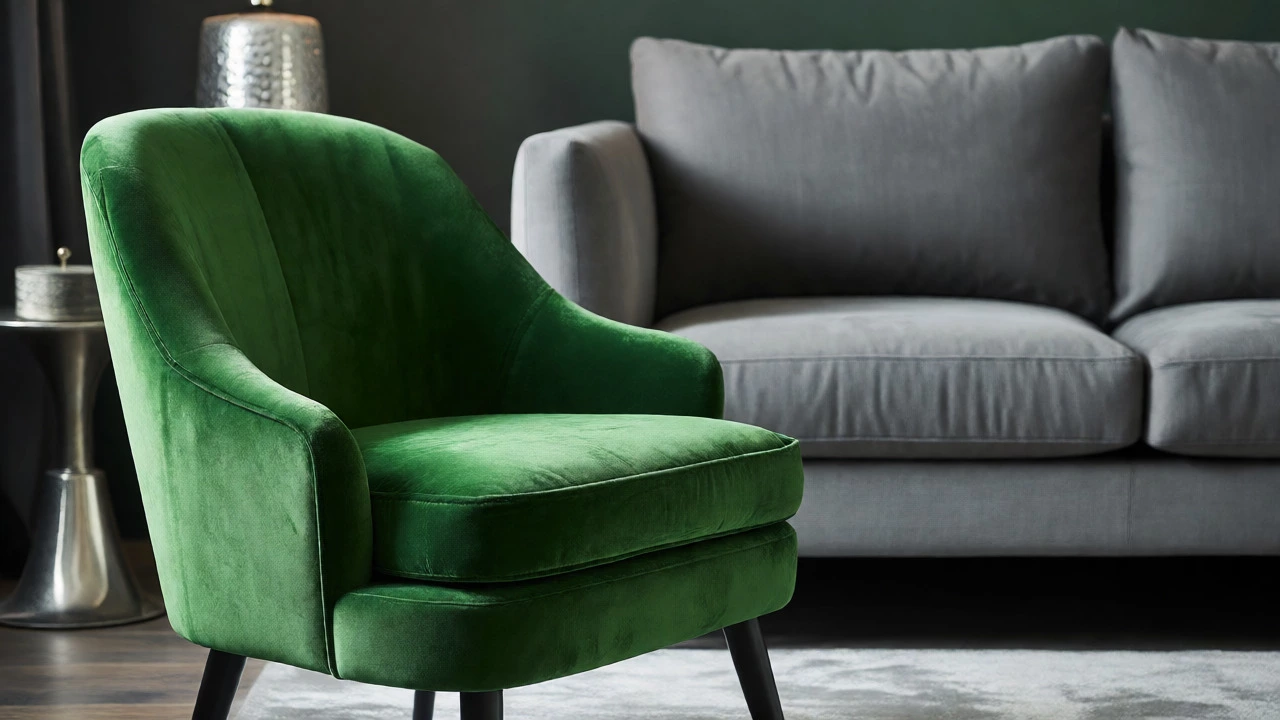
Texture Matters More Than You Think
Color gets all the attention, but texture is what makes a room feel finished. A gray couch is usually smooth-whether it’s microfiber, linen, or leather. If you add a smooth accent chair, the room feels flat. You need contrast.
If your sofa is sleek leather, go for a fuzzy boucle or shaggy sheepskin chair. The tactile difference invites touch and adds layers. Conversely, if your gray couch is nubby tweed or rough linen, choose a smooth velvet or polished leather chair. This interplay keeps the eye moving around the room rather than getting stuck on one surface type.
Don’t forget shape. If your gray couch is boxy and modern, a curved accent chair softens the lines. If your sofa has rolled arms and traditional curves, a geometric wire-frame chair adds contemporary edge. Mixing shapes prevents the room from looking like a showroom set.
Common Mistakes to Avoid
I’ve seen homeowners ruin good spaces by overthinking the color wheel. Here are the traps to sidestep.
1. Matching Too Closely: Buying a chair that is only slightly darker than your couch is boring. It looks like a mistake, not a choice. Aim for distinct contrast in either value (light vs. dark) or hue (color family).
2. Ignoring Lighting: Colors change throughout the day. That navy chair might look black at night and blue during the day. Always check swatches in your home’s actual lighting before buying online. Order samples if possible.
3. Overloading Patterns: If your gray couch has a subtle pattern, keep the chair solid. If both have busy patterns, they compete for attention. One statement piece per zone is enough.
4. Forgetting Scale: An oversized armchair next to a petite loveseat looks unbalanced. Measure your space. The accent chair should fit comfortably without blocking walkways or dwarfing the main seating area.
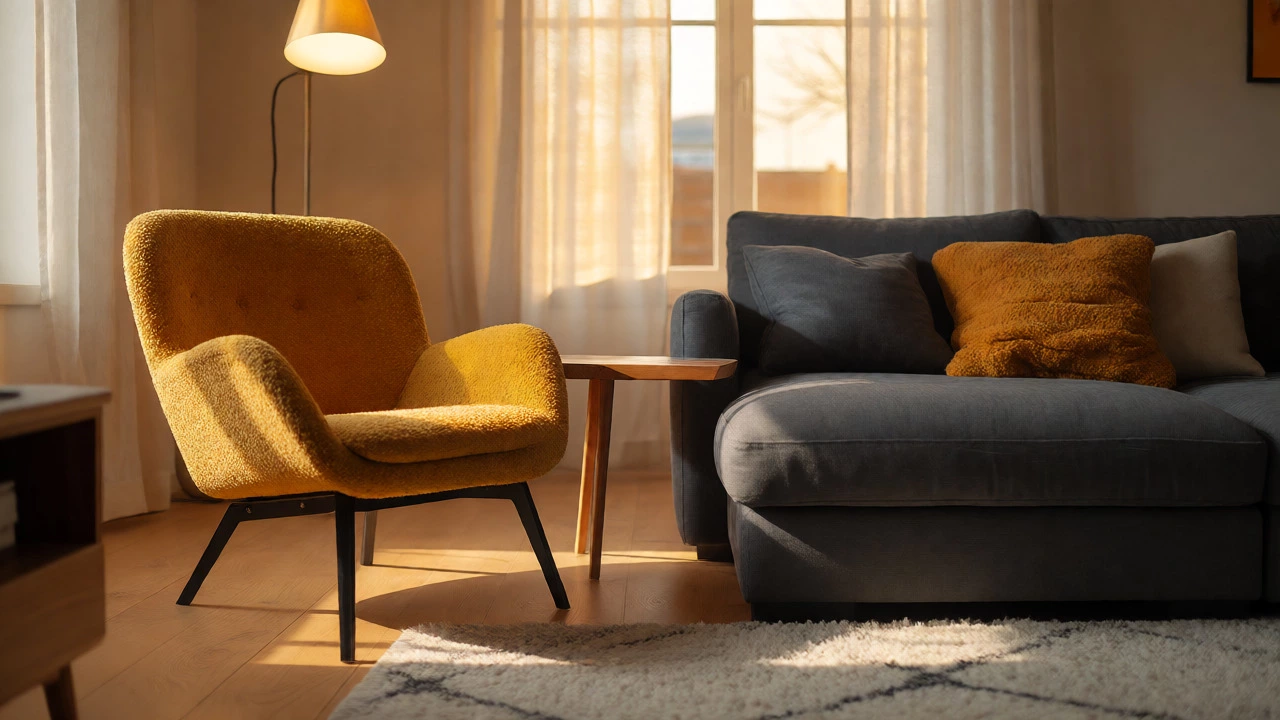
Styling Tips for Cohesion
You picked the chair. Now how do you make it belong? Don’t let it sit alone like an orphan. Pull the accent color elsewhere in the room. Toss two pillows on the gray couch in the same fabric as the chair. Add a rug with hints of that color. Hang art that features the shade. This repetition ties the pieces together visually.
Also, consider placement. Angle the chair toward the conversation area, not directly facing the TV unless that’s its sole purpose. Use a small side table between the couch and chair to create a unified seating group. A floor lamp behind the chair adds height and defines the nook.
Remember, there are no strict rules in design, only guidelines. If you love purple with your warm gray couch, buy it. Design is personal. But understanding why certain combinations work gives you the confidence to break the rules intentionally rather than accidentally.
Frequently Asked Questions
What color accent chair goes best with a light gray couch?
Light gray couches offer flexibility. For a bold look, try deep charcoal, black, or navy to create high contrast. For a softer, airy feel, opt for pastel blues, mint greens, or blush pinks. Avoid pale beiges as they can blend in too much and make the room look washed out.
Can I use a patterned accent chair with a gray couch?
Absolutely. Patterned chairs add interest and hide stains better than solids. Geometric prints work well with modern gray sofas, while floral or abstract designs suit traditional styles. Ensure the pattern includes colors found elsewhere in the room, like in rugs or curtains, to maintain cohesion.
Is a black accent chair too harsh with gray?
Not necessarily. Black provides strong definition and anchors a light gray sofa. However, it can feel cold in large doses. Balance a black chair with warm wood tones, textured throw blankets, or metallic gold/silver accessories to soften the effect and prevent the room from feeling sterile.
How many accent chairs should I have with a gray couch?
One is usually sufficient for a standard living room. Two can work if you have a large sectional or an open-concept space, but avoid symmetry unless you’re going for a formal look. Asymmetry feels more relaxed and conversational. Stick to odd numbers when grouping decor items nearby.
What material is best for a high-traffic home?
Performance velvet, treated linen, or synthetic leather are top choices. They resist stains and wear well. Darker colors or busy patterns also help conceal pet hair and minor spills compared to light solids. Check for abrasion cycle ratings (Martindale test) if durability is a priority.