TV Support Solution Finder
You just unboxed your new television. It’s sleek, it’s light, and it looks amazing... until you realize the box didn’t include a stand. Or maybe your old stand broke, or you simply want to reclaim that floor space. Panic sets in? Not necessarily. A flat-screen TV is a modern display device that often arrives without permanent mounting hardware designed to be versatile. In fact, many manufacturers ship TVs with minimal packaging to reduce shipping costs and environmental impact, leaving the support method up to you.
This isn't a dead end; it's an opportunity to customize your viewing experience. Whether you're looking to save money, improve room aesthetics, or solve a spatial constraint, there are several reliable ways to secure your TV. Let’s walk through the most practical solutions, from the classic wall mount to creative furniture hacks.
The Gold Standard: Wall Mounting
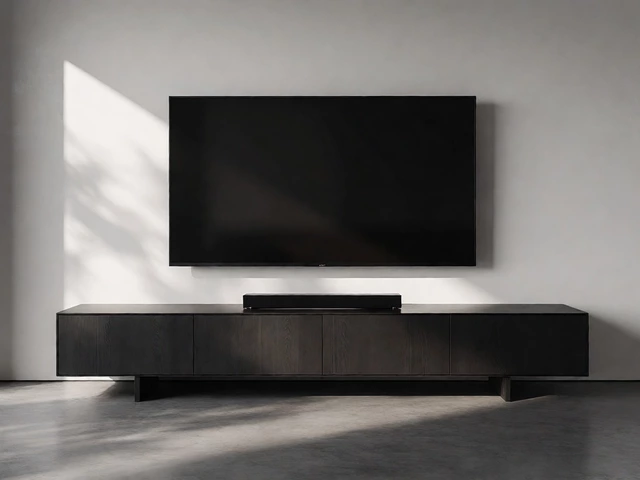
If you want the cleanest look and maximum floor space, wall mounting is the process of attaching a TV directly to a wall using specialized brackets is the way to go. This is the most common solution for people who find themselves without a stand. It transforms your TV into a piece of art rather than a bulky appliance.
But before you grab a drill, you need to understand the anatomy of your TV. Look at the back of the screen. You’ll see four screw holes arranged in a rectangle. This is your VESA pattern. The distance between these holes (measured in millimeters) determines which mount you can buy. Common patterns are 200x200mm, 400x400mm, or 600x400mm. Check your TV’s manual or manufacturer website for this specific number.
There are three main types of mounts:
- Fixed mounts: These hold the TV flush against the wall. They are cheap, sturdy, and great if you have good acoustics and don’t plan to move the TV. However, cleaning behind the TV becomes impossible, and cable management needs to be perfect.
- Tilting mounts: These allow you to angle the TV downward. Ideal for TVs mounted high up, like above a fireplace, to reduce neck strain.
- Full-motion (articulating) mounts: These let you pull the TV out, swivel it side-to-side, and tilt it. Perfect for rooms where you watch from different angles, but they stick out further from the wall, usually by 6-10 inches.
Critical safety note: You must anchor the mount into studs, not just drywall. Drywall anchors might hold a small 32-inch TV, but anything larger requires hitting the wooden or metal studs inside the wall. Use a stud finder to locate them-they are typically spaced 16 or 24 inches apart. If you miss the studs, your TV could fall. It’s not worth the risk.
The Flexible Solution: TV on Existing Furniture
Not everyone wants to drill into their walls. Renters, in particular, often face restrictions on modifying the structure of their homes. In this case, placing your TV on existing furniture is a viable, non-permanent option. But not all surfaces are created equal.
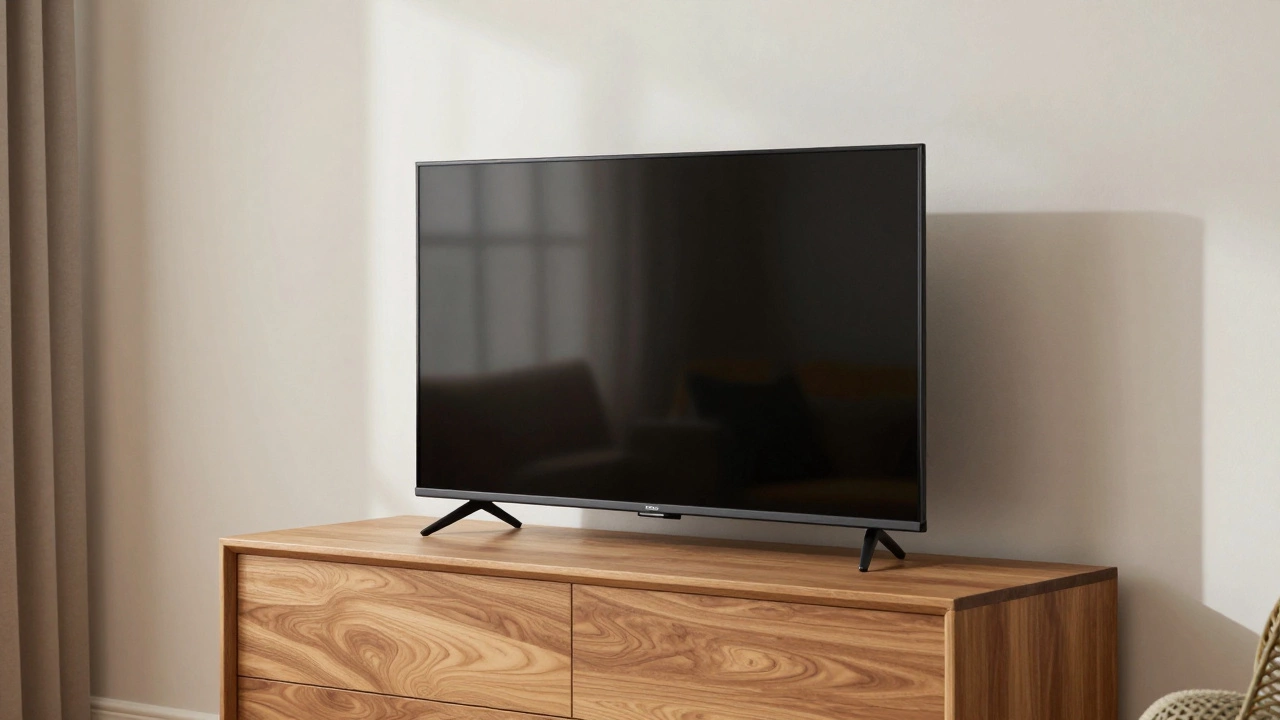
A dresser or chest of drawers is a sturdy piece of bedroom furniture that can serve as a stable base for a television works well because it is usually deep enough and heavy enough to prevent tipping. However, you need to check two things: width and depth. Your TV should sit comfortably within the width of the dresser so it doesn’t overhang dangerously. More importantly, the surface must be level.
If your TV came with no stand, it likely has a flat bottom or those four VESA holes. If it has a flat bottom, you can place it directly on the dresser. If it only has VESA holes, you have a problem. You cannot balance a TV on its screws. Here is where a universal TV tray or adapter plate is a flat metal or plastic board that attaches to the VESA holes to provide a stable surface comes in handy. These inexpensive plates attach to the back of your TV and give you a solid, flat base to rest on any surface.
Beware of glass-top tables or narrow bookshelves. Glass can crack under the concentrated weight of a TV, especially if the TV vibrates slightly during bass-heavy scenes. Narrow shelves increase the risk of tipping. Always ensure the center of gravity is low and centered.
The DIY Approach: Building a Custom Base
If you enjoy woodworking or have access to basic tools, building a custom base gives you total control over height, style, and stability. This is also a cost-effective alternative to buying expensive designer stands.
You can build a simple wooden plinth is a raised platform made of wood that elevates the TV off the ground using plywood or MDF. Measure the width of your TV and add a few inches on each side for stability. Cut a rectangular frame, reinforce the corners with brackets, and finish it with paint or stain to match your room.
For a more industrial look, consider using pipe fittings. Iron pipes and flanges can be assembled into a sturdy tripod or quadropod stand. This is particularly popular for loft-style apartments. The key here is rigidity. Wobbly stands are annoying and dangerous. Use thread-locking adhesive on your pipe connections to prevent them from loosening over time due to vibrations.
Another DIY hack is repurposing a sturdy crate or a large decorative box. If it’s strong enough to hold the TV’s weight (check the weight rating!), it can double as storage for remotes, gaming consoles, or soundbars. Just ensure the top surface is flat and reinforced.
Corner Solutions and Ceiling Mounts
Sometimes, floor space and wall space are both limited. In open-plan living areas, a corner mount is a specialized bracket that allows a TV to be positioned in the corner of a room can be a game-changer. It keeps the TV out of the way while still providing a clear view from multiple seating areas. Corner mounts require precise installation and often need to be anchored into two adjacent walls or a single corner stud assembly.
For extreme cases, such as home theaters or kitchens where counter space is premium, a ceiling mount is a motorized or fixed arm that suspends a TV from the ceiling offers a futuristic solution. These mounts allow the TV to drop down when in use and retract upwards when not needed. Installation is complex and requires professional help to ensure the ceiling joists can support the weight. It’s not a weekend project for beginners.
Safety First: Securing Your Investment
No matter which method you choose, safety is paramount. TVs are expensive and fragile. A falling TV can cause serious injury and damage.
- Anti-tip kits: If you place your TV on a dresser or shelf, always use an anti-tip kit. These are straps or cables that anchor the top of the TV to the wall or the furniture itself. It takes five minutes to install and prevents catastrophic accidents.
- Cable management: Loose cables can pull a TV forward. Use velcro ties or cable clips to bundle wires neatly. If wall-mounted, consider an in-wall cable kit to hide cords safely.
- Weight limits: Never exceed the weight capacity of your mount, furniture, or DIY base. Add a 20% safety margin. If your TV weighs 50 lbs, use a mount rated for at least 60 lbs.
- Childproofing: If you have young children or pets, avoid placing TVs on unstable surfaces. Wall mounts are generally safer as they eliminate the temptation to climb on furniture.
Comparison of TV Support Options
| Method | Cost Estimate | Difficulty | Best For | Risk Level |
|---|---|---|---|---|
| Wall Mount | $20 - $150 | Moderate | Saving space, clean look | Low (if installed correctly) |
| Furniture + Adapter | $10 - $30 | Easy | Renters, flexibility | Medium (requires anti-tip) |
| DIY Wood Base | $30 - $80 | Moderate | Customization, budget | Low (if built sturdily) |
| Ceiling Mount | $100 - $300+ | Hard | Home theaters, kitchens | High (professional install recommended) |
Frequently Asked Questions
Can I put my TV on a regular table?
Yes, but only if the table is sturdy, wide enough, and has a flat surface. Avoid glass-top tables or narrow side tables. Always use an anti-tip strap to secure the TV to the wall or the table itself to prevent it from falling.
How do I know what size mount I need?
Check the VESA pattern on the back of your TV. This is the distance between the four screw holes, measured in millimeters (e.g., 200x200mm). Ensure the mount you buy supports this pattern and the weight of your TV.
Is it safe to mount a TV on drywall without studs?
No, it is not safe for most TVs. Drywall alone cannot support the weight of a modern flat-screen TV. You must anchor the mount into wooden or metal studs. For very small TVs (under 32 inches), heavy-duty drywall anchors might work, but studs are always the preferred method.
What if my TV doesn't have a flat bottom?
If your TV only has VESA holes and no feet, you can buy a universal TV adapter plate. This plate screws into the VESA holes and provides a flat, stable base that allows you to place the TV on any flat surface like a dresser or shelf.
Can I build my own TV stand easily?
Yes, building a simple wooden plinth or using pipe fittings is a manageable DIY project for beginners. Use sturdy materials like plywood or iron pipes, and ensure the base is wider than the TV for stability. Reinforce corners and use thread-locking adhesive for pipe connections.