Simple Wardrobe Finder Tool
Find Your Perfect Simple Wardrobe
Your Recommended Wardrobe
Key Features:
Cost Range:
Based on standard market prices
Why This Works For You:
Quick Reference Guide
| Type | Best For |
|---|---|
| Freestanding | No closets |
| Minimalist | Modern looks |
| Armoire | Durability |
| Portable | Renters |
| Sliding Door | Small rooms |
Measurement Tips
- 📏 Measure width, height & depth
- 🚪 Account for door swing clearance
- 📐 Leave 2-3 inches around unit
- 🔌 Consider outlet locations
- ⚖️ Check floor weight limits
You stand in the middle of your bedroom, staring at a pile of clothes that has somehow grown into a small mountain. You need a place to put them, but you don't want a massive, ornate piece of furniture that dominates the room or costs a fortune. You just want something simple. But when you start searching online, the terminology gets confusing. Is it a "minimalist wardrobe"? A "freestanding unit"? An "armoire"? The names change depending on where you look, who is selling it, and what style you are aiming for.
Finding the right name helps you find the right product. If you know exactly what to search for, you skip the cluttered results and land on the pieces that actually fit your space and budget. This guide breaks down the common names for simple wardrobes, explains the differences between styles, and helps you decide which term-and which piece of furniture-is right for your home.
The Basic Term: Freestanding Wardrobe
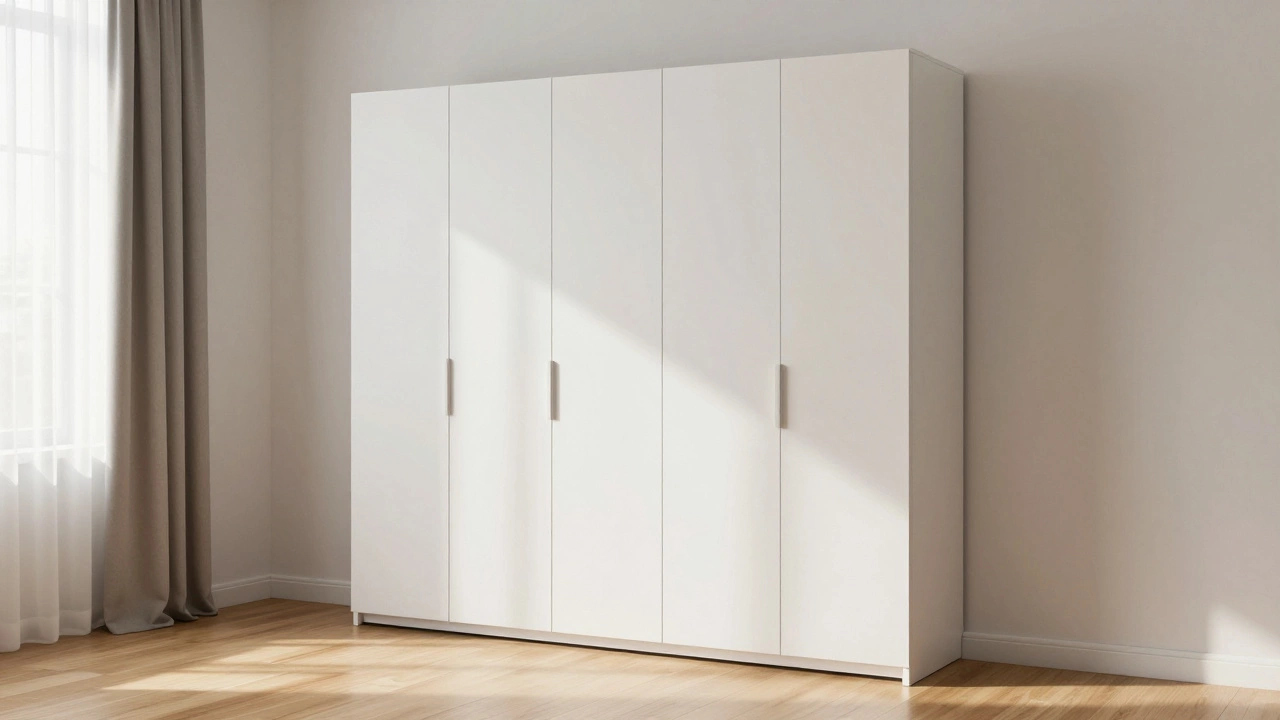
When people ask for a simple wardrobe, they are usually looking for what retailers call a "freestanding wardrobe." This is the most direct, no-nonsense term. Unlike built-in closets, which are part of the house structure, a freestanding wardrobe stands on its own legs or base. It is a self-contained box with doors, shelves, and hanging rails inside.
This term works best if you are renting an apartment or live in a home without dedicated closet space. Many older homes, particularly in Europe and parts of Asia, do not have built-in closets. In these cases, the freestanding wardrobe is the standard solution. It is movable, meaning you can take it with you when you move houses. That portability makes it a practical choice for anyone who values flexibility over permanent fixtures.
The beauty of a freestanding wardrobe is its simplicity. It does not require installation by a carpenter. You typically assemble it yourself using basic tools, plug it into the wall (if it has lighting), and start organizing. There are no complex measurements needed for the walls because the unit defines its own space.
Minimalist Wardrobe: Style Over Structure
If you are looking for a specific aesthetic rather than just a functional box, the term "minimalist wardrobe" comes up often. However, this refers more to the design language than the physical construction. A minimalist wardrobe features clean lines, hidden hardware, and neutral colors. Think flat-panel doors without knobs, or handles that are integrated into the wood grain.
This style appeals to those who want their storage to disappear visually. The goal is to reduce visual noise in the room. Instead of a bulky piece of furniture with decorative carvings or glass panels, you get a sleek rectangle that blends into the wall color. Brands like IKEA and Muji popularized this approach, making simple, affordable options widely available.
When shopping for a minimalist wardrobe, look for terms like "slab door," "handle-less," or "matte finish." These keywords help you filter out traditional styles that might feel too heavy or dated for a modern, simple setup. Remember, minimalism here is about restraint. The fewer details on the outside, the simpler the piece feels.
Armoire vs. Wardrobe: What’s the Difference?
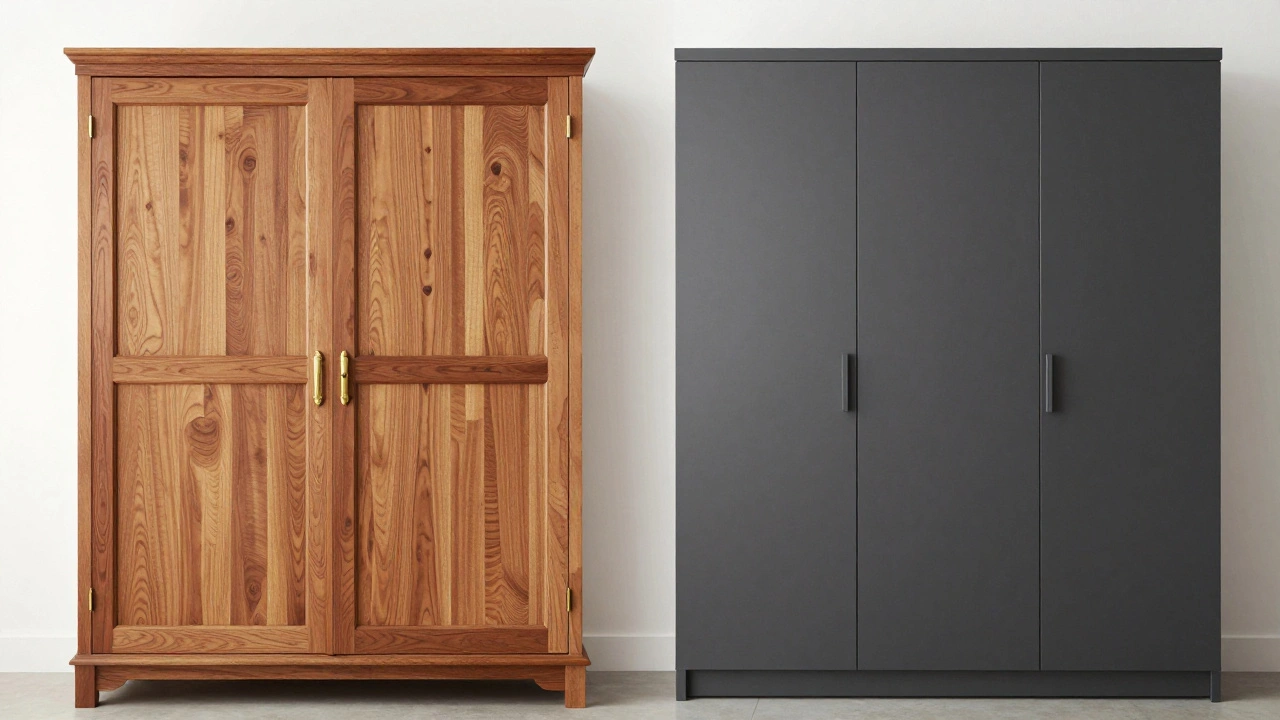
You might see the word "armoire" used interchangeably with wardrobe, but there is a historical distinction. An armoire traditionally refers to a large, freestanding cupboard used for storing clothes, often featuring intricate woodwork, carved details, and sometimes even mirrors. It originated in France and was associated with luxury and craftsmanship.
Today, however, the lines have blurred. Many manufacturers use "armoire" to market higher-end wooden wardrobes. If you see a simple, unadorned metal or particleboard unit, calling it an armoire would be inaccurate. But if you are looking for a solid wood piece with a bit of character, yet still relatively simple in layout, "armoire" might be the right keyword.
The key difference lies in the material and the vibe. A standard wardrobe can be made from MDF, laminate, or metal. An armoire implies solid wood and a more substantial presence. If you want simplicity but also durability and a timeless look, browsing under "wooden armoire" might yield better results than "plastic wardrobe."
Closet Organizers and Portable Units
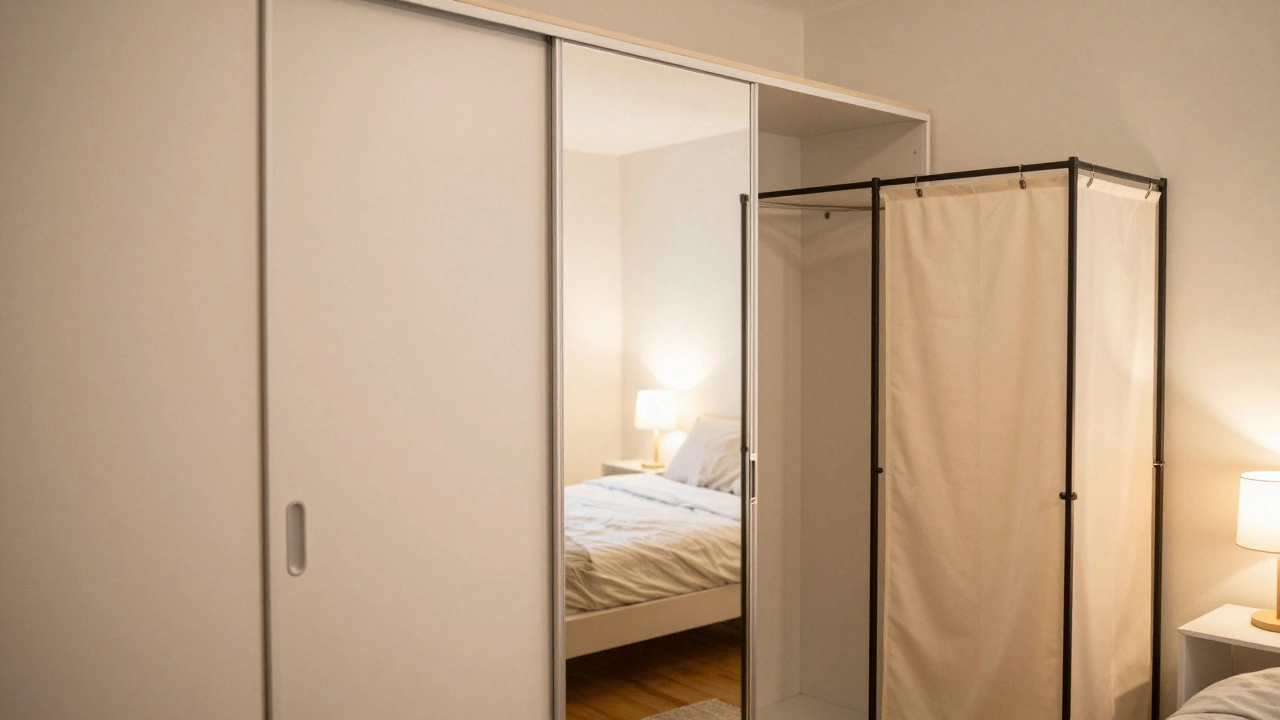
For renters or students who cannot commit to buying a large piece of furniture, the term "closet organizer" or "portable wardrobe" is essential. These are not traditional wardrobes with solid doors. Instead, they consist of metal frames covered by fabric sleeves. They fold flat for storage and pop up quickly.
These units are incredibly popular for temporary housing situations. They are lightweight, cheap, and easy to assemble. While they lack the sturdiness of a wooden wardrobe, they offer a surprisingly effective way to keep clothes off the floor. If your definition of "simple" includes "easy to move" and "low cost," then a portable wardrobe is likely what you need.
Look for models with reinforced poles and zippers that run smoothly. Fabric quality matters here because thin plastic-like fabrics can tear easily. A good portable wardrobe should feel stable enough to hang heavy winter coats without wobbling.
Sliding Door Wardrobes: Space-Saving Simplicity
Another variation worth knowing is the "sliding door wardrobe." In smaller rooms, swinging open a heavy wardrobe door can block pathways or hit other furniture. Sliding doors solve this problem by moving horizontally along a track. This mechanism adds a layer of complexity to the hardware but simplifies the daily use of the space.
Sliding door wardrobes often come with mirrored panels, which serve a dual purpose: they provide a full-length mirror and make the room feel larger by reflecting light. For a simple aesthetic, choose plain sliding doors rather than ones with complex patterns. The smooth operation of the tracks is crucial; cheap mechanisms can jam over time, turning a simple solution into a frustrating one.
| Type | Best For | Material | Cost Range |
|---|---|---|---|
| Freestanding Wardrobe | Homes without closets | MDF, Wood, Metal | $100 - $500 |
| Minimalist Wardrobe | Modern aesthetics | Laminate, Matte Finish | $150 - $600 |
| Armoire | Durability & Tradition | Solid Wood | $300 - $1,000+ |
| Portable Wardrobe | Renters & Students | Metal Frame, Fabric | $30 - $100 |
| Sliding Door Wardrobe | Small Rooms | Glass, Mirror, Wood | $200 - $800 |
Choosing the Right Size and Shape
Once you know the name, the next step is ensuring it fits. A simple wardrobe should not overwhelm the room. Measure your available space carefully, including width, height, and depth. Don't forget to account for door swing clearance if you choose hinged doors. A common mistake is buying a wardrobe that is too deep, forcing you to push other furniture against the wall awkwardly.
Consider the internal layout as well. A truly simple wardrobe has few adjustable shelves and plenty of hanging space. Shelves collect dust and limit flexibility. Hanging rods allow you to see all your clothes at once, reducing the chance of forgetting items in the back. Look for units with double hanging rods for shorter items like shirts and pants, maximizing vertical space.
Where to Buy and What to Avoid
Major furniture retailers like IKEA, Wayfair, and Amazon carry a wide range of simple wardrobes. Local hardware stores often have basic models too. When shopping, avoid units with excessive decorative molding if you want simplicity. Also, check reviews for assembly difficulty. Some "simple" wardrobes have complicated instructions that lead to frustration.
Quality hinges and drawer slides are non-negotiable. Even a simple design falls apart if the hardware fails. Test the drawers and doors if possible. Smooth operation indicates better build quality. For online purchases, read customer photos to see how the color looks in real lighting, as website images can be misleading.
Maintenance and Longevity
A simple wardrobe requires minimal maintenance. Dust the top regularly to prevent buildup. Check screws and bolts every six months to ensure they haven't loosened during assembly or use. For wooden wardrobes, occasional polishing keeps the finish looking fresh. Fabric wardrobes may need spot cleaning if stains occur.
Investing in a slightly more expensive unit with better materials can save money in the long run. Cheap particleboard can swell with humidity and break easily. Solid wood or high-quality laminates withstand daily wear and tear better. If you plan to stay in your home for several years, prioritize durability over the lowest price tag.
What is the cheapest type of simple wardrobe?
The cheapest option is usually a portable fabric wardrobe. These cost between $30 and $100 and are ideal for temporary use. However, they lack the durability and aesthetic appeal of wooden or metal freestanding wardrobes.
Is an armoire different from a wardrobe?
Historically, yes. An armoire is a large, often ornate wooden cupboard, while a wardrobe is a general term for clothing storage. Today, the terms are often used interchangeably, but "armoire" usually implies higher quality wood and a more traditional design.
Can I install a simple wardrobe myself?
Yes, most freestanding and minimalist wardrobes are designed for DIY assembly. They come with instructions and necessary hardware. Ensure you have basic tools like a screwdriver and an Allen key. Assembly typically takes 1-2 hours.
What size wardrobe fits in a small bedroom?
For small bedrooms, look for narrow wardrobes around 30-36 inches wide. Sliding door models are excellent for saving space since they don't require clearance for opening doors. Tall, slim designs maximize vertical storage without taking up much floor space.
Are minimalist wardrobes hard to clean?
No, minimalist wardrobes are often easier to clean due to their flat surfaces and lack of intricate carvings. A damp cloth is usually sufficient for wiping down laminate or painted finishes. Handle-less designs eliminate crevices where dust can accumulate.