Coffee Table Tray Visualizer
Design Analysis
Calculating margins...
Picture this: you’ve just bought a beautiful, sleek round coffee table is a circular low table placed in front of seating areas to hold drinks, books, and decorative items. It’s the centerpiece of your living room. Now, you’re looking at a matching round tray to place on top. Does it look intentional? Or does it look like two dinner plates stacked on each other?
This is one of those interior design dilemmas that seems simple but trips up even seasoned decorators. The short answer is: it depends. A round tray on a round coffee table can be stunning if done right, but it can also feel monotonous or cluttered if you ignore contrast and scale. Let’s break down why this combination works (or doesn’t) and how to make it work for your space.
The Geometry Problem: Why Circles Can Feel Flat
In design, we often talk about visual interest. Shapes create rhythm. When you put a circle inside a larger circle, you’re creating concentric rings. Think of a target or a ripple in water. On its own, that’s hypnotic. But in a living room, where you have sofas, rugs, and walls framing the space, concentric circles can sometimes feel static. They don’t guide the eye anywhere; they just sit there.
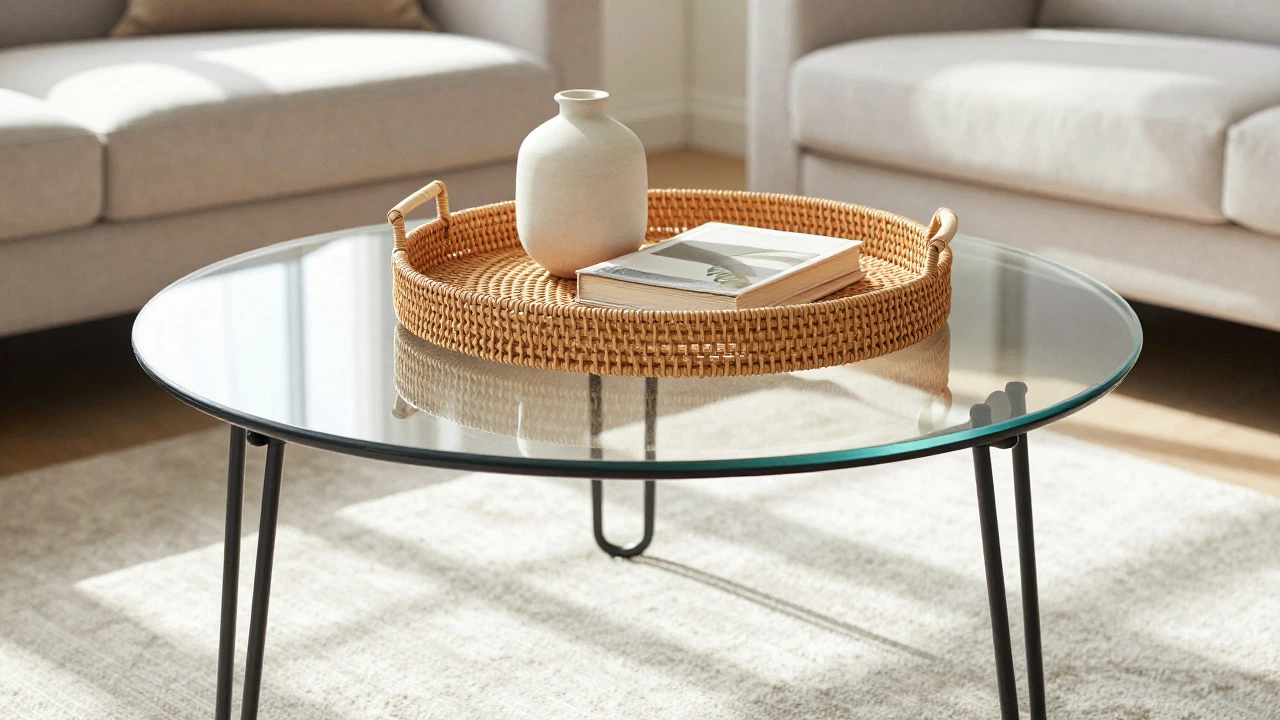
However, geometry isn’t a rulebook-it’s a toolkit. If your round coffee table has strong vertical lines, like tall hairpin legs or a chunky wooden base, a round tray can soften the look without competing. The key is breaking up the monotony with texture and material. A smooth glass table needs a textured tray. A matte wood table might need a metallic or woven tray. Without these contrasts, the two circles blend into a single, boring shape.
When a Round Tray Actually Works
There are specific scenarios where a round tray on a round table is not just acceptable, but ideal. Here’s when you should go for it:
- Small Tables: If your coffee table is under 36 inches in diameter, a square or rectangular tray will likely overhang the edges, looking awkward. A smaller round tray fits naturally within the boundary.
- Minimalist Aesthetics: In Scandinavian or Japandi styles, simplicity is king. A low-profile round tray holding a single vase or a stack of art books reinforces the clean, uncluttered vibe.
- Textural Contrast: If your table is smooth marble or polished metal, a round tray made of seagrass, rattan, or distressed wood adds necessary warmth and tactile interest.
- Functional Grouping: If you use the tray strictly for functional grouping-like holding coasters, candles, and remote controls-a round shape keeps everything contained and accessible from all sides.
Remember, the goal is cohesion, not competition. The tray should complement the table, not fight for attention.
Why Square or Rectangular Trays Often Win
If you want to add visual depth to your coffee table, consider breaking the circle. Placing a square or rectangular tray on a round table creates a dynamic tension between shapes. This contrast draws the eye and makes the arrangement feel more curated and intentional.
Think about it like fashion. Wearing a round necklace with a round-neck shirt can look repetitive. Adding angular earrings or a structured bag breaks up the silhouette. Similarly, a rectangular tray on a round table anchors the space. It provides straight lines that counterbalance the soft curves of the table and surrounding furniture.
This approach is particularly effective in modern or industrial spaces where hard lines are common. A black metal rectangular tray on a light oak round table creates a striking graphic effect. It also offers more practical surface area for arranging items in rows or columns, which can look neater than radial arrangements.
| Tray Shape | Visual Impact | Best For | Potential Pitfall |
|---|---|---|---|
| Round | Soft, cohesive, minimalist | Small tables, textured materials | Can look flat or repetitive |
| Square | Balanced, geometric contrast | Modern styles, medium tables | Corners may hang off edge if too large |
| Rectangular | Dramatic, anchored, structured | Large tables, eclectic mixes | Can dominate small surfaces |
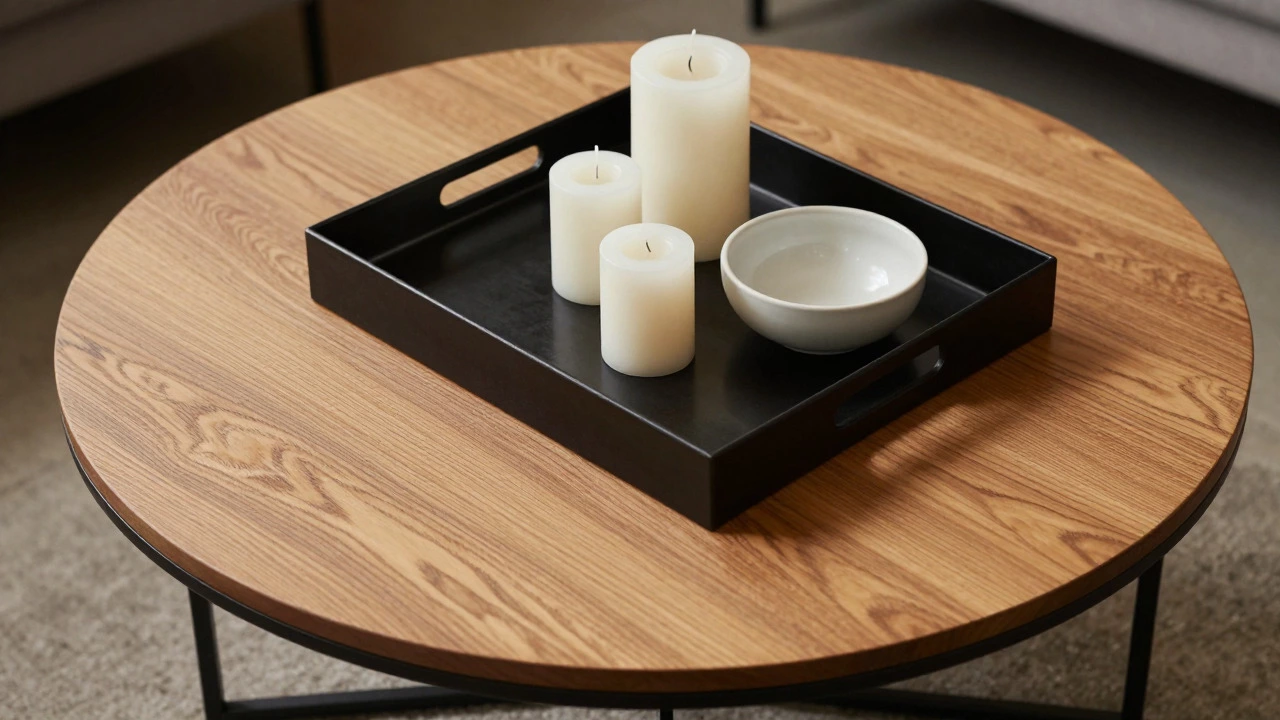
Scale and Proportion: The Golden Rules
No matter what shape you choose, size matters immensely. A common mistake is picking a tray that’s either too big or too small for the table.
Here’s a simple rule of thumb: your tray should leave at least 2-4 inches of table surface visible around the edges. This "breathing room" prevents the setup from feeling cramped. If your table is 40 inches wide, aim for a tray between 28 and 36 inches. Anything larger will overwhelm the space; anything smaller will get lost.
Also, consider the height. Low-profile trays (under 1 inch high) keep the focus on the items displayed. Higher-rimmed trays are better for containing clutter but can block sightlines. For a round table, a low round tray allows you to see across the surface, maintaining an open feel.
Styling Your Tray: Beyond the Shape
Once you’ve decided on the shape, how you style the tray determines whether the look succeeds. Whether you choose round or rectangular, follow these principles:
- Odd Numbers Rule: Arrange items in groups of three or five. A trio of candles, a vase, and a book looks more natural than symmetrical pairs.
- Vary Heights: Mix tall items (vases, stacks of books) with short ones (bowls, candles). This creates vertical interest and prevents the display from looking flat.
- Mix Materials: Combine wood, metal, glass, and fabric. A ceramic bowl on a wooden tray on a glass table creates layers of texture.
- Leave Negative Space: Don’t fill every inch. Empty space gives the eye a place to rest and makes the arranged items stand out.
For a round tray, try a central focal point (like a large vase) surrounded by smaller items radiating outward. For a rectangular tray, arrange items along the length, perhaps clustering them at one end for an asymmetrical, modern look.
Material Matters: Creating Contrast
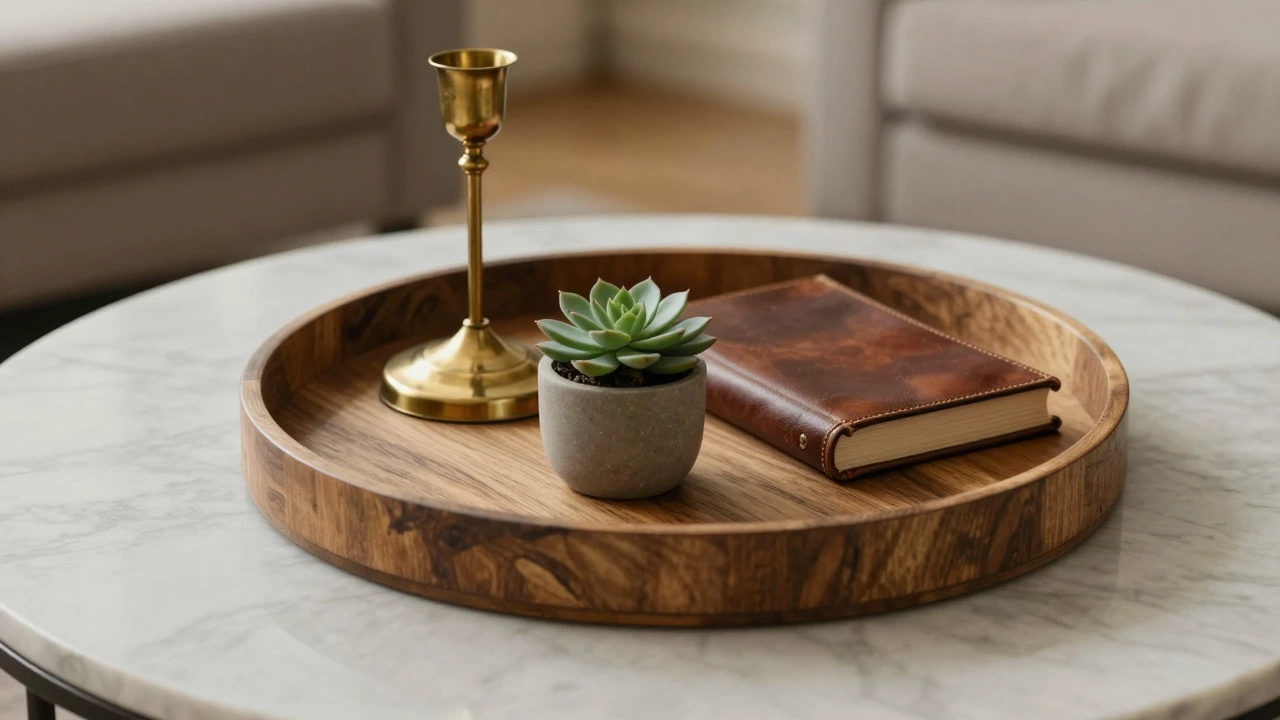
The material of your tray plays a huge role in how it interacts with your table. If both are made of the same material-say, dark walnut wood-they’ll blend together, reinforcing the concentric circle effect. To avoid this, mix materials.
If your table is glossy black lacquer, a matte white ceramic tray or a natural jute tray creates instant contrast. If your table is rustic reclaimed wood, a sleek brass or mirrored tray adds sophistication. The goal is to ensure the tray is visually distinct from the table surface so it reads as a separate layer, not just an extension of the table.
Consider the season too. Lighter woods and wicker trays feel fresh in spring and summer. Dark metals and rich woods ground the space in fall and winter. Swapping trays seasonally is an easy way to refresh your living room without buying new furniture.
Common Mistakes to Avoid
Even with the best intentions, some styling choices can backfire. Watch out for these pitfalls:
- Ignoring the Rug: If your rug is round and your table is round, adding a round tray creates too many circles. Break it up with a rectangular tray or angular decor items.
- Overcrowding: Piling too many items on a small tray makes it look messy. Edit ruthlessly. Less is often more.
- Matching Too Perfectly: Avoid sets where the tray matches the table exactly in color and finish. Aim for complementary, not identical.
- Neglecting Functionality: Don’t sacrifice usability for aesthetics. If you drink coffee at your table, ensure the tray has enough space for mugs and coasters.
Final Thoughts: Trust Your Eye
Design rules are guidelines, not laws. If you love the look of a round tray on your round table, go for it. Live with it for a week. See how it feels in the morning light versus evening lamp glow. Adjust as needed. Interior design is personal. Your home should reflect your taste, not just textbook principles.
Experiment with different shapes, sizes, and materials. Move things around. Take photos to see how the arrangement looks from different angles. You might find that a round tray works perfectly with your specific table and decor, or you might discover that a rectangular tray transforms the space entirely. The beauty of styling is in the trial and error.
What size tray should I use on a 40-inch round coffee table?
Aim for a tray between 28 and 36 inches in diameter (if round) or length (if rectangular). This leaves 2-4 inches of table surface visible around the edges, preventing a cramped look.
Is it bad to have a round tray on a round coffee table?
Not necessarily. It can look harmonious if you use contrasting textures and materials. However, it can appear flat if both pieces share the same finish and lack visual distinction.
What is the best shape for a coffee table tray?
It depends on your table and style. Rectangular trays offer dramatic contrast on round tables, while round trays provide a soft, minimalist look. Square trays offer a balanced middle ground.
How do I style a round coffee table without a tray?
You can group items directly on the table using odd numbers and varying heights. Place a large vase centrally, flanked by books and candles. Ensure items are spaced evenly to maintain balance.
Can I use multiple trays on one coffee table?
Yes, but keep it simple. Use two trays of different shapes or materials, placed asymmetrically. Avoid overcrowding; ensure each tray has its own defined space.