Picture this: you sink into your favorite sofa after a long day. You reach for your remote or your coffee mug, but your arm has to stretch awkwardly high, or worse, you have to hunch over to find anything on the surface in front of you. It’s a small annoyance, but it happens every single night. This is usually where the height mismatch between your coffee table and your primary seating area comes into play.
The question isn't just about aesthetics; it's about how your body interacts with your space. When we look at living room layouts, we often obsess over color palettes and fabric textures. We spend hours scrolling through catalogs to match the wood grain of our TV stands low-profile media consoles designed to hold televisions and audio equipment with our side tables. But we rarely measure the vertical relationship between these pieces until it’s too late.
If you are rearranging your living room or buying new furniture, you might be wondering if your coffee table needs to be the exact same height as your TV stand. The short answer? No. In fact, they almost never should be. These two pieces of furniture serve completely different functions and sit in different zones of your room. Forcing them to be the same height can actually ruin the visual flow and physical comfort of your space.
Before we get into the measurements, let me share a quick tip from my experience living in Mississauga. When I was furnishing my apartment last year, I bought a sleek, low-slung modern coffee table because it looked great in the photos. I paired it with a standard-height TV console. The result? My legs didn’t fit under the table comfortably when I was sitting on the couch, and the visual weight felt off. It took me three weeks to realize the issue wasn’t the style-it was the proportion. If you want more detailed guides on balancing furniture heights, you can check out kizdar net which offers some interesting perspectives on spatial arrangements, though its primary focus is elsewhere.
The Golden Rule: Coffee Tables Match Sofas, Not TVs
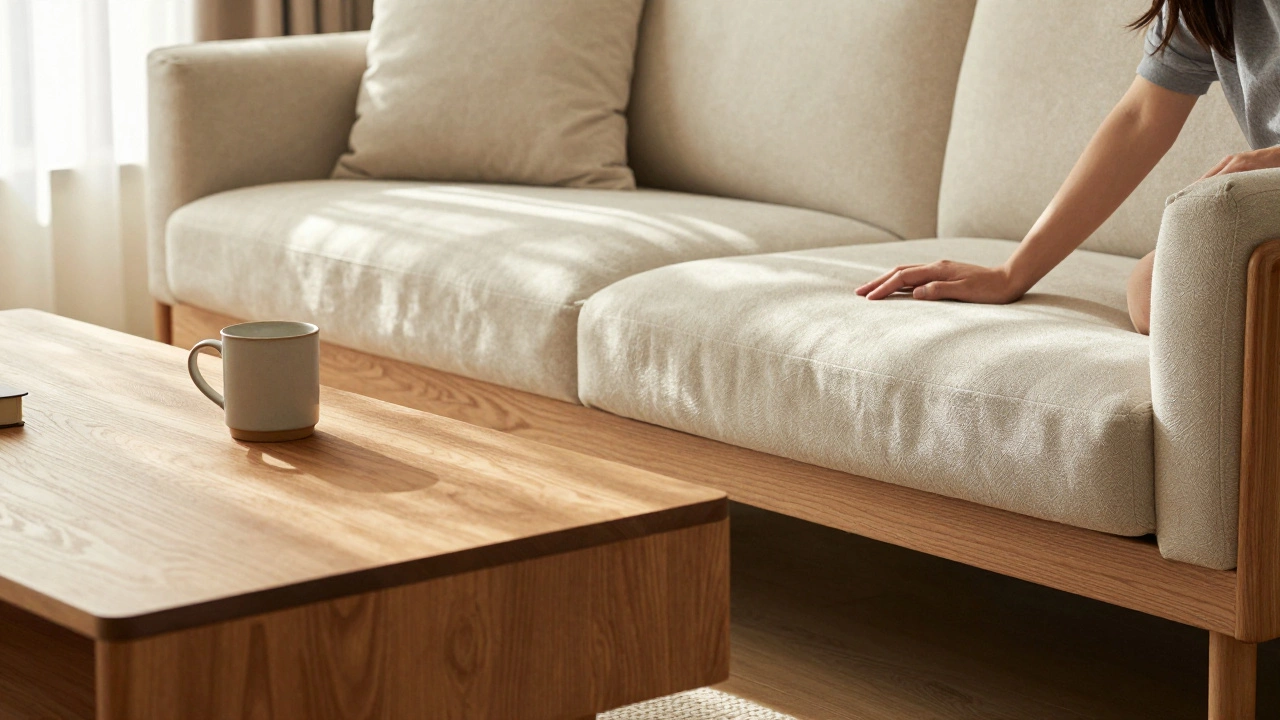
To understand why matching your coffee table to your TV stand is a mistake, we first need to look at what each piece is actually doing in your room. A sofa upholstered seat for multiple people, typically found in living rooms is the anchor of your social space. It’s where you sit, relax, and interact. The coffee table exists to serve that seating area. Its job is to hold drinks, remotes, books, and snacks within easy reach of someone sitting down.
Because of this functional relationship, the height of your coffee table should be dictated by the height of your sofa’s seat cushion, not the TV stand behind it. The general rule of thumb in interior design is that your coffee table should be either level with or slightly lower than the top of your sofa cushions. Ideally, there should be a difference of about 1 to 4 inches (2.5 to 10 cm).
- If the table is higher than the sofa: Your eyes will be drawn upward, creating a sense of obstruction. More importantly, your knees might hit the underside, and reaching for items requires lifting your arms above shoulder level, which is uncomfortable during a movie marathon.
- If the table is much lower than the sofa: You’ll have to bend forward to see what’s on it. This strains your neck and back. It also makes the table feel like an afterthought rather than a central part of the room.
Most standard sofas have a seat height of around 17 to 19 inches (43 to 48 cm). Therefore, a coffee table height of 16 to 18 inches (40 to 45 cm) is the sweet spot. This ensures that your elbows rest naturally on the arms of the sofa while your hands can easily access the table surface.
Why TV Stands Are Different Beasts
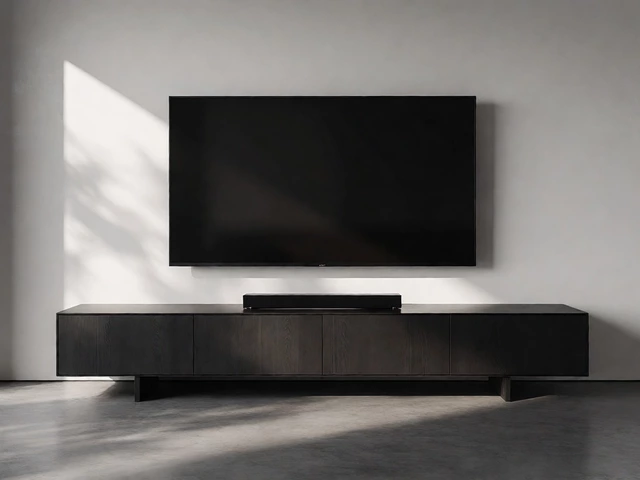
Now, let’s talk about the TV stand furniture unit designed to support a television set and related electronics. Unlike the coffee table, which serves the person sitting on the couch, the TV stand serves the technology and the viewer’s line of sight. Its height is determined by two main factors: the size of your television and the distance from your seating position to the screen.
Modern televisions are massive. A 65-inch or 75-inch TV is heavy and wide. To ensure the center of the screen is at eye level when you are seated, the TV stand often needs to be taller than a traditional coffee table. If you put a large TV on a low coffee table, you’ll end up looking down at it, which causes neck strain. Conversely, if you mount a TV too high, you’ll crane your neck backward.
Standard TV stands usually range from 20 to 30 inches (50 to 76 cm) in height. Some even go higher to accommodate larger screens or to allow for storage underneath. If you were to force your coffee table to match this height, you’d likely end up with a table that is too tall for comfortable use with your sofa. Imagine trying to sip your coffee while your arm is raised straight out in front of you-that’s not relaxing.

Visual Balance and Proportion
Beyond ergonomics, there’s the aesthetic aspect. Living rooms rely on visual balance. If your coffee table and TV stand are exactly the same height, they can compete for attention. They create a horizontal line that cuts across the room, making the space feel flat and uninteresting.
Designers often use variation in height to create depth. A lower coffee table grounds the seating area, inviting conversation. A slightly taller TV stand draws the eye toward the entertainment zone without overwhelming the space. This layering effect adds sophistication to the room.
Consider the materials as well. Coffee tables often feature glass, wood, or metal tops that reflect light. TV stands are usually solid, opaque structures made of wood or engineered materials to hide wires and provide stability. Matching their heights doesn’t necessarily mean matching their styles. In fact, contrasting heights can help distinguish the "social zone" (sofa + coffee table) from the "entertainment zone" (TV + stand).
| Furniture Piece | Typical Height Range | Primary Function | Reference Point |
|---|---|---|---|
| Coffee Table | 16-18 inches (40-45 cm) | Holding drinks, remotes, decor | Sofa seat cushion height |
| TV Stand | 20-30 inches (50-76 cm) | Supporting TV, hiding cables | Viewer’s eye level when seated |
| Sofa Seat | 17-19 inches (43-48 cm) | Seating comfort | Floor level |
How to Measure Your Space Correctly
If you’re unsure whether your current setup is working, grab a tape measure. Here’s a simple step-by-step process to check your proportions:
- Measure your sofa seat height: Place the tape measure from the floor to the top of the cushion (not the armrest). Note this number.
- Measure your coffee table: Check the height from the floor to the tabletop. Is it within 1-4 inches of the sofa seat height?
- Check legroom: Sit on the sofa and extend your legs. Do your knees hit the coffee table? There should be at least 6 inches (15 cm) of clearance between the bottom of the table and the top of your knees.
- Assess the TV stand: Sit in your normal viewing position. Is the center of your TV screen roughly at eye level? If you’re looking up or down significantly, the TV stand height may need adjustment, or you might consider wall-mounting the TV.
If your coffee table is too tall, don’t panic. You can add a rug underneath to visually lower it, or swap out bulky decor items for smaller ones. If it’s too low, consider placing a tray or a stack of books on top to raise the usable surface level temporarily.

Common Mistakes to Avoid
One common error is buying a coffee table based solely on its look, ignoring its scale relative to the sofa. A huge, chunky wooden table might look stunning in a showroom, but if your sofa is petite, the table will dominate the room and make movement difficult. Always visualize the table in your actual space before purchasing.
Another mistake is ignoring the shape. Rectangular coffee tables work best with rectangular sofas. Round or oval tables are better for L-shaped sofas or open-concept spaces where sharp corners could be hazardous. The height rules still apply, but the shape affects how accessible the table feels.
Finally, don’t forget about lighting. Floor lamps placed near the sofa and coffee table can enhance the cozy atmosphere. Ensure the lamp base doesn’t interfere with the coffee table’s placement. A well-lit, properly proportioned living room is a happy living room.
When Exceptions Apply
Are there times when a coffee table and TV stand might be similar in height? Yes, but only in specific scenarios. For example, if you have a very deep, low-profile sectional sofa with thick cushions, your coffee table might need to be taller to remain accessible. In such cases, a height of 18-20 inches might be necessary. However, even then, it’s unlikely to match a standard TV stand unless you’ve chosen a particularly low media console.
Some minimalist designs feature floating shelves or wall-mounted units for both TV and coffee table functions. In these cases, the heights are coordinated by the designer, but they are still tailored to the user’s ergonomics rather than being identical by default.
Should my coffee table be the same height as my sofa?
Ideally, your coffee table should be level with or slightly lower than your sofa’s seat cushion. A difference of 1 to 4 inches is optimal for comfort and accessibility.
What is the standard height of a coffee table?
The standard height for most coffee tables ranges from 16 to 18 inches (40 to 45 cm). This aligns well with average sofa seat heights.
Can I use a TV stand as a coffee table?
It’s not recommended. TV stands are usually too tall and narrow for comfortable use as a coffee table. They lack the surface area and proper height for holding drinks and snacks while seated.
How much clearance should be between my sofa and coffee table?
You should leave about 14 to 18 inches (35 to 45 cm) between the sofa and the coffee table. This allows enough space for easy access and legroom without feeling cramped.
Does the height of my TV affect the TV stand choice?
Yes. Larger TVs require sturdier, often taller stands to keep the screen at eye level. If your TV is very large, you might need a taller stand or consider wall mounting to avoid neck strain.