Coffee Table Size Calculator
Calculate the perfect round coffee table size for your living room based on your sofa dimensions and room layout.
Choosing the right size round coffee table isn’t just about looks-it’s about function, flow, and comfort. Too small, and it gets lost. Too big, and you’re tripping over it every time you get up. So what’s the sweet spot? Let’s cut through the noise and give you real numbers, real examples, and real advice based on how people actually live in their living rooms.
Start with your sofa
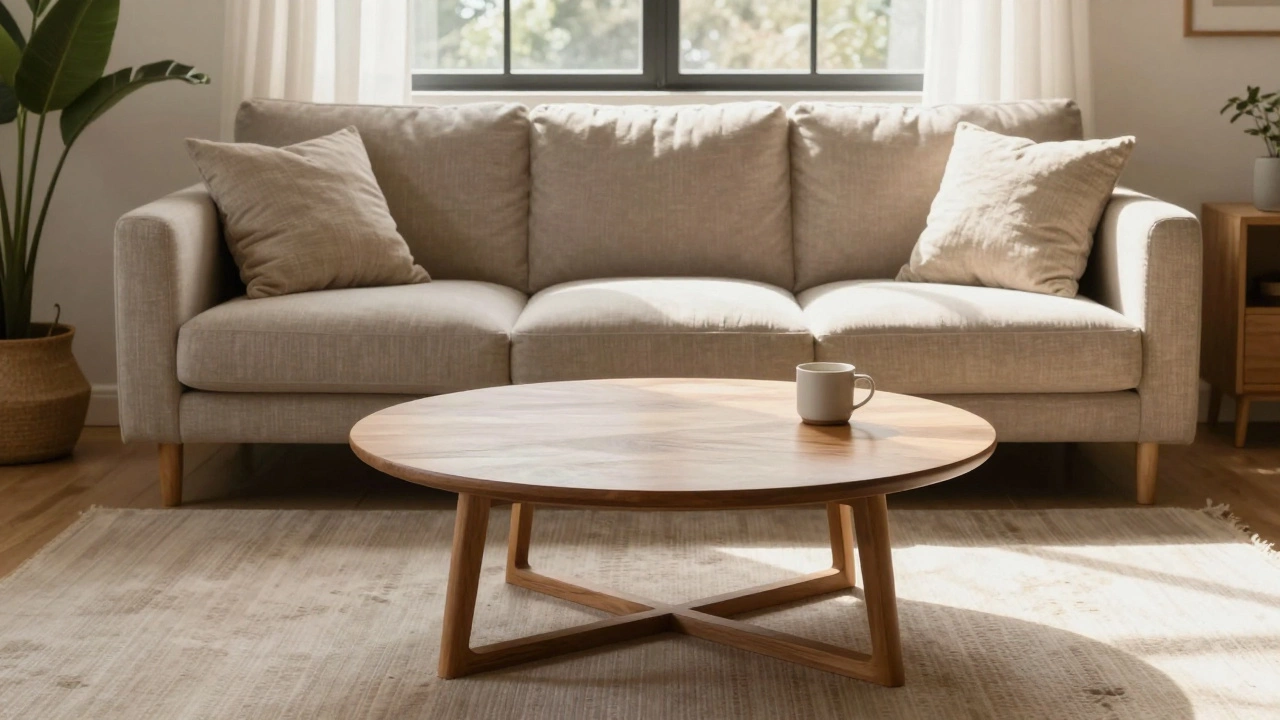
The size of your sofa is the single biggest factor in picking a round coffee table. Most experts recommend the table should be about two-thirds the length of your sofa. That’s not a rule carved in stone, but it’s a solid starting point. If your sofa is 84 inches long, aim for a table around 56 inches in diameter. That leaves enough room to walk around, reach for a drink, and still feel like the table belongs there.But here’s where people get it wrong: they measure the sofa’s total length, then pick a table that’s exactly two-thirds. That doesn’t account for the arms. A sofa with wide, plush arms needs more breathing room. If your sofa has arms that stick out more than 4 inches, add 6 to 8 inches to the table’s diameter. For example, if your sofa is 72 inches long with 5-inch arms, go with a 60-inch table instead of 48. You’ll thank yourself when you’re not constantly bumping elbows with your coffee mug.
Clearance is everything
You need space to move. Not just around the table, but between the table and the sofa. The golden rule? Leave at least 18 inches between the edge of your sofa and the edge of the coffee table. That’s the minimum for comfortable legroom. If you have kids, pets, or people who like to stretch out, aim for 20 to 24 inches. I’ve seen too many living rooms where the table is shoved right up against the couch-people can’t get their feet under the sofa without knocking over a vase. It’s not stylish. It’s just inconvenient.Round tables help here. Unlike rectangular ones, they don’t have sharp corners to catch on pants or trip over. A 48-inch round table with 20 inches of clearance means you’ve got a full 4 feet of walking space all the way around. That’s enough for two people to walk past each other without turning sideways.
Room size matters more than you think
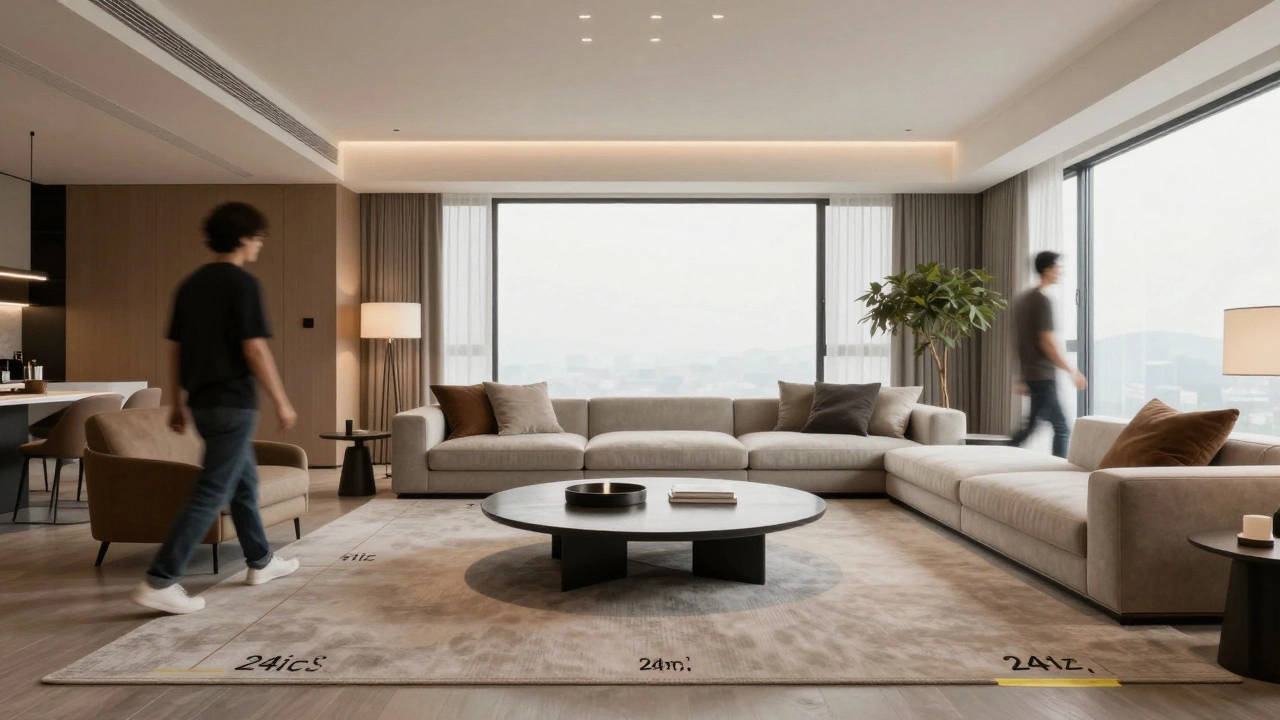
A 60-inch round table looks stunning in a 16x20 foot living room. In a 10x12 foot space? It’ll dominate everything. You want the table to feel like part of the room, not the room’s main attraction.Here’s a simple trick: lay out a piece of painter’s tape on the floor in a circle with the diameter you’re considering. Sit on your sofa. Walk around. See how it feels. If you feel cramped, go smaller. If it feels like you’re staring at a tiny coaster, go bigger. I’ve done this with dozens of clients in Mississauga homes-smaller spaces (under 150 sq ft) work best with 36 to 48 inch tables. Medium rooms (150-250 sq ft) handle 50 to 56 inches. Large, open-plan spaces? You can go up to 60 inches if the layout allows.
Don’t forget doorways and walkways. If your living room connects to a hallway or kitchen, make sure the table doesn’t block the path. A 48-inch table with 18 inches of clearance still leaves 36 inches of open space on the side. That’s the bare minimum for safe passage. Anything less, and you’re asking for trouble.
Height: Don’t ignore it
Round tables come in different heights, and the wrong one can ruin the whole look. The ideal height? Within 1 to 2 inches of your sofa’s seat cushion. Most sofas sit between 17 and 19 inches off the ground. That means your coffee table should be 16 to 19 inches tall.Why? Because you want to reach for your drink without leaning forward. If the table is too low, you’re hunching. Too high, and your arms feel awkwardly bent. I’ve tested this myself-17.5 inches is the sweet spot for most modern sofas. If your sofa has deep cushions that sink when you sit, go with a slightly taller table. If it’s firm and upright, lean toward 16 inches.
Also watch out for legs. A table with slender legs gives more visual space. A heavy, solid base can make the table feel heavier, even if it’s the same size. For small rooms, go for a table with a visible, open base. It helps the room feel airier.
What about storage?
Many round coffee tables now come with hidden storage-lift-top lids, drawers, or shelves underneath. These are great, but they change how you size the table. A lift-top table with a 52-inch diameter might have a 48-inch surface area. That means you’re getting less usable space than you think.If you want storage, plan for it. Add 4 to 6 inches to your ideal diameter. So if you were thinking 48 inches, go 52. That extra space lets you open the lid without hitting the sofa. Also, make sure the storage isn’t too deep. A 12-inch-deep drawer under a 50-inch table is fine. A 16-inch drawer? You’ll be pulling it out and knocking over the lamp.
Real-world examples
Let’s break this down with actual setups:- Small apartment (10x12 ft), loveseat (60 in): 40-inch round table. Enough for books, a tray, and a plant. Leaves 20 inches of walking space.
- Standard living room (12x16 ft), 3-seater sofa (80 in): 52-inch round table. Perfect for coffee, remote, and snacks. No crowding.
- Open-concept space (18x22 ft), sectional (100 in): 60-inch round table. Feels grounded, not overwhelming. Lets you walk around without stepping into the dining area.
These aren’t guesses. These are setups I’ve seen work consistently across homes in Ontario, from Toronto to Hamilton. People don’t need fancy designs-they need proportions that fit their life.
What to avoid
- Tables smaller than 36 inches: They look like side tables, not coffee tables. You’ll end up using two, which defeats the purpose.There’s no one-size-fits-all, but there are clear boundaries. Stick within them, and you’ll avoid the most common mistakes.
Final checklist
Before you buy, ask yourself:- Is the table’s diameter about two-thirds the length of my sofa?
- Is there at least 18 inches between the sofa and table edge?
- Is the height within 1-2 inches of my sofa’s seat?
- Does the table fit without blocking walkways or doorways?
- Do I have enough room for the table’s base, legs, or storage?
If you answered yes to all five, you’ve got a winner. If even one is a no, reconsider. It’s not about spending more. It’s about spending smarter.
What is the best diameter for a round coffee table?
The best diameter depends on your sofa size. Aim for a table that’s about two-thirds the length of your sofa. For a standard 3-seater sofa (72-84 inches), a 50-56 inch round table works best. Smaller sofas (60 inches or less) suit 40-48 inch tables. Larger sectionals can handle 58-60 inches if space allows.
Can a round coffee table be too big?
Yes. A table that’s too big makes the room feel cramped and blocks movement. If you can’t walk around it comfortably or if it touches the sofa arms, it’s oversized. In rooms under 150 square feet, avoid tables larger than 50 inches. Always test with painter’s tape before buying.
How much space should I leave around the coffee table?
Leave at least 18 inches between the edge of your sofa and the edge of the table. For families with kids or pets, aim for 20-24 inches. This ensures you can sit, stand, and walk without bumping into the table or each other. Also, make sure there’s at least 36 inches of clear space on all sides if people need to walk past.
Should a round coffee table match the height of my sofa?
It should be within 1 to 2 inches of your sofa’s seat height. Most sofas are 17-19 inches tall, so a coffee table between 16 and 19 inches works best. If the table is too low, you’ll lean forward to reach things. Too high, and your arms feel awkward. Test it by sitting on your sofa and reaching for a glass.
Is a round coffee table better than a rectangular one?
It depends on your space and lifestyle. Round tables are better for small rooms because they don’t have sharp corners, making them safer for kids and pets. They also allow more natural movement around them. Rectangular tables work better in long, narrow rooms or if you need more surface area for multiple people. If you have a sectional or a busy household, a round table often feels more welcoming and functional.