
Elizabeth I Wardrobe & Symbolism Decoder
Select your preferred combination of fabrics, styles, and embellishments, then click "Analyze Political Message" to decode what this appearance would communicate to the court and foreign diplomats.
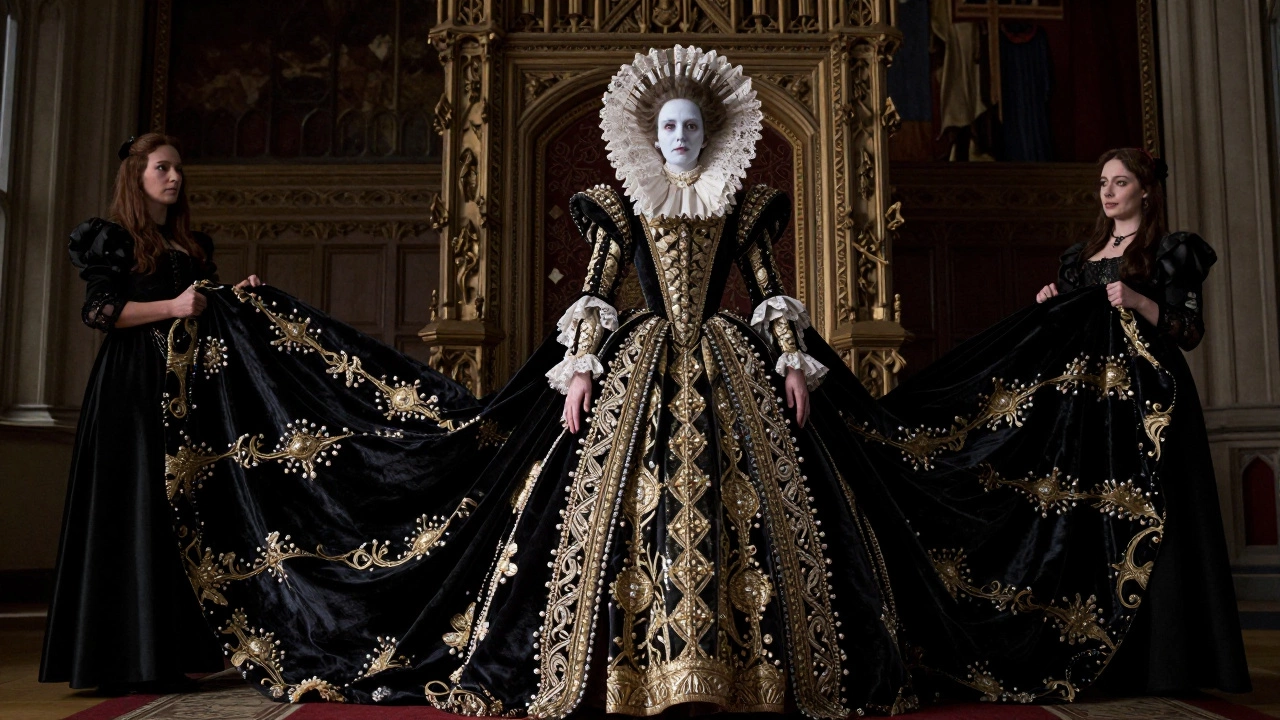
Imagine stepping into a room where the air is thick with the scent of expensive spices and heavy velvet. Standing before you is a woman who looks less like a human and more like a porcelain doll wrapped in gold thread. Her face is pale as milk, her hair a fiery red cascade, and her dress so wide it requires two attendants just to help her turn around. This wasn't just fashion; this was warfare.
When we ask why did Queen Elizabeth I dress the way she did, we aren't just asking about fabric choices. We are looking at one of the most sophisticated branding campaigns in history. For forty-five years, Elizabeth used her appearance to control how people saw her. She turned her body into a political tool, using clothes to project power, piety, and mystery to a kingdom that was terrified of instability.
The Image of Gloriana: Constructing a Myth
Elizabeth didn't just wear clothes; she wore a persona. By the time she reached middle age, she had cultivated an image known as "Gloriana." This wasn't a casual nickname. It was a carefully constructed myth of a virgin goddess who belonged to her country alone. Every element of her look supported this narrative.
Her dresses were designed to hide her natural shape completely. In the Tudor era, women’s bodies were expected to be hidden beneath layers of stiffened linen and heavy brocade. Elizabeth took this to an extreme. Her gowns featured massive, structured skirts that flared out from a tiny waist, creating a silhouette that looked almost architectural. This served two purposes. First, it made her look larger than life, literally taking up more space in any room she entered. Second, it concealed the physical realities of aging and illness. As she grew older and suffered from smallpox and other ailments, her elaborate costumes ensured that no one could see the frailty underneath.
The color palette was equally strategic. While early in her reign she wore brighter colors to signal vitality, later she favored deep blacks, rich crimsons, and shimmering silvers. Black was particularly powerful. It signaled mourning for her sister Mary’s husband, Philip II of Spain, but it also conveyed authority and solemnity. When she appeared in black velvet embroidered with pearls, she looked untouchable, like a dark star against the night sky.
Fabric as Currency: The Economics of Luxury
To understand Elizabeth’s wardrobe, you have to understand the value of materials. In the 16th century, cloth wasn't just something you bought at a store. It was a major economic driver. England was becoming a powerhouse in wool production, and the quality of its textiles was a point of national pride.
Elizabeth’s dresses were often made from imported silks, velvets, and satins from Italy and France. These fabrics were incredibly expensive, sometimes costing more than a skilled worker earned in a year. By wearing these materials, she wasn't just showing off wealth; she was demonstrating England’s ability to compete on the global stage. She sent messages to foreign diplomats through her sleeves. If she wore French silk, it might signal a diplomatic overture. If she switched to English wool broadcloth, it was a statement of independence.
Let’s look at the specifics of what went into a single gown:
- Silk Velvet: Often dyed in deep jewel tones like emerald or sapphire. Imported from Florence or Venice.
- Brocade: Fabric woven with raised patterns, usually featuring gold or silver threads. Used for outer layers to catch the light.
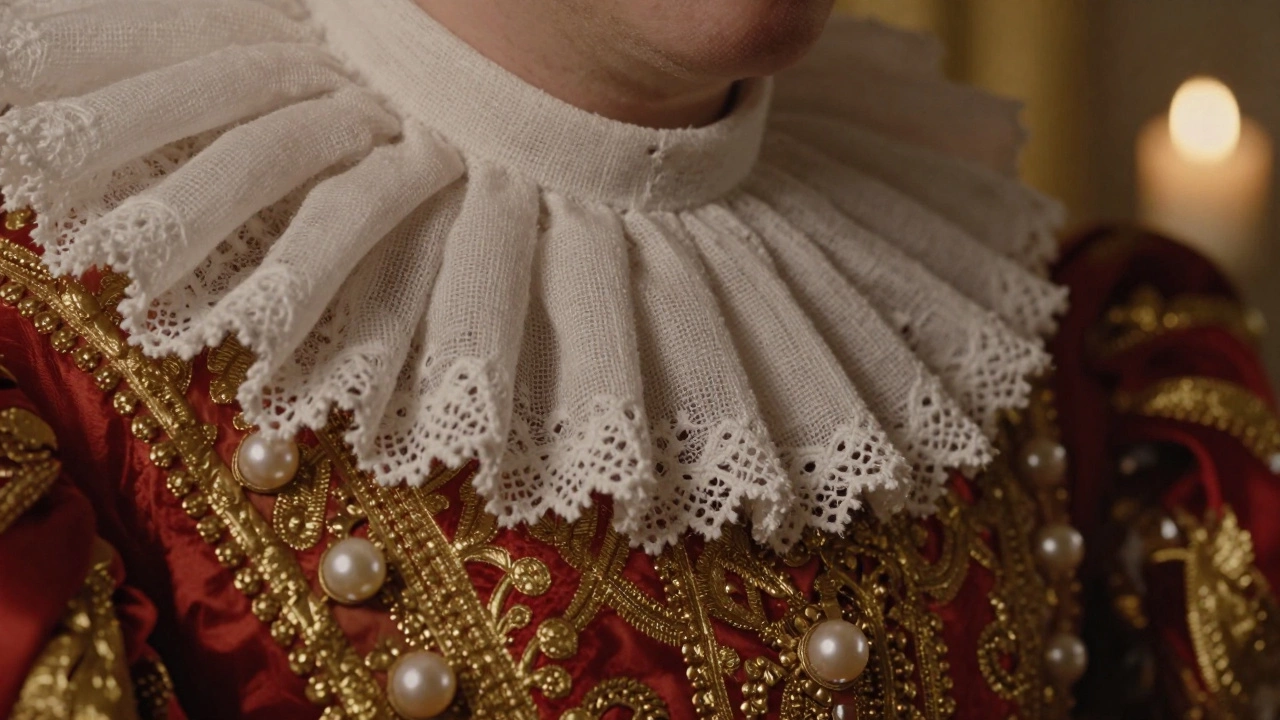
- Lace: Hand-made lace collars and cuffs were status symbols. Elizabeth’s ruffs became so large they required special frames to keep them stiff.
- Pearls: Not just jewelry, but sewn directly into the fabric. Pearls symbolized purity and were associated with the moon, linking her to celestial powers.
This wasn't vanity. It was economics. By displaying such wealth, she reassured her nobles that the crown was strong and solvent. It was a visual proof of stability in a world where kings could be deposed overnight.
The Ruff and the Mask: Hiding Behind Beauty
If you’ve ever seen a portrait of Elizabeth, you know her face is strikingly uniform. Pale skin, high forehead, sharp chin, and those piercing eyes. But here’s the secret: much of that beauty was artificial. Elizabeth used makeup extensively, which was dangerous at the time. The white powder she used to achieve her signature pallor contained lead, a toxic metal that slowly poisoned her over decades.
She also used a rouge made from vinegar and madder root to stain her cheeks. Why go to such lengths? Because she needed to control how she was perceived. A queen couldn't show wrinkles, blemishes, or signs of fatigue. Her face had to be flawless, like a mask. This led to the development of the ruff, that intricate, frilly collar that surrounded her neck.
The ruff did more than frame her face. It created distance. You couldn't hug a queen with a ruff. You couldn't touch her. It acted as a barrier between her flesh and the rest of the world. Over time, the ruffs grew larger and more complex, requiring hours of starching and pinning by her maids. They became so rigid that she had to eat with her hands held away from her mouth, turning even dining into a performance of elegance.
This attention to detail extended to her hair. Elizabeth had naturally red hair, which she bleached and curled into tight ringlets. As she lost her hair due to syphilis treatments and stress, she relied on wigs made of human hair, dyed to match her youthful self. The result was a consistent image that never changed, regardless of her actual age or health.
Political Messages in Every Stitch
Every public appearance by Elizabeth was a calculated event. She didn't just walk into a room; she made an entrance. Her wardrobe was filled with symbolic imagery that spoke to different audiences. For Protestants, she might wear jewels shaped like crosses or flowers representing purity. For Catholics, she might display icons of the Virgin Mary, subtly acknowledging their faith without converting.
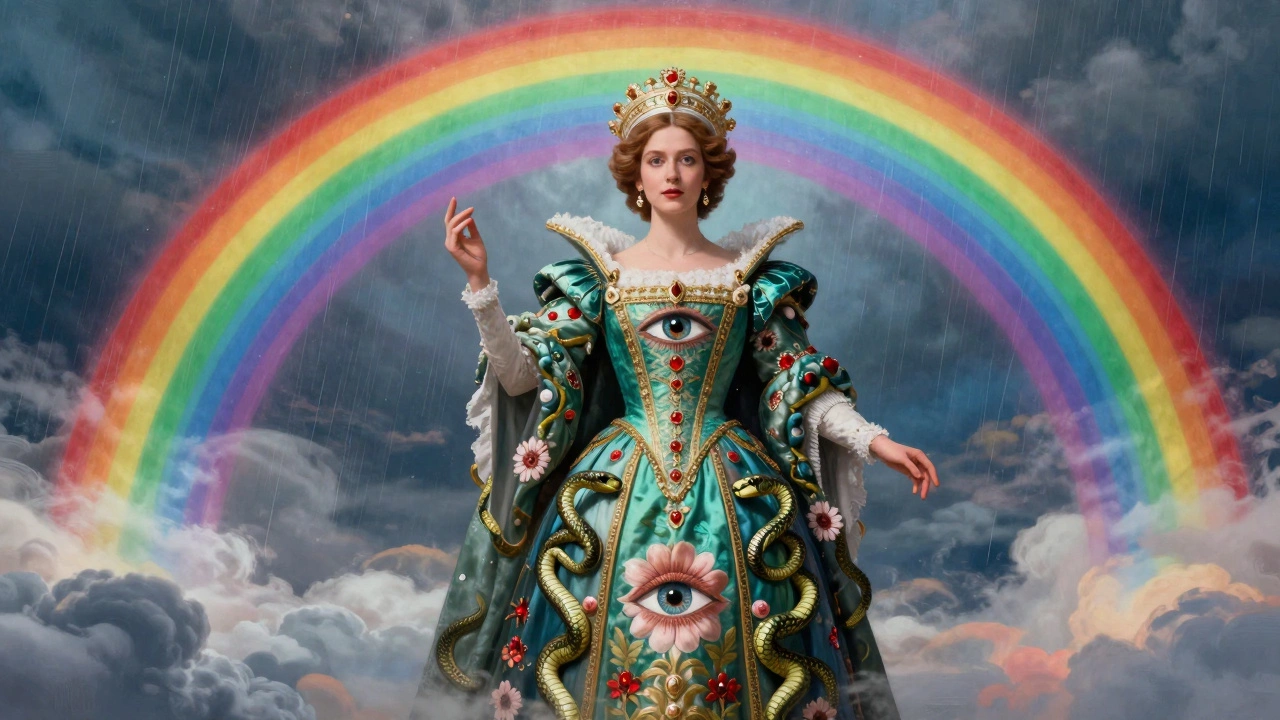
One famous example is the "Rainbow Portrait," painted in 1600. In it, she wears a dress covered in symbols: ears and eyes (representing her vigilance), snakes (symbolizing enemies defeated), and rainbows (representing hope after stormy times). This wasn't just art; it was propaganda. It told viewers exactly what she wanted them to believe about her rule.She also used clothing to manage court politics. Nobles vied for her favor, hoping to get a glimpse of her latest gown or receive a gift of ribbon from her sleeve. By controlling access to her person and her style, she kept everyone guessing and competing for her approval. It was a game of psychological chess played with satin and steel.
Legacy of Style: From Tudor to Modern Day
So why does this matter today? Because Elizabeth set the template for modern celebrity culture. She understood that image is everything. Long before Instagram or red carpets, she knew that how you present yourself defines your power. Her influence can still be seen in how leaders use fashion to communicate authority.
Think about modern politicians who choose specific colors for speeches or celebrities who curate their public personas down to the last accessory. Elizabeth was the original influencer. She didn't just follow trends; she created them. And she did it all while navigating a male-dominated world where women were expected to be silent and obedient.
Her legacy isn't just in museums. It's in the way we think about visibility, representation, and the power of aesthetics. When you see a leader standing confidently in a tailored suit or a designer dress, remember that Elizabeth taught us that clothes don't just cover the body-they tell a story.
What materials did Queen Elizabeth I primarily use in her dresses?
Elizabeth favored luxurious imports like Italian silk velvet, French brocade, and fine English wool. She also used extensive amounts of hand-made lace for collars and cuffs, along with pearls sewn directly into the fabric for decoration and symbolism.
Why did Elizabeth wear such heavy makeup?
She used lead-based white powder and rouge to create a flawless, ageless appearance. This helped maintain her image of divine perfection and hid signs of aging or illness, reinforcing her mystique as the Virgin Queen.
How did the ruff function beyond fashion?
The ruff acted as a physical barrier, preventing anyone from touching her neck or face. It emphasized her status and created a sense of unapproachability, forcing subjects to maintain a respectful distance during interactions.
Did Elizabeth's fashion choices affect international relations?
Yes. By wearing fabrics from specific countries, she could signal diplomatic alliances or tensions. For instance, switching from French silk to English wool was a clear message of national independence and economic strength.
What is the significance of the 'Virgin Queen' title in her fashion?
The title reinforced her image as married only to England. Her modest yet opulent dresses, often adorned with pearls (symbols of purity), visually communicated her chastity and dedication to the state rather than personal marriage.