
Recliner Ergonomics & Safety Checker
Enter your details and click "Analyze Fit & Risk" to get personalized ergonomic recommendations.
You sink into your favorite recliner, ready to watch the game or read a book, but something feels off. Your legs are dangling slightly, your knees feel tight, or maybe you’re just wondering if this is actually bad for you. The short answer is: it depends on how far they hang and why. For most people, having feet hover even an inch or two above the floor can disrupt circulation and strain the lower back. But for others, especially those with limited mobility, a slight overhang might be the only way to get comfortable.
We need to look at this not just as a comfort issue, but as a biomechanical one. How you sit affects your spine, your blood flow, and your ability to stand up safely. Let’s break down exactly what happens when your feet don’t touch the ground properly while reclining.
The Biomechanics of Reclining: Why Foot Position Matters
To understand whether hanging feet are a problem, we first need to look at how gravity works against us when we sit. When you sit upright, your weight is distributed through your hips and tailbone. When you recline, that distribution shifts. The goal of any good seat is to keep your spine in a neutral alignment while allowing your muscles to relax.
If your feet hang off the edge of the ottoman or the chair base without support, several things happen:
- Knee Flexion Increases: As your legs drop, your knees bend more sharply. This compresses the popliteal artery behind the knee, which can restrict blood flow to your lower legs.
- Lower Back Strain: Without proper leg support, your pelvis may tilt backward unnaturally, causing your lumbar spine to round instead of maintaining its natural curve.
- Calf Pressure: If your shins press hard against the front edge of the seat cushion or ottoman, you create pressure points that can lead to numbness or tingling.
This isn't just theoretical. Studies in ergonomic design consistently show that unsupported leg positions increase muscle activity in the quadriceps and hamstrings, meaning your legs aren't truly resting-they're working harder to stabilize your body.
When Hanging Feet Are Acceptable (and When They Aren't)
Not every situation requires perfect foot placement. There are scenarios where a little overhang is fine, and others where it becomes a health risk.
| Scenario | Foot Position | Risk Level | Recommendation |
|---|---|---|---|
| Short-term relaxation (< 30 mins) | Slight overhang (1-2 inches) | Low | Acceptable if no discomfort |
| Napping or long sessions (> 1 hour) | Feet hovering or unsupported | High | Avoid; use pillows or adjust chair |
| Users with circulatory issues | Any overhang | Very High | Never allow feet to hang; elevate legs |
| Children or shorter users | Significant overhang | Medium-High | Use cushions under thighs/knees |
If you have varicose veins, diabetes, or peripheral artery disease, letting your feet hang can significantly worsen symptoms. In these cases, elevation-not suspension-is key. You want your feet higher than your heart level to encourage venous return, not dangling below it.
How to Check if Your Recliner Fits Your Body
One size does not fit all. A standard recliner is often designed for someone who is 5'9" to 6' tall. If you’re outside that range, you’ll likely experience fit issues. Here’s how to test your current setup:
- Sit Fully Reclined: Pull the lever or button to extend the footrest fully. Lie back until your head rests comfortably on the headrest.
- Check Knee Angle: Look at your knees. They should form roughly a 90-degree angle or slightly more open (100-110 degrees). If your knees are bent sharply (less than 90 degrees), your feet are too high or the seat depth is too shallow.
- Assess Thigh Support: Your entire thigh-from hip to knee-should be supported by the seat cushion. If there’s a gap between your knee and the edge of the seat, you’re losing structural support.
- Test Stability: Try to stand up from the reclined position. If you struggle or feel unbalanced, your center of gravity is off due to poor foot positioning.
If any of these checks fail, your recliner isn’t supporting your body correctly. That doesn’t mean you need a new chair immediately-it means you need adjustments.

Practical Fixes for Poor Fit
You don’t always need to buy a new piece of furniture to solve this problem. Simple modifications can make a big difference.
- Add a Lumbar Pillow: Placing a firm pillow behind your lower back helps maintain spinal alignment, reducing the urge to slump forward when your feet dangle.
- Use a Footstool or Ottoman: Place a small stool or stack of sturdy books in front of the recliner so your feet rest flat rather than hanging.
- Cushion Under the Knees: For shorter users, placing a folded blanket or foam pad under the knees reduces the angle of flexion and prevents pressure on the back of the legs.
- Adjust the Recline Angle: Some modern recliners allow partial recline. Stopping halfway might give you better leg support without full extension.
These tweaks cost little but improve both comfort and safety. Think of them as temporary braces until you decide whether to upgrade your furniture.
Choosing the Right Recliner for Your Height
If you’re shopping for a new recliner, pay attention to two measurements: seat depth and overall height. Most manufacturers list these specs online, but few explain what they mean for real-world use.
For adults under 5'4", look for "compact" or "short-depth" models. These typically have seat depths of 17-19 inches compared to the standard 20-22 inches. Taller individuals (over 6') should seek out "tall" or "extended" versions with deeper seats and longer footrests.
Also consider the type of mechanism. Manual recliners often have fixed angles, while power-reclining chairs offer adjustable positions. Power options let you fine-tune your posture, which is crucial if you spend hours in the chair daily.
The Hidden Risk: Falls and Instability
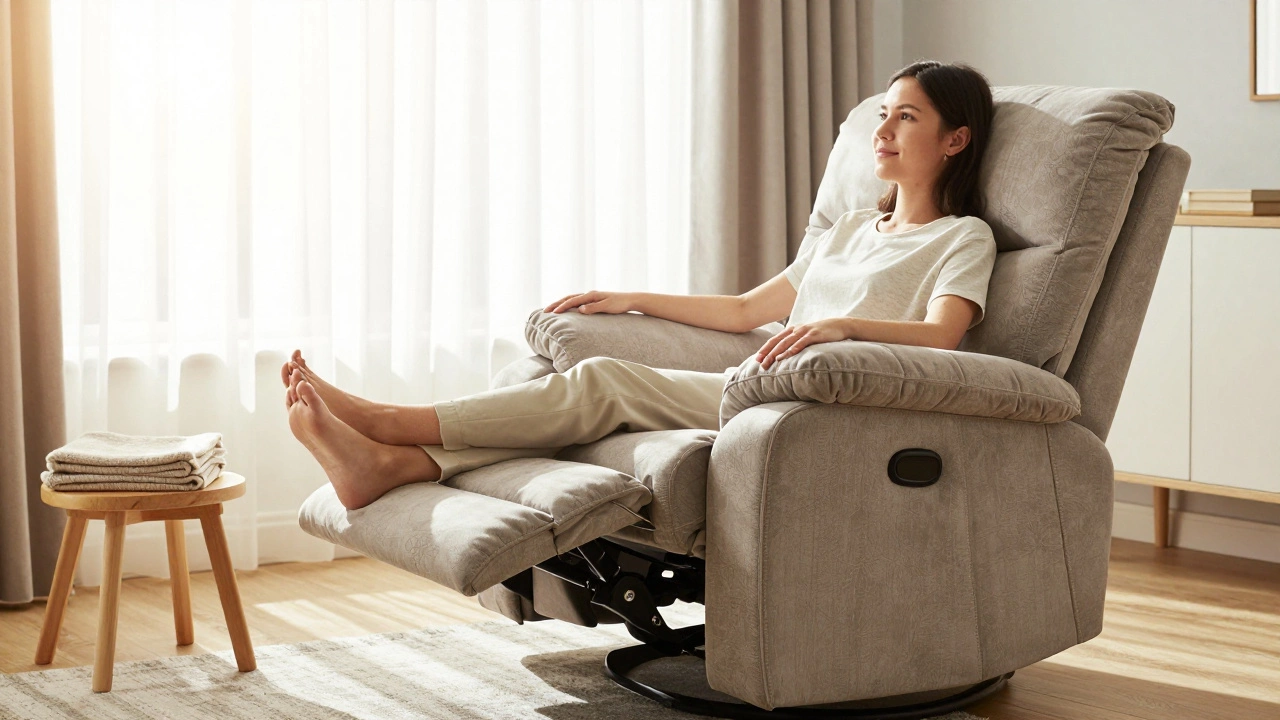
Here’s a danger many overlook: getting up from a poorly positioned recliner. When your feet hang off the edge, you lose leverage. Standing up requires pushing through your feet-but if they’re suspended, you’re forced to twist your torso or grab onto armrests excessively.
This increases fall risk, especially for older adults or those with balance disorders. According to geriatric research, improper seating transitions account for nearly 30% of home falls among seniors over 75. A simple fix? Ensure your feet touch the floor firmly before attempting to rise.
If you must recline deeply, practice standing up slowly. Engage your core, shift your weight forward, and push down with your heels-not your toes-to regain stability.
Special Cases: Children, Pets, and Shared Spaces
What if your child loves lounging in your recliner? Or your dog curls up beside you? Their needs differ from yours.
Children have smaller frames and developing spines. Allowing their feet to hang regularly can contribute to postural habits that persist into adulthood. Use booster cushions or dedicated kids’ chairs instead.
Pets, meanwhile, often mimic human behavior. If your cat sleeps on your lap while your feet dangle, neither of you is getting optimal rest. Consider adding a pet bed nearby so everyone stays comfortable-and safe.
Is it bad to let my feet hang off a recliner?
Yes, prolonged foot hanging can reduce circulation, strain your lower back, and increase fall risk. Short durations may be acceptable, but extended periods require proper foot support.
How do I know if my recliner fits me properly?
Check that your thighs are fully supported, your knees form a 90-110 degree angle, and you can stand up easily without twisting. If not, your recliner likely doesn’t fit well.
Can hanging feet cause long-term health problems?
Regularly allowing feet to hang can lead to chronic lower back pain, poor circulation, and increased fall risk, particularly in older adults or those with existing conditions.
What should I do if my recliner is too deep?
Add a cushion under your knees or use a separate footstool to bring your feet closer to the ground. Alternatively, choose a compact model next time you shop.
Are power recliners better for avoiding foot hang?
Power recliners often offer more precise angle control, allowing you to find a position where your feet rest naturally. However, fit still depends on your body dimensions relative to the chair’s design.
Your recliner should serve you-not force you into awkward positions. By paying attention to foot placement, you protect your spine, improve circulation, and make everyday movements safer. Whether you tweak your current setup or invest in a better-fitting chair, small changes yield big rewards for your health and comfort.