
Recliner Fit & Comfort Checker
Enter your data to check if your feet hang off the edge.
Enter your measurements to see if your recliner supports your legs properly.
You sink into your favorite recliner, ready to watch the game or read a book. But instead of pure relaxation, you feel a weird pressure behind your knees. Your feet are dangling slightly off the edge of the footrest, leaving your calves unsupported. It feels wrong, but is it actually bad for you? Or is it just a matter of getting used to it?
The short answer is no, your feet should not hang off a recliner if you want proper support and comfort. When your legs dangle, you lose the ergonomic benefits that make these chairs so popular in the first place. This isn't just about feeling cozy; it’s about how your body aligns when you’re sitting for long periods.
The Anatomy of Proper Support
To understand why dangling feet are problematic, we need to look at how gravity affects your legs. When you sit upright in a standard chair, your weight rests on your hips and thighs. In a reclined position, that weight shifts significantly toward your lower legs and feet. A well-designed reclining mechanism lifts your legs up to create a 90-degree angle between your torso and your thighs, reducing pressure on your spine.
If your feet hang off the end, two things happen immediately:
- Pressure points form: The back of your knees (the popliteal fossa) hits the hard edge of the footrest. This area contains major nerves and blood vessels, including the femoral artery. Constant pressure here can restrict circulation, leading to numbness, tingling, or that "pins and needles" sensation.
- Loss of calf support: Your calves bear a significant portion of your leg's weight when elevated. Without support under the lower third of your leg, your muscles tense up subconsciously to stabilize your limbs. This defeats the purpose of relaxing.
Think of it like wearing shoes that are too small. You might tolerate them for an hour, but after three hours, your feet will ache because they aren’t supported correctly. The same logic applies to your recliner.
Why Do Feet Dangle Anyway?
If hanging feet are uncomfortable, why does this happen so often? Usually, it comes down to a mismatch between user size and chair design. Most mass-produced recliners are designed for an average adult male height-roughly 5'9" to 6'0". If you are taller than 6'1", your shins and calves likely extend beyond the footrest’s length. Conversely, if you are shorter, your heels might slide off the front, causing your ankles to bend awkwardly.
Another culprit is the type of recliner. Traditional manual recliners have fixed footrests. Once the lever is pulled, the footrest stops at a predetermined point. Modern infinite-position recliners or wall-hugger models offer more flexibility, but even they have physical limits based on their internal track system.
Some people also adjust their seats incorrectly. They might pull the seat forward too much, thinking it gives more legroom, but this actually reduces the effective length of the footrest relative to their body.
The Risks of Long-Term Dangling
Occasional dangling won’t ruin your day. But if you spend several hours daily in a recliner where your feet don’t fit properly, the cumulative effect can be noticeable.
- Circulation Issues: Restricted blood flow from knee pressure can lead to swelling in the ankles and feet (edema). For individuals with existing vascular conditions, this is particularly risky.
- Nerve Compression: Prolonged pressure on the peroneal nerve behind the knee can cause temporary weakness in the foot or difficulty lifting the toes (foot drop).
- Postural Strain: When your legs aren’t fully supported, your pelvis may tilt backward to compensate. This flattens the natural curve of your lower back, potentially aggravating disc issues or causing chronic lower back pain.
- Skin Irritation: Friction against the rough edge of the footrest can cause chafing or bruising over time.
These aren’t immediate emergencies, but they are preventable annoyances that degrade your quality of life. You buy a recliner to escape discomfort, not to invite new kinds of it.
Finding the Right Fit: Measurements That Matter
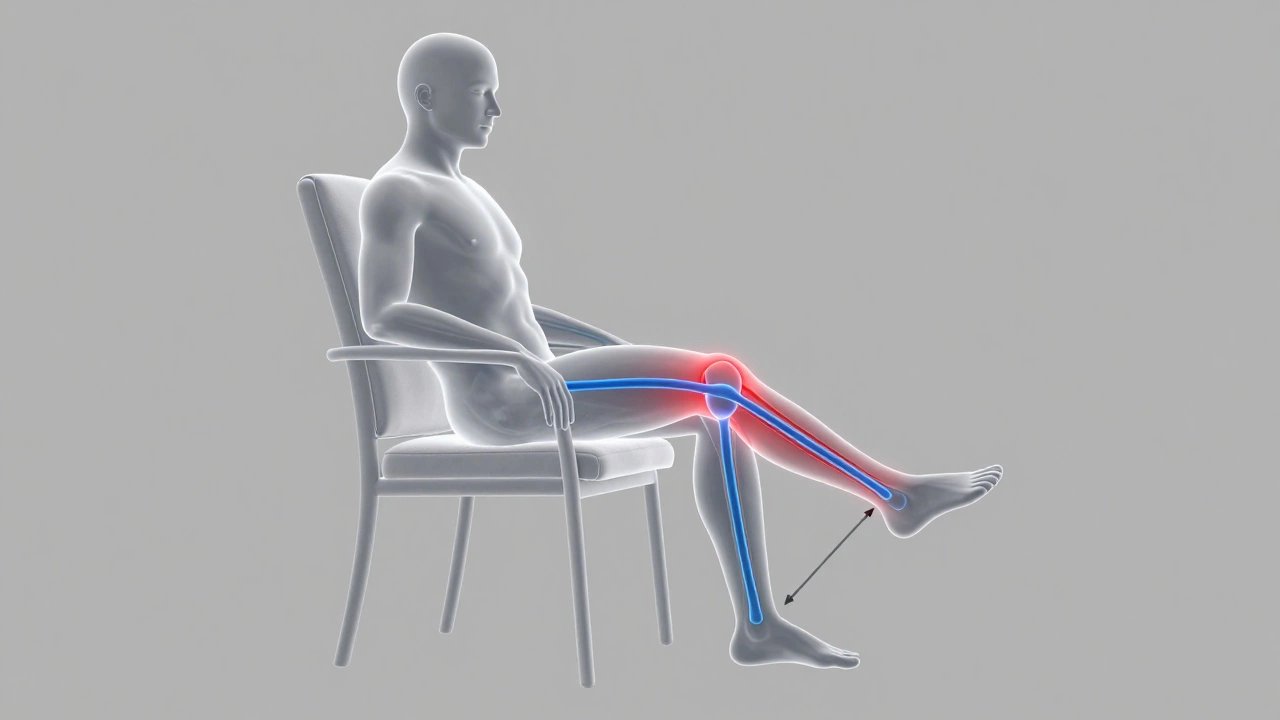
Before buying a new chair or trying to fix an old one, measure yourself. Specifically, you need to know your shank length. This is the distance from the back of your knee to the bottom of your heel. Add about 2-3 inches to this number for comfortable clearance.
For example, if your shank length is 18 inches, you need a footrest that extends at least 20-21 inches from the pivot point. Most standard recliners provide around 14-16 inches of footrest depth. Taller users often need extended-length models or specific "tall guy" designs.
Here’s a quick guide to what to look for:
| User Height | Recommended Footrest Depth | Best Recliner Type |
|---|---|---|
| Under 5'4" | 12-14 inches | Compact or Small-Scale Recliner |
| 5'4" - 5'10" | 14-16 inches | Standard Manual or Power Recliner |
| 5'11" - 6'2" | 16-18 inches | Extended-Length or Infinite Position |
| Over 6'2" | 18+ inches | Tall-Order Custom or Modular Sectional |
Note that seat depth matters too. A deeper seat allows you to sit further back, which can sometimes help align your knees better with the footrest edge, even if the footrest itself isn’t perfectly sized.
Quick Fixes for Your Current Chair
If you already own a recliner and your feet hang off, don’t panic. You don’t necessarily need to buy a new $1,000 chair. There are several practical ways to improve the fit.
1. Use a Cushion or Pillow
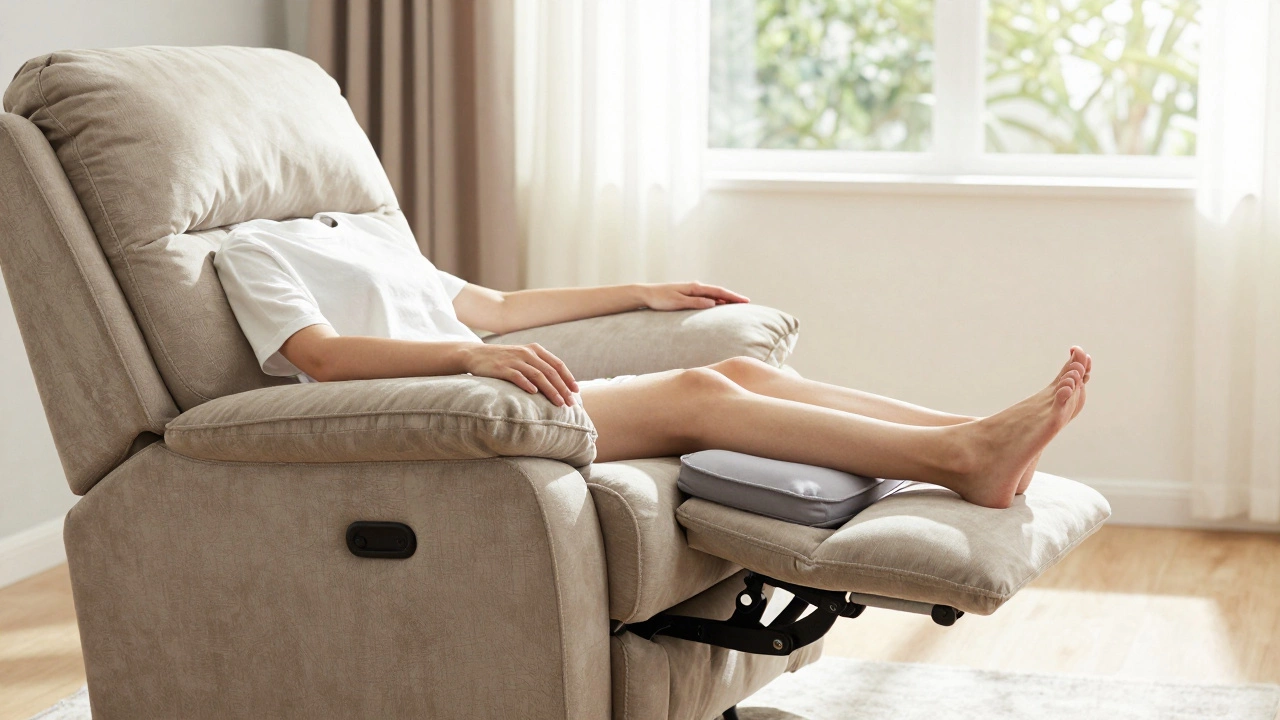
The simplest solution is to place a firm lumbar pillow or a folded blanket under your calves. This fills the gap between your leg and the footrest, providing support without modifying the furniture. Make sure the cushion is thick enough to reach the top of the footrest but not so thick that it pushes your knees upward uncomfortably.
2. Adjust Seat Position
If your recliner has a sliding seat base, try moving the entire seat assembly slightly forward. This brings the footrest closer to your knees, effectively increasing the usable length of the support surface. However, be careful not to move it so far that your thighs lose support against the seat cushion.
3. Add an Extendable Footrest Cover
Some companies sell universal recliner covers that include an extendable flap for the footrest. These zip onto the existing footrest and add 4-6 inches of padding. They’re inexpensive and easy to install, though they may look less sleek than the original upholstery.
4. Change Your Reclining Angle
Instead of fully reclining, try stopping at a mid-recline position (around 100-110 degrees). At this angle, your legs are elevated but not fully horizontal, which can reduce the amount of footrest needed. It’s a compromise, but it might eliminate the dangling sensation entirely.
What to Look for in a New Recliner
If you’re shopping for a new chair, prioritize features that address fit. Don’t just look at the style; look at the specs.
- Infinite Position Technology: Unlike traditional recliners that lock into set positions, infinite position models allow you to stop the footrest at any point along its track. This lets you fine-tune the extension until your feet are perfectly supported.
- Wall-Hugger Design: These chairs glide forward as they recline, allowing you to sit closer to a wall while still achieving full leg elevation. While this doesn’t change the footrest length, it often correlates with more modern, adjustable mechanisms.
- Adjustable Headrests and Lumbar Support: While not directly related to feet, these features ensure your upper body is aligned, preventing you from slumping forward to compensate for poor leg support.
- High-Density Foam: Cheaper recliners use low-density foam that compresses quickly. Over time, the footrest sinks, making it feel shorter. High-density foam maintains its shape and support longer.
Brands like La-Z-Boy, Ashley Furniture, and Hooker Furniture offer specific lines for taller users. Look for terms like "Extended," "Tall," or "Big & Tall" in their product descriptions.
When to Consult a Professional
If you have chronic back pain, sciatica, or circulation problems, pay extra attention to your seating posture. A physical therapist or ergonomist can assess your specific needs. They might recommend specialized orthopedic cushions or suggest avoiding deep recline angles altogether if they exacerbate your condition.
Remember, the goal of a recliner is to take stress off your body. If your feet are hanging off, the chair is failing that primary job. Whether you tweak your current setup or invest in a better-fitting model, prioritizing proper support will pay off in comfort and health.
Is it bad to sleep in a recliner with feet hanging off?
Yes, it can be. Sleeping requires prolonged immobility. If your feet are dangling, pressure builds behind your knees, restricting blood flow and potentially causing nerve compression. Over several hours, this can lead to stiffness, numbness, and increased risk of blood clots in susceptible individuals. Always ensure full leg support when sleeping in a recliner.
Can I use a stool instead of adjusting my recliner?
You can, but it’s not ideal. Placing a small ottoman or stool in front of the recliner adds support, but it creates a step-up motion that can strain your knees when getting in and out. It also disrupts the smooth line of the chair. A cushion placed directly on the footrest is safer and more integrated.
Why do some recliners have shorter footrests?
Manufacturers design for the average consumer to keep costs down and maximize floor space. Longer footrests require larger frames, more fabric, and stronger motors, which increase production costs. Additionally, very long footrests can make the chair bulky, making it harder to fit in smaller living rooms.
Does footrest height matter more than length?
Both matter, but length is critical for preventing dangling. Height determines whether your knees are higher than your hips (which reduces spinal pressure). Ideally, your knees should be slightly above hip level. If the footrest is too low, you lose the ergonomic benefit. If it’s too high, your groin area may feel cramped.
How do I measure if my recliner fits me?
Sit in the chair and recline fully. Measure the distance from the back of your knee to the edge of the footrest. If there’s more than 2 inches of exposed shin/calf, the chair is too short. Also, check if your heels rest comfortably on the front edge without slipping off. If they slip, the footrest is too shallow.