Closet/Wardrobe Translator
Find the Right Term
This tool helps you know the correct English term to use for storage furniture or clothing collections based on your location.
Correct term:
If you’ve ever walked into a U.S. home and asked where to put your clothes, only to be pointed to the closet, you’re not alone. Many people from the UK, Australia, or parts of Europe are confused when they hear Americans say "closet" instead of "wardrobe." It’s not a mistake - it’s just a difference in how English is used on different sides of the Atlantic. So what’s the real story behind these two words? And why does America use one and not the other?
What Americans Call a Wardrobe
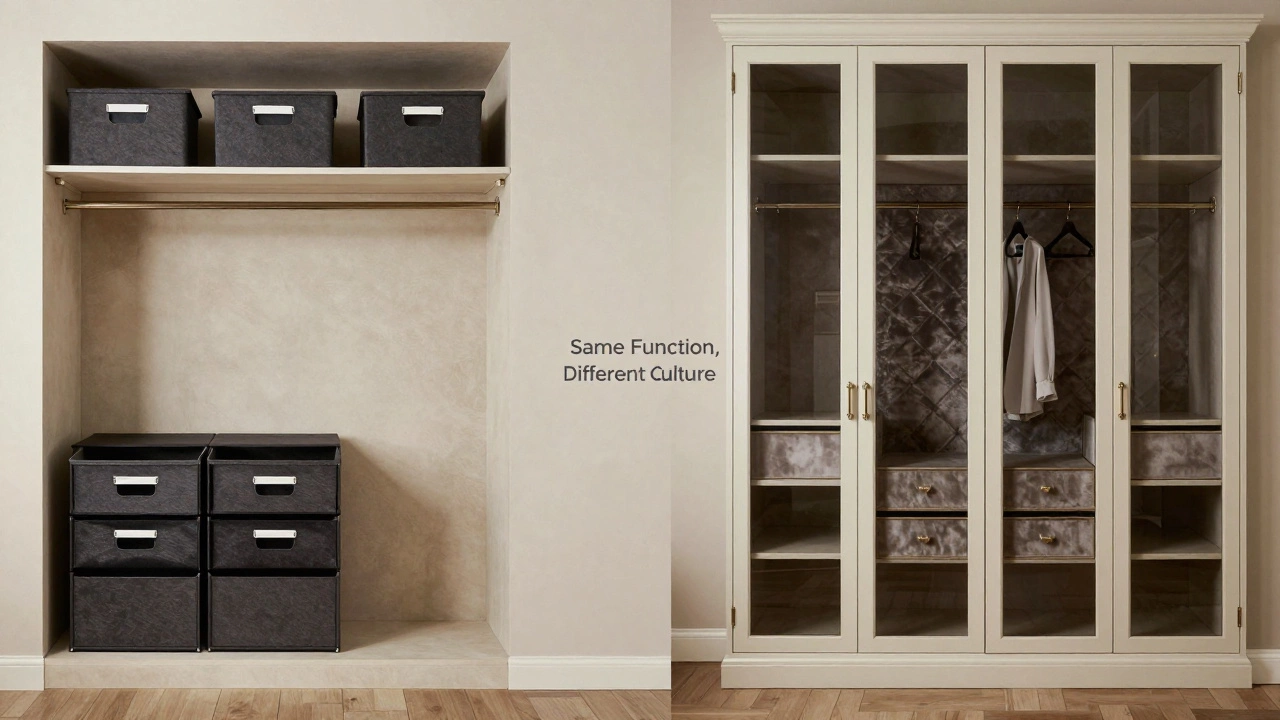
In the United States, the word "wardrobe" is rarely used to describe the piece of furniture you store clothes in. Instead, Americans say "closet." A closet is built into the wall of a bedroom, hallway, or even a bathroom. It’s not a freestanding unit - it’s part of the house’s structure. Most American homes have at least one walk-in closet in the master bedroom, and smaller reach-in closets in kids’ rooms or guest bedrooms.
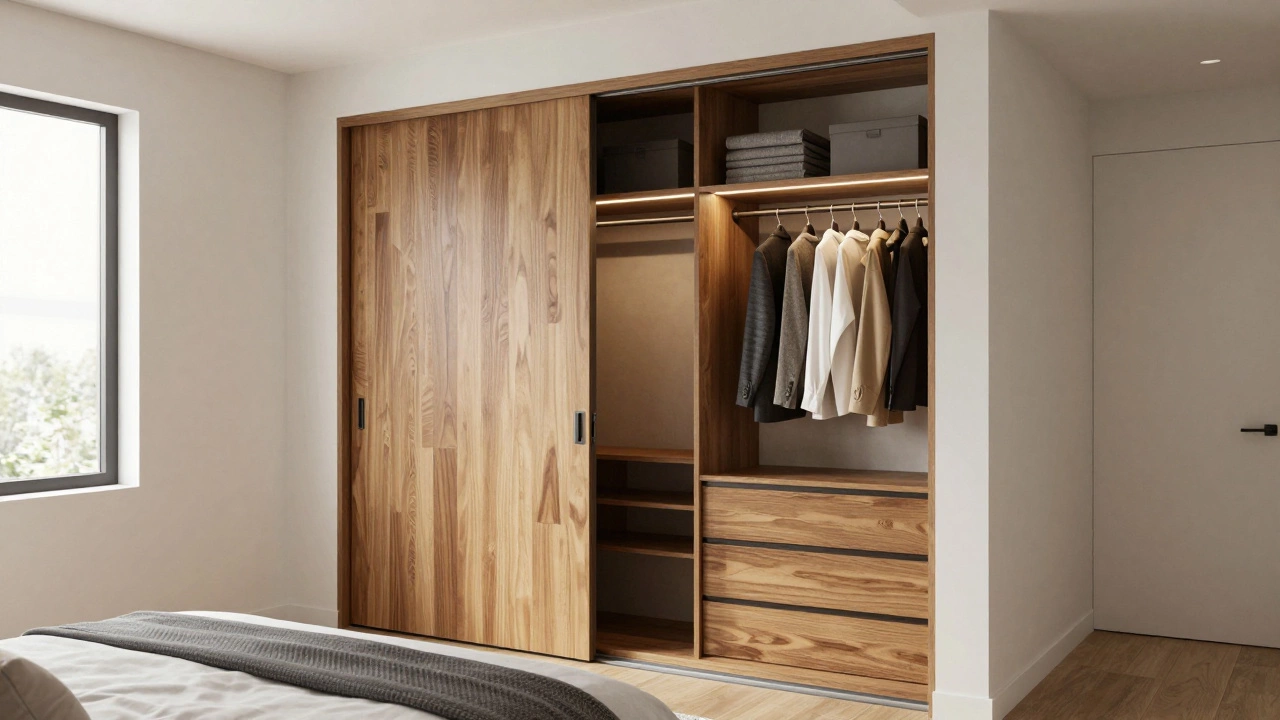
Think of it like this: if you’re in London and you say "I need to hang my coats in the wardrobe," you’re talking about a tall, freestanding cabinet with doors, rods, and shelves. In New York, you’d say "I need to hang my coats in the closet," and you’re pointing to a recessed space in the wall, usually with a swinging or sliding door.
Why the Difference Exists
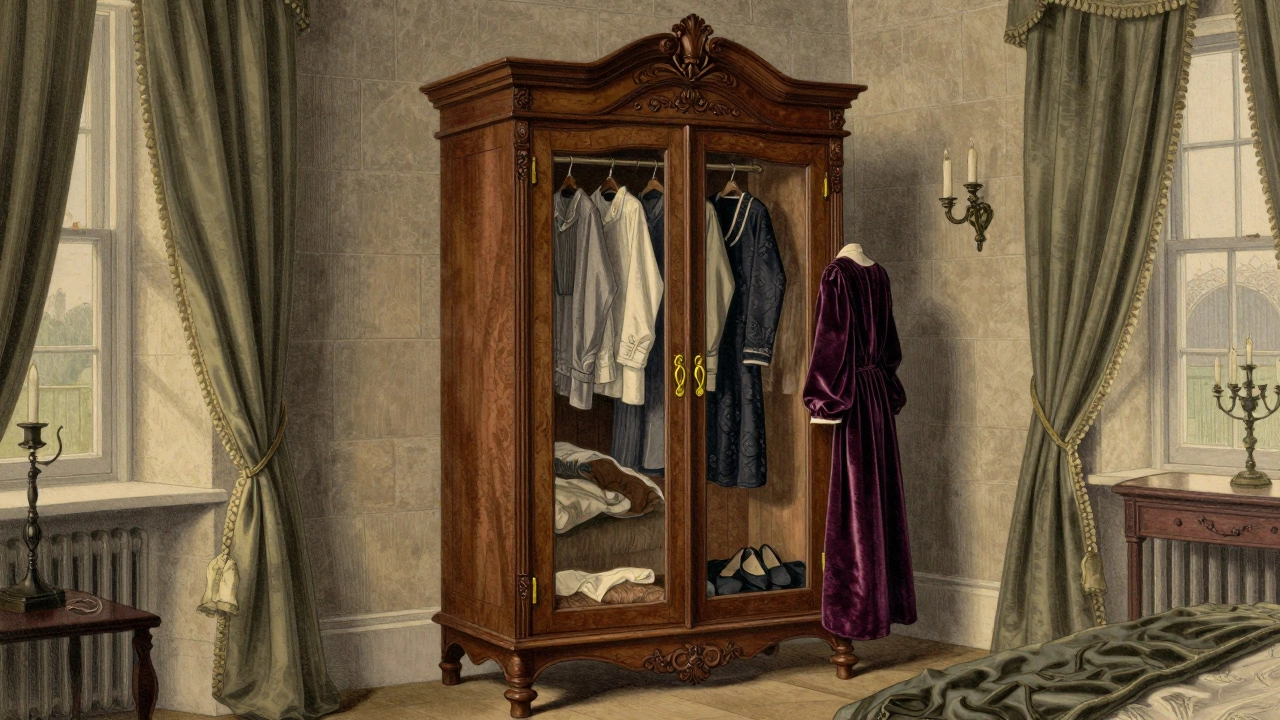
The split in terminology goes back to how homes were built in the 18th and 19th centuries. In Britain, houses were often older, with thick stone walls and limited space for built-in storage. People used freestanding furniture - like wardrobes - to store clothes. These pieces were portable, made of wood, and often ornate. They were a status symbol, not just storage.
In America, especially after the Industrial Revolution, homes were built faster and more uniformly. Builders started adding built-in storage spaces as standard features. Walls were thinner, framing was standardized, and closets became a normal part of bedroom design. There was no need to buy a separate piece of furniture because the storage was already there.
By the 1950s, American suburban homes came with closets as standard. The word "closet" became so deeply tied to American housing that even today, real estate listings highlight "walk-in closets" as a selling point. You’ll never see an American home ad say "features a large wardrobe." But you’ll see "spacious master closet with custom organizers" all the time.
When Do Americans Use the Word "Wardrobe"?
Don’t think "wardrobe" is completely gone in the U.S. - it’s just used differently. Americans still say "wardrobe" when they mean their entire collection of clothes. "She has a huge wardrobe," means she owns a lot of outfits. It’s a fashion term, not a furniture term.
You’ll also hear "wardrobe" in design magazines or high-end furniture stores, but usually when referring to luxury freestanding units - often imported from Europe. These aren’t common in average homes. They’re more likely to appear in luxury apartments, hotels, or homes with European design influences. In those cases, the piece might be called a "wardrobe" to emphasize its craftsmanship, size, or style - but it’s still the exception, not the rule.
What About Other English-Speaking Countries?
The U.S. isn’t alone in using "closet." Canada and Australia also mostly say "closet," though Australians sometimes use "robe" (as in "the robe is on the left") for a small storage space. In the UK, Ireland, South Africa, and India, "wardrobe" is still the standard term for the furniture.
Interestingly, in some parts of the U.S., especially older neighborhoods or in regions with strong British heritage (like parts of New England), you might hear older residents say "wardrobe." But it’s fading fast. Younger Americans don’t use it for furniture at all.
What to Say When You’re in the U.S.
If you’re visiting or moving to the U.S., here’s what works:
- Don’t ask for the "wardrobe" - say "Where’s the closet?"
- If you’re shopping for storage, look for "closets," not "wardrobes."
- If you’re buying a freestanding clothes storage unit, call it a "closet organizer," "clothing armoire," or "clothing cabinet." Those are the terms retailers use.
Don’t be surprised if a salesperson in a furniture store looks at you funny when you ask for a wardrobe. They’ll likely show you a tall cabinet with doors - and then say, "This is an armoire. We don’t call it a wardrobe here."
Closet vs. Wardrobe: A Quick Comparison
| Feature | Closet (U.S.) | Wardrobe (UK/Europe) |
|---|---|---|
| Location | Built into the wall | Freestanding furniture |
| Common in homes? | Yes - standard in nearly all U.S. homes | Yes - standard in older European homes |
| Material | Usually drywall, wood framing | Usually solid wood, sometimes metal |
| Portability | Not movable | Can be moved or relocated |
| Typical size | Varies - reach-in or walk-in | Tall, often floor-to-ceiling |
| Used to mean clothes collection? | Yes - "my wardrobe is full" | No - you’d say "my clothes" or "my collection" |
What to Look for When Shopping in the U.S.
If you’re used to a wardrobe and need something similar in the U.S., you’ll find a few options:
- Armoires - tall, freestanding cabinets with doors. Often used in bedrooms or home offices. These are the closest thing to a traditional wardrobe.
- Closet organizers - systems that fit into existing closets to maximize space. Popular in new homes.
- Clothing cabinets - simpler versions of armoires, often with one or two doors and a hanging rod.
- Wardrobe-style units - some modern brands (like IKEA or BoConcept) sell pieces labeled "wardrobe," but they’re designed for small spaces and marketed as space-saving solutions.
Don’t assume that if a product says "wardrobe," it’s the same as what you’re used to. American-made "wardrobes" are usually smaller, lighter, and less ornate than European ones. They’re meant to fit in tight apartments, not grand bedrooms.
Why This Matters
It’s more than just a word difference. It reflects how culture shapes everyday objects. In the U.S., efficiency and built-in space are valued. In Europe, furniture is often seen as art, something you move with you from house to house. The word you use tells a story about your home, your history, and your priorities.
If you’re buying furniture, moving abroad, or just trying to understand American homes, knowing this difference saves time, avoids confusion, and helps you communicate better. You don’t need to change your habits - just adapt your vocabulary.
Frequently Asked Questions
Is a closet the same as a wardrobe?
No. A closet is built into the wall and is part of the home’s structure. A wardrobe is a freestanding piece of furniture. In the U.S., people use "closet" for the built-in storage. In the UK and Europe, "wardrobe" is the standard term for the same function.
Can I buy a wardrobe in the U.S.?
Yes, but you’ll need to look for terms like "armoire" or "clothing cabinet." Some stores sell pieces labeled "wardrobe," especially imported ones, but they’re not common. Most Americans don’t use the word for furniture.
Why do Americans say "wardrobe" for clothes?
In American English, "wardrobe" refers to a person’s collection of clothing, not the furniture. So "She has a big wardrobe" means she owns many outfits. This usage is the same in the UK and elsewhere - it’s only the furniture term that differs.
Do all American homes have closets?
Almost all modern American homes have at least one closet in each bedroom. Building codes often require them. Older homes or apartments might have smaller storage spaces, but even then, they’re called closets, not wardrobes.
What’s the best term to use when shopping for clothes storage in the U.S.?
Use "closet" if you’re talking about built-in storage. For freestanding units, use "armoire," "clothing cabinet," or "closet organizer." Avoid "wardrobe" unless you’re specifically looking for European-style furniture.