Bookshelf Price Estimator
Use this calculator to determine the appropriate price range for your bookshelf based on your specific needs. Input your requirements and see what makes sense for your situation.
How much should a bookshelf actually cost? You walk into a store, see a sleek wooden bookcase for $800, then spot a simple metal one for $60. Which one makes sense? And why does one cost 13 times more than the other? The truth is, bookshelves don’t have a single price-they have a whole range based on what you need, what you’re willing to sacrifice, and where you’re shopping. Let’s cut through the noise and show you exactly what you’re paying for.
What Drives the Price of a Bookshelf?
Not all bookshelves are created equal. The cost comes down to five big factors: material, construction, size, brand, and where it’s made. If you don’t understand these, you’ll either overpay or end up with something that falls apart after six months.
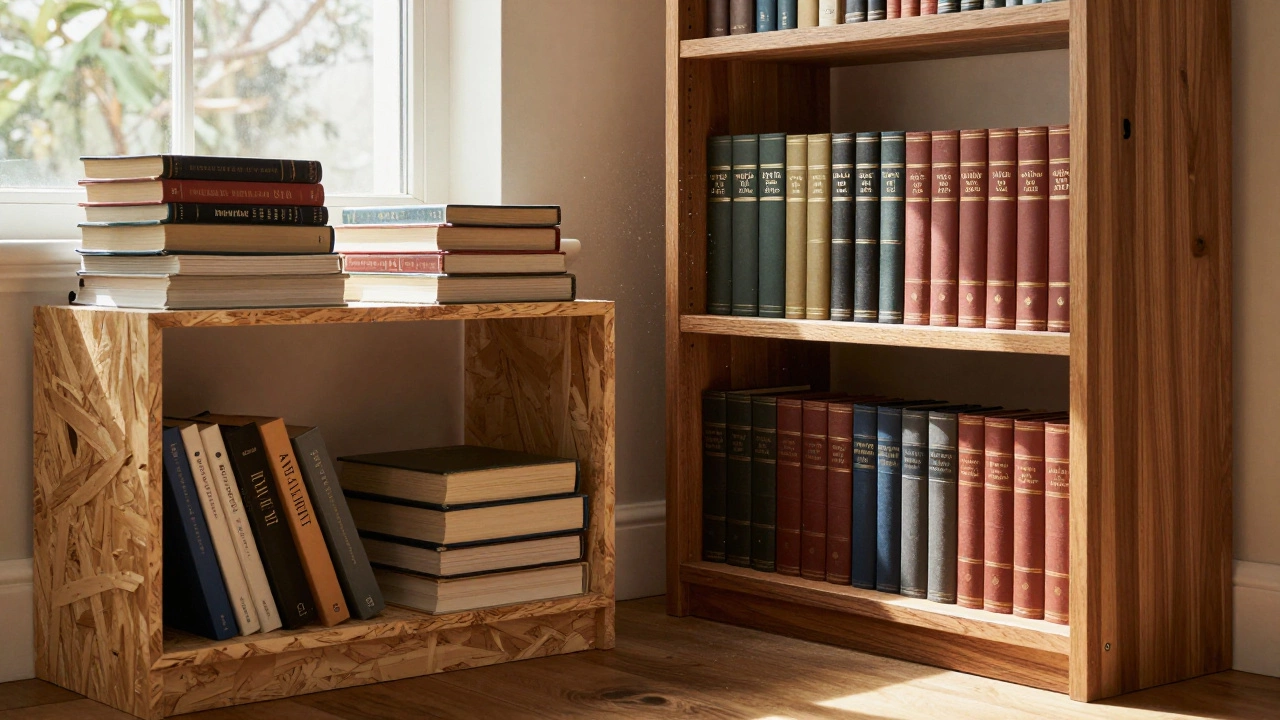
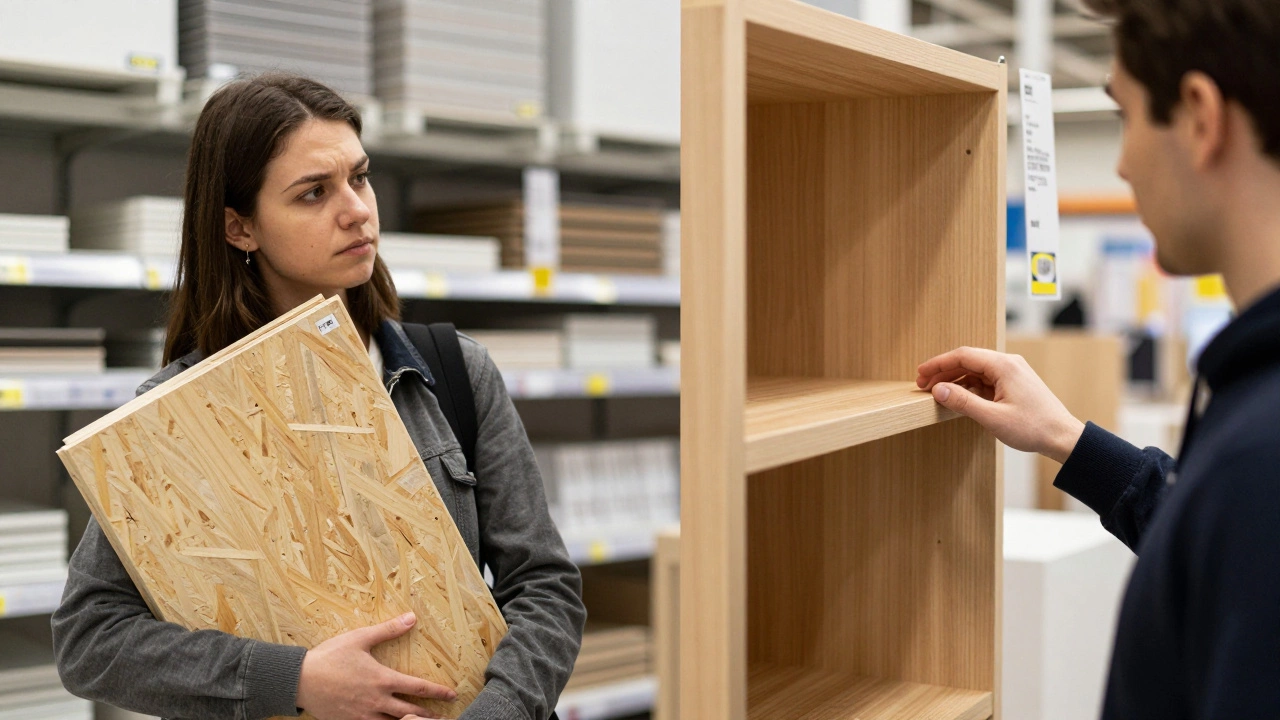
Let’s start with material. A particleboard bookshelf with a thin veneer might cost $40. That’s fine if you’re renting or just need something temporary. But if you’re putting heavy books on it, that shelf will sag. Solid wood? That’s a different story. A pine bookshelf made from real, kiln-dried lumber can easily run $200-$400. Oak, walnut, or teak? Those push into the $500-$1,200 range. The wood isn’t just about looks-it’s about weight capacity and lifespan. A solid wood shelf can last 30+ years. Particleboard? Maybe five.
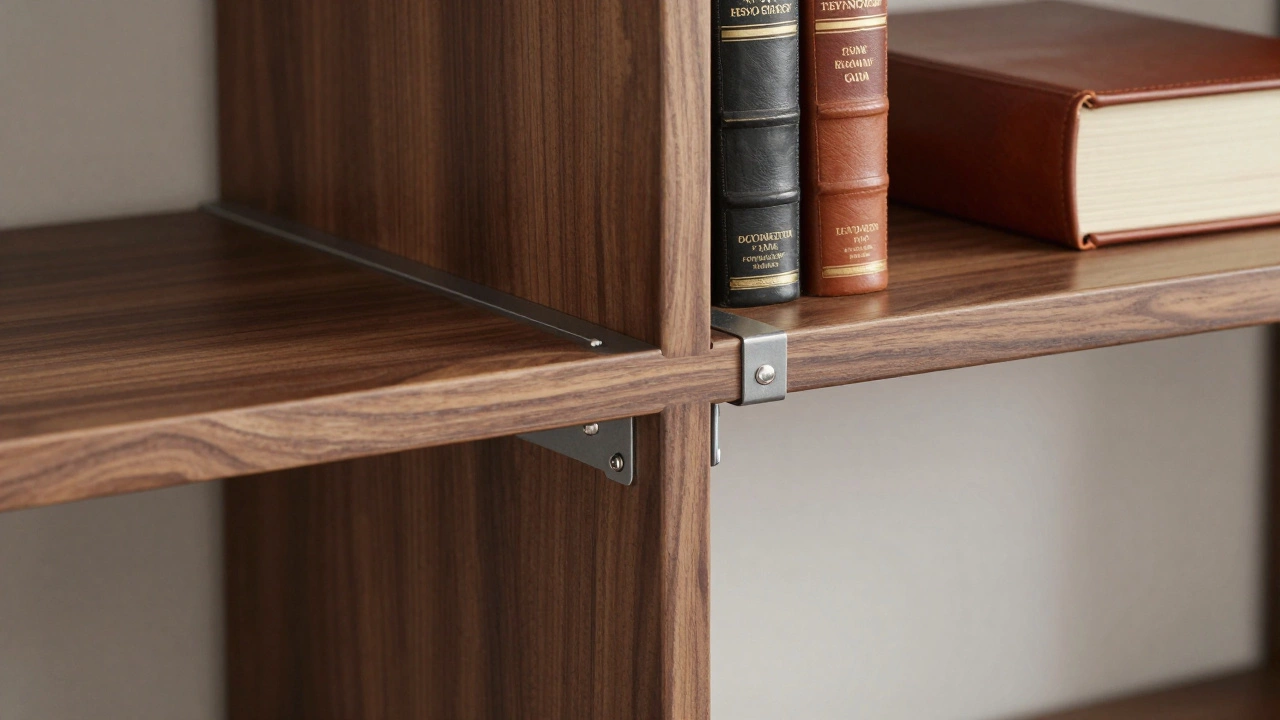
Then there’s construction. Look at the joints. If the shelves are just nailed or glued in, they’re not built to last. Dovetail joints, mortise-and-tenon, or metal brackets with reinforced screws? Those cost more upfront but mean you won’t be reassembling your bookshelf every year. Many cheap shelves use thin metal brackets that bend under pressure. A well-built shelf uses 14-gauge steel or thicker. You can test this by lifting the shelf-real quality feels heavy, not hollow.
Size matters too. A narrow, three-shelf unit might cost $70. A full-height, seven-shelf unit that spans 72 inches? That’s going to be $300 minimum, even in particleboard. Bigger means more material, more labor, and more structural reinforcement. If you’re storing textbooks, encyclopedias, or collectibles, you need depth and strength. Don’t just go by height-check the weight rating. Most budget shelves max out at 25 pounds per shelf. Higher-end ones handle 50-75 pounds.
Brand plays a role, but not always in your favor. IKEA’s KUNGSBACKA line uses recycled wood and costs $150. It’s decent, but not heirloom quality. On the other end, brands like Herman Miller or Roche Bobois charge $1,500+ for a bookshelf that’s basically furniture art. You’re paying for design, warranty, and reputation-not just wood. You don’t need to spend that much unless you’re furnishing a luxury home or need museum-grade durability.
Finally, where it’s made affects cost. Shelves made in Vietnam or China using automated presses are cheaper. Those made in the U.S. or Europe with skilled craftsmen cost more. A hand-finished oak bookshelf made in Michigan might cost $800. The same design made in China? $350. The difference isn’t just labor-it’s oversight, environmental standards, and quality control.
Price Breakdown: What You Can Expect in 2026
Here’s a realistic look at what you’ll find on the market right now, broken down by budget tier.
| Price Range | Material | Best For | Weight Capacity per Shelf | Lifespan |
|---|---|---|---|---|
| $30-$80 | Particleboard, thin veneer | Temporary use, dorms, rentals | 15-25 lbs | 2-5 years |
| $80-$200 | MDF, engineered wood, metal frame | Home offices, light books, modern decor | 25-40 lbs | 5-10 years |
| $200-$500 | Solid pine, birch, or oak | Living rooms, libraries, families | 40-60 lbs | 15-25 years |
| $500-$1,200 | Hardwood (walnut, teak, maple), hand-finished | High-end homes, heirloom pieces | 60-80 lbs | 30+ years |
| $1,200+ | Custom design, artisan-crafted, rare woods | Interior design projects, luxury spaces | 80+ lbs | Lifetime |
Notice something? The jump from $80 to $200 isn’t just about looks-it’s about safety. A $150 solid pine shelf can hold twice as much as a $90 MDF one. If you’ve ever had a shelf collapse under your collection, you know that’s not just an inconvenience-it’s a risk.
When Should You Spend More?
You don’t need to buy the most expensive bookshelf. But there are times when spending more makes sense.
- You have heavy books: textbooks, art books, or a full library. A $50 shelf won’t cut it.
- You’re planning to stay in your home for more than five years. A cheap shelf will need replacing. A solid one won’t.
- You’re using it as a room divider or statement piece. It needs to look good from all angles.
- You have kids or pets. A sturdy shelf won’t tip over.
- You care about sustainability. Solid wood lasts longer, and many brands use FSC-certified lumber.
On the flip side, if you’re moving every two years, have light books (paperbacks, magazines), or just need something to hold a few plants, a $60 shelf is perfectly fine. There’s no shame in that. But don’t pretend it’s a long-term investment.
Where to Buy for the Best Value
Not all stores are equal. Here’s where to look based on your budget.
- For under $100: IKEA, Target, Walmart. They offer decent options if you check the weight specs. Avoid anything labeled "particleboard" unless you’re okay with short-term use.
- For $100-$400: Wayfair, Amazon Basics, Crate & Barrel (sale section). These have more solid wood options. Look for "solid wood frame" in the description, not just "wood tone."
- For $400+: Local woodworkers, Etsy artisans, or brands like Floyd, West Elm, or BoConcept. These often use reclaimed wood and hand-finished details. You’re paying for craftsmanship, not just storage.
- For vintage or unique: Thrift stores, estate sales, Facebook Marketplace. You can find 1970s oak bookshelves for $120 that are better built than new $300 ones.
Pro tip: Always check the reviews for sagging. Look for comments like "shelves bent after 3 months" or "fell over when I put my vinyl collection on it." Real users tell you what the photos won’t.
What to Avoid
Here are the three biggest mistakes people make when buying a bookshelf:
- Buying based on looks alone. A sleek white shelf might be beautiful, but if the back panel is 1/8-inch plywood, it’s a disaster waiting to happen.
- Ignoring weight limits. That 72-inch shelf might look impressive, but if it’s rated for only 30 lbs per shelf, don’t put your 20 heavy cookbooks on it.
- Skipping assembly instructions. Many cheap shelves come with missing screws or unclear diagrams. A well-made shelf includes a PDF manual and customer support.
Also, avoid "free shipping" offers that require a $500 minimum. You’re not saving money-you’re buying something you don’t need just to get shipping. That’s not a deal. That’s a trap.
Final Rule of Thumb
Here’s a simple way to decide: How much would you pay to replace this shelf in five years? If you’d rather not, spend more now. If you’re okay with buying another one later, go cheap. The math is simple: A $60 shelf that lasts three years costs $20 per year. A $400 shelf that lasts 25 years costs $16 per year. The expensive one is cheaper in the long run.
Bookshelves aren’t just storage. They’re part of your home’s structure. Choose wisely. You’ll thank yourself later.
Are metal bookshelves cheaper than wood ones?
Yes, metal bookshelves are usually cheaper, but not always better. Basic metal shelving units from Home Depot or ULINE start at $50 and are great for garages or workshops. But for living rooms or libraries, they often look industrial and lack the warmth of wood. High-end metal bookshelves with powder-coated finishes and wooden accents can cost $400+, so it depends on the design. For pure storage, metal wins on price. For aesthetics and durability in a home, wood usually wins.
Can I build my own bookshelf for less money?
Yes, if you have basic tools and some time. A DIY pine bookshelf using 2x12 boards, wood screws, and sandpaper can cost under $100 for materials. You’ll need a drill, level, and measuring tape. Online tutorials from woodworking channels like Ana White or Woodsmith Plans offer free, detailed plans. The catch? It takes 8-12 hours of work. If your time is worth $20/hour, you’re effectively paying $160-$240. But you get a custom size, no assembly required, and a piece you built yourself. Many people find the pride worth the effort.
Do bookshelves go on sale?
Yes, and timing matters. The best sales happen in January (post-holiday clearance), late July (summer home refresh), and around Black Friday. Stores like IKEA, Wayfair, and Target often drop prices by 30-50% on bookshelves during these windows. Don’t buy in February or October-those are slow months. Also, check for floor models. They’re often 40% off and have been tested for stability. Just make sure there’s no deep scratch or warping.
What’s the best depth for a bookshelf?
Standard depth is 10 to 12 inches. That fits most paperbacks and hardcovers without crowding. If you store large art books, photo albums, or collectibles, go for 14 inches. Anything deeper than 14 inches makes it hard to reach the back items, and the shelf can sag under weight. Shelves under 8 inches are only good for small decor or magazines. Always measure your largest book before buying.
Should I anchor my bookshelf to the wall?
Yes, especially if you have kids, pets, or live in an earthquake-prone area. Even heavy bookshelves can tip over if someone pulls on them or if there’s a sudden jolt. Most manufacturers include wall anchoring kits. Use them. It takes five minutes with a drill and drywall anchors. It’s not optional if you want to keep your home safe. Many insurance policies even require it for tall furniture.