Most people don’t think about their office chair until it starts creaking, sinking, or making their back ache. But ignoring a worn-out chair doesn’t make the problem go away-it just makes it worse. By the time you’re shifting in your seat just to find a comfortable spot, your chair has already cost you more in productivity and discomfort than it would’ve to replace it.
How Long Do Office Chairs Actually Last?
The average office chair lasts between 5 and 7 years. That’s not a guess-it’s based on industry testing from the Business and Institutional Furniture Manufacturers Association (BIFMA), which sets durability standards for commercial-grade seating. Their tests simulate 10 years of daily use, and most chairs that pass are rated for 50,000 cycles of sitting and standing. If you’re at your desk 8 hours a day, 5 days a week, that’s about 2,000 cycles a year. So 5 years is the minimum you should expect.
But here’s the catch: not all chairs are built the same. A $150 chair from a big-box store might start showing wear after 2 years. A $500 ergonomic model with a steel frame, high-density foam, and a Class 4 gas lift can easily hit 8 or even 10 years. The difference isn’t just price-it’s materials. Look for chairs with a 5-star base (not 4-star), a gas lift rated for 100,000 cycles, and fabric or leather that resists tearing and fading.
Signs Your Office Chair Needs Replacing
You don’t need to wait for the seat to collapse to know it’s time. Watch for these red flags:
- The seat sinks when you sit down-even after adjusting the height. This means the gas cylinder is leaking. It’s not just inconvenient-it’s unsafe. A failing gas lift can cause sudden drops.
- The armrests wobble or won’t stay in place-loose joints mean the internal mechanisms are worn. This throws off your posture and forces your shoulders to compensate.
- The backrest doesn’t recline or locks in place-if your chair no longer supports natural movement, it defeats the purpose of ergonomic design.
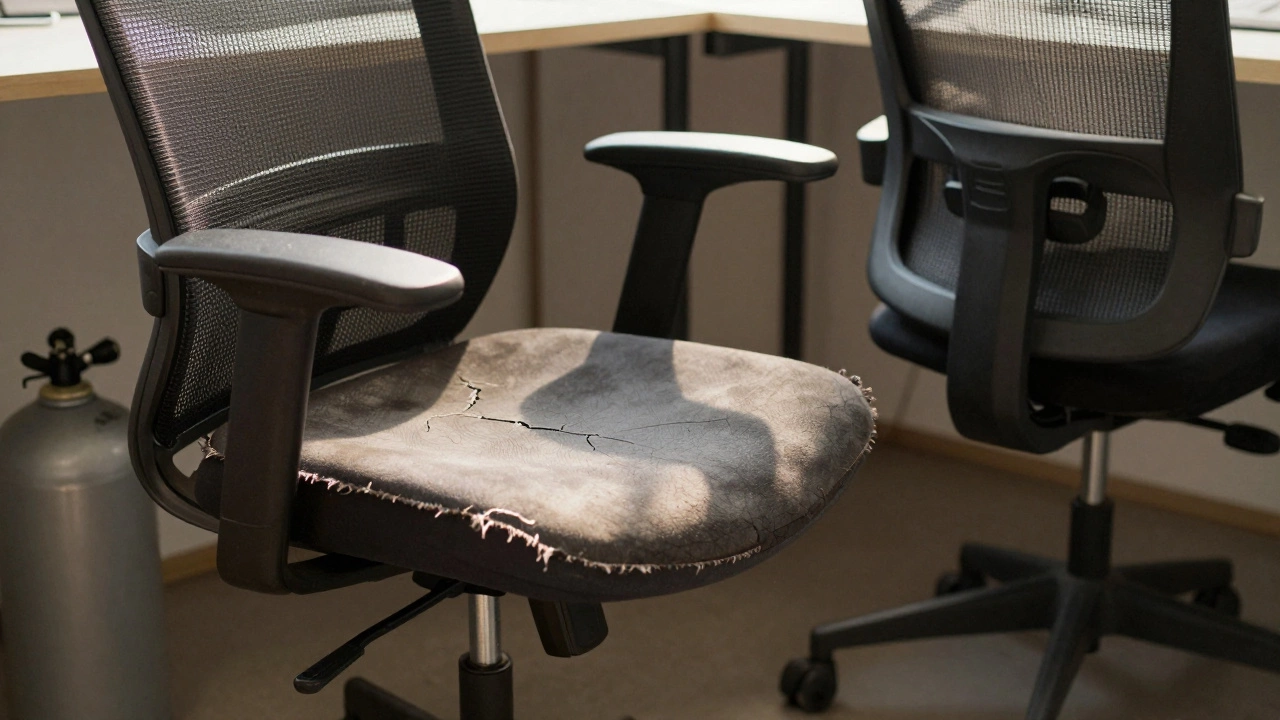
- The fabric is torn, stained, or flattened-foam that’s lost its bounce doesn’t cushion your hips or tailbone. You’ll feel pressure points after just 30 minutes.
- You’re constantly adjusting-if you’re shifting, leaning, or standing up every 20 minutes to relieve discomfort, your chair isn’t doing its job.
One real-world example: A client in Mississauga switched from a 7-year-old chair to a new one with lumbar support. Within two weeks, their chronic lower back pain dropped by 70%. They didn’t realize how much the chair was contributing to their discomfort until it was gone.
Why Replacing Your Chair Matters Beyond Comfort
It’s not just about avoiding a sore back. A bad chair affects your focus, your posture, and even your long-term health. The Journal of Occupational Health found that workers using poorly designed chairs had a 40% higher risk of developing musculoskeletal disorders over three years. That’s not just a health issue-it’s a cost issue. Missed workdays, physical therapy, and reduced productivity add up fast.
Good chairs aren’t luxury items. They’re tools. Just like you wouldn’t keep using a broken printer because it’s "still working," you shouldn’t keep sitting on a chair that’s working against you.
Can You Extend the Life of Your Chair?
Yes-but only if you act early. Simple maintenance can add 1-3 years to your chair’s life:
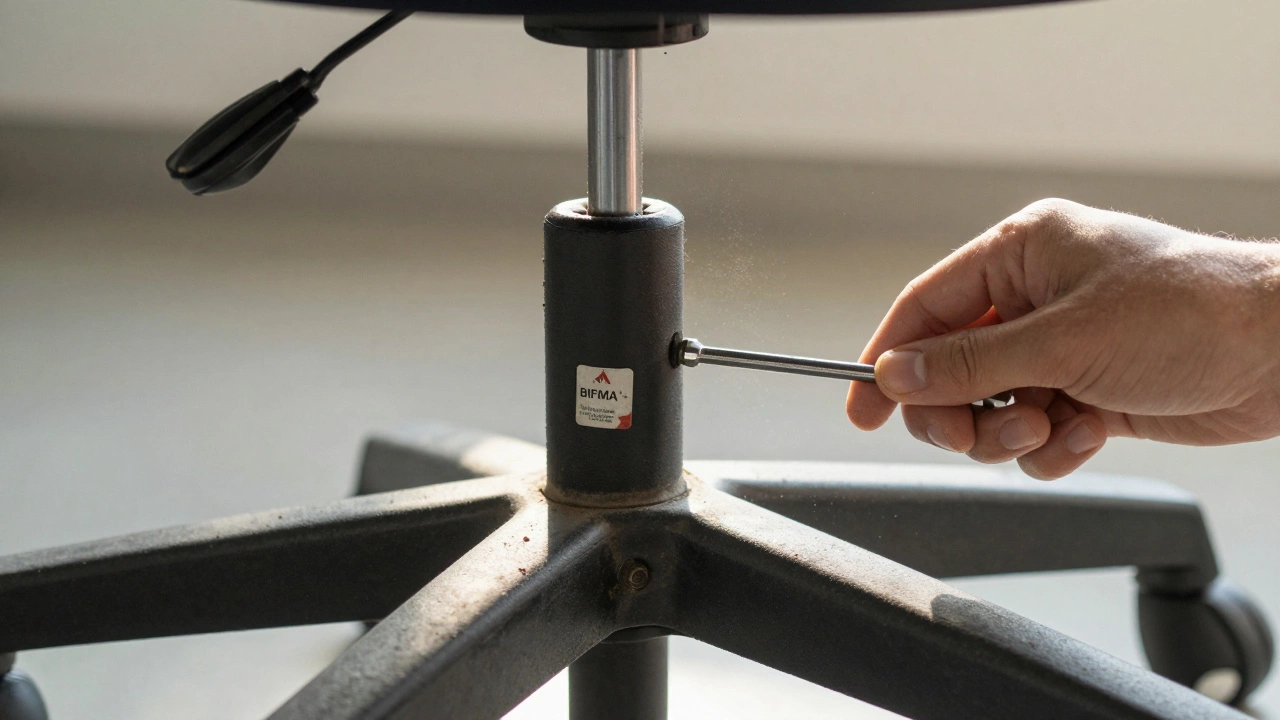
- Check the gas lift every 6 months-if the chair sinks slowly when you sit, it’s time to replace the cylinder. They cost $20-$40 and are easy to swap with a screwdriver.
- Tighten all bolts and screws-loose connections cause wobbling. Use a hex key to secure the base, armrests, and backrest joints.
- Rotate the seat cushion-if it’s removable, flip it every few months to even out wear.
- Wipe down the fabric or leather monthly-dust and oils break down materials faster. Use a damp cloth and mild soap.
- Avoid extreme heat or direct sunlight-UV rays fade and crack upholstery. Keep your chair away from windows if possible.
But here’s the truth: maintenance only delays the inevitable. Once the foam is compressed, the fabric is frayed, or the base is cracked, no amount of cleaning or tightening will fix it. At that point, you’re just buying time-and risking your health.
When to Buy a New One
Don’t wait for your chair to break. Set a reminder every 5 years to evaluate it. If it’s older than that and you’re still using it, you’re overdue.
Here’s a simple decision tree:
- If your chair is under 5 years old and still feels supportive? Keep it.
- If it’s 5-7 years old and has minor wear? Consider repair if it’s a high-quality model.
- If it’s 7+ years old, or shows multiple signs of wear? Replace it.
Also, don’t assume your old chair was "good enough." Ergonomic standards have improved. Modern chairs have adjustable lumbar support, dynamic seat depth, and breathable mesh that actively cools your back. These features aren’t marketing fluff-they reduce fatigue and improve circulation.

What to Look for in a Replacement
When you’re ready to buy, focus on these three things:
- Lumbar support-it should adjust vertically and depth-wise. Fixed lumbar is better than none, but adjustable is ideal.
- Seat depth-you should fit 2-4 fingers between the edge of the seat and the back of your knees. If your chair doesn’t let you adjust this, it’s not right for your body.
- Material-mesh backs breathe better than fabric. Leather lasts longer but needs care. Avoid cheap vinyl-it cracks in a year.
Brands like Herman Miller, Steelcase, and Haworth are known for durability, but you don’t need to spend $1,000. The Steelcase Leap v2 and Herman Miller Aeron are gold standards, but you can find excellent chairs from Amazon Basics, Autonomous, or Humanscale for $300-$600 that meet BIFMA standards.
What Happens to Old Chairs?
Don’t just toss it. Many cities, including Mississauga, have furniture recycling programs. Some companies even offer take-back services when you buy a new chair. Local nonprofits like ReStore accept gently used office furniture. If your chair is still functional, donating it helps someone else-and keeps it out of landfill.
And if it’s beyond repair? Look for e-waste drop-off centers. The metal base and plastic parts can be recycled. Don’t let your chair become trash.
Final Thought: Your Chair Is Part of Your Work
You spend a third of your day in your chair. That’s more time than you spend with your family, your friends, or even sleeping. If you wouldn’t use a worn-out keyboard or a slow computer, why settle for a worn-out chair?
Replacing your office chair isn’t an expense. It’s an investment in your health, your focus, and your ability to do your best work. Five years from now, you’ll be glad you didn’t wait.
How often should I replace my office chair?
Most office chairs last 5 to 7 years under normal use. If your chair is older than that and shows signs of wear-like sinking, wobbling, or flattened cushioning-it’s time to replace it. Don’t wait for it to break completely.
Can I repair my office chair instead of replacing it?
Yes, but only for minor issues. You can replace the gas lift, tighten loose screws, or clean the fabric to extend its life by 1-3 years. But if the foam is compressed, the frame is cracked, or the mechanism is broken, repair won’t restore safety or comfort. At that point, replacement is the smarter choice.
What’s the most important feature to look for in a new office chair?
Adjustable lumbar support. It’s the single feature that most directly affects spinal health. Without it, your lower back is unsupported, leading to slouching and long-term pain. Look for chairs that let you move the lumbar pad up, down, and forward to match your spine’s natural curve.
Are expensive office chairs worth the cost?
If you sit 8+ hours a day, yes. A $600 chair that lasts 10 years costs less than $60 per year. Compare that to the cost of physical therapy, lost productivity, or missed work due to back pain. The best chairs are built to last and meet commercial durability standards-unlike cheaper models that fail in 2-3 years.
How do I know if my chair is ergonomic?
An ergonomic chair lets you sit with your feet flat on the floor, knees at 90 degrees, elbows at 90 degrees, and your monitor at eye level. It should have adjustable height, armrests, lumbar support, and seat depth. If your chair doesn’t allow you to adjust these, it’s not truly ergonomic-even if it claims to be.
If you’re unsure whether your chair is still serving you, try this: sit in it for 20 minutes without adjusting anything. If you feel discomfort, tension, or the urge to shift positions, your chair is no longer doing its job. It’s not about being picky-it’s about being smart.