Dresser Safety Calculator
Is Your Dresser Safe for a TV?
Use this calculator to check if your dresser meets the safety requirements for supporting a television.
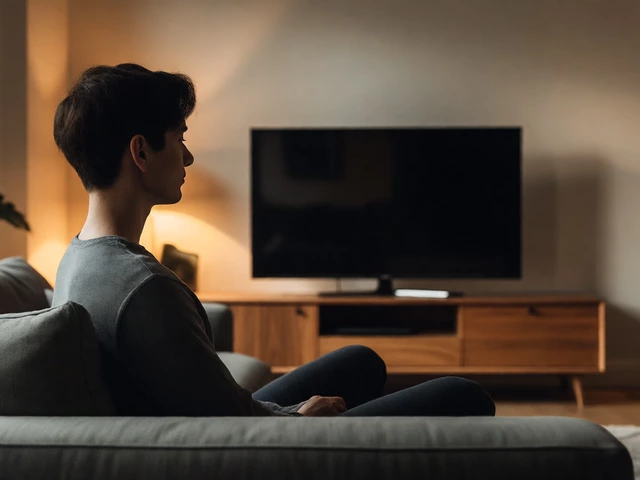
You’ve got a sturdy dresser sitting in your bedroom or basement. It’s not being used much anymore. Meanwhile, your TV is sitting on a flimsy stand that wobbles every time someone walks by. You start to wonder: can you use a dresser as a TV stand? The short answer? Yes - but not all dressers are built for it. If you do it wrong, you could damage your TV, your floor, or even hurt someone. Do it right, and you save money, reduce clutter, and get a cleaner look.
Why People Try This
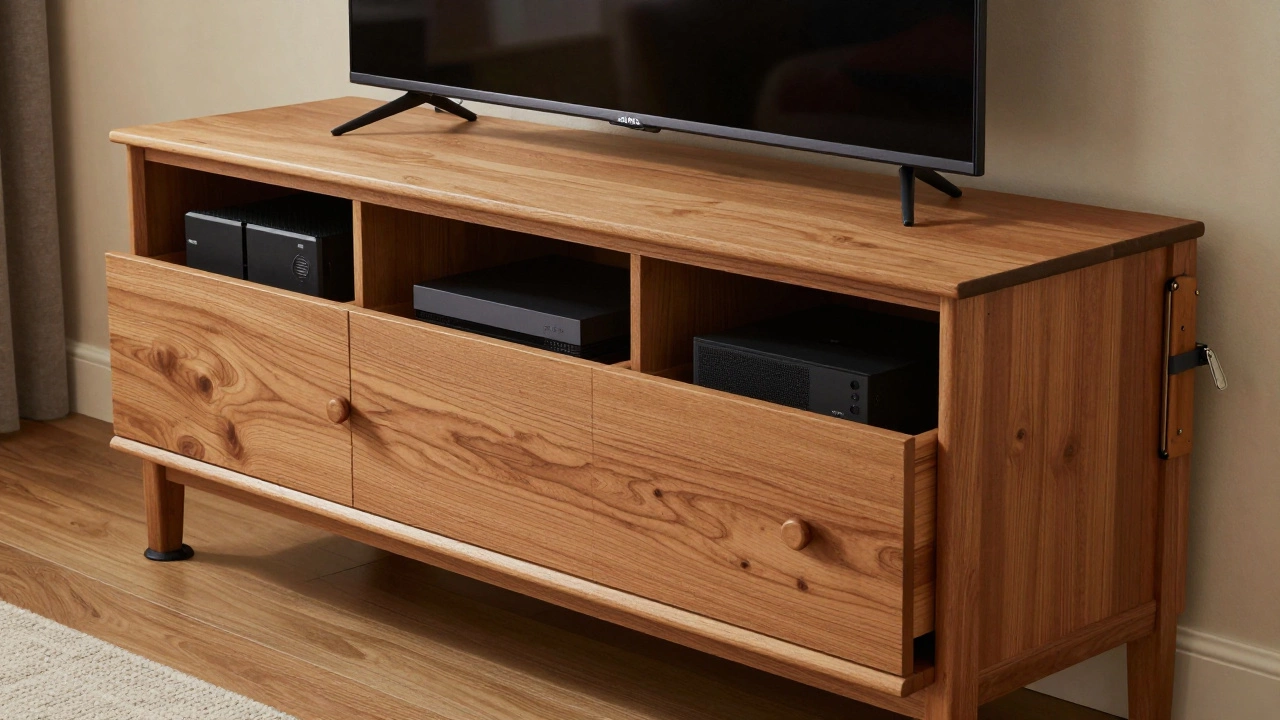
People turn dressers into TV stands for a few real reasons. Maybe you’re on a tight budget and don’t want to buy a new stand. Maybe you already own a solid wooden dresser and don’t want to toss it. Or maybe you like the look of a vintage piece with drawers underneath for hiding remotes, game consoles, or streaming boxes. It’s a smart way to reuse what you have.What Makes a Dresser Safe for a TV
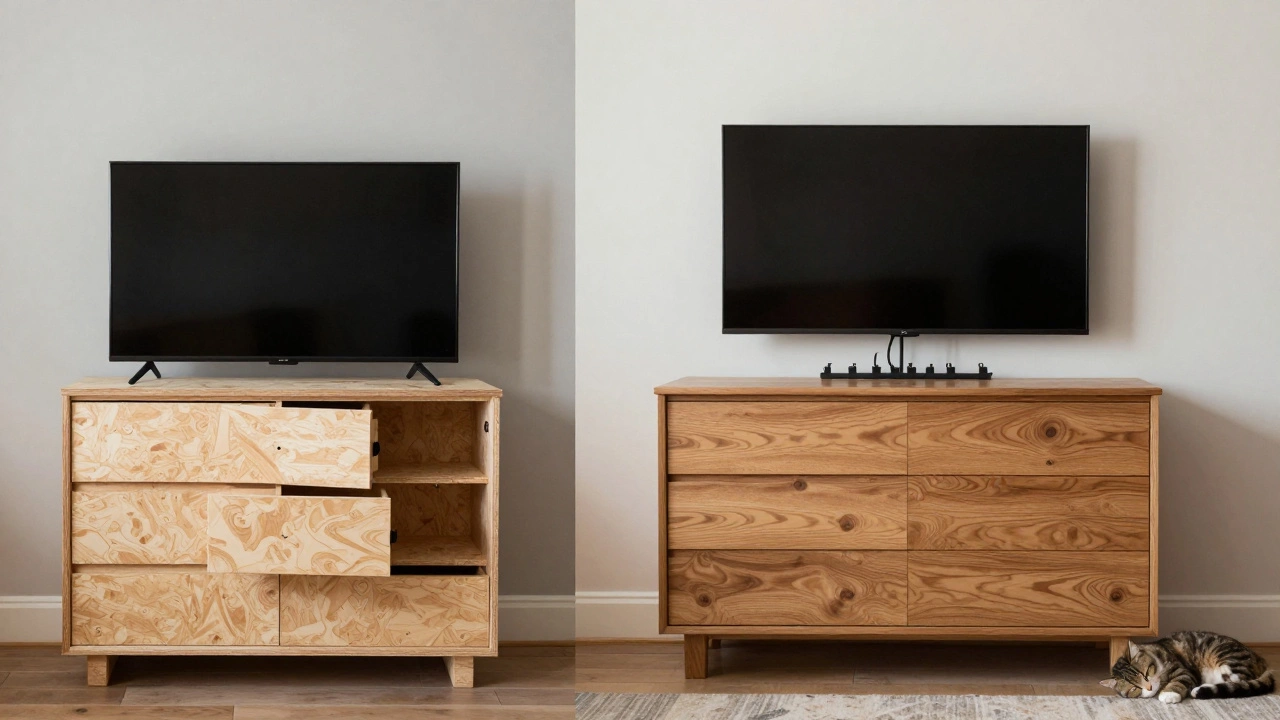
Not every dresser can handle a TV. TVs aren’t light - a 55-inch model can weigh 40 to 60 pounds. Add a soundbar, a cable box, and a few gaming consoles, and you’re pushing 100 pounds or more. That’s a lot of weight to put on a piece of furniture not designed for it. Here’s what you need to check before you even lift your TV:- Material: Solid wood or engineered wood with thick panels (at least 3/4 inch) is best. Particleboard or thin MDF? Avoid it. Those materials sag under weight over time.
- Structure: Look for a wide, flat top surface. No curves, no raised edges, no glass panels. The TV needs to sit flat with all four corners supported.
- Width: The dresser top should be at least 2 inches wider than your TV on each side. That gives you room for airflow and prevents accidental bumps.
- Stability: Shake it gently. If it wobbles, it’s not safe. A dresser with uneven legs or loose joints is a hazard.
- Weight capacity: Most dressers don’t list weight limits. But if it’s from a budget brand like IKEA or a discount store, assume it’s meant for clothes, not electronics.
How to Test Your Dresser
You don’t need tools to test if your dresser can hold a TV. Just follow this simple checklist:- Place a heavy object (like a box of books) the same size as your TV on the top. Wait 24 hours. If the surface sags, it’s not safe.
- Check for wobble. Push down on each corner. If the whole thing shifts, it needs to be anchored.
- Look at the drawers. Can you pull them out fully without the dresser tipping forward? If yes, that’s a red flag.
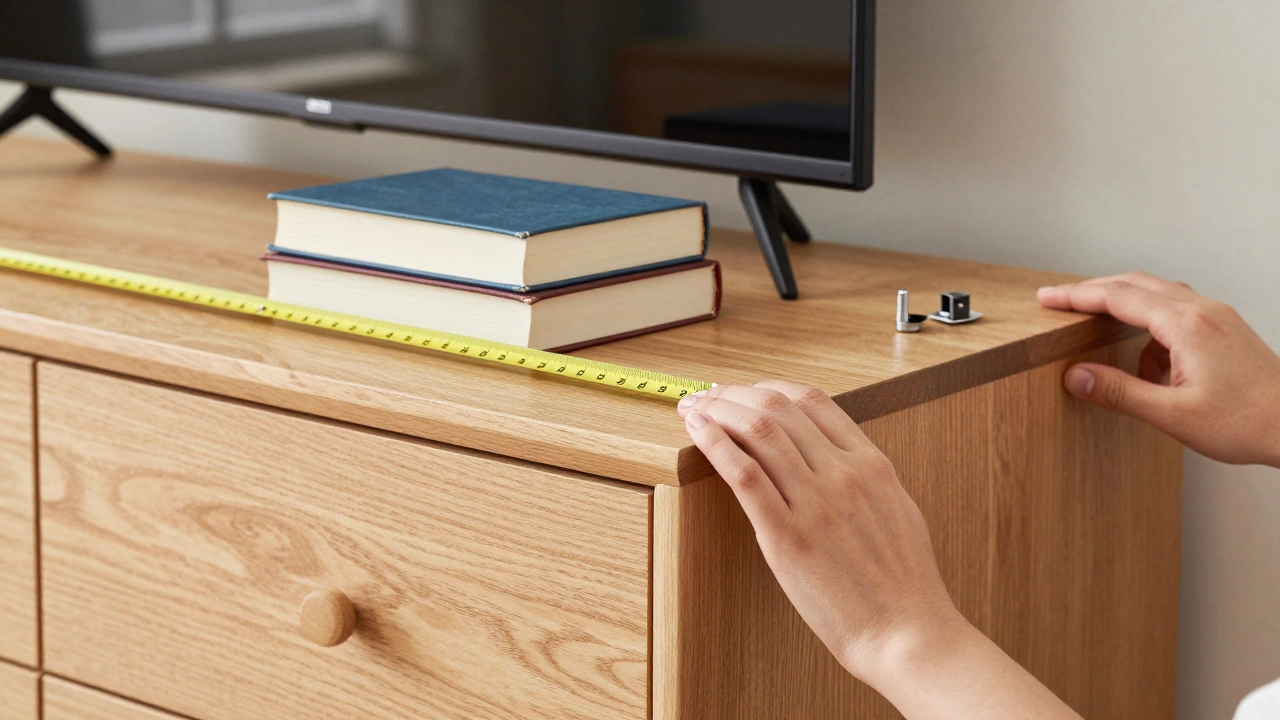
- Measure the top. Is it flat and at least 48 inches wide? Most 55-inch TVs need at least 50 inches of space.
How to Secure It
Even if your dresser passes the test, you still need to secure it. TVs and dressers are both heavy, but they don’t move the same way. If the dresser tips, the TV goes with it. Here’s how to prevent that:- Anchor it to the wall: Use an anti-tip kit. These come with straps and screws. Attach one end to the dresser’s back frame and the other to a wall stud. This is non-negotiable if you have kids or pets.
- Use furniture pads: Put rubber pads under the legs to stop scratching your floor and reduce sliding.
- Clear the drawers: Don’t store heavy stuff in the top drawers. That shifts the center of gravity and makes tipping more likely.
- Keep cords tidy: Use cable clips or a cord cover. Loose wires can pull the TV off if someone tugs on them.
What Not to Do
A lot of people make these mistakes:- Putting a 75-inch TV on a 42-inch dresser top - nope. Too narrow. Too risky.
- Using a glass-top dresser - glass can shatter under pressure or heat from the TV.
- Blocking ventilation - TVs need airflow. Don’t cram it into a closed cabinet or cover the back vents.
- Ignoring weight limits - just because it looks sturdy doesn’t mean it is. A 1980s oak dresser might be fine. A 2020s flat-pack dresser? Not so much.
Alternatives If It’s Not Safe
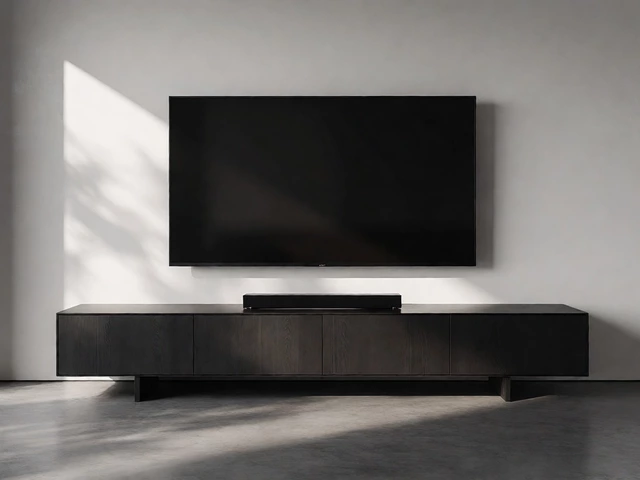
If your dresser doesn’t pass the test, don’t force it. There are better options:- TV console with drawers: These are made for TVs. They’re wider, sturdier, and often have built-in cable management.
- Media cabinet: Closed doors hide wires and dust. Great for a clean look.
- Wall mount: If you’re worried about space or safety, mounting the TV saves floor space and removes the risk of tipping entirely.
- Repurpose another piece: A sturdy bookcase, a solid wood sideboard, or even a thick dining table can work if it’s wide and stable.
Real-Life Example
A friend in Mississauga did this last year. She had an old maple dresser from her grandmother - solid, 60 inches wide, 18 inches deep. She removed the top drawers, added felt pads, anchored it to the wall, and placed her 50-inch TV on it. No wobble. No damage. And now she uses the remaining drawers for gaming gear and streaming devices. She saved $200 and kept a piece of family history.When to Walk Away
If your dresser is:- Older than 30 years and has cracks or warping
- From a discount store with no brand name
- Has thin veneer or visible glue lines
- Feels hollow when you knock on it
Final Verdict
Yes, you can use a dresser as a TV stand - but only if it’s solid, wide, flat, and anchored. Don’t guess. Test it. Secure it. And if you’re unsure? Go with a purpose-built TV stand. It’s cheaper than replacing a TV.Can any dresser be used as a TV stand?
No. Only dressers made of solid wood or thick engineered wood with a wide, flat top and strong construction are safe. Thin particleboard, glass tops, or wobbly frames should never be used.
How wide does the dresser top need to be?
It should be at least 2 inches wider than your TV on each side. For a 55-inch TV, aim for a top that’s at least 50 inches wide. This gives you room for airflow and keeps the TV from overhanging.
Is it safe to put a TV on a dresser with drawers?
Yes, but only if the top is solid and the drawers aren’t overloaded. Heavy items in the top drawers can shift the center of gravity and make the dresser tip forward. Keep the top drawers light or empty.
Do I need to anchor the dresser to the wall?
Absolutely. Any piece of furniture holding a TV should be anchored to the wall. This prevents tipping, especially if you have kids, pets, or live in an area with earthquakes. Anti-tip kits cost under $15 and take 10 minutes to install.
Can I put a soundbar under the TV on the dresser?
Yes, as long as the dresser top is wide enough to hold both the TV and the soundbar with space between them. Make sure the soundbar doesn’t block the TV’s infrared sensor or vents. Also, avoid placing it directly on top of drawers - vibration can loosen them over time.
What’s the safest alternative if my dresser isn’t suitable?
A wall mount is the safest option. It removes all tipping risk and saves floor space. If you prefer a stand, choose a media console or TV stand made from solid wood with a weight rating that exceeds your TV’s weight. Look for one with cable management and ventilation.