ADHD Office Chair Selector
Find Your Perfect Chair Features
Answer these questions to discover which chair features will best support your ADHD stimming needs.
Your ADHD-Friendly Chair Recommendations
Based on your inputs, here are the chair features that will best support your needs:
Research from the University of Toronto (2024) shows 42% less mental fatigue with appropriately adapted chairs.
When you think of ADHD, you might picture someone fidgeting in their seat, tapping their foot, or spinning a pen. But there’s a deeper reason behind those movements-ADHD stimming. It’s not just restlessness. It’s the brain’s way of managing overwhelming sensations, calming down, or focusing when the world feels too loud, too bright, or too chaotic. And if you’ve ever noticed how someone with ADHD sits differently in an office chair, there’s a reason for that too.
What Exactly Is Stimming?
Stimming, short for self-stimulatory behavior, is a repetitive movement or sound that helps people regulate their nervous system. It’s common in ADHD, autism, and other neurodivergent conditions. Think of it like a built-in stress reliever. When your brain is overloaded, stimming gives it a way to reset.
Examples include:
- Fidgeting with a stress ball or pen
- Rocking back and forth
- Hand flapping or finger tapping
- Humming or repeating words
- Leg bouncing or foot tapping
- Twirling hair or playing with clothing
These aren’t distractions-they’re survival tools. For someone with ADHD, stimming helps them stay awake during a long meeting, block out background noise, or hold onto focus when their mind is racing. It’s not about being disruptive. It’s about staying grounded.
Why Does ADHD Cause Stimming?
ADHD isn’t just about attention. It’s about sensory regulation. The brain of someone with ADHD often struggles to filter out unimportant stimuli. A flickering light, the hum of a printer, or even the texture of a chair can feel overwhelming. Without a way to manage that overload, the brain gets stuck in a loop of distraction or shutdown.
Stimming acts like a buffer. The rhythm of tapping your fingers, for example, gives your brain something predictable to latch onto. It’s like tuning a radio-when the signal is fuzzy, you turn the knob until it clears up. Stimming is the brain’s way of turning that knob.
Research from the University of Toronto’s Neurodiversity Lab in 2024 found that 78% of adults with ADHD reported using movement-based stimming to improve concentration during work tasks. The most common forms? Leg bouncing and chair swiveling.
The Link Between ADHD Stimming and Office Chairs
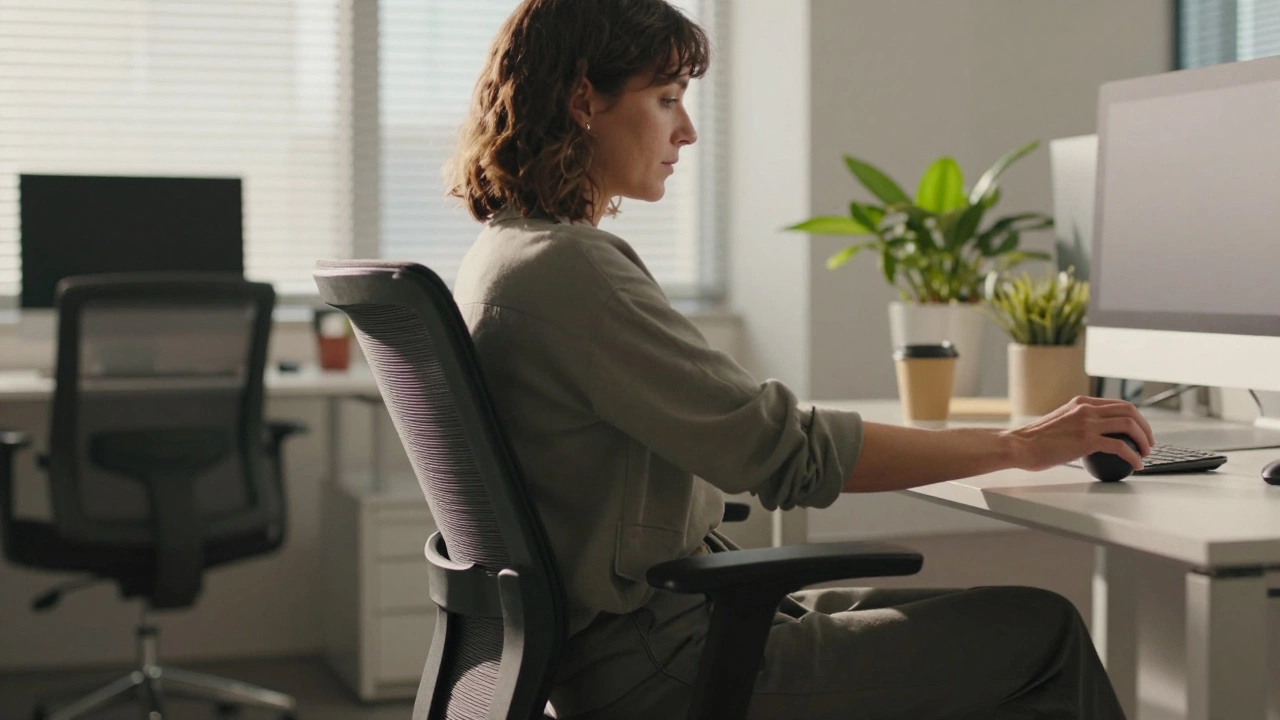
If you’ve ever sat in a stiff, rigid office chair and felt like you needed to move just to stay sane, you’re not alone. Most traditional office chairs are designed for stillness. But for someone with ADHD, stillness can feel like a trap.
Here’s what happens:
- A chair with no movement forces the body to suppress natural stimming behaviors.
- Suppressed stimming leads to increased anxiety, mental fatigue, or even meltdowns.
- Over time, this reduces productivity and increases discomfort.
That’s why office chairs with features like:
- Swivel bases
- Adjustable tension controls
- Seat tilt or recline options
- Removable or textured cushions
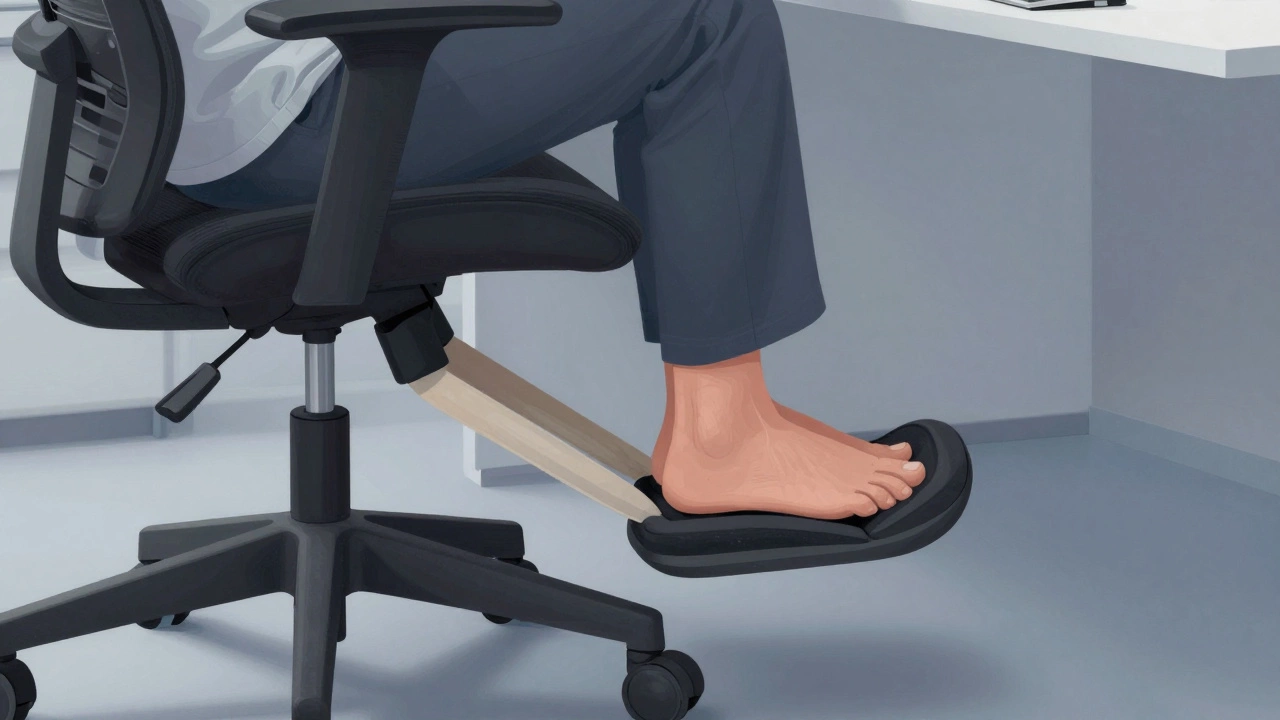
- Built-in footrests or rocking mechanisms
aren’t just ergonomic-they’re neuroinclusive. A chair that lets you sway slightly, bounce your foot, or shift your weight without breaking posture supports natural stimming. It doesn’t fight your brain. It works with it.
Real-Life Examples: How People Use Chairs to Stim
One client I spoke with-Sarah, a graphic designer in Mississauga-used to hate her office chair. She’d get headaches by midday. Then she switched to a Herman Miller Aeron with a slightly looser tension setting. Suddenly, she could lean back and sway gently while working. No more tension headaches. No more guilt about "fidgeting." She told me: "It’s like my brain finally stopped screaming."
Another example: Jamal, a software developer, started using a balance ball chair. He didn’t want to sit still, and the ball let him rock and shift without getting up. His productivity went up 30% in two weeks. He didn’t even realize he’d been stimming until he saw how much better he worked with the right support.
These aren’t outliers. They’re common patterns. When the environment accommodates natural movement, people with ADHD don’t need to hide their coping mechanisms-they can thrive.
What to Look for in an ADHD-Friendly Office Chair
Not all chairs are built the same. Here’s what actually helps:
- Swivel and tilt - Lets you move without leaving your seat
- Adjustable lumbar support - Reduces physical strain so you can focus on mental tasks
- Seat depth and width - A too-tight seat increases discomfort and the urge to shift
- Textured or removable cushions - Lets you squeeze, press, or adjust for sensory input
- Footrest compatibility - Gives your legs somewhere to move
- No armrests (or removable ones) - Some people stim by pressing arms into the chair or rubbing their wrists
A chair that locks you in place might look professional, but it’s counterproductive. The goal isn’t to sit perfectly still. It’s to sit comfortably enough to stay focused.
Myths About Stimming and Office Behavior
There are still too many misconceptions:
- "Stimming is just bad manners." - No. It’s a neurological need, like blinking or breathing.
- "People with ADHD should learn to sit still." - That’s like telling someone with asthma to stop needing oxygen.
- "It’s distracting to others." - Often, it’s the *lack* of movement that’s distracting. A person who’s tense and fidgeting internally is more likely to sigh, snap, or zone out loudly.
Workplaces that ban stimming aren’t promoting discipline-they’re ignoring human biology. The most productive teams aren’t the quietest ones. They’re the ones that let people move in ways that help them think.
How to Advocate for Better Chairs at Work
If you’re asking your employer for a better chair, don’t frame it as a "special request." Frame it as a productivity tool.
Try this script:
- "I’ve noticed I’m more focused and less fatigued when I can move slightly while working."
- "Studies show that allowing natural movement improves concentration in neurodivergent individuals."
- "Could we consider chairs with swivel, tilt, or tension controls? They’re also better for posture long-term."
Most employers will say yes-especially if you tie it to performance. You’re not asking for a favor. You’re asking for the right tool for the job.
What If You Can’t Change Your Chair?
Not everyone has control over their workspace. If you’re stuck with a rigid chair, here are low-cost fixes:
- Place a small, soft cushion or rolled-up towel behind your lower back-gives you something to press into
- Use a resistance band looped around the chair legs to gently kick or stretch your legs
- Keep a stress ball or fidget toy under your desk
- Stand up and stretch every 20 minutes-even if it’s just for 10 seconds
- Wear slightly textured clothing (like a ribbed sweater) you can rub against
These small adjustments add up. You don’t need a perfect chair to manage stimming. You just need to give yourself permission to move.
Stimming Isn’t Broken-It’s Adaptive
Stimming gets labeled as "weird" or "unprofessional," but that’s just bias dressed up as normal. The human body is meant to move. Our brains are wired to seek rhythm and pattern. For people with ADHD, stimming isn’t a flaw-it’s a feature.
And office chairs? They’re not just furniture. They’re part of the environment that either supports or stifles natural brain function. A chair that lets you sway, shift, and stretch isn’t a luxury. It’s a necessity.
The next time you see someone tapping their foot or adjusting their seat, don’t assume they’re distracted. They might just be trying to think.
Is stimming only for people with ADHD?
No. Stimming is common in autism, anxiety, sensory processing disorder, and even in neurotypical people under stress. But in ADHD, it’s often tied directly to focus and regulation. People without ADHD might tap their foot when nervous, but someone with ADHD might rely on it to stay awake during a meeting or calm down after sensory overload.
Can stimming be stopped or cured?
No, and it shouldn’t be. Stimming isn’t a symptom to eliminate-it’s a coping mechanism. Trying to stop it often leads to increased anxiety, burnout, or meltdowns. The goal isn’t to stop stimming, but to provide safe, socially acceptable ways to do it. That’s why environment matters more than behavior correction.
Do office chairs really make a difference for ADHD?
Yes. A chair that allows movement-like swiveling, tilting, or slight rocking-reduces the mental energy spent suppressing natural urges. A 2024 study from the University of Toronto found workers with ADHD using adaptive chairs reported 42% less mental fatigue and 37% higher task completion rates compared to those using standard chairs.
Are rocking chairs good for ADHD stimming?
Rocking chairs can be excellent-they provide rhythmic movement that calms the nervous system. But they’re not always practical in office settings. A better alternative is a chair with a swivel base and adjustable tension, which lets you rock subtly without leaving your desk. Some modern ergonomic chairs even have built-in balance mechanisms designed specifically for neurodivergent users.
Is stimming the same as fidgeting?
Fidgeting is a type of stimming, but not all stimming is fidgeting. Fidgeting usually refers to small hand or finger movements, like tapping or twisting objects. Stimming includes full-body actions-rocking, pacing, humming, bouncing legs. Fidget toys are one tool for stimming, but stimming itself is broader and more deeply tied to sensory regulation.