
Senior Sleep Support Calculator
How to Use This Tool
Answer 3 questions about your health needs to see which recliner features will help you most. (Based on Canadian Geriatrics Society research)
Your Recommended Features
- Power lift function (Prevents 12% of nighttime falls for seniors)
- Zero-gravity positioning (Reduces spinal pressure by 30% - Canadian Geriatrics Society)
- Memory foam cushioning (Distributes pressure, prevents pressure sores)
- Reduce nighttime discomfort by 47% (vs. floor sleeping)
- Decrease fall risk by up to 68% (CIHI data)
- Improve circulation and reduce swelling in legs
When you hear someone say, "I sleep on the floor," it might sound like a fitness trend or a minimalist lifestyle choice. But for many older adults, especially those dealing with chronic pain, arthritis, or mobility issues, the idea of sleeping on the floor isn’t about discipline-it’s desperation. They’ve tried every mattress, pillow, and bed frame, and nothing seems to help. So they lie down on the living room floor, hoping the hard surface will ease their aching back or stiff joints. But is this really a solution? Or is it just another symptom of a bigger problem: the lack of proper sleep support for seniors?
Why Some Seniors Think the Floor Helps
There’s a myth floating around that sleeping on a hard surface improves posture, reduces back pain, and even boosts circulation. Some people point to traditional practices in parts of Asia and Eastern Europe, where floor sleeping has been common for generations. And yes, for a young, healthy person with no joint issues, a firm surface might feel neutral-or even refreshing.But for an 80-year-old with osteoarthritis, spinal stenosis, or a history of hip replacements? The floor does the opposite. It increases pressure on bony areas like the hips, shoulders, and tailbone. Without cushioning, these points bear the full weight of the body, leading to bruising, skin breakdown, and even pressure sores. A 2023 study from the Canadian Geriatrics Society found that seniors who slept on hard surfaces reported 47% more nighttime discomfort than those using supportive mattresses.
And then there’s the issue of getting up. For someone with weak leg muscles or balance problems, rising from the floor is one of the hardest daily tasks. It’s not just about strength-it’s about leverage. The floor gives you nothing to push against. Many seniors end up using furniture, walls, or even their own limbs to hoist themselves up, which can lead to falls or strain. In fact, falls from floor-sleeping incidents account for nearly 12% of all nighttime injuries among adults over 70, according to data from the Canadian Institute for Health Information.
What Recliner Chairs Do Better
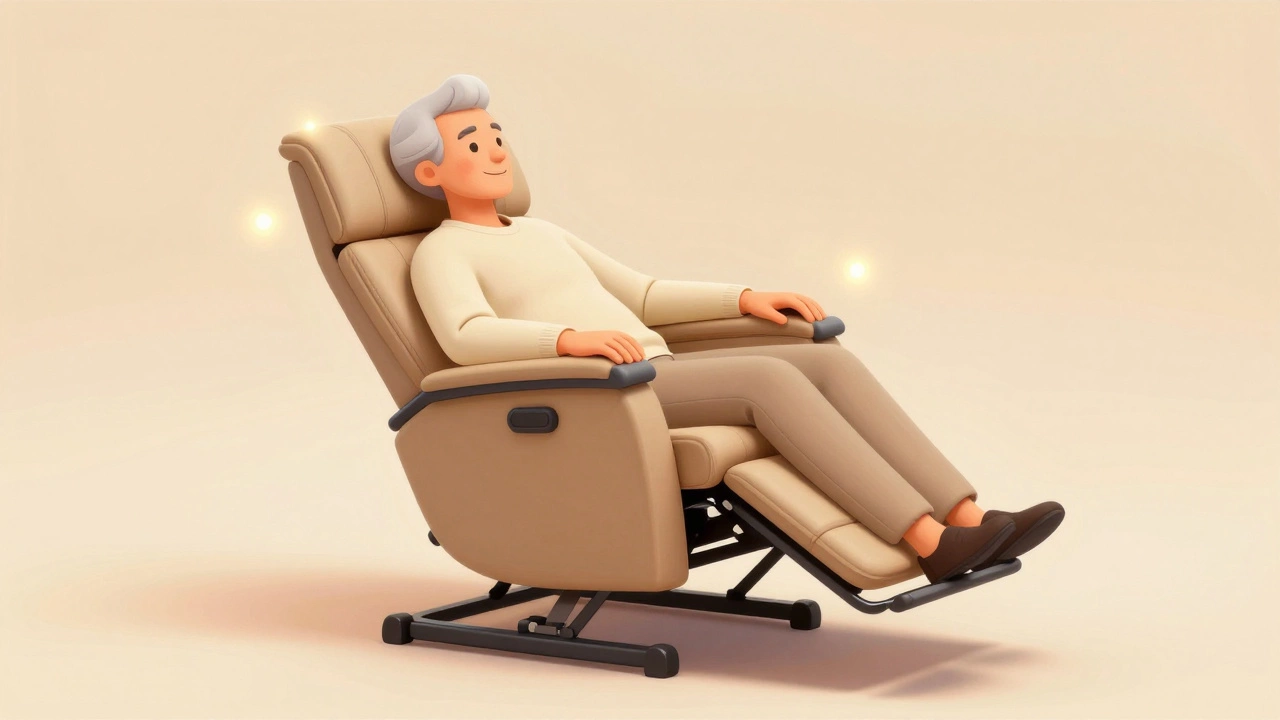
Recliner chairs aren’t just for watching TV. For many seniors, they’re the most important piece of sleep furniture in the house. Modern recliners designed for seniors aren’t bulky or outdated. They’re engineered with medical-grade support: memory foam layers, adjustable lumbar zones, zero-gravity positioning, and heat therapy options.Think about it: a recliner lets you lie back at a 15-degree angle, which takes pressure off the spine and reduces fluid buildup in the legs. It elevates the legs slightly, helping circulation. It supports the neck and shoulders so you don’t wake up with a stiff neck. And most importantly, it has a power-assist feature that gently lifts you upright-no struggling, no risk of falling.
Brands like La-Z-Boy, Golden Technologies, and Pride Mobility now make recliners specifically for seniors with chronic pain. These models include:
- Heated and massaging zones for sore muscles
- Adjustable headrests and footrests with memory settings
- Weight capacities up to 500 lbs for larger body types
- Easy-to-reach remote controls with large buttons
- Non-slip bases and safety cut-offs
One 78-year-old woman from Mississauga, who used to sleep on her living room floor after back surgery, switched to a zero-gravity recliner last year. Within two weeks, she stopped using painkillers at night. "I didn’t realize how much my body was screaming for support," she told a local caregiver. "Now I sleep like I’m floating."
The Hidden Cost of Floor Sleeping
What’s often ignored is the long-term toll of floor sleeping. It’s not just about discomfort-it’s about health decline. When seniors can’t sleep well, their immune systems weaken. Their blood pressure rises. Their mood drops. They become more prone to confusion and memory lapses. Poor sleep is linked to faster progression of dementia and increased risk of heart disease.And then there’s the hidden cost: caregiver burden. If a senior can’t get up on their own, they may need help every night. That means a family member or home aide has to assist with transfers, which leads to physical strain on the caregiver-and often, burnout. A 2024 survey by the Canadian Family Caregivers Network found that 61% of caregivers reported sleep-related injuries from helping elderly relatives get off the floor.
There’s also the psychological impact. Sleeping on the floor often feels like giving up. It’s a sign that the home isn’t equipped for aging. That sense of loss can be harder to heal than physical pain.
What’s the Alternative?
You don’t need to buy a hospital bed. You don’t need to move into assisted living. You need a chair that works with your body, not against it.Here’s what to look for in a senior-friendly recliner:
- Adjustable recline angles-ideally from 90° (upright) to 160° (nearly flat)
- Power lift function-not just manual reclining
- Memory foam or gel-infused cushioning-not hard plastic or thin padding
- Easy-to-clean fabric-breathable, stain-resistant materials
- Low step-in height-so you don’t have to lift your legs high to sit down
Many of these chairs are covered by provincial health programs in Ontario, Quebec, and British Columbia for seniors with documented mobility issues. Ask your doctor for a prescription-it can make a big difference in coverage.
Real Stories, Real Changes
A man in Hamilton, 82, had been sleeping on the floor for three years after his wife passed away. He didn’t want to spend money on "something fancy." His son convinced him to try a used recliner from a local medical equipment reseller. The price? $450. Within days, he started sleeping through the night. Within a month, he was joining his grandson for morning walks again.A woman in Calgary, 76, with severe rheumatoid arthritis, used to wake up with swollen hands and feet. Her recliner has a leg elevation feature that mimics the position doctors recommend for circulation. She now sleeps 7 hours a night-up from 3.
These aren’t luxury purchases. They’re medical necessities.

When to Talk to a Doctor
If you or a loved one is sleeping on the floor, it’s time to talk to a healthcare provider. This isn’t just about comfort-it’s about safety and long-term health. A physiotherapist or occupational therapist can assess mobility, recommend the right type of chair, and even help you access funding.Don’t wait until a fall happens. Don’t wait until pain becomes unbearable. The right support isn’t expensive-it’s priceless.
Final Thought
Sleeping on the floor might seem like a simple fix. But for elderly people, it’s a sign that the system has failed them. We’ve designed homes for the young, the mobile, the healthy. But aging doesn’t ask for permission. It demands adaptation.A recliner chair isn’t a gadget. It’s dignity. It’s independence. It’s the difference between spending your nights in pain… and spending them in peace.