
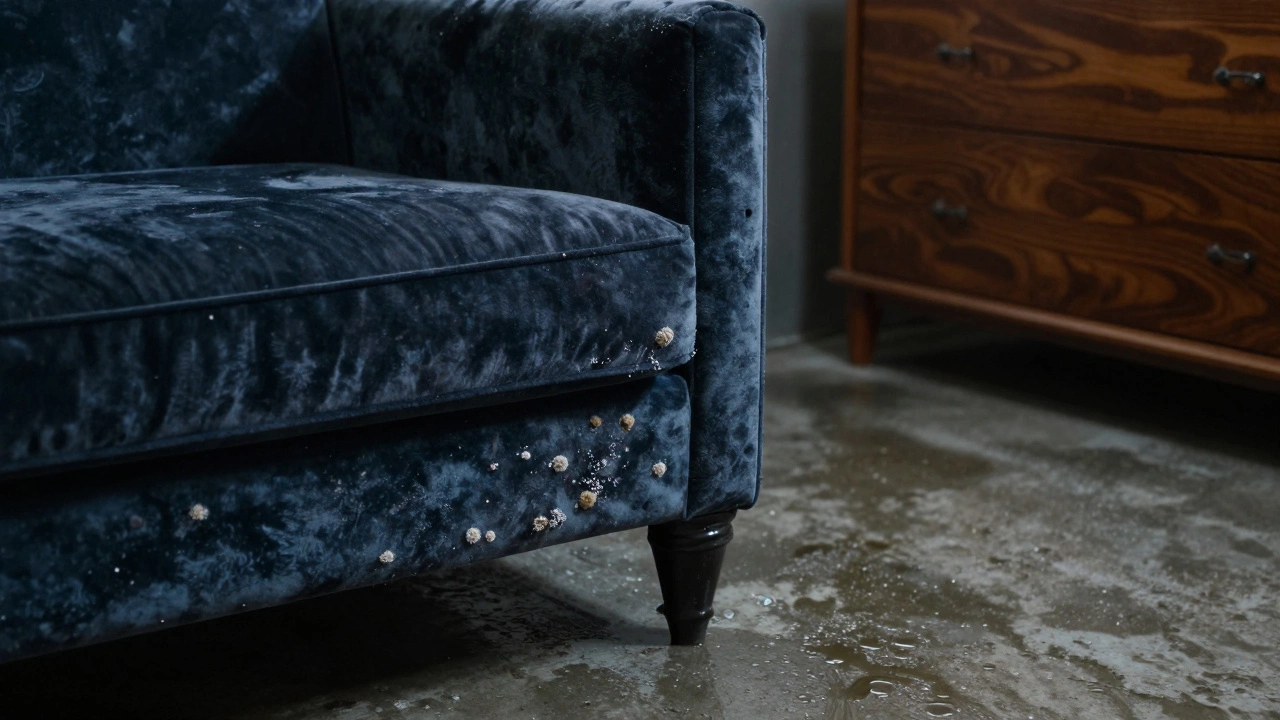
Quick Wins for Mold-Free Storage
- Clean and dry everything completely before packing.
- Avoid plastic wrap for long-term storage; use breathable fabric covers.
- Keep furniture off the floor using pallets or blocks.
- Use moisture absorbers like silica gel or calcium chloride buckets.
- Ensure there is a gap between furniture and the walls for airflow.
The Science of Why Furniture Molds
To stop mold, you have to understand what it wants. Mold is a fungus that feeds on organic materials. Wood is a porous organic material that absorbs moisture from the air, making it a prime target. When you place a piece of furniture in a confined space with high humidity, the moisture settles into the fibers. If the temperature fluctuates-common in non-climate-controlled units-condensation forms, and mold spores, which are always present in the air, land and begin to grow.
The danger increases when you use airtight plastic wraps. While you might think you're protecting your couch from dust, you're actually trapping moisture inside the plastic. If there's even a tiny bit of humidity when you wrap it, that moisture has nowhere to go, creating a miniature sauna that accelerates mold growth. This is why breathable materials are your best friend.
Prepping Your Furniture for the Long Haul
You can't just drag a sofa from the living room straight into storage. Even a tiny spill from a coffee cup three months ago can become a mold colony in a humid warehouse. Start with a deep clean. Use a vacuum with a HEPA filter to remove dust and skin cells, which act as food for mold.
For wooden pieces, avoid using heavy waxes or oils right before storage, as these can sometimes trap moisture within the grain. Instead, ensure the piece is bone-dry. If you've recently moved through a rainy area, let your furniture sit in a dry, air-conditioned room for 48 hours before packing. This ensures that no hidden dampness is locked into the upholstery or the joints of the wood.
Choosing the Right Storage Environment
Not all storage units are created equal. If you're storing high-value antiques or fabric-heavy pieces, a Climate Controlled Storage is a facility that maintains a consistent temperature and humidity level, typically keeping humidity below 50% to prevent mold growth. This is the single most effective way to guarantee your stuff stays clean.
| Feature | Standard Unit | Climate Controlled | Garage/Basement |
|---|---|---|---|
| Humidity Level | Variable (High) | Regulated (Low) | Very High |
| Temperature | Extreme swings | Stable | Unpredictable |
| Mold Risk | Moderate to High | Very Low | Critical |
| Cost | Budget-friendly | Premium | Free/Low |
If a climate-controlled unit isn't in your budget, you have to manually manage the air. Avoid the back corners of the unit where air stagnates. These "dead zones" are where mold usually starts. Leave at least six inches of space between your furniture and the walls to allow air to circulate around the pieces.
Smart Packing and Wrapping Techniques
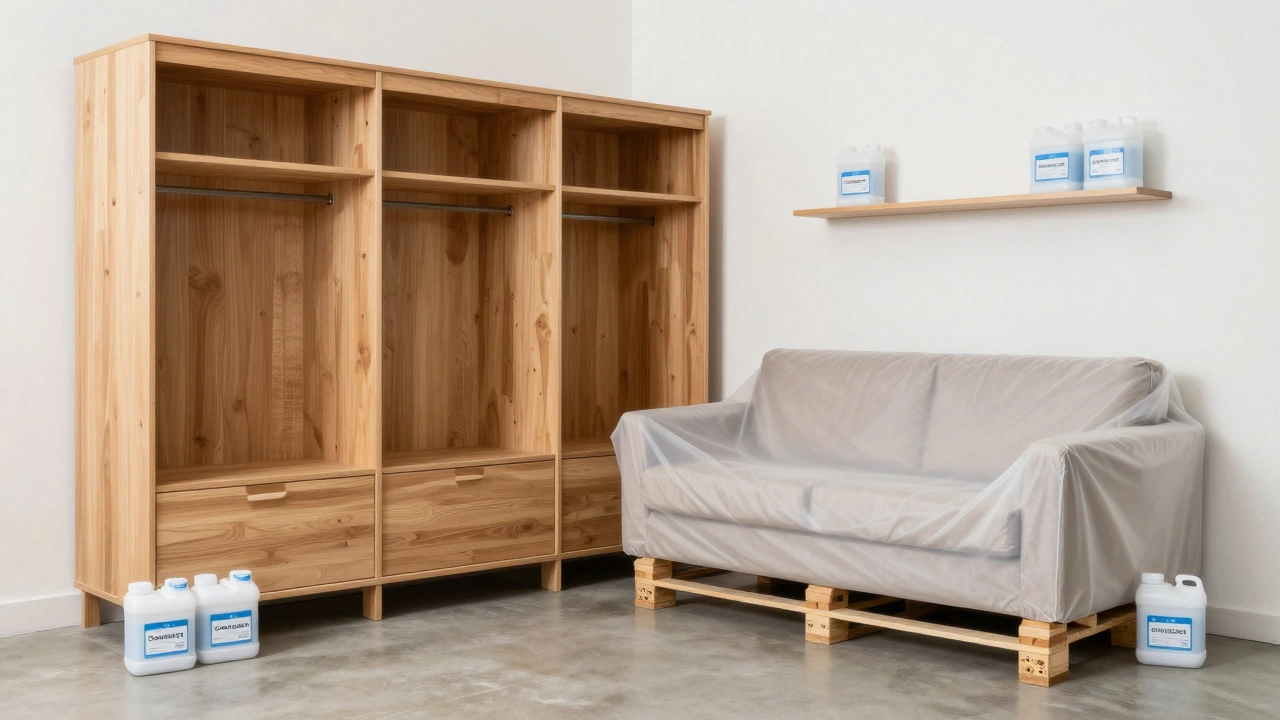
The biggest mistake people make is using shrink wrap on everything. Instead, look for Breathable Furniture Covers, which are protective sheets made from woven fabrics that block dust but allow water vapor to escape. These are essential for sofas and mattresses.
For wooden furniture, use acid-free packing paper or old cotton sheets. Avoid using cardboard boxes directly against the wood for long periods, as cardboard is highly absorbent and can actually pull moisture from the air and hold it against the furniture surface, creating a damp interface that encourages mold.
If you must use plastic for short-term transit, remove it as soon as the item is placed in the unit. Replace it with a fabric drape. This prevents the "sweating" effect that happens when temperature changes cause moisture to condense inside the plastic wrap.
Active Moisture Control Strategies
Even in a decent unit, humidity can spike during a rainy season. You need an active defense. This is where Desiccants come in. Hygroscopic substances that induce dryness by absorbing water molecules from the surrounding air.
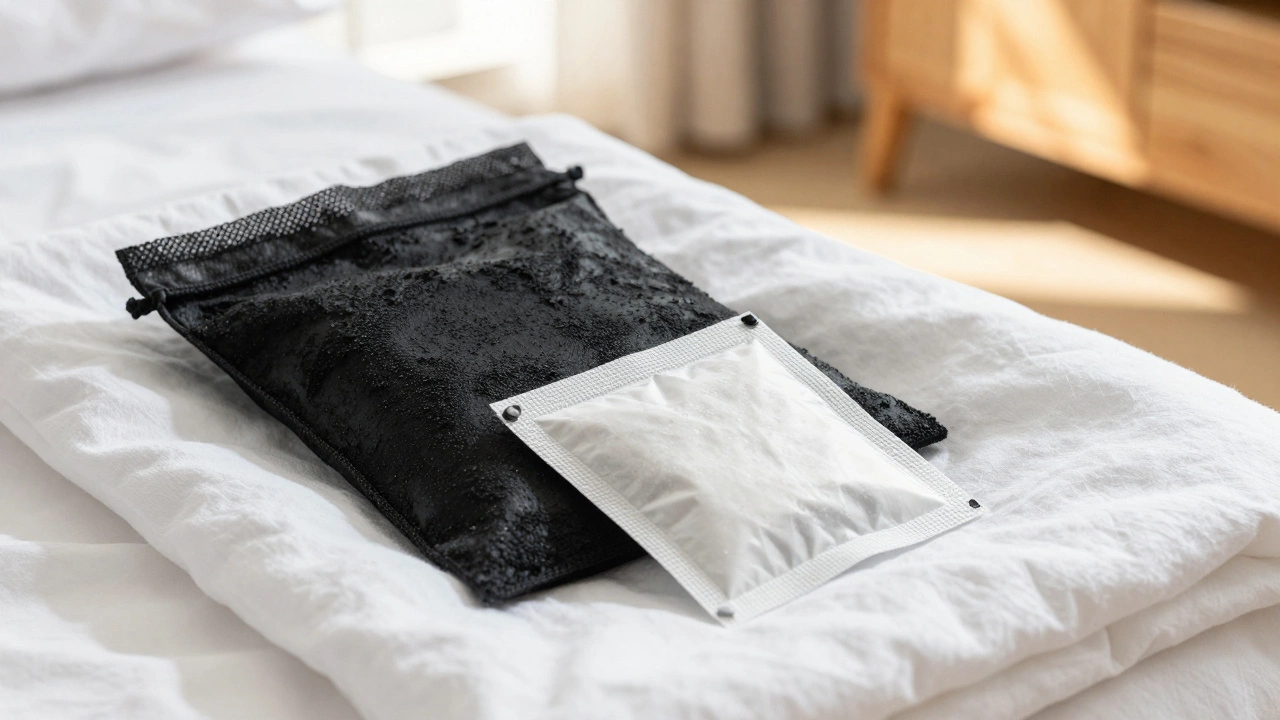
For small drawers or cabinets, silica gel packets are great. For larger areas, use calcium chloride moisture absorbers-those tubs with a grate on top that collect water in a reservoir. These are incredibly effective at pulling moisture out of the air before it can settle on your dresser. Just remember to check them every few months; once the reservoir is full, they stop working.
Another pro tip is to use charcoal bags. Activated charcoal doesn't just absorb some moisture; it also neutralizes the musty odors associated with dampness. Place a few bags inside wardrobes or under sofa cushions to keep the air fresh and dry.
The Layout Strategy: Avoiding the Damp Trap
How you arrange your unit matters. Never push furniture directly against the exterior walls of a storage facility. These walls are prone to "thermal bridging," meaning they get colder than the air inside, causing condensation to form on the surface. If your sofa is touching a cold wall, the fabric will absorb that moisture instantly.
Use Pallets or sturdy plastic risers to lift furniture off the concrete floor. Concrete is porous and can "wick" moisture upward from the ground (capillary action). By elevating your furniture, you create a buffer zone that prevents ground dampness from seeping into the bottom of your wardrobes or the legs of your tables.
Dealing with Unexpected Mold Discovery
If you open your unit and find a few spots of mold, don't panic, but act fast. Do not use a vacuum cleaner immediately, as this can blow spores all over the rest of your furniture. Instead, use a vacuum with a HEPA filter or wipe the area with a solution of white vinegar and water. Vinegar is more effective than bleach for porous materials because it penetrates deeper into the wood or fabric to kill the mold root.
After cleaning, move the item into direct sunlight for a few hours. UV rays are a natural disinfectant and will help kill any remaining spores. Once the item is completely dry and the smell is gone, you can either keep it or re-store it using the breathable methods mentioned above.
Can I use bleach to clean mold off my stored furniture?
Bleach is great for non-porous surfaces like tile, but it's often ineffective on wood or fabric. Bleach only kills mold on the surface, and the water in the bleach solution can actually seep into the porous material and feed the mold roots deeper down. Distilled white vinegar is a better choice as it penetrates the material and kills the fungus more effectively.
How often should I check my storage unit for mold?
Ideally, you should visit your unit once every 2 to 3 months. This allows you to check if your moisture absorbers are full, ensure that no leaks have developed in the facility's roof, and give the air a chance to circulate by opening the door for a short while.
Are silica gel packets enough for a whole sofa?
No, small silica packets are designed for electronics or shoe boxes. For a large item like a sofa, you need larger-scale solutions. Use calcium chloride tubs (damp-rid style) placed around the furniture and high-capacity activated charcoal bags tucked into the crevices of the upholstery.
Does bubble wrap protect against mold?
Bubble wrap is excellent for preventing scratches and breaks, but it is a disaster for mold prevention. Because it is plastic, it traps moisture against the furniture. If you use bubble wrap for the corners, ensure the main body of the furniture is covered with a breathable cotton sheet or a fabric furniture cover.
What is the ideal humidity level for furniture storage?
The sweet spot for furniture is between 30% and 50% relative humidity. If it goes above 60%, mold risk increases significantly. If it drops below 30%, some woods can begin to crack or shrink. Climate-controlled units usually aim for this middle ground.
Next Steps for Different Storage Scenarios
For the Budget-Conscious: If you're using a free garage space, focus heavily on elevation. Use wooden pallets to keep everything 4-6 inches off the floor and buy a bulk pack of calcium chloride absorbers. Check them monthly, as garages are more prone to humidity spikes than professional units.
For High-Value Antiques: Avoid any DIY wraps. Invest in professional, breathable museum-grade covers and insist on a climate-controlled unit with a monitored hygrometer. If the facility can't provide the current humidity reading, it's not safe for high-end wood.
For Quick-Move Transitions: If you're only storing things for a few weeks, a clean, dry environment is usually enough. However, avoid the temptation to shrink-wrap everything just for "convenience," as even a few weeks in a damp environment can start the mold process.