
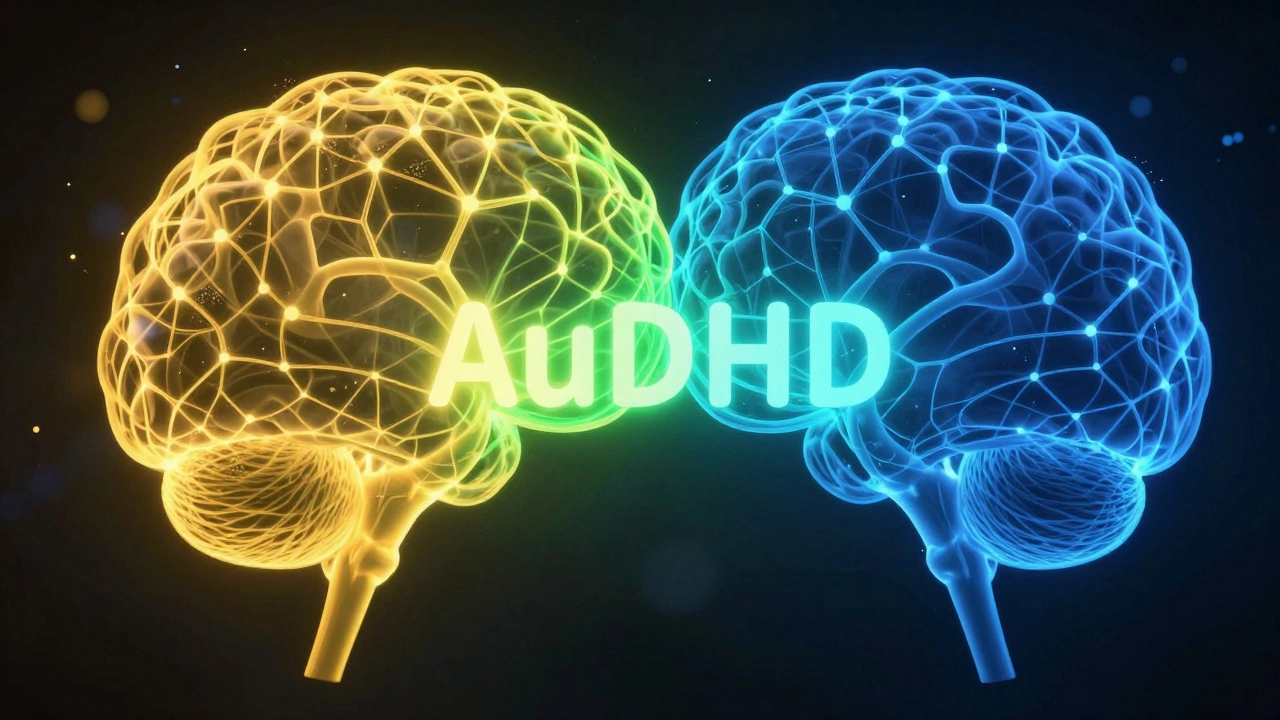
Neurodivergence Comparison Tool
Select a trait to see how it manifests differently in ADHD and Autism, and how it looks when both (AuDHD) coexist.
Select a Behavior:
You might have noticed that the traits of ADHD and autism look incredibly similar on the surface. Maybe you’re someone who struggles to focus but also gets overwhelmed by a loud room, or perhaps you know a child who is hyper-focused on trains but can't sit still during dinner. It leads to a million-dollar question: is ADHD actually part of the autism spectrum? The short answer is no, but the long answer is much more interesting because these two conditions are practically best friends.
Quick Takeaways
- ADHD is not a subtype of autism; they are distinct neurodevelopmental conditions.
- They share a huge amount of genetic and behavioral overlap.
- It is very common to have both at the same time (often called AuDHD).
- Both affect how the brain processes information and manages time.
The Technical Side: What Are We Talking About?
To get this straight, we need to define the players. ADHD is Attention Deficit Hyperactivity Disorder, a condition characterized by patterns of inattention, hyperactivity, and impulsivity. It’s primarily about the brain's reward system and its struggle to regulate attention.
On the other side, Autism Spectrum Disorder (or ASD) is a developmental disability that affects how people communicate, interact, behave, and learn. While ADHD is about the "volume knob" of attention, autism is often more about how the brain wires social connections and sensory input.
For years, medical guidelines actually said you couldn't be diagnosed with both. If you had autism, doctors assumed any hyperactivity was just part of that. But that changed around 2013 with the release of the DSM-5. Now, we recognize that you can absolutely have both, and for many people, that's the only way the pieces of the puzzle actually fit together.
The Great Overlap: Where They Meet
If they are different, why do they feel so similar? The truth is, both fall under the umbrella of Neurodivergence, meaning the brain just functions differently than what is considered "typical." The biggest bridge between the two is Executive Function.
Executive function is like the secretary of your brain. It handles planning, organizing, remembering tasks, and controlling impulses. Both people with ADHD and those on the autism spectrum struggle here, but in different ways. An ADHD brain might forget where the keys are because it jumped to three different thoughts in five seconds. An autistic brain might struggle to start the task of "cleaning the room" because the instructions are too vague and the process feels chaotic.
Then there's the sensory part. While we usually associate sensory overload with autism, ADHD brains are also often hypersensitive. A humming refrigerator or a scratchy clothing tag can be a total distraction for someone with ADHD, making it impossible to focus on a conversation. This shared sensory struggle is why people often confuse the two.
| Trait | ADHD Focus | Autism Focus |
|---|---|---|
| Social Interaction | Might interrupt others due to impulsivity. | Might struggle with social cues or norms. |
| Interests | Rapidly switches "hyperfixations." | Deep, long-term "special interests." |
| Routine | Hates routine; craves novelty. | Needs routine; finds comfort in predictability. |
| Attention | Easily distracted by external stimuli. | Intense focus on specific details. |
The AuDHD Paradox: Living With Both
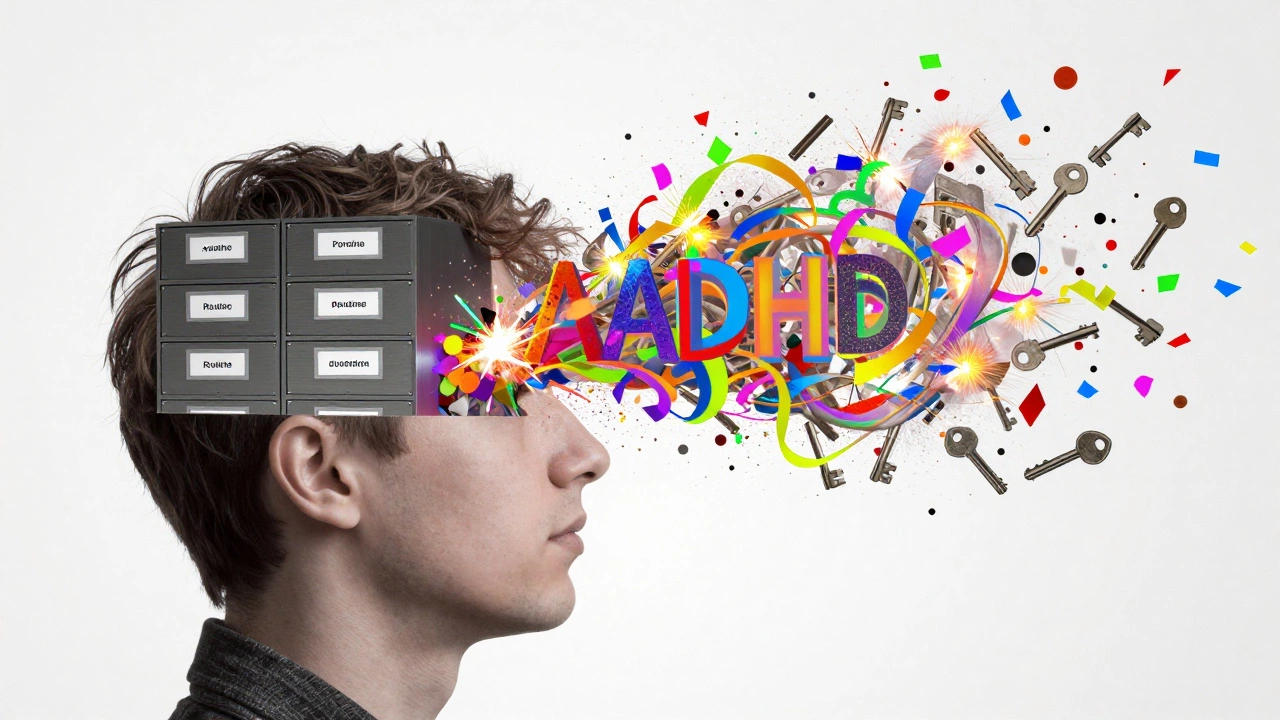
When someone has both ADHD and autism, they often describe it as a constant internal war. This combination is frequently called AuDHD in online communities. Why is it a paradox? Because the needs of the two conditions often contradict each other.
Imagine you have a brain that desperately needs a strict schedule to feel safe (the autism side), but you also have a brain that gets bored to tears if every day looks the same (the ADHD side). You might spend three hours meticulously planning your week, only to wake up on Monday and feel a physical repulsion toward the plan you just made.
This internal conflict often leads to extreme burnout. A person might "mask" their traits-trying to act neurotypical to fit in-which takes an incredible amount of energy. When the ADHD side pushes them to be social and impulsive, and the autism side pushes them to withdraw and seek solitude, the result is often a total crash in productivity and mood.
How to Spot the Difference in Real Life
Since the symptoms overlap, how do you actually tell them apart? Look at the "why" behind the behavior. Let's take "fidgeting" as an example. Someone with ADHD might fidget because they have excess energy or need stimulation to keep their brain awake. Someone on the autism spectrum might engage in Stimming (self-stimulatory behavior) to soothe themselves during a stressful moment or to process a strong emotion.
Another clue is in the nature of their interests. ADHD hyperfixations are often like a wildfire-intense, all-consuming, but they might disappear in two weeks. Autism special interests are more like a slow-burning fire-they can last for years or even a lifetime, with the person becoming a walking encyclopedia on a specific topic, like 19th-century railway systems or marine biology.
Communication also differs. An ADHD person might miss a detail in a conversation because they were distracted by a bird outside. An autistic person might miss the detail because they didn't pick up on the subtle tone of voice or the implied meaning behind the words.

Practical Strategies for Support
Whether you're dealing with one or both, the goal isn't to "fix" the brain, but to work with it. Standard productivity advice, like "just use a planner," often fails because it doesn't account for how these brains actually work.
For the ADHD side, the key is removing friction. If you struggle to start a task, try "body doubling"-having someone else in the room with you while you work. It doesn't mean they have to help; their mere presence helps anchor the ADHD brain to the task at hand.
For the autistic side, predictability is king. Using visual schedules or checklists helps reduce the anxiety of the unknown. However, for the AuDHD person, these schedules need to be flexible. Instead of a rigid time-block (e.g., "Clean kitchen at 10:00 AM"), try a menu of tasks. This gives the ADHD brain a sense of choice and novelty while giving the autistic brain a clear set of expectations.
Managing the sensory environment is equally vital. Investing in noise-canceling headphones or choosing seamless clothing can stop the "sensory drip" that eventually leads to an explosion of irritability or a total shutdown.
Can you be diagnosed with both ADHD and autism?
Yes. While it was once considered impossible in older medical manuals, current guidelines (like the DSM-5) explicitly allow for a dual diagnosis. Many people find that they have traits of both, and recognizing this helps them find better coping mechanisms.
Why do ADHD and autism feel so similar?
They share common ground in how they affect the brain's executive functions. Both can involve difficulties with organization, impulse control, and sensory processing, which makes the outward behavior look very similar even if the internal cause is different.
Does ADHD medication work for people with autism?
Stimulants used for ADHD can work for some people with autism to help with focus and hyperactivity, but they can also make sensory sensitivities worse for others. It varies wildly from person to person, which is why a cautious, doctor-led approach is necessary.
What is "masking" in the context of neurodivergence?
Masking is the process of consciously or unconsciously hiding your natural traits to fit into a neurotypical society. For example, an autistic person might force themselves to make eye contact even though it's uncomfortable, or someone with ADHD might pretend to be listening while their mind is racing.
Is one more common than the other?
ADHD is generally diagnosed more frequently in the general population, but the gap is closing as our understanding of autism expands. Both are significantly more common in children than they were previously reported, largely due to better screening tools.
Next Steps and Troubleshooting
If you suspect you or a loved one might be neurodivergent, the first step isn't a Google search-it's a professional evaluation. Start by documenting specific examples of your struggles. Instead of saying "I'm disorganized," write "I lose my wallet three times a week and cannot start a project without a deadline looming." This concrete data is much more helpful for a clinician.
If you're already diagnosed and struggling with a specific "clash" between ADHD and autism, try a trial-and-error period with your environment. If a strict routine is making you miserable but a lack of routine is making you anxious, try the "flexible framework" approach. Set a few non-negotiable anchor points in your day (like meal times) and leave the rest open for spontaneous activity.
Lastly, look for community. Whether it's through support groups or online forums, talking to other "AuDHD" individuals can provide a level of validation and practical "life-hacks" that you won't find in a textbook. Understanding that your brain isn't broken-it's just wired differently-is the most important part of the journey.