Ergonomic Recline Angle Calculator
Optimal Recline Calculator
Your recommended recline angle will appear here
Spinal Pressure Comparison
Compare your current posture to optimal position
Upright (90°)
Optimal Recline
Reclining Best Practices
You’ve been sitting at your desk for hours. Your lower back aches. Your shoulders feel tight. You glance at your office chair and wonder: Should I recline my office chair? It seems like a simple question, but the answer isn’t just about comfort-it’s about your spine, your energy, and how long you can work without pain.
Reclining Isn’t Just Leaning Back
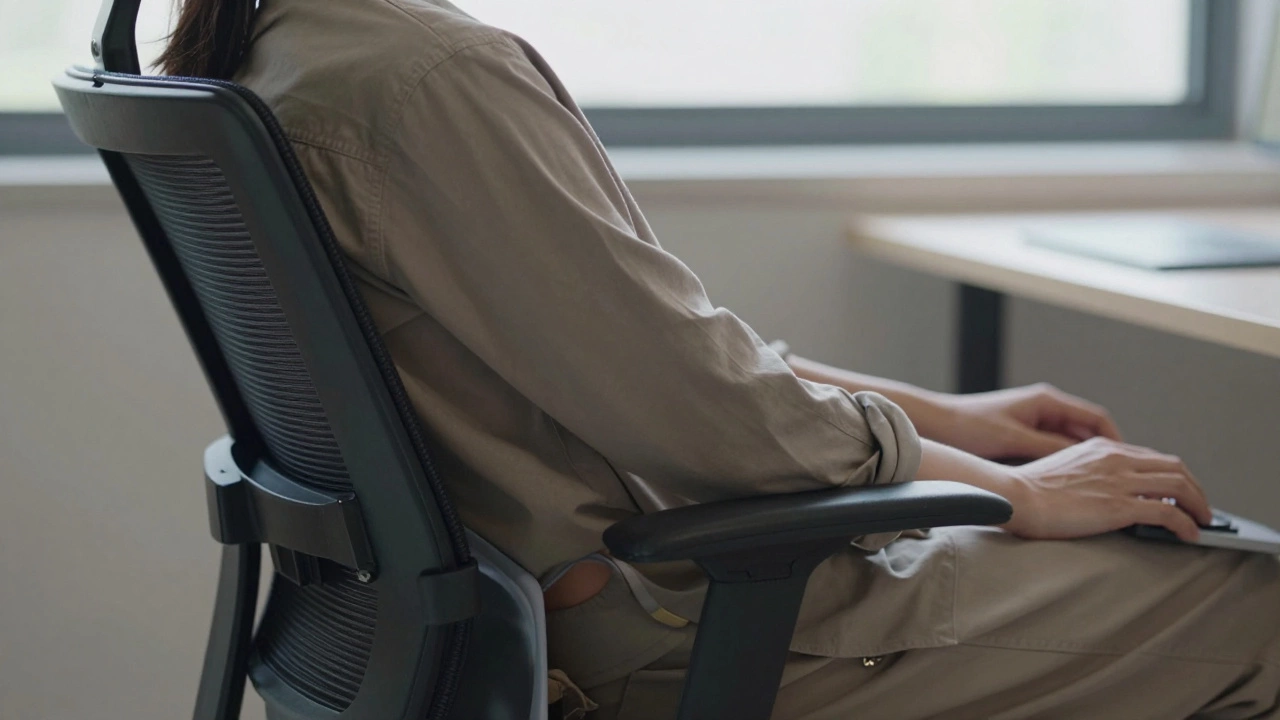
Many people think reclining means dumping into the chair and letting gravity take over. That’s not reclining. That’s collapsing. True reclining means adjusting the angle of your backrest to support your spine in a neutral position, usually between 100 and 110 degrees. This isn’t lounging. It’s biomechanics. A 2023 study from the University of Waterloo tracked 120 office workers using ergonomic chairs with adjustable recline. Those who sat at 110 degrees reported 37% less lower back pressure than those who sat upright at 90 degrees. Why? Because your spine naturally curves. When you sit straight up, your lumbar region bears the full weight of your upper body. Reclining slightly shifts that load to your backrest, letting your muscles relax.What Happens When You Don’t Recline
Sitting upright all day sounds like good posture-until your body says otherwise. Your erector spinae muscles, which keep your spine straight, start firing nonstop. After 45 minutes, they begin to fatigue. By two hours, you’re slouching anyway, but now without support. Your hips tuck under, your pelvis rotates backward, and your lower back flattens unnaturally. That’s when disc pressure spikes. You might think a lumbar pillow fixes this. It helps-but only if your chair’s backrest is angled right. A pillow can’t compensate for a rigid 90-degree angle. Reclining allows the chair’s built-in support to do its job.Not All Reclines Are Created Equal
A cheap office chair with a fixed backrest? Reclining won’t help. You need a chair with:- Adjustable backrest angle (ideally 90-120 degrees)
- Lumbar support that moves with the recline
- A synchronized tilt mechanism (so the seat and back move together)
- Recline tension control (so you’re not fighting the chair)
Reclining and Movement Go Hand in Hand
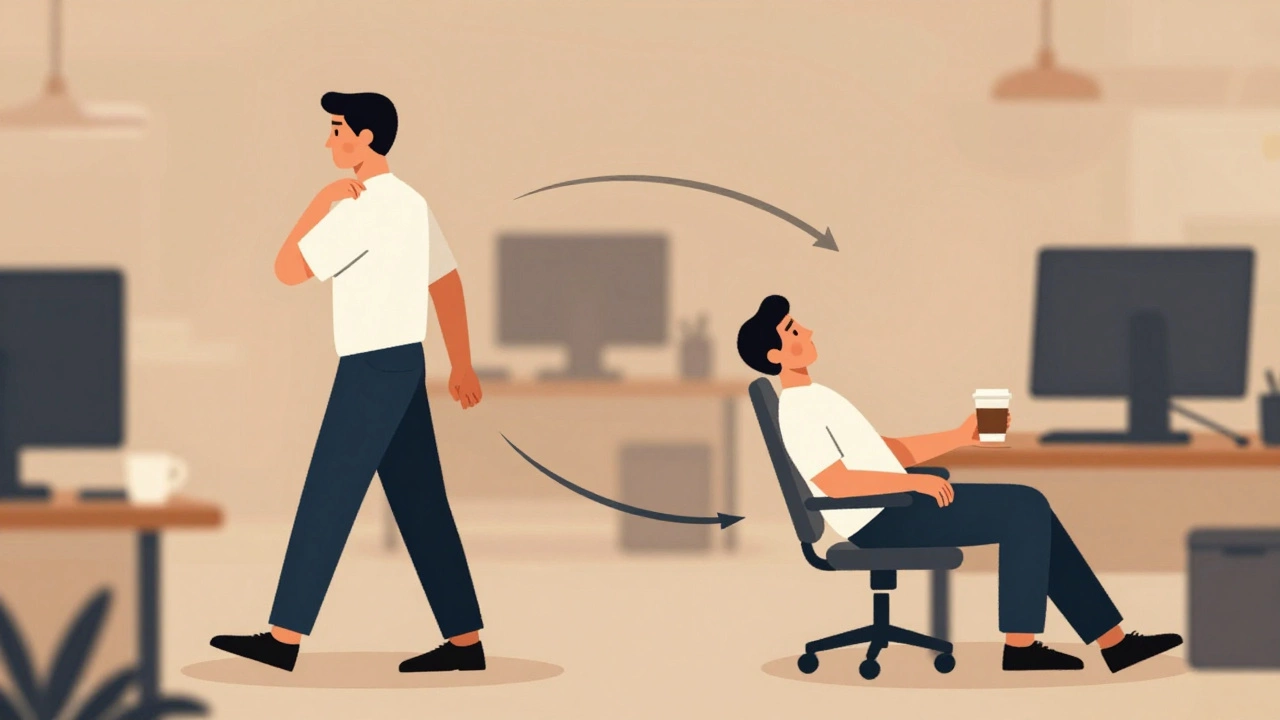
Reclining isn’t a one-time fix. It’s part of dynamic sitting. The best workers don’t stay in one position for more than 30 minutes. They shift. They stand. They recline. They lean forward. They stretch. Set a timer. Every 30 minutes, adjust your recline angle by 5-10 degrees. Try sitting upright for 15 minutes, then recline to 105 degrees for the next 15. Your body craves motion. A static posture-even a “good” one-creates stiffness.Who Should Avoid Reclining
Reclining isn’t for everyone. If you have:- Severe spinal stenosis or herniated discs (consult a physical therapist first)
- Chronic hip flexor tightness (reclining can worsen pelvic tilt)
- A chair with no back support or unstable base
How to Recline Properly (Step by Step)
1. Sit all the way back so your back touches the chair’s support. Don’t hover. 2. Adjust the recline angle so your shoulders are relaxed and your arms rest naturally on the armrests. Your elbows should be at 90-110 degrees. 3. Make sure your lower back feels supported-not pushed forward or pulled back. If you feel pressure, adjust the lumbar support or recline angle. 4. Test your position: try typing without leaning forward. If you can do it comfortably, you’re in the right zone. 5. Use the tilt tension knob to make reclining feel smooth-not too loose, not too stiff.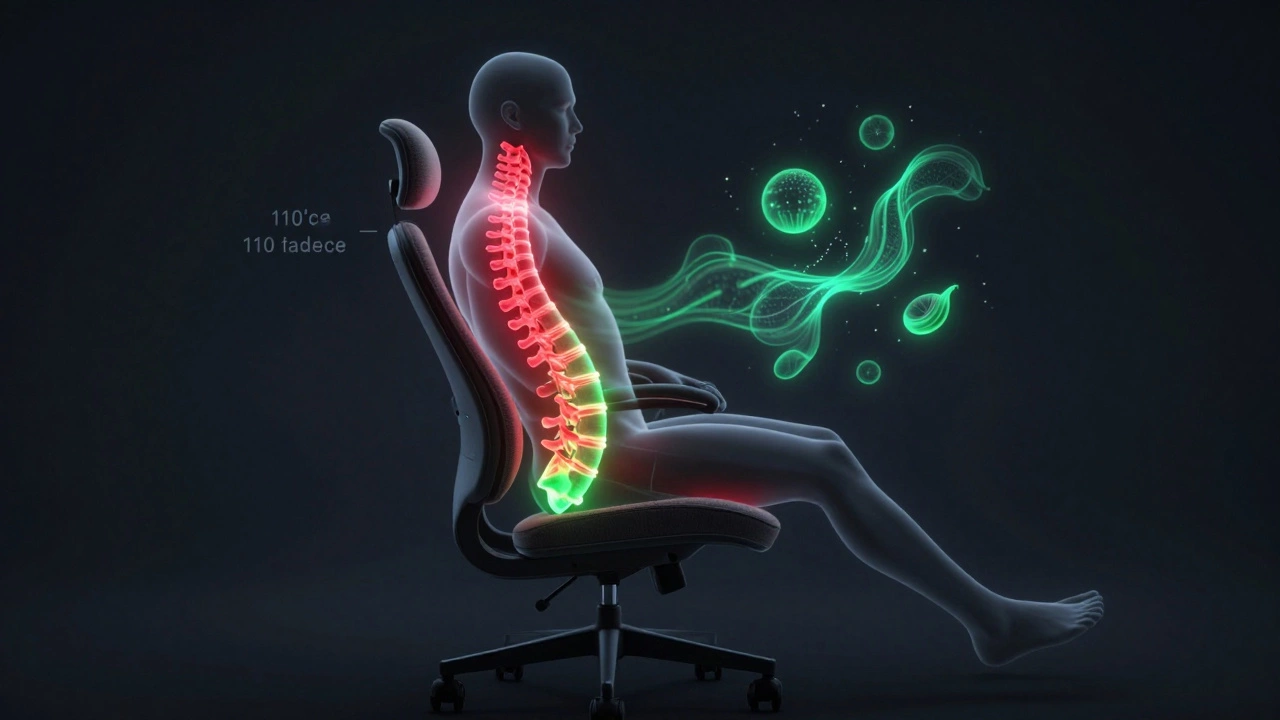
Myth: Reclining Makes You Lazy
Some managers think a straight-backed chair equals discipline. It doesn’t. Studies show people who use reclining chairs report higher focus, fewer distractions, and less fatigue. Why? Because comfort reduces cognitive load. Your brain isn’t busy screaming about back pain-it’s working. A 2024 survey of 500 remote workers found that those using reclining chairs completed tasks 12% faster on average and took 28% fewer breaks due to discomfort.What About Standing Desks?
Standing desks are great-but they’re not a replacement for a good chair. You can’t stand for eight hours. Your feet hurt. Your legs swell. Your posture slips. The best setup? A mix. Stand for 20-30 minutes. Sit and recline for 40-50. Repeat.Bottom Line
Yes, you should recline your office chair-if it’s designed for it. Don’t just lean back. Adjust it. Use it. Move with it. Your spine will thank you. Your productivity will thank you. And after a few weeks, you’ll wonder why you ever sat upright all day.Is it bad to recline my office chair all day?
Reclining all day isn’t ideal-no single posture is. The goal is variation. Stay reclined at 105-110 degrees for focused work, but switch to upright for calls or typing that requires precision. Change positions every 30 minutes to keep your muscles active and your joints lubricated.
Can reclining cause hip problems?
Only if your chair doesn’t support your pelvis properly. A good reclining chair keeps your hips level and your knees slightly lower than your hips. If your chair makes your hips sink too far back or your knees rise above your hips, it’s pushing your pelvis into a posterior tilt. That can strain your hip flexors over time. Check your seat depth and adjust it so there’s 1-2 inches between the edge of the seat and the back of your knees.
Do I need a headrest to recline safely?
Not for short-term use, but if you recline for more than 20 minutes at a time, yes. Without head support, your neck will strain forward to compensate for the weight of your head. That’s how tension headaches start. A headrest that adjusts in height and angle helps keep your cervical spine aligned. Look for one that supports the base of your skull, not just your neck.
Can I recline on a mesh office chair?
Absolutely. Mesh chairs like the Herman Miller Aeron are designed for recline. The mesh conforms to your back and maintains airflow. The key is whether the chair has adjustable recline tension and lumbar support. If it does, mesh is one of the best materials for reclining-it’s breathable, responsive, and durable.
What if my chair doesn’t recline at all?
You have two options: upgrade or adapt. If you can’t replace the chair, try a small wedge cushion behind your lower back to mimic the angle of a reclined chair. Sit slightly forward on the seat so your hips are higher than your knees. This helps restore your natural lumbar curve. It’s not perfect-but it’s better than sitting flat against a rigid backrest.