Posture & Metabolic Health Analyzer
Assess Your Current Setup
Your Results
Complete the assessment to see your metabolic risk score.
You’ve probably heard the rumor before: sit this way, and you’ll burn off that stubborn belly fat. It sounds too good to be true, doesn’t it? You’re sitting at your desk in Mississauga or anywhere else in the world, typing away, and you think a slight tweak to your spine angle will magically melt inches off your waistline. Here is the hard truth: no sitting position burns significant calories. If you are looking for a magic bullet to lose weight without moving, you won’t find it in your chair.
However, how you sit does matter. While it won’t directly torch fat, poor posture can compress your abdomen, slow down digestion, and signal your body to store more visceral fat over time due to stress hormones. Conversely, an upright, ergonomic posture supports better breathing, improves metabolism slightly by keeping muscles engaged, and prevents the "slouching bloat" that makes your belly look larger than it is. Let’s break down what actually happens when you sit, why your chair matters, and how to position yourself for the best possible metabolic health.
The Myth of Spot Reduction
First, we need to clear up a massive misconception. Many people believe that engaging specific muscles while sitting-like sucking in your stomach or twisting your torso-will burn the fat covering those muscles. This is known as spot reduction, and science has consistently debunked it. When your body loses fat, it draws from stored energy reserves across the entire body, not just the area you are working. You cannot choose where fat comes off.
If you want to reduce belly fat, the primary drivers are a caloric deficit (eating fewer calories than you burn) and overall physical activity. Sitting, by definition, is a low-energy state. Whether you slouch or sit perfectly straight, the caloric difference is negligible. However, this doesn’t mean your posture is irrelevant. Your sitting position affects your internal organs, your nervous system, and your long-term ability to move efficiently, all of which play indirect but crucial roles in weight management.
How Poor Posture Contributes to Belly Bloat
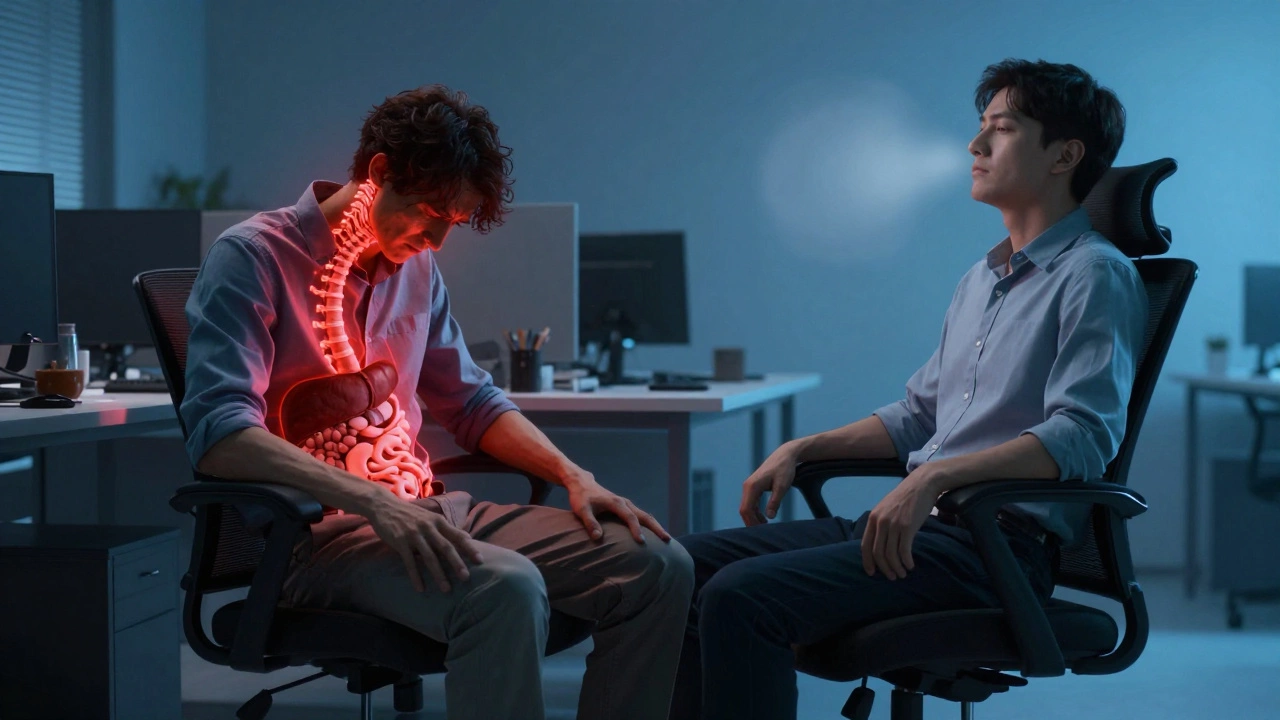
When you slouch in an office chair with poor lumbar support, your pelvis tilts backward. This anterior pelvic tilt compresses your abdominal cavity. Imagine squeezing a balloon from the sides; the air has to go somewhere. In your body, this compression pushes your intestines upward and forward, creating a visible protrusion often mistaken for excess fat. This is mechanical bloating, not necessarily adipose tissue.
Furthermore, chronic slouching restricts diaphragmatic breathing. When you can’t take deep breaths into your belly, your oxygen intake drops, and your body may switch to shallow chest breathing. This triggers a mild stress response, releasing cortisol. Elevated cortisol levels are strongly linked to increased storage of visceral fat-the dangerous kind of fat that wraps around your organs. So, while sitting poorly doesn’t burn less fat directly, it creates a hormonal environment that encourages fat storage.
- Compression: Slouching squashes the gut, leading to immediate visual bloating.
- Digestion: A compressed abdomen slows gastric emptying, causing discomfort and gas.
- Cortisol: Poor posture increases physical stress, raising cortisol and promoting visceral fat accumulation.
The Ideal Sitting Position for Metabolic Health
If you want to minimize the negative effects of sitting and keep your metabolism as active as possible, you need to focus on alignment and engagement. The goal isn’t to rigidly hold a pose like a soldier, but to maintain a neutral spine that allows your core muscles to work lightly throughout the day. Think of it as "active sitting" rather than passive collapsing.
- Feet Flat: Place both feet flat on the floor. This stabilizes your pelvis and prevents blood pooling in your legs, which aids circulation.
- Hip Angle: Aim for a hip angle of roughly 90 to 100 degrees. Some studies suggest a slightly open angle (100-110 degrees) reduces pressure on the lower back and allows for better spinal alignment. Avoid acute angles (less than 90 degrees) which compress the abdomen further.
- Lumbar Support: Use a chair that supports the natural curve of your lower back. If your ergonomic chair lacks adjustable lumbar support, use a small cushion or rolled-up towel. This keeps the pelvis in a neutral position, preventing the anterior tilt that causes slouching.
- Shoulders Back: Keep your shoulders relaxed but pulled slightly back. This opens the chest, allowing for deeper diaphragmatic breathing, which lowers stress signals.
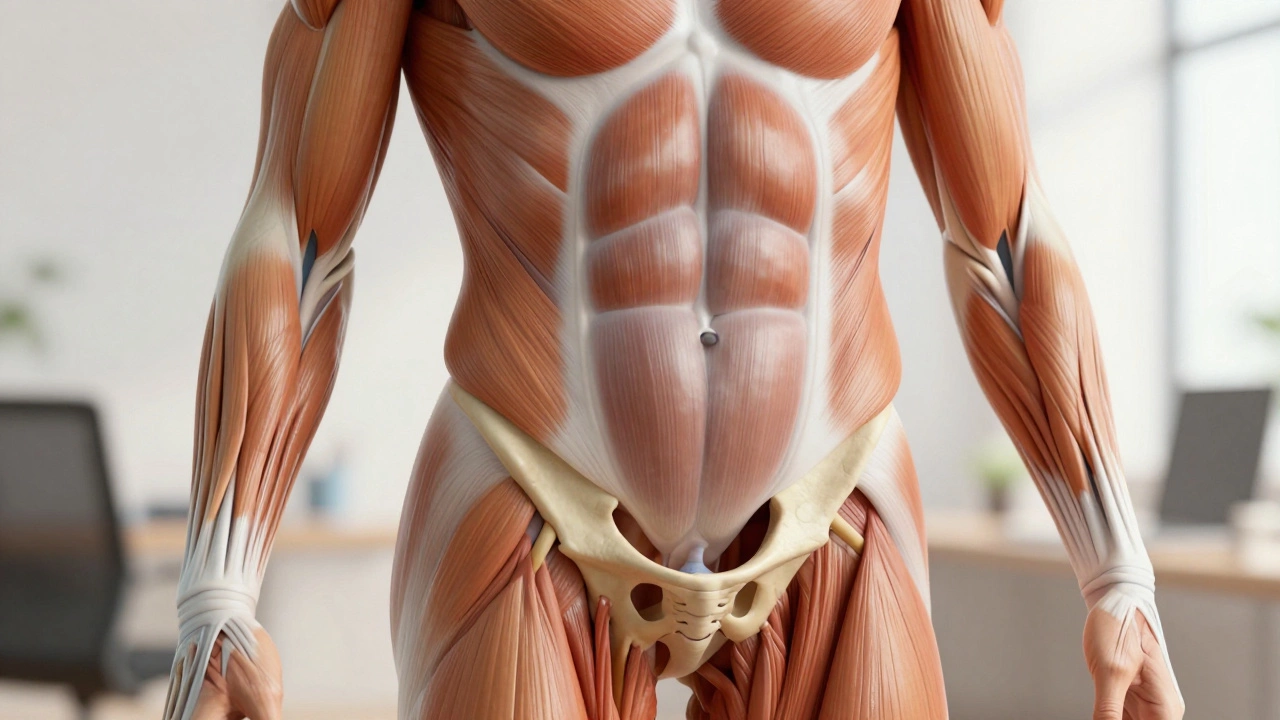
This position engages your deep core muscles, specifically the transverse abdominis. These muscles act like a natural corset, supporting your spine and keeping your abdominal wall tight. Engaging these muscles requires a tiny amount of energy, but more importantly, it trains them to stay strong, which improves your posture even when you stand up.
Why Static Sitting Is the Real Enemy
The biggest mistake people make is thinking there is one "best" position to hold for eight hours. There isn’t. The best posture is the next one. Prolonged static sitting, regardless of how perfect your alignment is, leads to muscle stiffness, reduced blood flow, and a drop in metabolic rate. Your body is designed to move. When you sit still for too long, enzymes that help break down fats become less active.
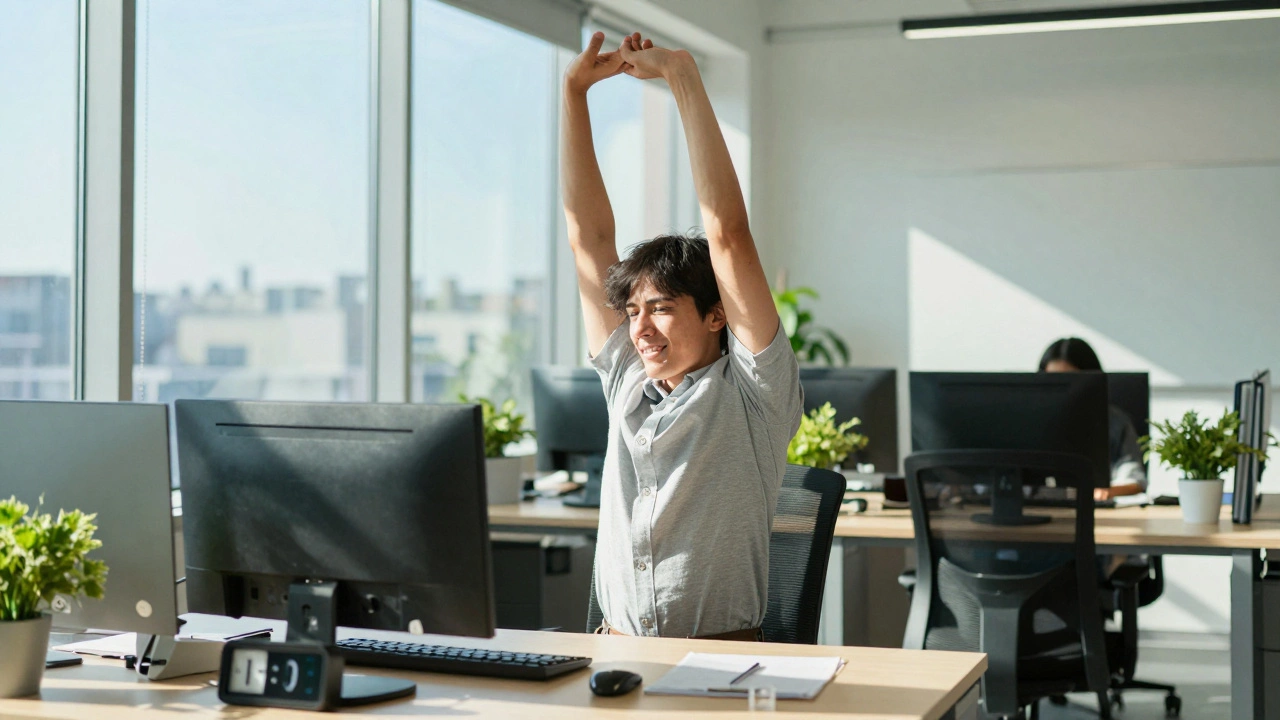
To truly combat belly fat and improve health, you need to break up sitting time. Research shows that interrupting sedentary time with just two minutes of light activity every 30 minutes can significantly improve glucose control and lipid metabolism. This doesn’t mean you need to run a marathon; it means standing up, stretching, walking to get water, or doing a few squats.
| Behavior | Postural Effect | Metabolic Impact | Belly Fat Risk |
|---|---|---|---|
| Slouching | Compresses abdomen, rounds shoulders | Low; increases cortisol | High (due to stress & bloating) |
| Perfect Static Posture | Neutral spine, engaged core | Moderate; maintains baseline metabolism | Low (but stagnates over time) |
| Dynamic Sitting/Moving | Varies; promotes circulation | High; activates lipase enzymes | Lowest (supports fat oxidation) |
Choosing the Right Office Chair
Your chair is the tool that enables good posture. If your chair forces you to slouch because it’s too deep, too soft, or lacks support, no amount of willpower will fix your belly bloat. Look for specific features that promote the ideal sitting position described above.
First, check the seat depth. There should be about two to three fingers' width between the edge of the seat and the back of your knees. If the seat is too deep, you’ll have to slide forward to get your feet flat, which cuts off circulation and forces you to round your back. If it’s too shallow, your thighs lack support, causing you to slump.
Second, prioritize adjustability. A high-quality mesh office chair or ergonomic task chair should allow you to adjust seat height, armrests, and lumbar support independently. Armrests are particularly important; if they are too high, you’ll hike your shoulders, creating tension that pulls you out of alignment. If they are too low, your arms hang unsupported, leading to fatigue and slouching.
Consider chairs with a "waterfall" seat edge. This design slopes downward at the front, reducing pressure on the underside of your thighs. Better blood flow means less swelling and a more comfortable sit, making it easier to maintain an upright position for longer periods.
Practical Tips for All-Day Alignment
Knowing the theory is one thing; applying it during a busy workday is another. Here are some actionable strategies to keep your posture optimal and your metabolism humming.
- Set Micro-Reminders: Use a timer or app to remind you to check your posture every 20 minutes. Ask yourself: Are my feet flat? Is my lower back supported? Are my shoulders down?
- Stand Up Frequently: Aim for a 5-minute break every hour. Walk around your office, stretch your hamstrings, or do a quick plank. This resets your posture and boosts calorie burn.
- Use a Stability Ball (With Caution): Some people swap their chair for a yoga ball to engage their core. While this can improve awareness, it’s not sustainable for long periods and can lead to lower back strain if not used correctly. Use it for short intervals only.
- Strengthen Your Core Off the Clock: Since sitting alone won’t burn fat, dedicate time to exercises that strengthen your abs and back. Planks, bird-dogs, and dead bugs are excellent for building the muscular endurance needed to sit upright effortlessly.
Remember, reducing belly fat is a holistic process. Your sitting position is a piece of the puzzle, not the whole picture. By optimizing your ergonomics, you remove barriers to good health, reduce stress-induced fat storage, and create a foundation for a more active lifestyle. Start with your chair, fix your posture, and then get moving.
Can sitting up straight really burn belly fat?
No, sitting up straight does not directly burn significant amounts of belly fat. Fat loss requires a caloric deficit achieved through diet and exercise. However, good posture prevents abdominal compression and reduces cortisol levels, which can indirectly help prevent fat storage and reduce the appearance of bloating.
What is the best angle for hips when sitting?
The ideal hip angle is between 90 and 110 degrees. This range keeps the spine in a neutral position, reduces pressure on the discs, and allows for proper engagement of the core muscles without straining the lower back.
Does slouching increase belly fat?
Slouching itself doesn't create fat cells, but it compresses the abdomen, making your belly look larger. More importantly, chronic poor posture increases stress hormones like cortisol, which are linked to increased visceral fat storage around the organs.
How often should I change my sitting position?
You should change your position or stand up every 30 to 60 minutes. Prolonged static sitting, even in a perfect posture, reduces blood flow and metabolic activity. Movement is key to maintaining metabolic health.
What features should an office chair have for better posture?
Look for adjustable lumbar support, seat depth adjustment, and height-adjustable armrests. A mesh back can provide better airflow and flexibility, while a waterfall seat edge reduces pressure on your legs, promoting better circulation.