
ADHD-Friendly Workspace Assessment
Answer these questions about your current work environment to determine its compatibility with ADHD neurological needs.
Compatibility Score
Based on ADHD-friendly design principles
Have you ever watched someone in a meeting wiggle constantly, spin their chair, or perch on the edge of their seat like they’re ready to bolt? If that person has Attention Deficit Hyperactivity Disorder (also known as ADHD), this isn’t just bad manners. It’s biology.
We often think of sitting still as the default human state, especially in professional settings. But for the roughly 4-5 million adults in Canada living with ADHD, staying perfectly still is physically exhausting and mentally counterproductive. This article breaks down why those "strange" sitting positions actually happen, how your brain craves movement, and which office chairs are designed to help rather than hinder your focus.
The Brain’s Need for Movement: Stimming and Focus
To understand the posture, we first have to look at the brain. ADHD is not just about attention; it’s about regulation. The prefrontal cortex-the part of the brain responsible for executive function-often struggles to maintain optimal arousal levels without external stimulation.
This leads to a behavior called stimming (self-stimulatory behavior). When an adult with ADHD rocks back and forth, bounces their leg, or twists their torso, they are regulating their nervous system. Research published in journals like Child Development suggests that mild physical activity can increase dopamine and norepinephrine levels in the brain. These neurotransmitters are crucial for focus. In simple terms: moving helps them pay attention.
When you force an ADHD brain into a rigid, static position, you drain their cognitive energy. They spend so much mental effort trying to stay still that they have less left for listening to the presentation or reading the email. The "strange" sitting is actually a coping mechanism to keep the brain online.
Proprioception: Why Sitting Still Feels Wrong
Another key factor is proprioception. This is your body’s ability to sense its position in space. Many people with ADHD have sensory processing differences. For some, standard seating provides too little feedback. They literally don’t feel "grounded" unless they are pressing hard against something, leaning sideways, or balancing precariously.
Consider the difference between sitting on a firm dining chair versus a yoga ball. On the dining chair, you might feel numb after ten minutes. On the yoga ball, your core muscles are constantly making micro-adjustments to keep you upright. That constant input satisfies the proprioceptive need. Without it, the body creates its own input through slouching, crossing legs tightly, or twisting.
This explains why you see people with ADHD sitting on the armrests of chairs or perching on the front edge. They are seeking pressure and resistance to feel stable. It’s not rebellion; it’s a search for sensory clarity.
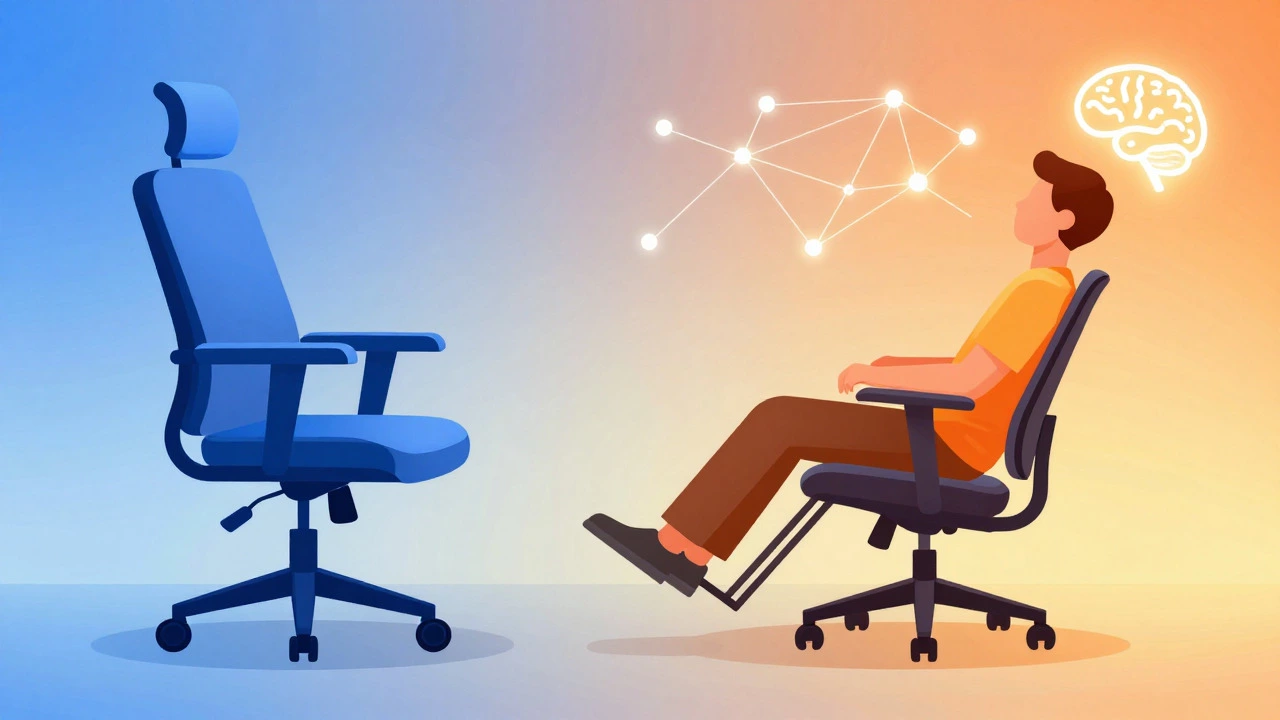
Traditional Office Chairs vs. Neurodivergent Needs
Most standard office chairs are designed for a neurotypical user who sits relatively still for long periods. They prioritize lumbar support and static comfort. For someone with ADHD, these features can sometimes be detrimental.
- Rigid Lumbar Support: Fixed lower-back support can feel restrictive if the user needs to twist or lean forward frequently. It forces a straight spine when the brain wants dynamic movement.
- High Armrests: Standard armrests often prevent the user from pulling their chair close to the desk, forcing them to hunch or reach awkwardly.
- Lack of Tilt: A chair that locks flat offers no outlet for the urge to rock or recline slightly while thinking.
When the furniture fights the body’s natural impulses, the result is discomfort, distraction, and eventually, poor posture that looks "slouched" or "lazy" but is actually a struggle for balance.
Better Seating Solutions for ADHD
You don’t need to throw out your current setup entirely, but swapping to more dynamic seating options can make a massive difference in productivity and comfort. Here are three types of seating that align better with ADHD needs.
| Seating Type | Key Benefit for ADHD | Best For | Potential Drawback |
|---|---|---|---|
| Active Sitting Ball | Constant core engagement and proprioceptive feedback | Short work bursts (30-60 mins) | Can cause hip pain if used all day; lacks back support |
| Ergonomic Chair with Synchronized Tilt | Allows reclining and rocking while maintaining foot contact | All-day use, deep work tasks | Higher cost; requires proper adjustment |
| Standing Desk Converter | Enables shifting weight and walking while working | Meetings, phone calls, creative brainstorming | Not suitable for detailed typing tasks for long periods |
The Power of the Tilt Mechanism
If you stick with a traditional chair, look for one with a synchronized tilt mechanism. Unlike a basic recliner, a synchronized tilt moves the seat pan and backrest together at a specific ratio. This allows you to lean back and rock gently without sliding off the chair. This subtle motion satisfies the need for movement without breaking your concentration.
Brands like Herman Miller (with their Sayl or Embody lines) and Steelcase (with the Gesture chair) design seats that encourage changing positions. The Gesture chair, for example, was developed based on research showing that people change positions every few minutes. It supports multiple postures, including side-sitting, which is common among ADHD users.
Active Seating and Balance Boards
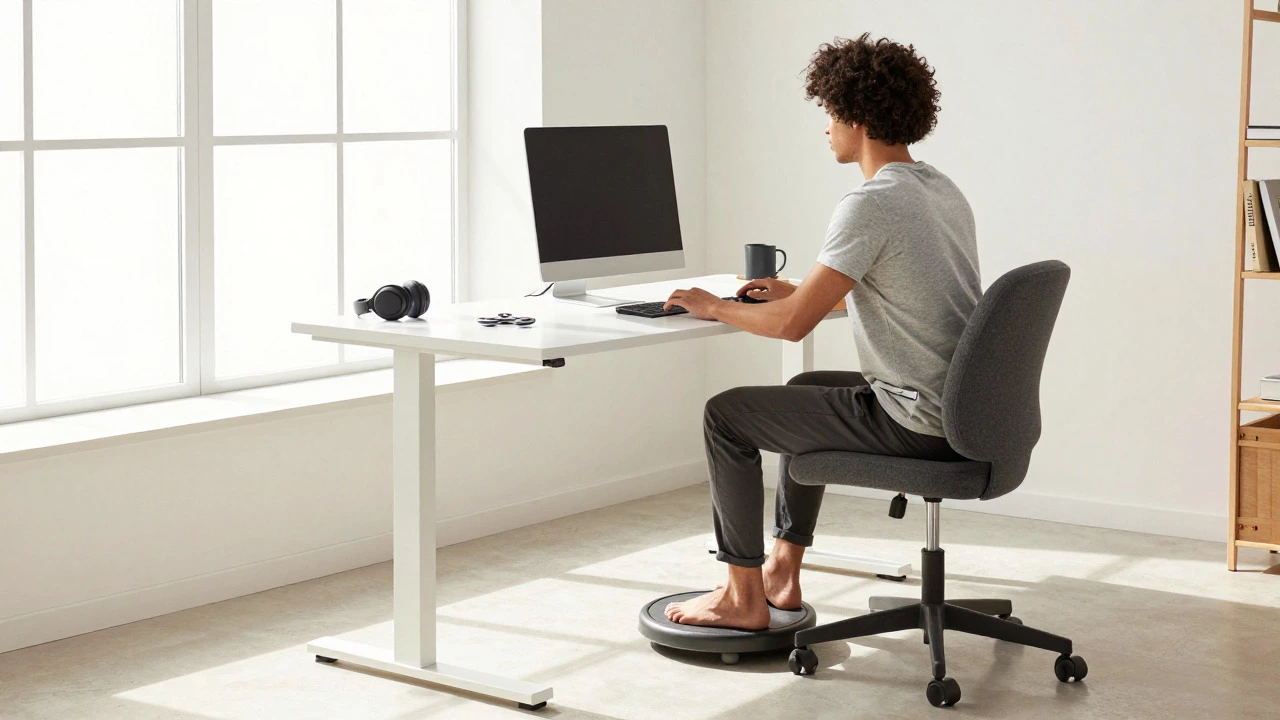
For those who find even tilted chairs too restrictive, active seating is the next step. This includes wobble stools, balance boards, or exercise balls. These tools require constant micro-movements to stay balanced. This keeps the blood flowing and the brain engaged.
A study involving students with ADHD found that using a therapy ball as a chair improved on-task behavior significantly compared to standard chairs. While adults may not want to sit on a giant rubber ball all day, smaller balance discs placed under the feet of a regular chair can provide similar benefits by allowing leg movement.
Creating a Neuro-Inclusive Workspace
It’s not just about the chair. The entire workspace environment impacts how well an ADHD brain functions. Consider these adjustments:
- Allow Movement: If you manage a team, normalize standing meetings or walking discussions. Don’t penalize fidgeting.
- Sensory Control: Noise-canceling headphones or white noise machines can reduce auditory overload, which often triggers restlessness.
- Visual Clarity: Keep the desk surface clear. Visual clutter competes for attention, leading to more physical agitation.
- Flexible Hours: Allow employees to choose when they work best. Some ADHD brains peak in the evening, not at 9 AM.
In Mississauga and across Canada, workplaces are slowly recognizing that one-size-fits-all ergonomics doesn’t exist. By accommodating different neurological needs, companies boost not just morale, but actual output.
Practical Tips for Immediate Relief
If you can’t buy new furniture today, try these low-cost hacks to make your current setup more ADHD-friendly:
- Add a Footrest: A simple foam roller or wooden block under your desk lets you bounce your feet or shift your weight.
- Use a Cushion: Place a firm cushion on your chair to create a slight incline, encouraging a forward-leaning posture that feels more active.
- Fidget Tools: Keep a stress ball, textured ring, or silent fidget spinner at your desk. Hand movements can free up mental bandwidth for listening.
- Stand Up Every 30 Minutes: Set a timer. Stand, stretch, walk around. Resetting your posture prevents the "freeze" response.
Remember, sitting "strangely" is often a sign that your body is trying to help you focus. Instead of fighting it, work with it. The right combination of movement-friendly seating and environmental tweaks can turn that restless energy into productive flow.
Is it normal for adults with ADHD to bounce their legs?
Yes, leg bouncing is a very common form of stimming in adults with ADHD. It helps regulate dopamine levels and maintain alertness. It is a physiological response to boredom or under-stimulation, not necessarily a sign of anxiety.
What is the best type of office chair for someone with ADHD?
The best chairs are those that allow movement, such as those with a synchronized tilt mechanism or active seating options like balance stools. Look for chairs that support multiple postures rather than locking you into one static position.
Can sitting on an exercise ball help with focus?
Yes, for short periods. Exercise balls engage core muscles and provide proprioceptive feedback, which can improve focus. However, they lack back support and can cause fatigue if used for more than an hour at a time.
Why do people with ADHD slouch so much?
Slouching can be a way to reduce sensory input or conserve energy. Maintaining perfect posture requires significant muscle tension and cognitive effort. For an ADHD brain already managing other distractions, slouching is a way to lower the physical demand of sitting.
Do fidget toys really help with productivity?
Research suggests that silent fidgeting can improve listening comprehension and task performance in individuals with ADHD. By occupying the motor centers of the brain, fidget toys free up cognitive resources for attention and memory.