Recliner Safety Assessment Tool
Personal Assessment
Answer these questions to determine if your recliner use is safe for nightly sleep.
Results
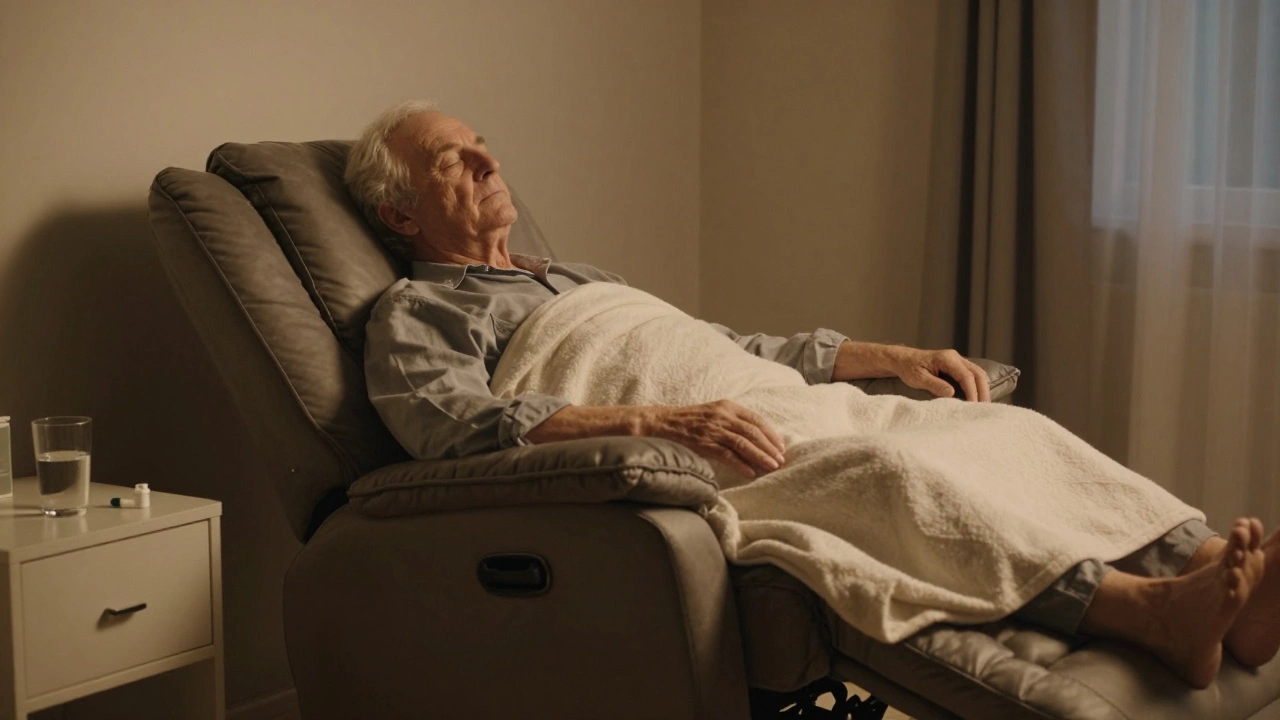
Many people swear by sleeping in a recliner every night. Maybe you have back pain, acid reflux, or just find it more comfortable than your bed. But is it actually bad for you? The short answer: it depends. For some, it’s a lifeline. For others, it could cause long-term problems if done without care.
Why People Choose to Sleep in Recliners
It’s not just about comfort. People with chronic lower back pain often find that the slight angle of a recliner takes pressure off their spine. Those with sleep apnea or GERD (gastroesophageal reflux disease) benefit from elevated sleeping positions-it keeps stomach acid from rising and helps airways stay open. After surgery, especially on the hips or knees, doctors sometimes recommend recliners to avoid lying flat.
In Canada, where winter nights are long and cold, many older adults use recliners as their primary sleeping spot. A 2023 survey by the Canadian Sleep Society found that 12% of adults over 65 regularly sleep in recliners, mostly due to mobility issues or pain. It’s not a trend-it’s a practical solution.
What Happens to Your Body When You Sleep in a Recliner All Night
Your body isn’t designed to stay in one position for 7-8 hours, no matter how cozy the chair feels. Recliners typically support your back and legs, but they don’t offer the full-body alignment your spine needs. Over time, this can lead to:
- **Hip and knee stiffness**-Your joints stay bent at unnatural angles, reducing circulation and tightening muscles.
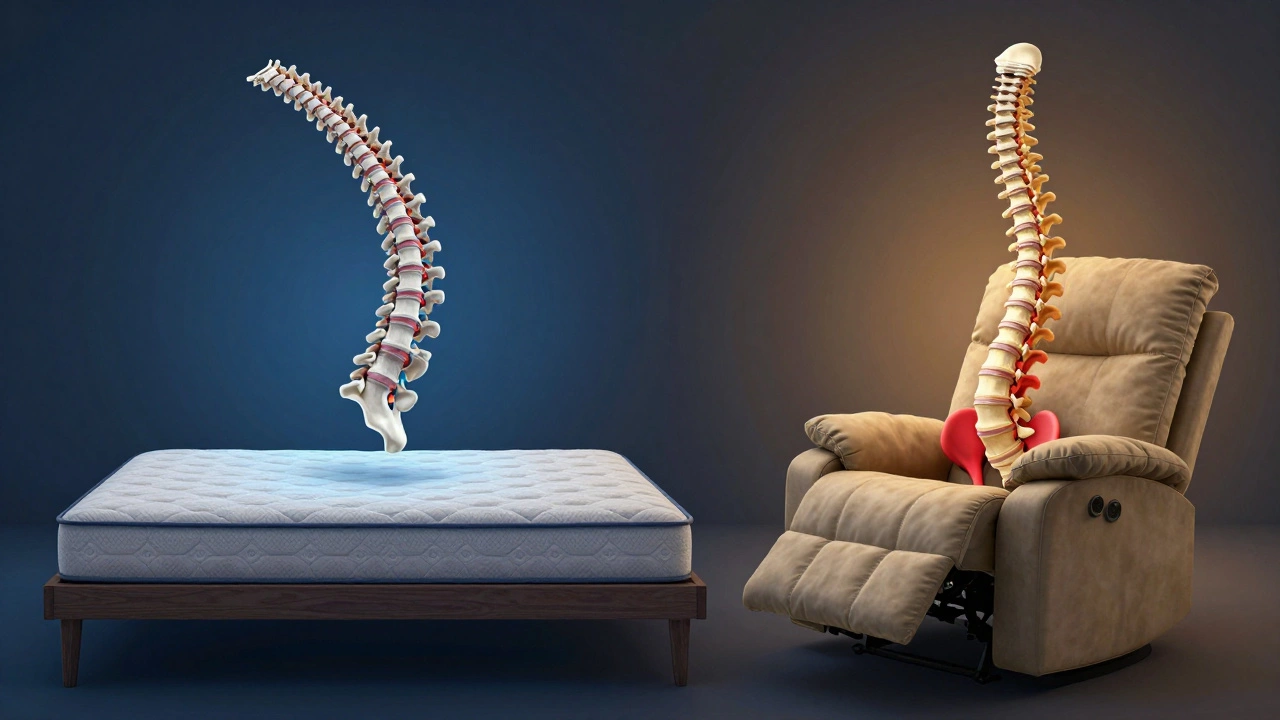
- **Poor spinal curvature**-Most recliners don’t support the natural S-shape of your spine. Instead, they push your lower back into a rounded position, which strains discs and ligaments.
- **Reduced deep sleep**-Studies show that sleeping in a seated position can limit REM sleep, the stage where your brain processes emotions and memories. One 2022 sleep lab study found participants spent 30% less time in REM when sleeping in recliners compared to beds.
- **Pressure sores**-If you’re immobile for long periods, constant pressure on your tailbone, hips, or heels can break down skin tissue. This is especially risky for people with diabetes or limited mobility.
These aren’t hypothetical risks. A 2024 case report in the Journal of Orthopaedic Medicine described a 72-year-old man who developed chronic lower back pain and hip contractures after sleeping in a recliner nightly for 10 years.
When Sleeping in a Recliner Is Actually Helpful
Not everyone who sleeps in a recliner is doing it wrong. For specific health conditions, it’s the best option available.
If you have:
- Severe acid reflux-Sleeping at a 30-45 degree angle reduces nighttime heartburn better than pillows stacked under your head.
- Chronic obstructive pulmonary disease (COPD)-Elevated sleeping improves oxygen flow and reduces breathlessness.
- Post-surgical recovery-After spinal or hip surgery, lying flat might be painful or dangerous. A recliner gives you controlled support.
- Pregnancy in the third trimester-Many expectant mothers find relief from back pressure and swollen legs by sleeping semi-reclined.
In these cases, the benefits outweigh the risks. But even then, you should use a recliner that offers full lumbar support, adjustable footrests, and the ability to recline fully flat if needed.
What Makes a Recliner Safer for Nightly Use
If you’re going to sleep in a recliner regularly, not all models are equal. Here’s what to look for:
- Zero-gravity position-This elevates your legs above your heart and aligns your spine in a neutral posture. Brands like La-Z-Boy and Stressless offer this feature.
- Lumbar support you can adjust-It should match the curve of your lower back, not just push against it.
- Full recline capability-You should be able to lie completely flat if you need to shift positions during the night.
- Memory foam or high-density cushioning-Cheap foam collapses under pressure, creating pressure points. Look for cushions rated at 2.5 lb density or higher.
- Electric adjustment-Manual recliners require you to get up to adjust. Electric models let you fine-tune your position without moving.
For example, the La-Z-Boy CaliMotion has a built-in zero-gravity mode, 4-position memory settings, and a massage function that helps with circulation. It’s not cheap-but if you’re sleeping in it every night, it’s an investment in your body.
Alternatives to Sleeping in a Recliner
You don’t have to choose between a bad bed and a bad recliner. There are better options:
- Adjustable bed frames-These let you elevate your head and feet while still lying flat. They support your spine like a mattress should, but with the same benefits as a recliner. Prices start around $800, but many come with massage, cooling, and smart sensors.
- Wedge pillows-A firm foam wedge under your upper body can mimic the angle of a recliner without the joint strain. Great for reflux and mild snoring.
- Orthopedic mattresses-If your back pain is the reason you avoid your bed, a medium-firm memory foam or hybrid mattress might solve the problem without needing a recliner at all.
One patient in Mississauga switched from a recliner to an adjustable bed after chronic hip pain worsened. Within three weeks, her sleep quality improved, her morning stiffness vanished, and she no longer needed painkillers before bed.

When to Stop Sleeping in a Recliner
Here are red flags that it’s time to reconsider:
- You wake up numb in your legs or feet
- Your back pain gets worse over time
- You’re having trouble standing up straight in the morning
- You’ve gained weight or become less active
- You’re relying on the recliner because your bed feels too hard
If you’re answering yes to any of these, it’s not just about comfort anymore. Your body is signaling that something’s wrong. Talk to a physical therapist or sleep specialist. Don’t wait until you develop permanent joint issues.
Final Thoughts: It’s Not the Recliner-It’s How You Use It
Sleeping in a recliner every night isn’t inherently unhealthy. But treating it like a permanent bed without adjustments or movement is asking for trouble. The key isn’t avoiding recliners-it’s using them wisely.
If you’re using one for medical reasons, make sure it’s the right model. If you’re using it because your bed is uncomfortable, fix the bed instead. And if you’re just used to it? Try alternating nights between the recliner and a properly supported mattress. Your spine will thank you.
Is it safe to sleep in a recliner every night?
It can be safe if you have a medical reason like acid reflux, sleep apnea, or back pain, and if your recliner offers full support, adjustable positioning, and the ability to recline flat. But for most people, it’s not ideal long-term due to poor spinal alignment and reduced deep sleep.
Can sleeping in a recliner cause back pain?
Yes, especially if the chair doesn’t support your lower back properly. Sitting in a reclined position without lumbar support can flatten your spine’s natural curve, leading to disc strain and muscle tightness. Over time, this can become chronic pain.
What’s better: a recliner or an adjustable bed?
An adjustable bed is generally better. It provides full-body support like a mattress, with the added benefit of elevation. Recliners often lack proper hip and leg alignment, while adjustable beds maintain spinal neutrality even when raised. They’re also easier to get in and out of.
Do recliners help with snoring?
Yes, elevating your head by 30-45 degrees can reduce snoring by keeping your airway open. But this is a temporary fix. If snoring is persistent, it could be a sign of sleep apnea, which needs medical evaluation-not just a better chair.
How do I know if my recliner is good enough for sleeping?
Check if it has: zero-gravity positioning, adjustable lumbar support, full recline capability, high-density cushions, and electric controls. If it doesn’t have at least three of these, it’s not designed for all-night use. Look for models labeled as "sleep recliners"-not just "comfort recliners."
If you’ve been sleeping in a recliner for years and feel fine, don’t panic. But don’t ignore warning signs either. Your body changes as you age. What worked at 40 might not work at 60. Pay attention. Make small changes. And if in doubt, consult a sleep specialist or physical therapist-they can help you find a solution that’s both comfortable and healthy.