
Grey Couch Selector
Find Your Perfect Grey Couch
Answer a few questions about your lifestyle and space to get personalized recommendations for the best grey couch shade and fabric.
How do you use your living room?
How is your room lit?
What's your design style?
How do you prefer your grey tone?
What's your priority?
Your Personalized Recommendation
Recommended Grey Shade:
Recommended Fabric:
Why This Combination Works For You
Grey couches aren’t just a passing fad-they’ve become the default choice for millions of homes. Walk into any modern living room, browse top furniture retailers, or scroll through Instagram home tours, and you’ll see them everywhere. But why? It’s not just because they’re "safe" or "neutral." There’s a deeper mix of practical, psychological, and design-driven reasons behind this shift. And if you’re wondering whether a grey couch is right for your space, the answer isn’t just about color-it’s about how it fits into the way we live today.
Grey works because it doesn’t fight your life
Think about your daily routine. Kids spill juice. Pets shed. Coffee cups leave rings. Grey couches don’t scream for attention when things get messy. A dark charcoal sofa hides crumbs, pet hair, and the occasional wine stain better than a cream or white one. A light heather grey doesn’t show dust like a black one does. It’s the Goldilocks zone of durability. You don’t need to treat your living room like a museum. Grey lets you live in it.A 2024 survey by the Home Furnishings Association found that 68% of homeowners who bought a new sofa in the past year chose a shade of grey. The top reason? "It’s easy to maintain." Not "it looks expensive." Not "it’s trendy." Just "it survives." That’s the quiet truth behind its popularity.
It’s the perfect backdrop for everything else
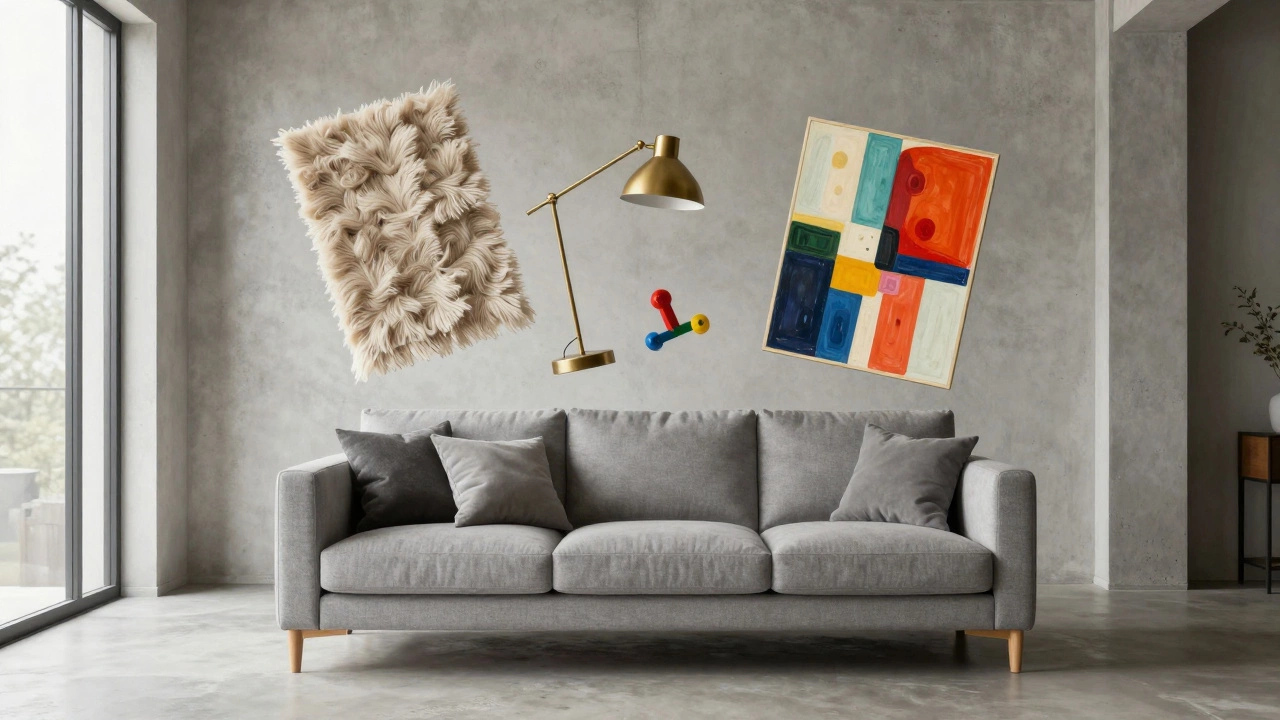
Grey isn’t trying to be the star. It’s the stage. Whether your style is Scandinavian minimalism, industrial loft, or cozy farmhouse, a grey couch adapts. Pair it with bright yellow throw pillows? It works. Add a rustic wooden coffee table and wool rugs? Still works. Hang bold abstract art above it? No problem. Grey doesn’t compete-it enhances.Compare that to a bright blue or red sofa. Those colors demand attention. They limit your options. You start matching everything else to the couch instead of building a room around your personality. Grey gives you freedom. You can change your decor seasonally, swap out accessories, or upgrade your side tables without needing a whole new sofa. It’s the most flexible piece of furniture you can own.
It matches how we see homes now
Ten years ago, people wanted their living rooms to look like catalogs-perfect, polished, untouched. Today, we want spaces that feel lived-in, warm, and real. Grey leans into that. It’s not cold or sterile like white. It’s not loud like jewel tones. It’s calm. It’s grounded. It’s the color of concrete, stone, and wool-materials we associate with comfort and authenticity.Designers call this "organic neutrality." It’s not about being boring. It’s about creating a space that feels soothing after a long day. When your brain is overloaded with noise, screens, and demands, your home should feel like a reset button. Grey couches deliver that. They’re the visual equivalent of deep breathing.
Manufacturers pushed it-and we listened
This trend didn’t happen by accident. Furniture brands noticed a shift in what people wanted and doubled down. Companies like IKEA, West Elm, and Ashley Furniture now offer grey couches in more styles, fabrics, and price points than any other color. They’ve made it easy to find one that fits your budget and aesthetic.And they didn’t stop at basic grey. They expanded the palette: charcoal, slate, taupe, heather, smoke, stone. Each has a slightly different mood. Charcoal feels modern and bold. Heather grey feels soft and cozy. You’re not just buying a color-you’re choosing a feeling. That kind of variety makes grey feel intentional, not lazy.
It’s the go-to for rental and resale value
If you rent, you know you can’t paint the walls or install permanent fixtures. Your furniture has to carry the weight of making a space feel like home. A grey couch does that without looking generic. Landlords notice it too. When a tenant leaves, a grey sofa is far more likely to stay with the unit or appeal to the next renter. That’s why property managers and Airbnb hosts overwhelmingly choose grey sofas over bolder colors.Same goes for resale. If you ever sell your home, a neutral sofa helps buyers imagine themselves living there. A bright red couch? That’s a turnoff for half the market. A grey one? It disappears into the background so they can focus on the space itself.
It’s not just grey-it’s the whole neutral family
Grey didn’t rise alone. It’s part of a bigger shift toward earthy, muted tones. Beige, taupe, oat, and warm greige have all gained ground. But grey stands out because it has more contrast. It’s easier to pair with black metal frames, white walls, and dark wood. It holds its own next to bold accents without overwhelming them.Look at the top-selling sofas on Amazon, Wayfair, and Crate & Barrel right now. The top five colors? All variations of grey or neutral. The sixth? White. No other color comes close.
What grey couches aren’t good for
Let’s be honest: grey isn’t perfect for everyone. If you love color and want your furniture to be a statement, a grey couch might feel too quiet. If you live in a very bright, sunny space, a light grey can wash out and look dull. And if you’re going for a very traditional or ornate style-think Victorian or French country-grey might clash with the richness of those designs.But those are exceptions. For most people, in most homes, grey solves more problems than it creates.

How to pick the right grey couch for you
Not all greys are created equal. Here’s how to choose:- Warm grey (with beige or brown undertones): Best for cozy, traditional, or rustic spaces. Feels inviting.
- Cool grey (with blue or green undertones): Ideal for modern, minimalist, or urban interiors. Feels crisp.
- Dark grey (charcoal, slate): Makes a statement. Hides stains. Great for high-traffic areas.
- Light grey (heather, stone): Opens up small rooms. Feels airy. Needs more maintenance.
Also consider the fabric. Performance fabrics like Crypton or Sunbrella are stain-resistant and ideal for families. Linen looks great but shows wear faster. Microfiber is durable and soft-perfect for pets and kids.
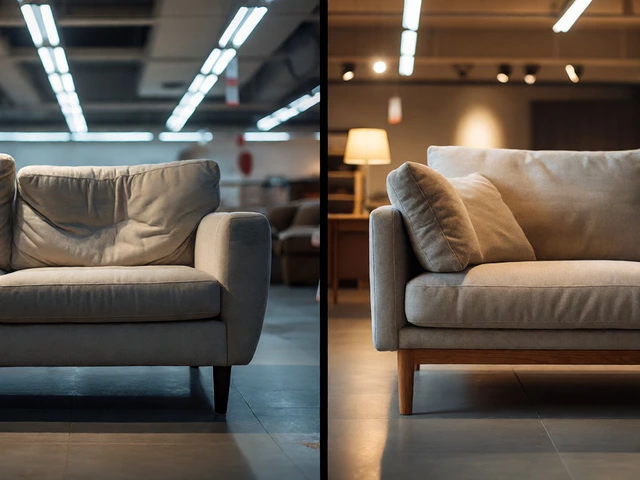
Test samples in your space. Lighting changes everything. A grey that looks perfect in the store might look blue under your north-facing window. Bring home a swatch and live with it for a day.
Grey isn’t just a color. It’s a mindset.
The rise of the grey couch reflects how we’ve changed as homeowners. We value comfort over perfection. Function over flash. Real life over curated perfection. We don’t want furniture that says "look at me." We want furniture that says "let’s relax."Grey couches aren’t popular because they’re trendy. They’re popular because they work. They fit into messy lives, changing styles, and tight budgets. They don’t demand anything from you-except to sit down, unwind, and enjoy your space.
Are grey couches hard to keep clean?
Not if you pick the right fabric. Performance fabrics like Crypton, Sunbrella, or microfiber repel stains and are easy to wipe down. Light grey fabrics show dust more than dark grey, so if you have pets or kids, go for charcoal or slate. Vacuum weekly and spot-clean spills right away-same as any sofa. The key is choosing a durable material, not avoiding grey.
Do grey couches go out of style?
Grey has been a staple in interior design for over a decade, and it shows no signs of fading. Unlike bright colors or patterns that cycle in and out, neutral tones like grey, beige, and taupe form the foundation of timeless design. They adapt to new trends-whether it’s biophilic elements, maximalist accents, or minimalist lines-without looking dated.
Is a grey couch a good investment?
Yes, if you buy well-made. A quality grey sofa lasts 10-15 years with proper care. Its versatility means you won’t need to replace it when your decor changes. It also adds resale value to your home, making it easier to sell or rent later. Compared to a bold-colored sofa that may limit your options, grey is one of the smartest furniture purchases you can make.
Can a grey couch look expensive?
Absolutely. The key is texture and construction. A deep charcoal velvet sofa with clean lines and tapered legs looks luxurious. A well-tailored grey linen sectional with wooden feet feels high-end. Even a simple grey microfiber sofa can look polished if it’s well-placed and paired with quality accessories. It’s not the color-it’s the details.
What colors go best with a grey couch?
Almost anything. For warmth, add mustard yellow, rust, or terracotta. For calm, use soft blues, sage green, or white. For drama, try black, navy, or charcoal. Metallics like brass and copper add shine without clashing. The best rule? Pick one or two accent colors and stick to them. Let the grey be the anchor, not the background.
What to do next
If you’re thinking about buying a grey couch, start by identifying your lifestyle. Do you need something durable? Go for dark grey and performance fabric. Want a light, airy feel? Choose a light heather grey with linen blend. Have a modern space? Try a low-profile silhouette with metal legs.Don’t rush. Test fabrics in your home lighting. Sit on the couches. See how they feel after 10 minutes. Look at them from different angles. A grey couch isn’t just furniture-it’s the foundation of your daily life. Choose one that lets you breathe, relax, and be yourself.