Couch Mold Risk Calculator
Storing a couch for the winter? Moving to a new home? Putting it in the basement or attic? You’re not alone. But if you’ve ever opened up a stored couch and found black spots, a musty smell, or sticky fabric, you know mold doesn’t care how expensive your sofa is. It doesn’t care if you wrapped it in plastic or thought you were being smart. Mold just shows up when the conditions are right-and storage spaces are often perfect for it.
Why Couches Get Moldy in Storage
Mold doesn’t magically appear. It needs three things: moisture, warmth, and something to eat. Your couch? It’s basically a buffet. Upholstery fabric, foam padding, wood frames, and even dust trapped inside are all food sources. And if your storage spot is damp, even a little, mold will start growing in as little as 48 hours.
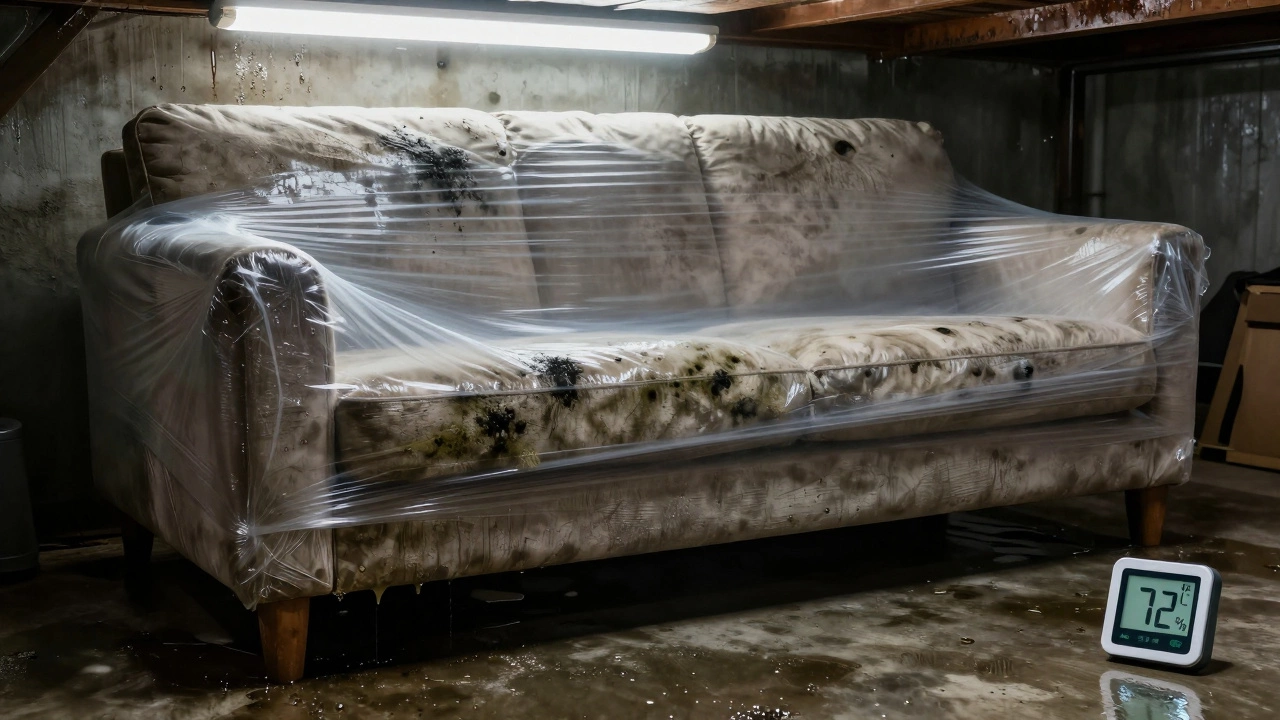
Basements are the #1 culprit. Even if they feel dry, concrete walls and floors sweat in humid weather. A 2023 study by the Canadian Building Science Directorate found that 67% of homes in Ontario with basement storage had measurable mold growth on stored textiles-including couches. Attics aren’t much better. In winter, cold air hits warm surfaces and causes condensation. In summer, heat builds up and traps moisture from the outside air.
And here’s the kicker: plastic wrap, which many people think protects couches, actually makes it worse. It traps moisture inside like a greenhouse. If your couch has even a tiny bit of dampness when you wrap it, that moisture can’t escape. It becomes a mold incubator.
What Types of Couches Are Most at Risk?
Not all couches are equal when it comes to mold. The materials matter more than the brand or price.
- Upholstery fabric: Cotton, linen, and velvet absorb moisture like sponges. Synthetic fabrics like polyester resist moisture better-but they don’t stop mold from growing underneath.
- Padding: High-density foam breaks down over time and holds moisture. Low-density foam? It turns into a sponge. Memory foam is especially bad-it traps heat and moisture like a pillow in a sauna.
- Frames: Wood frames can rot. Particleboard and MDF? They swell and crumble when damp. Metal frames won’t rot, but they can rust and create condensation spots.
- Leather: People think leather is mold-proof. It’s not. Real leather can develop mold spores that eat the finish. Faux leather? It peels and traps moisture between layers.
Even if your couch looks clean, hidden moisture in the seams or under the cushions is enough to start the problem. Mold doesn’t need to be visible to be active.
How to Store a Couch Without Getting Mold
There’s no magic trick. But there are proven steps that work-especially in places like Mississauga, where humidity swings from 20% in winter to 80% in summer.
- Clean it first. Vacuum every seam, crevice, and underside. Use a damp cloth with mild soap to wipe down fabric. Let it dry completely-24 hours minimum. No shortcuts. If you skip this, you’re just storing dirt and skin cells that mold loves.
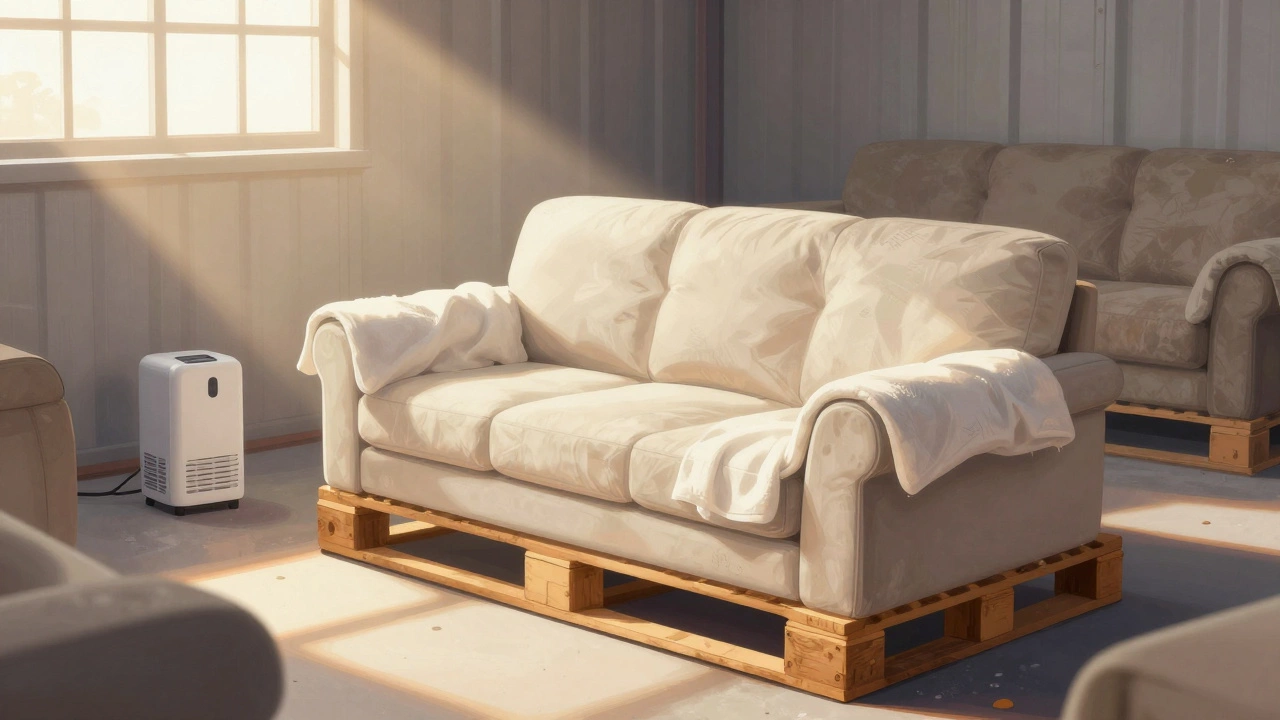
- Remove all moisture. Use a dehumidifier in the storage space for at least 3 days before storing. Check the humidity level with a cheap digital hygrometer. If it’s above 50%, don’t store anything until it drops.
- Use breathable covers. Skip plastic. Use cotton sheets or specialized furniture moving blankets. They let air flow while keeping dust out. If you must use plastic, only use it over a breathable layer-and leave it slightly open at the bottom for airflow.
- Elevate the couch. Put it on wooden pallets or thick plastic blocks. Never let it sit directly on concrete or dirt. Even a 2-inch gap stops moisture wicking up from the floor.
- Check it monthly. Open the cover every 4 weeks. Look for damp spots, discoloration, or smell. If it smells even slightly earthy, wipe it down with a solution of 1 part white vinegar to 1 part water. Let it air out for 2 hours before re-covering.
One real-life example: A family in Mississauga stored their sectional in a garage for 8 months. They used plastic wrap and thought they were fine. When they pulled it out, the cushions were covered in green fuzz. The frame was warped. They lost $1,200 in one weekend. All because they didn’t check the humidity.
Signs Your Couch Already Has Mold
You don’t need a lab test to know mold is there. Here’s what to look for:
- A musty, damp smell-even if you can’t see anything
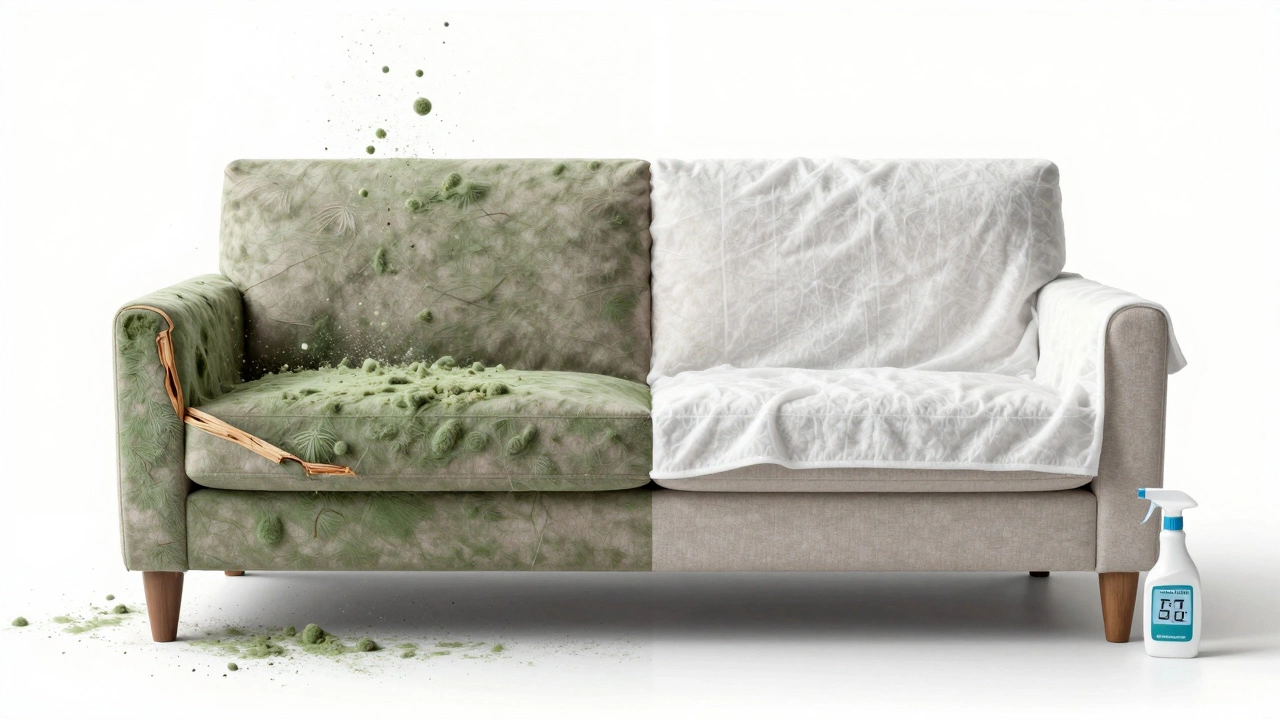
- Dark spots on fabric, especially along seams or under cushions
- Stains that look like water damage but don’t dry out
- Fabric that feels stiff, sticky, or brittle
- Allergic reactions when you sit on it: sneezing, itchy eyes, coughing
If you see any of these, don’t just wipe it off. Mold spores can spread through your home. You might need professional cleaning-or replacement. A couch with deep mold penetration isn’t salvageable. The foam and padding are too porous to clean safely.
What to Do If Mold Is Already There
If you find mold on your couch, act fast-but don’t panic.
First, take it outside. Wear gloves and a mask. Don’t shake or brush it-that spreads spores.
For light surface mold on fabric: Mix 1 cup white vinegar with 1 cup water. Spray lightly. Let sit for 10 minutes. Gently scrub with a soft brush. Dry completely in sunlight if possible. Sunlight kills mold spores.
For leather: Use a leather cleaner designed for mold. Never use vinegar or bleach-it damages the finish. Wipe with a microfiber cloth, then condition with a natural oil-based product.
For foam or padding: If it’s visibly moldy, throw it out. No cleaning product can fully remove mold from porous foam. It’s cheaper to replace the cushions than to risk your health.
And never use bleach on upholstered furniture. It kills surface mold but doesn’t reach the roots. Plus, it weakens fabric fibers and leaves behind toxic fumes.
Storage Locations Ranked by Risk
Not all storage spots are created equal. Here’s how they stack up:
| Location | Mold Risk | Why |
|---|---|---|
| Climate-controlled storage unit | Low | Temperature and humidity regulated year-round |
| Garage (with ventilation) | Moderate | Can get hot/cold, but airflow helps if windows are open |
| Basement | High | Constant moisture from concrete, poor airflow |
| Attic | High | Extreme heat in summer, condensation in winter |
| Outdoor shed | Very High | No climate control, direct exposure to rain and humidity |
If you have to choose, go for a climate-controlled unit-even if it costs more. It’s cheaper than replacing a ruined couch and dealing with mold allergies.
How Long Can a Couch Stay in Storage?
There’s no fixed rule. A couch stored perfectly in a dry, climate-controlled space can last 2-3 years. But in a damp garage or basement? It could be ruined in 3 months.
Here’s a simple rule: If you’re storing it longer than 6 months, you need to take active steps to control moisture. Don’t just assume it’s fine.
And if you’re storing it for a move, don’t wait until the last minute. Clean and prepare it at least a week before packing. Rushing leads to mistakes-and mold grows fast.
What to Do After Taking It Out of Storage
Don’t just roll it into your living room. Even if it looks clean, mold spores can still be hiding.
- Unwrap it outside and let it air out for at least 24 hours
- Vacuum thoroughly with a HEPA filter vacuum
- Wipe down all surfaces with a damp cloth and mild soap
- Use a fan to circulate air around it for another 24 hours
- Check for smell. If it still smells musty, don’t use it until you fix the issue
Many people skip this step. Then they wonder why their kids get coughing fits every time they sit on the couch.
Final Thought: Is It Worth Saving?
Some couches are worth saving. Others aren’t. Ask yourself: How much did it cost? How old is it? How bad is the mold?
If it’s a $200 couch from a big-box store and it’s 5 years old? Probably not worth the risk. Buy a new one. Mold exposure can cause long-term respiratory issues, especially for kids and seniors.
If it’s a family heirloom or a high-end piece you can’t replace? Then yes-spend the money on professional cleaning. But even then, be prepared: some damage is permanent.
Bottom line: Mold doesn’t care how much you loved your couch. It only cares if there’s moisture. If you store it right, it’ll last. If you don’t, it’ll become a health hazard-and a trash heap.
Can a moldy couch be cleaned safely at home?
You can clean light surface mold on fabric using a vinegar-water solution and gentle scrubbing. But if the mold has penetrated the foam, padding, or frame, it’s not safe to clean at home. Mold spores hide deep in porous materials and can cause health problems even after cleaning. In those cases, replacement is the only safe option.
Is plastic wrap good for storing couches?
No. Plastic wrap traps moisture inside, creating a perfect environment for mold to grow. If your couch has any dampness when wrapped, it will rot. Use breathable cotton covers or moving blankets instead. If you must use plastic, only as an outer layer over a breathable material-and leave gaps for airflow.
What’s the best humidity level for storing a couch?
Keep the storage area below 50% relative humidity. Above that, mold starts to grow. Use a digital hygrometer to monitor levels. If you’re in a humid climate like Ontario, consider a small dehumidifier in your storage space-even in winter.
Can I store a couch in the basement?
It’s risky. Basements naturally hold moisture from concrete walls and floors. If you must store a couch there, elevate it on wooden pallets, use breathable covers, and run a dehumidifier constantly. Check it every 2 weeks. If you notice any dampness or smell, move it immediately.
How often should I check on a stored couch?
Every 4 weeks. Open the cover, smell it, and look for dark spots or dampness. If it smells musty, wipe it with vinegar water and air it out. Waiting longer than a month increases the chance of irreversible damage.