
Wood Furniture Storage Humidity Calculator
Check Your Storage Safety
Input your storage conditions to see if they're safe for wood furniture
Ever left a wooden dresser or coffee table in a garage, basement, or storage unit for months and then opened the door to find cracks, warping, or sticky residue? You’re not alone. Many people assume wood furniture is tough enough to handle any storage environment-but that’s a dangerous myth. Wood isn’t plastic. It breathes. It reacts. And if you store it wrong, it can get ruined faster than you think.
Wood Isn’t Just a Material-It’s a Living Thing
Wood furniture doesn’t just sit there quietly. It’s constantly absorbing and releasing moisture from the air around it. That’s why a table might look fine in your living room but start to crack in a dry storage unit, or swell up in a damp basement. This movement is called hygroscopic behavior, and it’s the #1 reason wood furniture gets damaged in storage.
Most hardwoods like oak, maple, and walnut can handle normal indoor humidity levels (30-50%). But storage spaces? They rarely stay in that sweet spot. In winter, heated garages can drop below 20% humidity. In summer, unventilated sheds can hit 80% or higher. Both extremes stress the wood. Over time, that stress leads to splits, warping, or even glue failure in joints.
The Top 3 Ways Wood Furniture Gets Ruined in Storage
Let’s cut through the noise. You don’t need to memorize 10 tips. Just know these three killers:
- Humidity swings - Wood expands when wet, contracts when dry. Rapid changes cause cracks in the finish or along the grain. A table that’s fine in your home can split open after three months in a storage unit with no climate control.
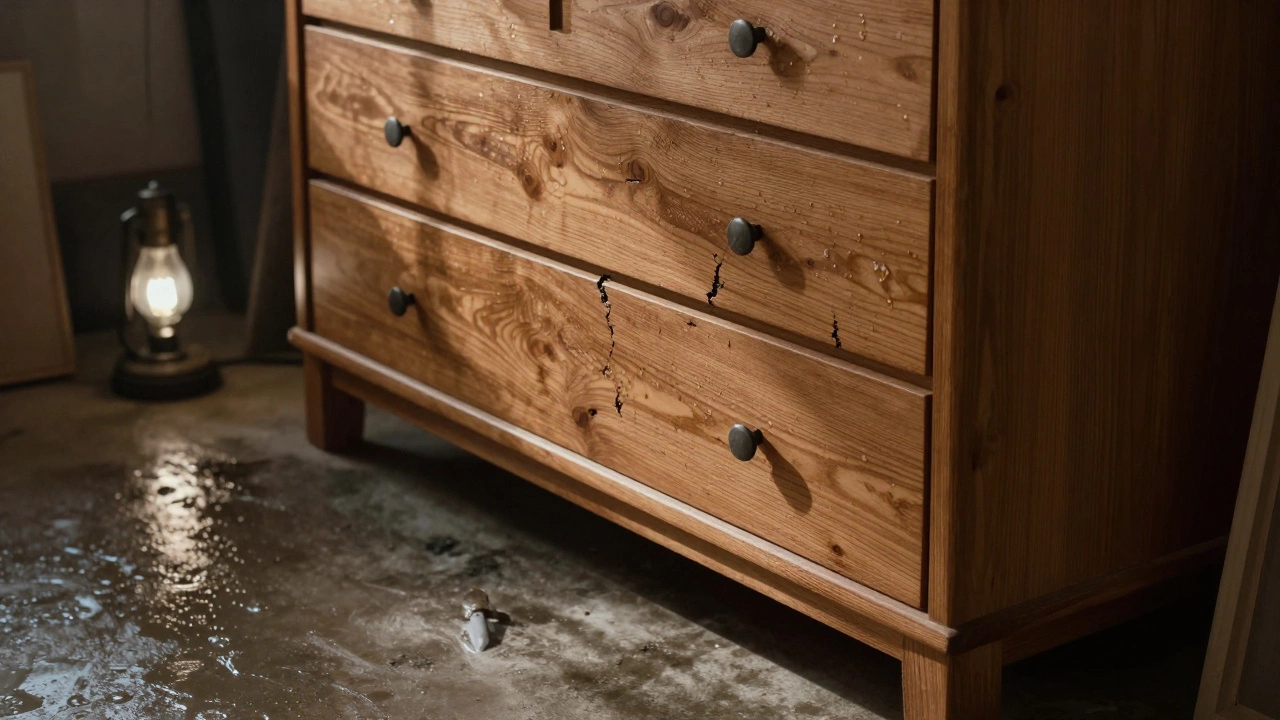
- Direct moisture contact - Leaky pipes, flooded basements, or even condensation on concrete floors can soak the bottom of furniture. Even if the top looks dry, the legs and underside can rot. I’ve seen solid oak dressers with perfectly fine tops but completely mushy legs from sitting on a damp concrete slab.
- Extreme temperatures - Heat above 80°F (27°C) can dry out wood too fast, while freezing temps make glue brittle. In Canada, garages in January can hit -20°C. That’s not just cold-it’s a recipe for cracked veneer and popped joints.
What Kind of Wood Matters More Than You Think
Not all wood is the same. Solid hardwoods like cherry, ash, and teak hold up better than engineered wood. But even solid wood can fail if stored poorly.
- Hardwoods (oak, maple, walnut) - More stable, but still vulnerable to humidity extremes. They’re dense, so they take longer to absorb moisture, but when they do, the damage is more dramatic.
- Softwoods (pine, cedar) - Softer and more porous. They absorb moisture faster and are more likely to warp. Not ideal for long-term storage unless sealed tightly.
- Engineered wood (MDF, plywood, particleboard) - The worst for storage. These materials are glued together with resins that break down in damp conditions. Once they swell, they’re done. No amount of sanding or refinishing fixes it.
If your furniture is made of MDF or particleboard, storing it long-term is asking for trouble. You might as well donate it or recycle it instead of risking damage.
Storage Environment: The Hidden Killer
Where you store it matters more than what you store. A climate-controlled unit isn’t a luxury-it’s a necessity for wood furniture.
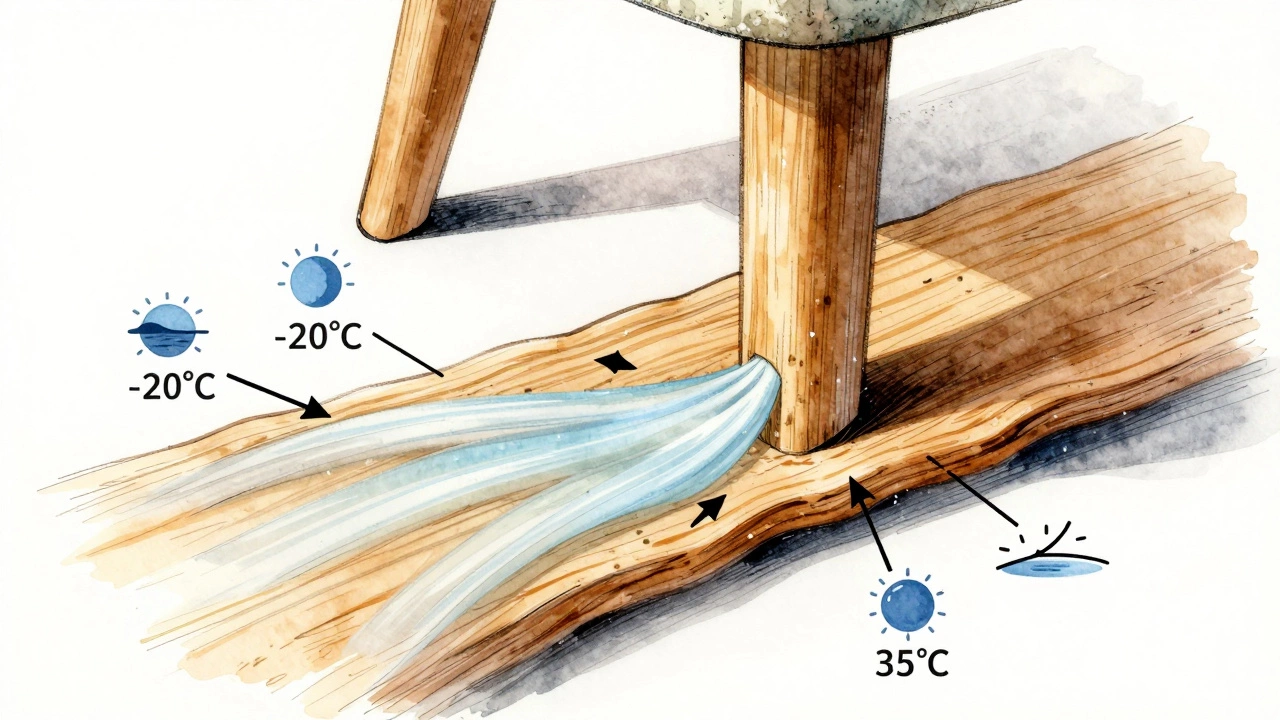
Think about this: a standard self-storage unit in Mississauga can swing from -15°C in January to 35°C in July. Humidity? It can jump from 15% to 90% in the same building. That’s like putting your furniture through a steam room, then a sauna, then a freezer-all in one year.
Here’s what you should look for in a storage space:
- Climate-controlled - Keeps temp between 15-25°C and humidity at 40-50%. This is the gold standard.
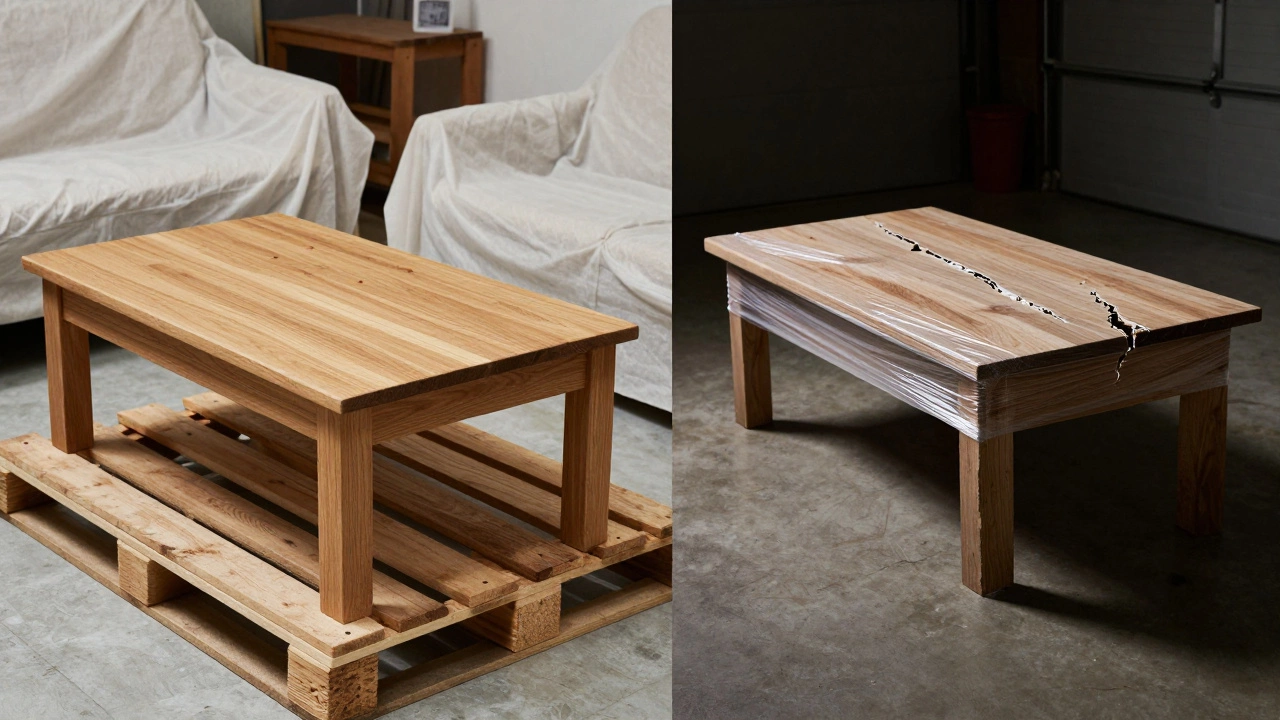
- Concrete floor with moisture barrier - Never let furniture sit directly on concrete. Use pallets or plastic sheeting.
- Good ventilation - Avoid sealed, dark units. Airflow helps prevent mold and mildew.
- Indoor, not outdoor - Metal sheds, garages, and barns? Skip them. They’re humidity traps.
Most people think, “It’s just a chair-I’ll throw it in the garage.” But a garage isn’t storage. It’s a weather simulator.
How to Prepare Wood Furniture for Storage
If you must store wood furniture, don’t just wrap it and hope for the best. Do this right:
- Clean it thoroughly - Wipe down with a damp cloth, then dry completely. Dust and grime trap moisture.
- Apply a protective finish - Use a high-quality paste wax or furniture polish. It creates a barrier against moisture. Avoid silicone-based sprays-they leave sticky residue.
- Disassemble when possible - Take off legs, drawers, and shelves. Store them separately. This reduces stress on joints.
- Use breathable covers - Cotton sheets or furniture moving blankets. Never use plastic wrap-it traps moisture like a greenhouse.
- Elevate it - Place on wooden pallets or plastic risers. Keep it 2-4 inches off the floor.
- Leave breathing room - Don’t pack furniture tightly. Air needs to circulate around every piece.
What to Avoid at All Costs
These mistakes are common-and deadly for wood:
- Storing in plastic - Traps moisture, causes mold, and ruins finishes.
- Leaving it on concrete - Even a few weeks can lead to rot, especially in damp climates like Ontario.
- Using heat sources nearby - Radiators, space heaters, or direct sunlight? They dry wood out too fast.
- Ignoring seasonal changes - You wouldn’t leave a wine bottle in the sun. Don’t do it to your furniture.
How to Check for Damage After Storage
Don’t wait until you’re trying to use it again to find out something’s wrong. When you pull furniture out of storage:
- Run your hand along joints-feel for looseness or gaps.
- Look for white powdery residue (that’s salt bloom from moisture evaporation).
- Check for stickiness or discoloration on the surface-signs of finish breakdown.
- Tap on panels-solid wood should sound dense. Hollow or dull sounds mean delamination.
If you spot minor cracks or warping, you might still be able to fix it with wood filler and refinishing. But if the structure is compromised-like a leg that wobbles or a drawer that won’t slide-you’re looking at repair costs that might exceed the value of the piece.
When to Just Let It Go
Some pieces aren’t worth saving. If your furniture is:
- Made of particleboard or MDF
- Has major cracks in the wood grain
- Has swollen or bubbled veneer
- Has mold that won’t clean off
-then it’s time to recycle it. Trying to restore it will cost more than replacing it. And you’ll still have the risk of mold spores in your home.
Final Thought: Storage Isn’t Storage-It’s a Test
Wood furniture isn’t meant to be stored like boxes of old books. It’s a natural material that responds to its environment. If you treat it like something fragile (because it is), you’ll keep it looking good for decades. If you toss it into a random unit and forget about it? You’re not storing it-you’re testing how fast it falls apart.
The best storage isn’t the cheapest. It’s the one that keeps temperature and humidity steady. And if you’re not sure? Better to leave it in your home-even if it means rearranging a room-than risk losing something you love.
Can wood furniture be stored in a garage?
Storing wood furniture in a standard garage is risky. Most garages aren’t insulated or climate-controlled, so they experience extreme temperature swings and high humidity. In winter, cold air can dry out wood, causing cracks. In summer, moisture from rain or humidity can swell the wood, leading to warping or mold. If you must use a garage, elevate the furniture on pallets, cover it with a breathable cotton sheet, and use a dehumidifier. But even then, it’s not ideal.
How long can wood furniture be stored safely?
With proper preparation and climate-controlled storage, wood furniture can be stored safely for years-even up to a decade. But in a non-climate-controlled space like a basement or shed, damage can start in as little as 3-6 months. Humidity swings, temperature extremes, and direct contact with concrete accelerate deterioration. If you’re storing furniture for more than 6 months, climate control isn’t optional-it’s essential.
Is it okay to cover wood furniture with plastic?
No, never cover wood furniture with plastic. Plastic traps moisture against the surface, creating a humid microclimate that leads to mold, mildew, and finish damage. Even if the air feels dry, condensation forms under plastic, especially when temperatures change. Use breathable materials like cotton sheets, moving blankets, or furniture covers designed for ventilation. If you need dust protection, use a light cotton sheet over plastic, not the other way around.
What’s the best humidity level for storing wood furniture?
The ideal humidity range for storing wood furniture is 40-50%. This mimics the conditions of a well-heated home in winter or a cool, dry room in summer. Below 30%, wood loses moisture too quickly and can crack. Above 60%, it absorbs moisture and swells, which can warp panels and loosen joints. If you’re using a climate-controlled unit, ask for the humidity settings. If you’re storing at home, use a hygrometer to monitor levels.
Can you fix wood furniture that got damaged in storage?
Minor damage like small cracks, light warping, or dull finishes can often be repaired. Sand the area lightly, apply wood filler if needed, re-stain, and reseal with wax or polyurethane. But if the wood is split, veneer is bubbled, or joints are loose, professional repair may be required-and it can cost more than replacing the piece. If mold is present, especially deep in the wood, it’s usually not worth saving. Mold compromises the structure and can spread to other items.