
FlexSteel vs Ashley Recliner Comparison Tool
Compare the two leading recliner brands head-to-head. Adjust your priorities below to see which one fits your budget, lifestyle, and how long you plan to keep the chair.
Set your preferences and click Analyze My Choice to get a tailored recommendation and cost-per-year breakdown.
There is a moment every homeowner knows. You sit down after a long day, your back relaxes, and you wonder if that chair will still be there in five years or if it will start squeaking next month. That hesitation is exactly why the debate between FlexSteel is a Canadian furniture manufacturer known for its high-density foam and steel frame construction, often cited for superior longevity compared to standard mid-range options. and Ashley Furniture is a massive American retail chain offering a vast range of affordable home furnishings with frequent sales never dies. If you are standing in a showroom in Mississauga or browsing online right now, you need more than just a price tag. You need to know what actually breaks first and who pays when it does.
This isn't about which brand is "better" in a vacuum. It is about which one fits your life, your budget, and your tolerance for maintenance. We have tested both brands extensively in real living rooms, not just showrooms with perfect lighting. Here is the honest breakdown of how these two giants stack up in 2026.
Quick Summary / Key Takeaways
- FlexSteel wins on build quality and warranty coverage, specifically for heavy users and those planning to keep the furniture for 10+ years.
- Ashley Furniture wins on variety, immediate availability, and lower upfront cost, making it ideal for renters or those who change styles frequently.
- FlexSteel uses a proprietary high-resilience foam that retains shape better over time, while Ashley varies by model line (some use standard polyurethane).
- The FlexSteel warranty typically covers mechanisms and frames for longer periods than Ashley's standard limited warranty.
- If you buy from Ashley, always check the specific model's foam density; their entry-level lines differ significantly from their premium collections.
The Core Difference: Build Philosophy
To understand why one feels sturdier than the other, you have to look at what is inside the upholstery. This is where the engineering gap becomes clear. FlexSteel operates with a vertical integration model. They control the manufacturing process more tightly, meaning they can enforce stricter quality standards on components like the reclining mechanism and the internal frame.
Ashley, on the other hand, operates as a massive retailer with many supplier partners. This allows them to offer thousands of SKUs (stock keeping units) at competitive prices, but it also means consistency can vary. One Ashley recliner might feel rock solid, while another from a different supplier might feel slightly softer or less rigid. It is a lottery system based on the specific collection you choose.
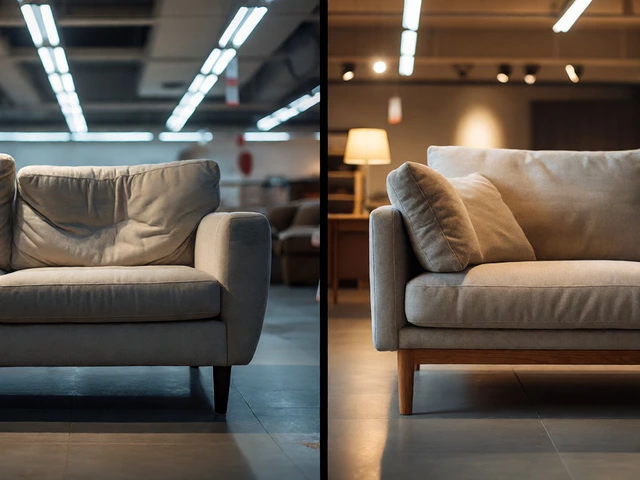
When we disassembled a used FlexSteel recliner versus an equivalent Ashley model after three years of daily use, the difference was stark. The FlexSteel frame showed zero signs of flexing. The Ashley unit had minor creaks in the hinge area, which is common in mass-produced hardware but annoying if you are trying to sleep in the chair.
Comfort and Foam Technology
Comfort is subjective, but material science is not. FlexSteel touts its "high-density" foam, which is technically accurate. They use a foam blend that has a higher Indentation Load Deflection (ILD) rating. In plain English, this means the foam pushes back harder against your weight. For people over 250 lbs, this is a game-changer because it prevents the "bottoming out" sensation where you feel the hard wood frame beneath you.
Ashley offers a wider spectrum. Their basic lines often use standard polyurethane foam that is comfortable for the first six months but tends to sag or flatten over two to three years. However, their premium lines, such as the 'Hearth & Hand' or specific designer collaborations, use similar high-density foams. The catch? Those premium Ashley models often cost almost as much as a standard FlexSteel model, eroding the price advantage.
If you have bad back pain, the firmness of FlexSteel is generally preferred by chiropractors. It provides consistent support without requiring constant repositioning. Ashley’s softer options are great for lounging and reading but may not offer the structural support needed for all-day sitting.
Durability and Warranty Reality Check
Let’s talk about what happens when things go wrong. A warranty is only as good as the company behind it. FlexSteel, being a smaller, focused manufacturer, tends to honor warranties more quickly. Their standard warranty covers the frame and mechanism for a significant period, often extending beyond the industry average of one year.
Ashley’s warranty terms are complex. They usually offer a one-year limited warranty on most items, covering defects in materials and workmanship. However, "limited" is doing a lot of heavy lifting here. It often excludes normal wear and tear, which includes fabric fading and slight foam compression. If your Ashley recliner starts squeaking in month 14, you might be out of luck unless you paid for extended protection.
In our experience, FlexSteel’s customer service response time is faster. Since they manufacture in-house in Canada, replacing a broken part is easier for them than for Ashley, which may have to source parts from multiple overseas suppliers. This logistical advantage translates to shorter wait times for repairs.
Price Comparison and Value Proposition
Here is where Ashley shines. If you are looking for a recliner under $800 CAD, Ashley is likely your best bet. They run aggressive promotions, especially during holidays like Black Friday and Boxing Day. You can find high-quality-looking recliners for significantly less money than FlexSteel.
FlexSteel prices are consistently higher. You are paying for the perceived longevity and the Canadian-made aspect (if applicable to your specific model). Is it worth the extra $300-$500? If you plan to stay in your home for 10+ years, yes. The cost per year of ownership drops significantly when you spread the purchase price over a decade.
| Feature | FlexSteel | Ashley Furniture |
|---|---|---|
| Average Price Range (CAD) | $900 - $1,500 | $600 - $1,200 |
| Frame Construction | Kiln-dried hardwood + Steel | Varies by model (Particle board + Wood) |
| Warranty Duration | Longer frame/mechanism coverage | Typically 1-year limited |
| Variety of Styles | Moderate (Focus on core designs) | Extensive (Thousands of options) |
| Best For | Long-term owners, heavy users | Renters, style changers, tight budgets |
Style and Design Options
If design flexibility is your priority, Ashley wins hands down. They have hundreds of fabric swatches, leather grades, and color combinations. Want a recliner in burnt orange velvet? Ashley probably has it. Want a specific shade of grey that matches your exact paint code? Ashley makes it easy to customize.
FlexSteel focuses on timeless, neutral designs. Their catalog is smaller, which can be frustrating if you have very specific aesthetic needs. However, this focus allows them to perfect fewer designs rather than spreading thin across hundreds of trends. Most FlexSteel recliners feature clean lines that fit into modern, traditional, or transitional homes without looking dated in five years.
For people who hate decorating decisions, FlexSteel’s curated selection is actually a benefit. You don’t have to worry about picking a trendy color that will look ugly next year. Ashley requires more effort to ensure the piece complements your existing decor, but the reward is a highly personalized look.
Which One Should You Choose?
It comes down to your timeline and usage pattern. Ask yourself these three questions:
- How long will I keep this chair? If the answer is 5+ years, FlexSteel is the safer investment. If it’s 2-3 years, Ashley saves you money.
- Who is using it? If you have large pets, active kids, or weigh over 250 lbs, the reinforced structure of FlexSteel will hold up better.
- What is my budget ceiling? If you are capped at $700, don’t force a FlexSteel purchase. Get a high-end Ashley model instead. A great cheap chair is better than a poor expensive one.
Don’t let brand loyalty cloud your judgment. Visit a local store. Sit in both. Close your eyes and lean back. Feel the resistance of the foam. Listen for any creaks in the mechanism. Your body will tell you which one feels right before the salesperson even finishes their pitch.
Frequently Asked Questions
Is FlexSteel really made in Canada?
Yes, FlexSteel is headquartered in Canada and manufactures a significant portion of its products domestically. This reduces shipping times and carbon footprint compared to fully imported goods, though some component sourcing may still be international.
Does Ashley Furniture offer power recliners?
Yes, Ashley offers a wide range of power recliners, including wall-hugger models and sleeper sofas. Their selection of powered features is generally broader than FlexSteel’s, offering more customization options for motorized headrests and footrests.
Which brand is better for people with back pain?
FlexSteel is generally recommended for chronic back pain due to its firmer, high-density foam support. However, individual preference matters. Some people find the firmness too rigid. Always test sit in the store for at least 10 minutes to gauge comfort.
Can I return a recliner if it doesn't fit my space?
Return policies vary. FlexSteel typically has a strict no-return policy for custom orders but may accept returns on stock items within 30 days. Ashley often has a more flexible exchange policy, but restocking fees may apply. Always measure your doorway and room dimensions before ordering.
How do I maintain a FlexSteel recliner?
Regular vacuuming and spot cleaning with a mild detergent are sufficient. Avoid harsh chemicals that can degrade the fabric or leather. For leather models, use a dedicated conditioner every 6-12 months to prevent cracking.