When you buy outdoor furniture, you’re not just buying a chair or a table-you’re buying years of use. But if you live anywhere with rain, snow, or even heavy dew, the wrong material can turn your investment into a soggy, moldy mess in just one season. So what material actually survives the rain? Not all teak, aluminum, or wicker is created equal. Here’s what works, what doesn’t, and why.
Teak: The Classic That Still Wins
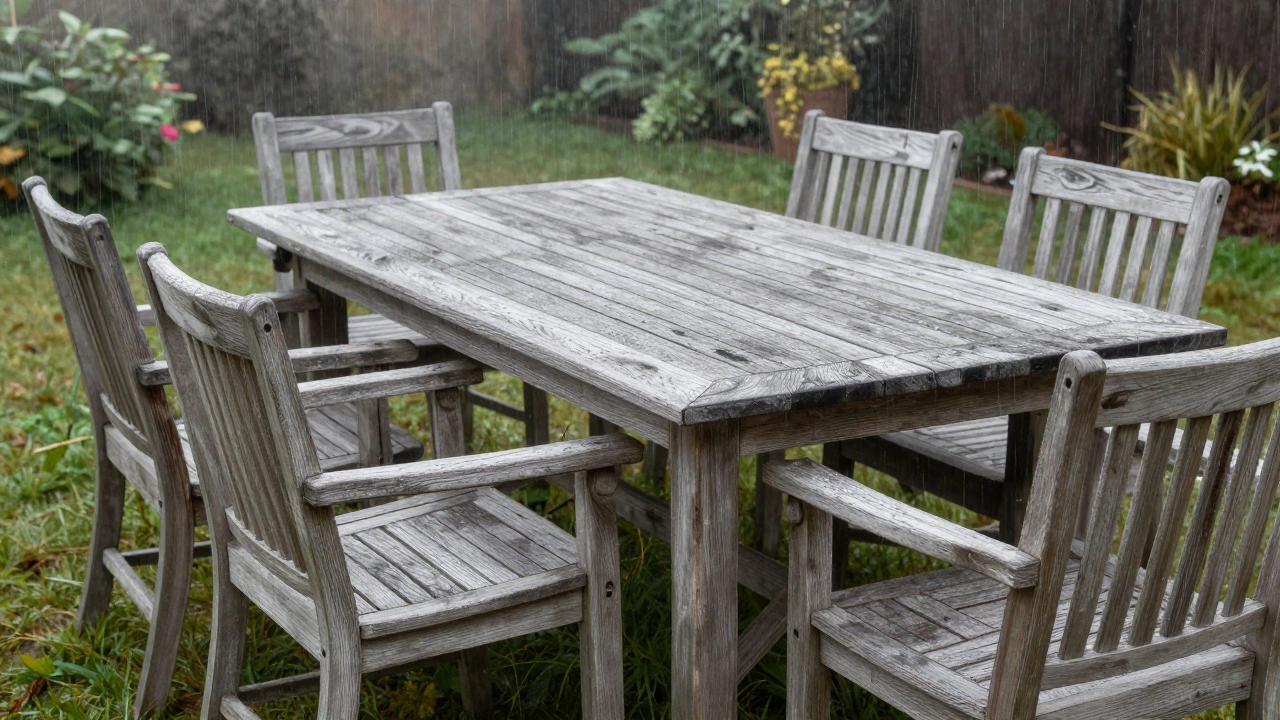
Teak has been the go-to for outdoor furniture since the 1950s, and for good reason. It’s dense, oily, and naturally resistant to rot, insects, and water. High-quality teak from Indonesia or Myanmar doesn’t need sealants or covers. Left in the rain, it weathers to a soft silver-gray patina-no damage, no warping. That’s because teak contains natural silica and oils that repel moisture. Brands like Tropitone and Brown Jordan use A-grade teak that lasts 20+ years with zero maintenance.
But here’s the catch: cheap teak from lesser sources can be dried improperly or mixed with softer woods. If you see teak furniture priced under $300 for a chair, it’s likely not solid. Look for labels that say "100% solid teak" and avoid anything labeled "teak effect" or "teak veneer." The real stuff feels heavy, smells faintly like leather when new, and doesn’t splinter easily.
Powder-Coated Aluminum: The Low-Maintenance Champ
If you want furniture that laughs at rain, look at powder-coated aluminum. It doesn’t rust, it doesn’t absorb water, and it dries instantly. The powder coating adds a protective layer that resists scratches and UV fading. Unlike bare aluminum-which can oxidize into a chalky white finish-powder-coated versions come in matte black, charcoal, bronze, or even bright colors that stay vibrant for over a decade.
Many modern patio sets from brands like Harmonia Living and Frontgate use extruded aluminum frames with welded joints. These aren’t bolted together like cheap imports; they’re fused, so water can’t pool in seams. Pair it with all-weather cushions made from solution-dyed acrylic (more on that below), and you’ve got a set that survives Canadian winters and summer downpours.
Pro tip: Avoid aluminum with thin coatings or painted finishes. Those chip and peel after one season of rain. Stick to powder-coated only.
HDPE Wicker (Synthetic Wicker): The Real Alternative to Natural Rattan
Natural rattan or cane? Don’t even think about it for rainy climates. It soaks up moisture, swells, cracks, and grows mold in weeks. But HDPE (high-density polyethylene) wicker? That’s a game-changer. Made from recycled plastic, it’s UV-stabilized, waterproof, and flexible enough to bend without breaking.
Brands like Polywood and Hanover use HDPE that’s woven over powder-coated steel frames. The material won’t fade in sunlight, won’t crack in freezing temps, and can be hosed off like a car. Even after five years of being left outside in Mississauga’s unpredictable weather, HDPE wicker still looks new.
Look for furniture with thick strands-0.5 inches or more-and a tight weave. Thin, flimsy wicker looks nice in catalogs but collapses under moisture and weight. Also, check the frame: if it’s not aluminum or galvanized steel, it’ll rust from the inside out.
Stainless Steel: For Modern Designs That Last
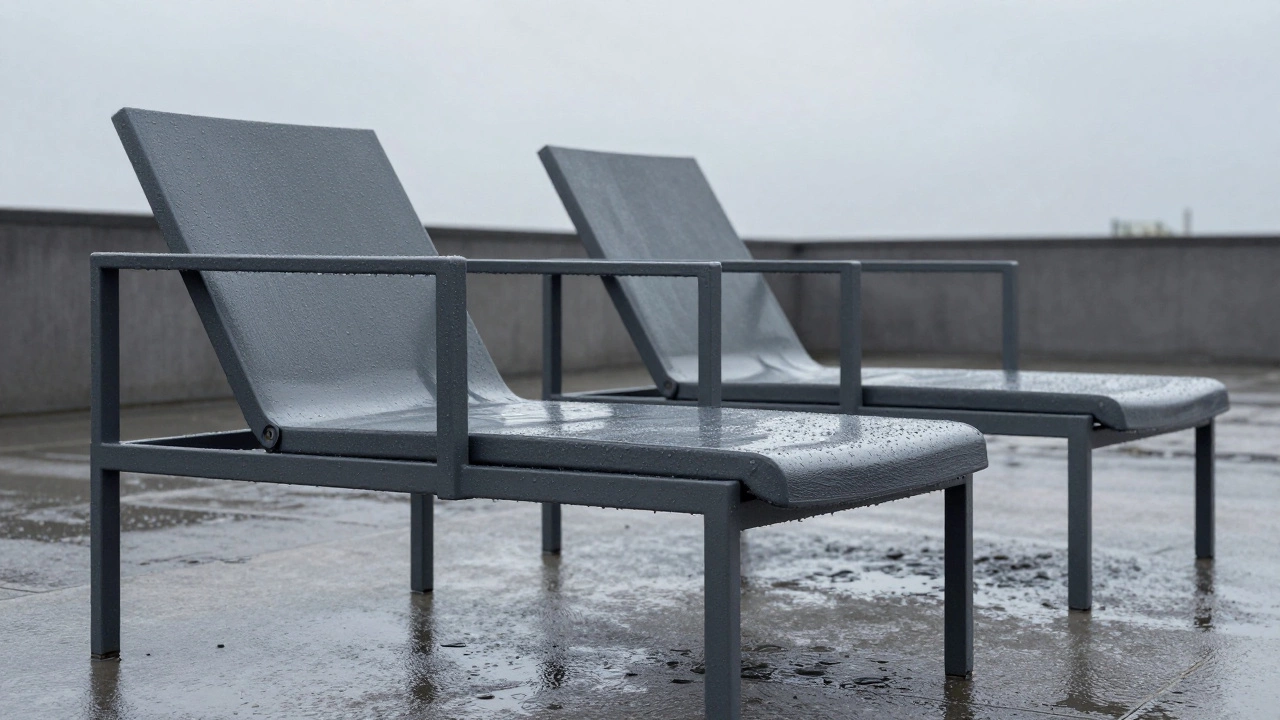
Stainless steel isn’t just for kitchens. Grade 316 stainless steel-also called marine-grade-is the gold standard for coastal and rainy environments. It contains molybdenum, which makes it resistant to salt and chlorides in rainwater. You’ll find it in high-end modern sets from Kartell or Ledge Lounger.
Unlike regular steel or chrome-plated metal, 316 stainless doesn’t pit or rust, even when left out in the rain year-round. It’s heavier, pricier, and often used in minimalist designs. If you like clean lines and don’t mind the industrial look, it’s one of the most durable options out there.
Just avoid 304 stainless-it’s common in cheaper furniture and will eventually corrode in wet climates. Always ask for the grade. If they don’t know, walk away.
Cushions: The Hidden Weak Point
Even the best frame will fail if the cushions rot. Most outdoor cushions use polyester or cotton fills that soak up water like a sponge. That leads to mildew, odors, and broken zippers.
The solution? Solution-dyed acrylic fabric-like Sunbrella or Outdura. These aren’t just water-repellent; the color is baked into the fiber itself, so it won’t fade or bleed. The fill should be quick-dry foam, not polyester batting. Brands like WeatherWise and Outdoor Designs use this combo. The cushions can sit in a downpour, then dry in a few hours.
And yes, you still need to store them during winter. But unlike cotton, they won’t rot if left out for a few rainy weeks. That’s the difference between a cushion that lasts 2 years and one that lasts 10.
What to Avoid at All Costs
Some materials are death traps in the rain. Skip these:
- Natural wicker or rattan: Absorbs water, cracks, molds. Not for rain.
- Untreated pine or cedar: Even "weather-resistant" woods will rot without annual sealing. Too much work.
- Iron or wrought iron: Rusts fast unless powder-coated-and even then, chips lead to rust spots.
- Plastic lawn furniture: The cheap kind turns brittle in cold weather and cracks when you sit on it.
- Upholstered fabric without waterproof backing: Cotton, linen, or polyester blends will trap moisture and grow mold.
If you bought any of these in the past and they’re already falling apart? You didn’t buy bad furniture-you bought the wrong material for your climate.
Real-World Test: What Survived a Canadian Winter
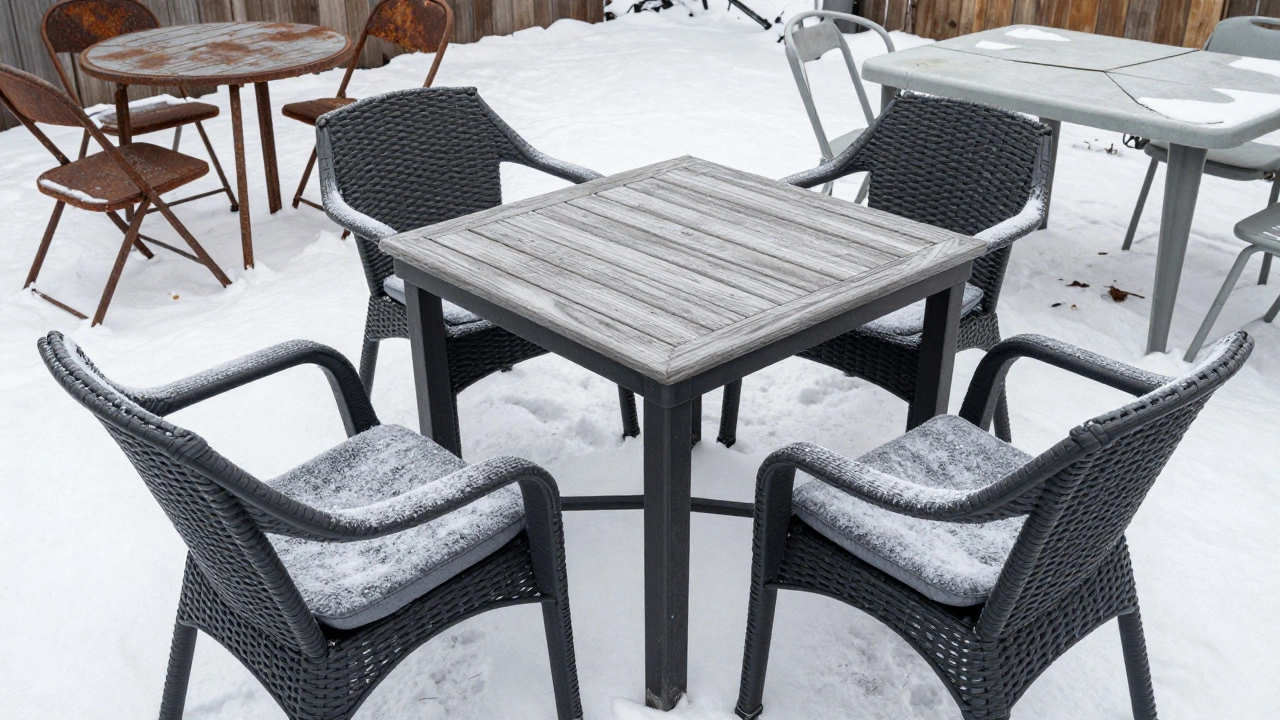
Last year, a neighbor in Mississauga left a set of HDPE wicker chairs and a teak table outside all winter. No covers. No storage. Snow, ice, freeze-thaw cycles-you name it. In spring, the teak was gray but solid. The wicker hadn’t cracked. The cushions? They’d been removed, but the frame was dry inside. No rust, no rot, no mold.
Compare that to the metal folding chairs from the hardware store. They rusted through the legs. The plastic table? Cracked down the middle from the cold.
Material matters more than brand. A $1,200 set made of the wrong stuff will fail faster than a $500 set made of the right stuff.
Final Checklist: Pick the Right Material
Before you buy, ask yourself these questions:
- Is the frame made of solid teak, powder-coated aluminum, 316 stainless steel, or HDPE wicker over metal?
- Are the cushions made with solution-dyed acrylic fabric and quick-dry foam?
- Is the product made for year-round outdoor use-or just "weather-resistant" (a marketing word)?
- Does the company offer a 5+ year warranty against material failure?
- Have you seen real photos of this furniture after 3+ years outside?
If you answer yes to all five, you’ve found something that won’t let you down when the rain comes. If not, keep looking.
Outdoor furniture isn’t about style alone. It’s about engineering. The best material for rain isn’t the prettiest-it’s the one that outlasts the storm.
Is teak furniture worth the price?
Yes-if it’s solid, high-grade teak. A good teak set costs more upfront but lasts 20+ years with no maintenance. Cheaper teak looks similar but cracks and rots in 3-5 years. You’re paying for density, oil content, and proper kiln-drying. If you plan to keep furniture outside long-term, teak pays for itself.
Can I leave cushions outside in the rain?
Only if they’re made with solution-dyed acrylic fabric and quick-dry foam. These materials repel water and dry fast. But even then, it’s best to store them during heavy storms or winter. Leaving them out constantly reduces their lifespan. A simple storage bag or cover helps.
Does aluminum rust in the rain?
No-pure aluminum doesn’t rust. But cheap aluminum furniture often has a painted finish that chips, exposing the metal underneath. That can oxidize into a white powdery residue. Always choose powder-coated aluminum, not painted. Powder coating bonds to the metal and won’t flake off in rain or sun.
What’s the cheapest durable option for outdoor furniture?
HDPE wicker over aluminum frames. You can find decent sets starting around $600-$800 for a 5-piece configuration. It’s cheaper than teak or stainless steel but just as durable in rain. Avoid the $200 plastic sets-they’ll crack in cold weather. The $600 option lasts 10 years; the $200 one lasts 2.
Do I need to cover my outdoor furniture?
Not if it’s made from the right materials. Teak, powder-coated aluminum, HDPE wicker, and 316 stainless steel don’t need covers to survive rain. But covers help keep dust off, prevent UV fading on cushions, and protect against snow buildup. If you’re in a place with heavy snow or pollen, a breathable cover is still a good idea. Just don’t rely on it as a substitute for good materials.
If you’re shopping this season, remember: the best material for outdoor furniture in the rain isn’t the flashiest or the cheapest. It’s the one that’s built to last through seasons, not just summer parties. Choose wisely-your future self will thank you when the rain comes again.