
Sleep Quality Impact Calculator
How does couch sleeping affect your body? Enter your habits below to see personalized impact analysis.
Your sleep quality impact will appear here after calculation
You’ve had a long day. The TV’s on, the lights are low, and before you know it, your head is sinking into the armrest. You meant to just rest your eyes for five minutes-but now you’re fully asleep on the couch. You wake up hours later with a stiff neck, a sore back, and that weird numb feeling in your arm. Sound familiar? You’re not alone. Millions of people do this every night. But here’s the truth: sleeping on the couch isn’t just uncomfortable-it’s actively hurting your sleep and your body.
Your spine isn’t designed for couches
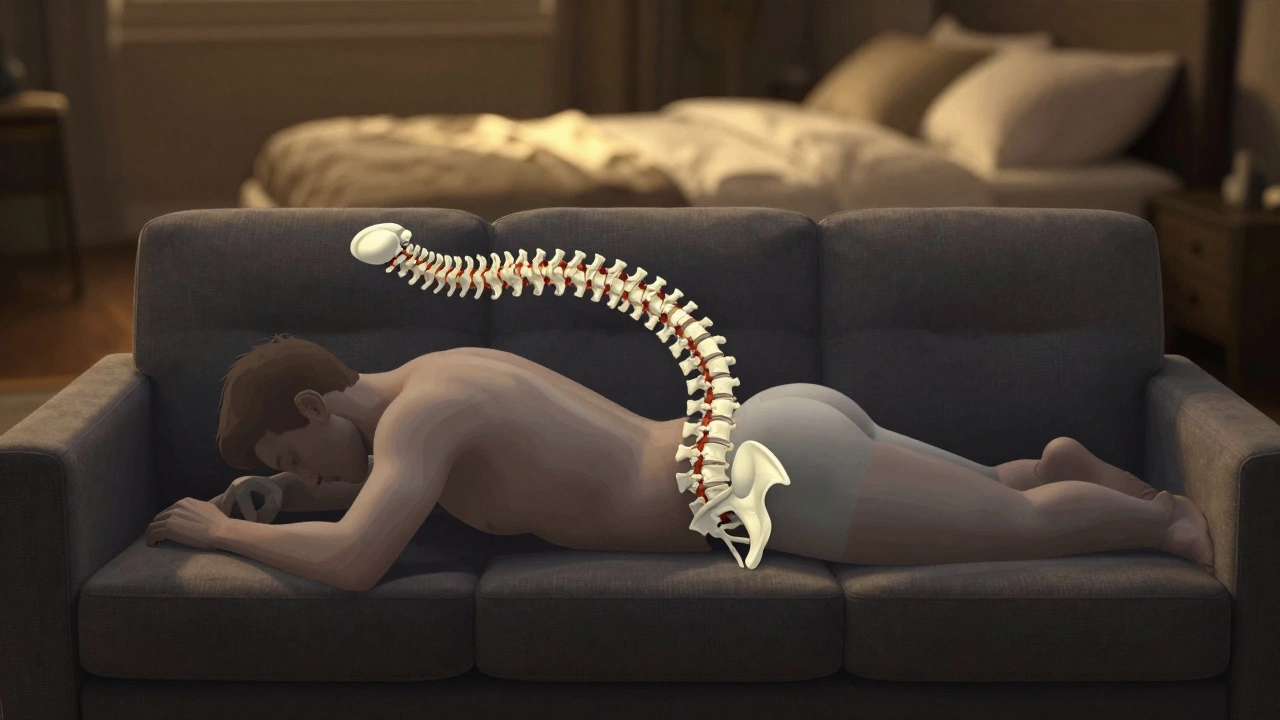
Your spine has three natural curves: one in the neck, one in the mid-back, and one in the lower back. When you sleep in a bed, a good mattress supports those curves. A couch? Not so much. Most couches are too soft, too flat, or too angled. You end up with your head tilted forward, your lower back sinking, and your hips twisted. That’s not rest. That’s strain.A 2023 study from the American Chiropractic Association tracked 1,200 people who regularly slept on sofas. Over 78% reported waking up with neck or lower back pain within a week. That’s not coincidence. It’s physics. Your body isn’t getting the support it needs. And when you’re sleeping, your muscles aren’t active to compensate. So your spine gets pulled out of alignment-and stays that way until you wake up, stiff and sore.
You’re not getting real sleep
Sleep isn’t just about closing your eyes. It’s about cycling through stages: light sleep, deep sleep, and REM. Deep sleep is when your body repairs tissues and strengthens your immune system. REM is when your brain processes emotions and memories. Both need stability.On a couch, you’re constantly shifting. You’re too hot. Too cold. Too upright. Too slouched. Every time you move, your body wakes up just enough to break the cycle. You might think you slept for eight hours-but if you were tossing and turning every 20 minutes, you probably got less than two hours of real deep sleep. That’s why you wake up exhausted, even after what felt like a long nap.
One 2024 sleep study using wearable monitors found that people who slept on couches spent 42% less time in REM sleep compared to those who slept in beds. Their heart rates stayed elevated longer. Their oxygen levels dipped more often. Their brains never fully shut down.
Your posture turns into chronic pain
One bad night on the couch? Annoying. Three nights a week? That’s a problem. Chronic poor posture during sleep leads to muscle imbalances. Your neck muscles tighten. Your shoulder blades pull forward. Your hips get tight. Your core weakens. Over time, this isn’t just discomfort-it’s structural.People who regularly sleep on couches are 3.5 times more likely to develop chronic neck pain, according to data from the National Institute of Neurological Disorders. And it’s not just the neck. Lower back pain from couch sleeping often leads to sciatica, pinched nerves, and even herniated discs in people under 40.
It’s not just about being sore in the morning. It’s about how your body adapts. You start leaning to one side when you sit. You walk with a slight hunch. Your breathing gets shallow because your ribcage can’t expand fully. All of it starts with a couch.
Sofa beds aren’t the answer
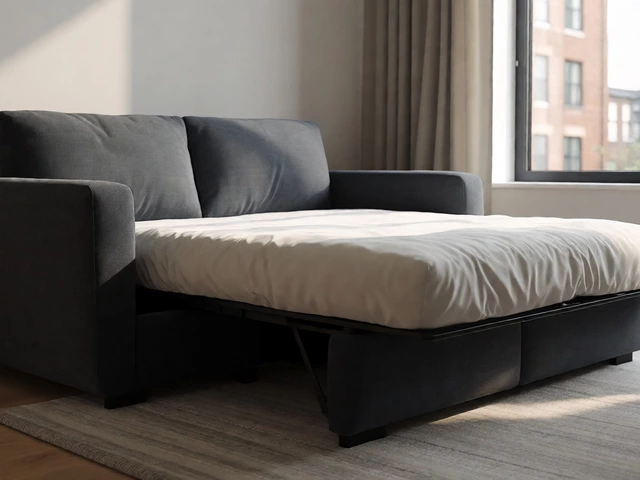
You might think, “But I have a sofa bed-it’s basically a mattress.” Not really. Most sofa beds use thin, low-density foam that collapses under weight. The frame is rigid. The springs are uneven. The mattress is usually only 4 to 6 inches thick. Compare that to a standard mattress, which is 8 to 14 inches with layered support systems.Even the best sofa beds are designed for occasional use. Not nightly sleep. A 2025 consumer report tested 12 popular sofa beds used as primary beds for 30 days. 9 of them showed visible sagging in the lumbar area. 11 had noticeable pressure points. 10 caused users to wake up with numb hands or tingling arms because of poor shoulder alignment.
They’re fine for guests. Fine for a weekend. But if you’re sleeping on one every night, you’re trading short-term convenience for long-term pain.
What to do instead
You don’t need to buy a new bed right away. But you do need to stop treating your couch like a bed.- If you’re falling asleep on the couch because you’re tired after watching TV, set a 30-minute screen limit before bed. Blue light delays melatonin. Less screen time = easier sleep.
- Keep a pillow and blanket in your bedroom. If you’re cold or comfy on the couch, bring that comfort to your bed.
- Use a wedge pillow under your knees if you sleep on your back. Or a body pillow if you’re a side sleeper. Small changes make a big difference.
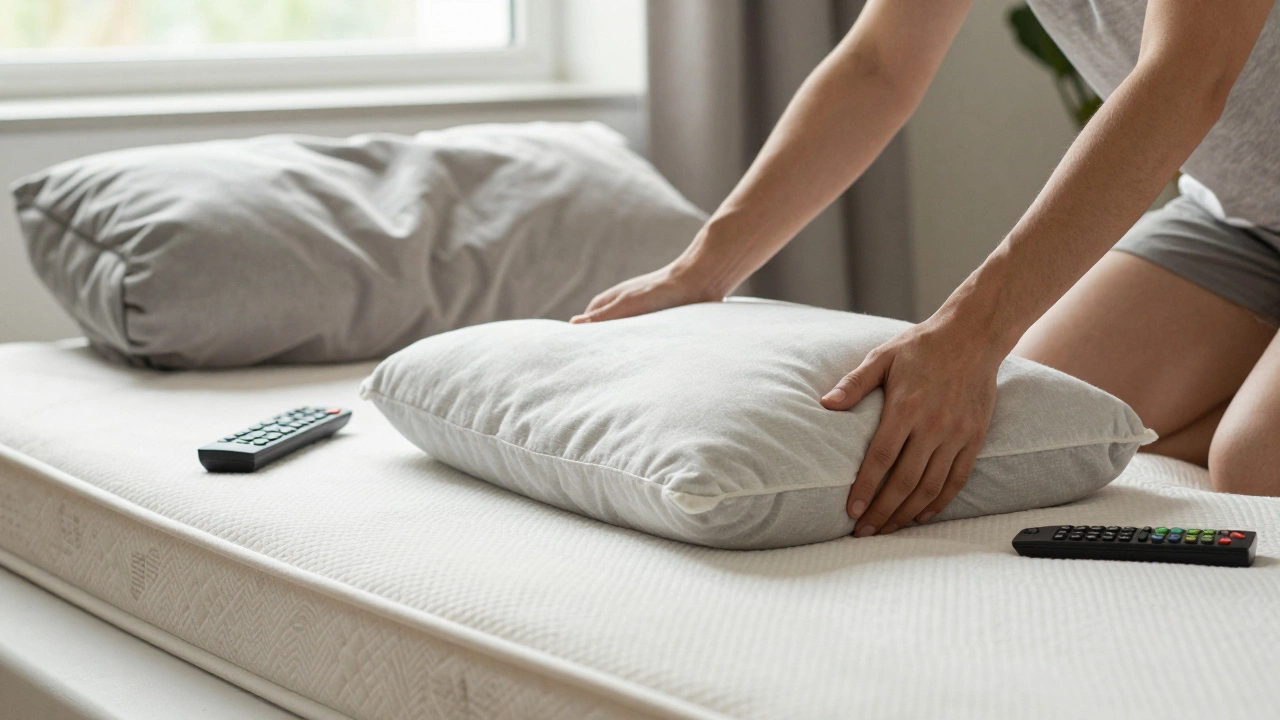
- Try a fold-out mattress topper on your floor for a few nights. It’s cheaper than a new bed and gives your spine the support it needs.
If you’re already waking up in pain, start with a 10-minute stretch routine every morning. Focus on your neck, shoulders, and lower back. Gentle yoga or even walking for 15 minutes helps reset your posture.
It’s not laziness. It’s habit.
You’re not failing at sleep because you’re lazy. You’re doing it because your brain associates the couch with relaxation. And that’s normal. But habits can be rewired.Make your bedroom the only place you sleep. No TV. No snacks. No work. Just sleep. Do the same thing every night: dim the lights, put on calming music, read for 10 minutes. Train your brain that bed = sleep. Couch = rest, not rest.
It takes about 21 days to form a new habit. Give yourself that time. You might miss the couch at first. But after a week, you’ll notice you’re waking up without pain. After two weeks, you’ll feel more alert. After a month, you’ll wonder why you ever did it.
Your body remembers every night you slept on the couch
Sleep isn’t just downtime. It’s repair time. When you sleep on a couch, you’re not giving your body what it needs. You’re asking it to work harder just to stay aligned. You’re robbing yourself of deep rest. You’re training your spine to hurt.You don’t need a fancy bed. You don’t need expensive pillows. You just need a flat, supportive surface that keeps your spine in line. That’s all. And if your couch doesn’t do that, it’s time to stop using it as a bed.
Tomorrow night, make your bed. Not because it’s perfect. But because it’s better than the couch.