Posture Risk Calculator
Your Risk Assessment
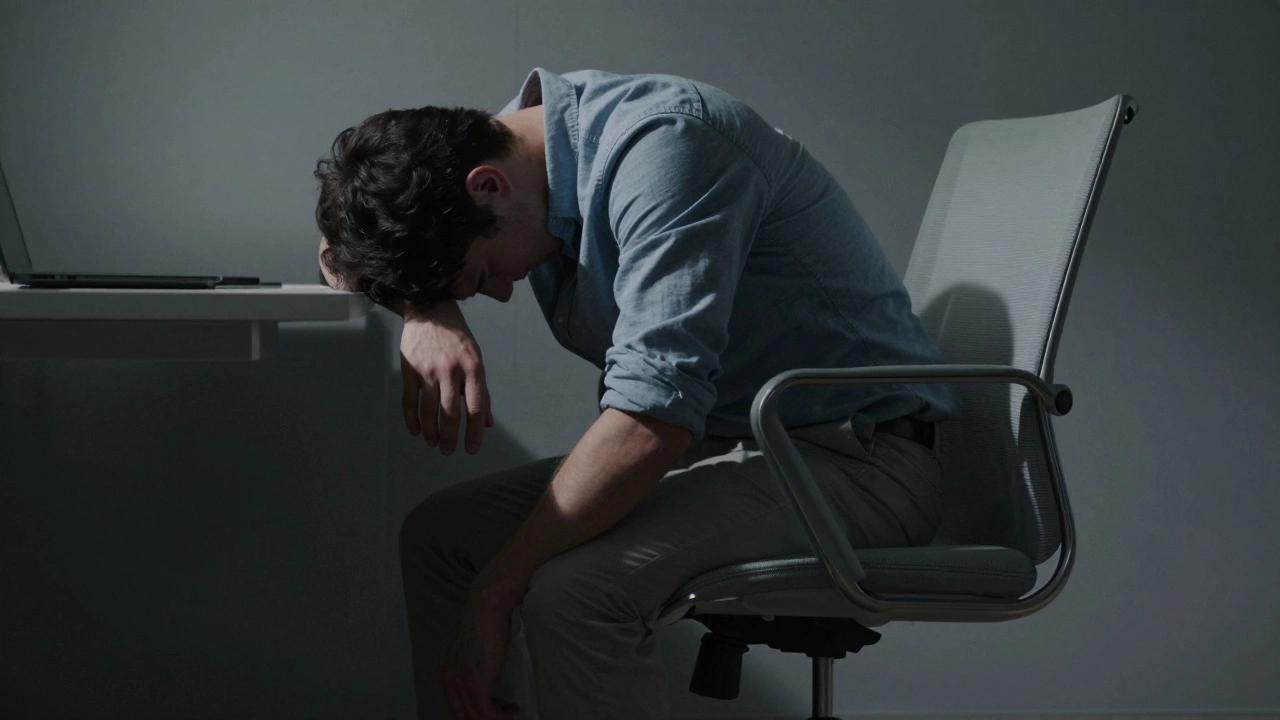
Ever sat in a chair that felt like it was fighting you? You’re slumped forward, shoulders hunched, wrists dangling over the edge of your desk - and you can’t figure out why your neck aches by 3 p.m. The problem might not be your posture. It might be the chair itself - specifically, the lack of armrests.
Why Armrests Matter More Than You Think
Armrests aren’t just for resting your arms. They’re structural supports that help your body stay aligned. When you sit without them, your shoulders do all the work. Your upper body has to hold your arms up, and that constant tension pulls your neck and spine out of alignment. Over time, this leads to chronic discomfort - not just in your arms, but in your shoulders, upper back, and even your head.
A 2023 study from the Journal of Occupational Health looked at 1,200 office workers who sat for more than six hours a day. Those using chairs without armrests were 47% more likely to report persistent shoulder and neck pain than those with adjustable armrests. The difference wasn’t subtle. It was measurable, repeatable, and avoidable.
The Hidden Cost of ‘Minimalist’ Design
Many modern chairs - especially sleek, low-profile models marketed as ‘premium’ or ‘minimalist’ - skip armrests to look cleaner. But clean doesn’t mean comfortable. That aesthetic choice ignores how the human body actually works. Your arms have weight. When they’re unsupported, your trapezius muscles (the ones running from your neck to your shoulders) contract just to keep them from dragging down. That’s not rest. That’s strain.
Think about it: if you stood holding a 5-pound dumbbell in each hand for eight hours, you’d be exhausted. Your arms aren’t that heavy, but over time, the effort adds up. Without armrests, you’re doing that every workday.
How Lack of Armrests Affects Your Posture
- Slouching increases - Without armrests, you lose a natural anchor point. You lean forward to reach your keyboard, which flattens your lower back and compresses your spine.
- Shoulders rise - Your deltoids and upper traps tighten to hold your arms up. This leads to rounded shoulders and tension headaches.
- Wrist strain grows - When your arms aren’t supported, your wrists hover or bend awkwardly. This raises your risk of carpal tunnel symptoms.
- Leg circulation suffers - To compensate for poor upper body support, you shift your weight, cross your legs, or sit on the edge of the seat. All of this reduces blood flow and increases discomfort.
One user, a graphic designer who switched from a chair without armrests to one with them, noticed her headaches disappeared within two weeks. She didn’t change her screen height, her lighting, or her breaks. She just added armrests. Her body finally had a place to rest.

What About Standing Desks? Don’t They Solve This?
Standing desks are great - but they’re not magic. If you’re sitting part of the day (and most people are), you still need proper seated support. In fact, standing all day without proper chair support can make things worse. You’re switching between two bad positions: unsupported sitting and unsupported standing. That’s not ergonomics - that’s whiplash for your muscles.
Research from the Mayo Clinic shows that workers who alternate between sitting and standing still need ergonomically designed chairs. The chair’s role doesn’t disappear just because you stand sometimes. It becomes even more important.
Can You Fix a Chair Without Armrests?
Yes - but not perfectly. You can buy clip-on armrests, but they rarely match the chair’s height or angle. They wobble. They dig into your arms. They’re a Band-Aid on a broken bone.
Or you can try using pillows or rolled-up towels under your arms. That might help temporarily, but it’s not sustainable. You’re still fighting gravity. And pillows shift. You’ll end up adjusting them every 20 minutes - which defeats the whole point of having a chair that lets you relax.
The real fix? Replace the chair. Look for one with:
- Adjustable armrests (height, width, and angle)
- Padded support that matches the natural curve of your forearm
- Depth that lets your elbows rest at 90 degrees while your shoulders are relaxed
Brands like Herman Miller, Steelcase, and even budget-friendly options like Secretlab and HON offer models with these features. You don’t need to spend $1,000. You just need to spend wisely.

What If You’re on a Budget?
You don’t need to buy a new chair right away. Start with a simple test: sit in your current chair for 30 minutes. Now, place two sturdy books or a low table next to you and rest your forearms on them. How does your body feel? If your shoulders drop, your neck relaxes, and your wrists feel lighter - you’ve just proven what you need.
That’s your signal. You’re not lazy. You’re not overreacting. Your body is telling you it’s time for better support.
Who’s Most at Risk?
People who:
- Use computers for more than 4 hours a day
- Work in roles that require precise hand movements (writers, coders, designers, accountants)
- Have existing shoulder, neck, or wrist issues
- Are taller or shorter than average (standard armrests often don’t fit them)
If you fit any of these, a chair without armrests isn’t just uncomfortable - it’s a health risk.
It’s Not About Luxury. It’s About Longevity.
People think ergonomics is about luxury. It’s not. It’s about avoiding pain you didn’t sign up for. You wouldn’t drive a car without seatbelts. You wouldn’t hike in flip-flops on a rocky trail. Why sit in a chair that’s designed to hurt you over time?
Armrests aren’t optional. They’re part of the chair’s function. Just like a chair back supports your spine, armrests support your arms. Skip one, and you’re asking your body to compensate. And your body will - until it can’t anymore.
Are armrests necessary for short-term use?
Even short-term use adds up. If you sit for 30 minutes at a time, 10 times a day, that’s five hours. That’s enough time for your muscles to fatigue and your posture to degrade. Armrests help maintain alignment even in brief sessions.
Can I use a couch or dining chair as an office chair?
No. Couches and dining chairs lack proper lumbar support, seat depth, and adjustable armrests. They’re designed for occasional use, not eight-hour days. Using them as office chairs increases your risk of chronic pain, especially without armrests.
Do all armrests work the same?
No. Fixed armrests are better than none, but adjustable ones are best. Look for armrests that let you adjust height, width, and angle. If they’re too high, they lift your shoulders. Too low, and they don’t support your forearms. The right ones let your arms rest naturally at 90 degrees.
What if my chair has armrests but they’re uncomfortable?
Adjust them. If they’re too wide, too narrow, too high, or too hard, you can usually tweak them. If you can’t adjust them at all, consider replacing the chair. Comfort isn’t a luxury - it’s a requirement for long-term health.
Is there a quick way to test if my chair is causing my pain?
Yes. Try resting your forearms on a desk or table next to your chair for 15 minutes. If your shoulders drop, your neck feels lighter, and your wrists stop tingling, your chair’s lack of armrests is likely the problem.