Book Arrangement Personality Quiz
How do you arrange your books?
Take this quick quiz to discover your book arrangement personality type.
Question 1
How do you feel when you see a bookshelf with all spines visible?
Question 2
Why do you think people turn books backwards?
Question 3
What's most important to you in a bookcase arrangement?
Question 4
When you see a book you haven't read yet, how do you usually place it?
Your Book Arrangement Style
Ever open a bookcase and see a row of books standing upside down, spine in, cover facing the wall? You’re not alone. It’s one of those weird little habits people do without thinking-like turning socks inside out or stacking plates backward. But why? There’s no instruction manual that says, ‘Flip your books around for better vibes.’ So what’s really going on?
It’s Not About the Books-It’s About the Space
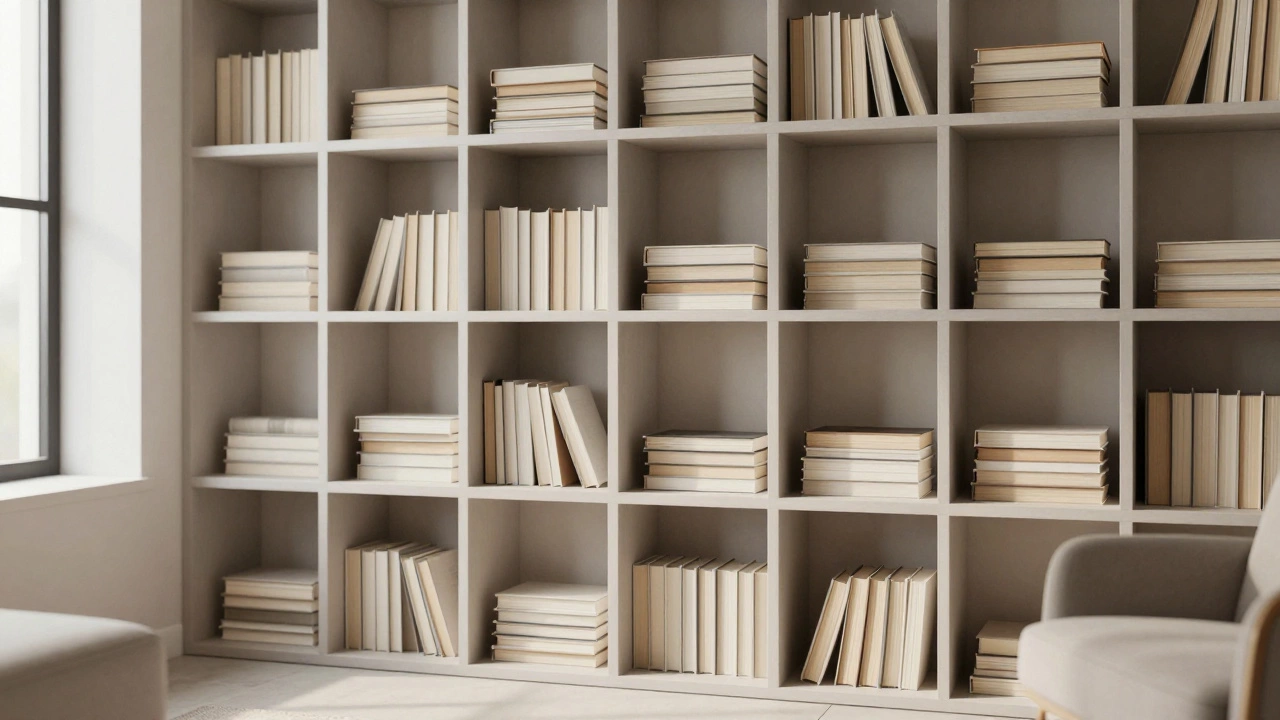
Most bookcases aren’t built for books. They’re built for show. People buy them because they look nice in a living room, not because they need to store 200 novels. When you put books in backwards, you’re not trying to hide them-you’re trying to make the shelf look clean.Think about it: a row of colorful book spines can look like a mess. Bright reds, neon yellows, bold fonts-all of it competes for attention. But when you flip them around, the plain wood or cloth backing of the books becomes a neutral canvas. Suddenly, the shelf looks intentional. Minimalist. Calm. It’s not storage-it’s interior design.
This isn’t new. In the 1950s, Scandinavian designers started favoring muted, uniform looks in homes. Books turned spine-in became a quiet rebellion against clutter. Today, it’s still popular in modernist interiors. You’ll see it in design magazines, Airbnb listings, and even in the homes of architects who swear by it.
Books Are Tools, Not Decor
Here’s the truth most people won’t admit: you don’t read most of the books on your shelf. You bought them for inspiration, for status, or because they looked good in a photo. Once they’re on the shelf, they become background noise.When you flip a book around, you’re not hiding it-you’re deprioritizing it. You’re saying, “I don’t need to see this right now.” It’s still there. You can pull it out if you want. But you don’t need to be reminded of it every time you walk by.
Compare that to your favorite novels. Those stay spine-out. You know exactly where they are. You pick them up often. The ones you don’t touch? They get tucked away. It’s not about organization. It’s about mental space.
Practical Reasons Nobody Talks About
There’s more to this than aesthetics. Flip a book around and you’ll notice something: the pages don’t get dusty on the back. The spine doesn’t crack from sunlight. The glue doesn’t dry out as fast.Books placed spine-in are protected. The cover, which is usually the most fragile part, is pressed against the shelf. The pages are shielded from UV rays if the bookcase sits near a window. In places like Mississauga, where winters are long and indoor lighting stays on for hours, this matters. Books last longer when they’re not constantly exposed.
Also, flipping books around helps with weight distribution. Heavy books on top? If they’re spine-out, gravity pulls on the spine, causing warping over time. Turn them around, and the weight presses evenly across the entire back. No stress points. No bent spines. No falling apart after five years.
It’s a Psychological Trick
There’s a reason this habit sticks. It’s not just about looks or durability-it’s about control.When your bookshelf looks neat, your mind feels neat. Even if you haven’t read a book in months, seeing a clean row of uniform backs gives you a sense of order. It’s the same reason people line up their shoes or stack their towels just so. It’s not about function. It’s about calm.
Psychologists call this “environmental priming.” Your surroundings influence your mood. A cluttered bookshelf? It can trigger anxiety. A tidy one-even if it’s full of unread books-feels peaceful. Turning books around is a small act of creating mental quiet.
And here’s the kicker: people who do this often don’t even realize they’re doing it. They just feel better. Then they notice someone else’s bookcase and think, “Why are all those books facing the wall?” And suddenly, they’re explaining it to a friend like it’s common sense.
What About Accessibility?
You might be thinking: “But what if I need to find a book?” Fair question.Most people who turn books around don’t do it for every single one. They pick a few-maybe the reference books, the ones they bought on impulse, or the ones they’re not proud of. The ones they actually read? They stay visible.
And if you do need to find something? You don’t need to see the title. You remember the weight. The thickness. The corner that sticks out a little. You’ve lived with these books long enough to recognize them by touch. It’s like knowing where your keys are without looking.
Some people even use labels. A small sticky note on the bottom edge. Or a colored dot on the spine. Nothing fancy. Just enough to jog your memory.
It’s Not Wrong-It’s Just Different
There’s no right way to arrange books. No universal rule. Libraries keep books spine-out for easy scanning. But homes? Homes are personal.Some people use bookcases to show off their taste. Others use them to create quiet. One isn’t better than the other. It’s just different.
If you like seeing your collection, keep them facing out. If you like the calm of a blank wall behind your books, flip them around. Neither is pretentious. Neither is lazy. It’s just how you live.
And if you’ve been doing it for years without thinking about why? You’re not odd. You’re just paying attention to what makes your space feel right.