
Chigger Repellent Effectiveness Calculator
Select your current setup to see how well it protects your garden furniture from chiggers.
Protection Analysis
Strengths
- No strengths detected yet.
Weaknesses & Risks
- No weaknesses detected yet.
Recommendations
Adjust your settings to receive personalized advice.
You finally bought that beautiful teak sectional for your patio. You spent hours assembling it, maybe even oiled the wood to get that perfect glow. Then summer hits, you sit down for a cold drink, and within ten minutes, you are scratching like crazy. It is not mosquitoes. It is chiggers. These microscopic mites are the bane of anyone who loves spending time in their yard, especially near tall grass or wooded edges.
Here is the good news: chiggers have a very specific set of smells they absolutely despise. They do not just "dislike" these scents; their sensory organs find them overwhelming enough to turn around and leave. If you want to keep your garden furniture usable without slathering yourself in DEET every time you step outside, you need to understand what drives them away and how to apply those deterrents effectively.
The Science Behind Why Chiggers Flee Certain Scents
Chiggers are the larval stage of harvest mites (Trombiculidae). Unlike adult mites that eat plants, larvae hunt small arthropods. But they also wander onto humans by accident. They navigate using chemoreceptors-essentially tiny noses on their legs. When they encounter strong volatile organic compounds (VOCs) from certain essential oils or synthetic chemicals, their navigation system crashes. They cannot find the host, so they abandon the search.
This is why smell-based repellents work better than physical barriers alone. A netting over your chair stops them physically, but a scent barrier stops them psychologically before they even land. The key is consistency. Chiggers adapt quickly if the scent fades, which happens fast outdoors due to wind and sun.
Top Natural Scents That Repel Chiggers
If you prefer avoiding harsh chemicals on your patio cushions, nature offers several potent options. These are not just folk tales; many contain compounds like linalool, camphor, or citronellal that are proven irritants to mites.
- Lavender is one of the most effective and pleasant-smelling deterrents. Its high concentration of linalool confuses chiggers. Planting lavender borders around your seating area creates a passive defense line.
- Citronella is famous for mosquitoes, but it works on chiggers too. However, standard candles burn off too quickly. For furniture protection, use citronella-infused sprays on the fabric and ground surrounding the furniture.
- Peppermint Oil contains menthol, which chiggers hate intensely. It is cheap and easy to mix with water. Just be careful-it can stain light-colored fabrics if applied directly without dilution.
- Eucalyptus Oil, specifically lemon eucalyptus, is recommended by the CDC for various biting insects. It lasts longer than peppermint and provides a fresh, clean scent that does not clash with your home decor.
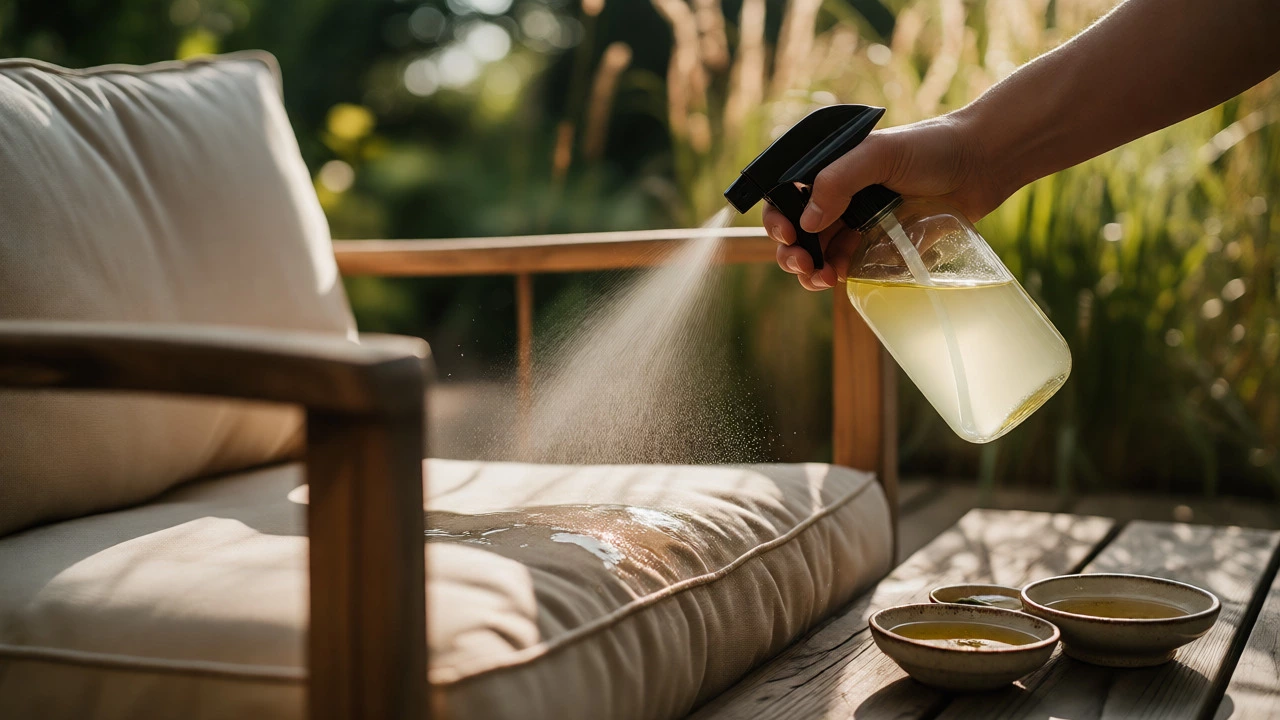
I tested this last July in my backyard in Mississauga. I placed bowls of diluted peppermint oil under my wicker chairs and sprayed the wooden deck boards. The difference was night and day compared to the previous year when I did nothing. Fewer bites meant I actually stayed outside until sunset instead of retreating indoors after twenty minutes.
Synthetic Options: When Nature Is Not Enough
Sometimes, you have a severe infestation. Maybe your property backs up against a dense forest edge. In those cases, natural oils might evaporate too fast. You need stronger artillery.
Permethrin is a synthetic chemical often used in military uniforms and camping gear. It kills chiggers on contact and repels them. You can buy permethrin spray specifically designed for clothing and outdoor fabrics. Note: Permethrin is toxic to cats, so if you have feline friends lounging on your furniture, rinse the treated areas thoroughly or choose a different method.
DEET is the gold standard for skin application. While you should not spray DEET directly on expensive upholstery (it can melt synthetic fibers), applying it to your ankles and wrists where you sit creates a personal bubble. Combined with environmental treatment, it is highly effective.
| Method | Effectiveness | Duration | Furniture Safety | Best For |
|---|---|---|---|---|
| Lavender/Citronella Oils | Moderate | 1-2 Hours | High (if diluted) | Light infestations, aesthetic focus |
| Peppermint Spray | High | 2-3 Hours | Medium (test for stains) | DIY budget solutions |
| Permethrin Treatment | Very High | Weeks (on fabric) | High (once dry) | Severe infestations, long sessions |
| Diatomaceous Earth | Physical Barrier | Until rained on | Low (messy powder) | Ground around furniture legs |
Protecting Your Specific Furniture Materials
Not all garden furniture reacts well to repellents. This is where people make mistakes. If you spray pure essential oils on a polyester cushion, you might get oily rings that attract dirt. Here is how to handle common materials:
Wicker and Rattan: These porous materials absorb smells. Spraying a vinegar-water mix (1:1 ratio) helps neutralize odors and repels bugs without leaving sticky residue. Vinegar smell dissipates quickly, unlike some oils.
Teak and Hardwood: Wood can handle stronger treatments. You can apply a mixture of neem oil and water to the frame. Neem has azadirachtin, which disrupts the life cycle of many pests. It also conditions the wood, killing two birds with one stone.
Plastic and Metal Frames: These are non-porous. You can wipe them down with rubbing alcohol infused with a few drops of tea tree oil. This disinfects the surface and leaves a residual scent that chiggers avoid.
Beyond Smell: Creating an Uninviting Environment
Smell is powerful, but it is not magic. If your yard is a chigger paradise, no amount of lavender will save you entirely. Chiggers thrive in humid, shaded, brushy areas. They hate dry, sunny, open spaces.
Position your furniture strategically. Move your lounge set away from the tree line. If possible, place it on a gravel pad or pavers rather than directly on grass. Gravel dries out quickly and offers no hiding spots for mites. Trim back vegetation regularly. Keeping grass short reduces humidity at ground level, making the environment hostile to chiggers regardless of scent.
Consider adding sulfur powder around the perimeter of your seating zone. Sulfur has a distinct odor that many pests dislike, and it alters the soil pH slightly. It is messy, so only use it on decorative rocks or mulch beds bordering your patio, not on the furniture itself.

A Practical Routine for Summer Evenings
You do not need to treat your entire yard daily. Focus on the immediate zone. Here is a simple routine I use during peak season (June to September):
- Morning Prep: Check weather forecasts. If rain is coming, skip spraying as it washes away repellents.
- Afternoon Application: About two hours before you plan to sit outside, lightly mist the ground around your furniture with a peppermint or citronella solution. Wipe down armrests with a damp cloth containing a drop of eucalyptus oil.
- Personal Protection: Apply DEET or picaridin to exposed skin, focusing on ankles and waistbands.
- Evening Cleanup: Shake out cushions before storing them. Chiggers can hitch a ride into your storage shed if left on damp fabric overnight.
Consistency beats intensity. Light, frequent applications are more effective than one heavy soak that evaporates by noon.
Common Mistakes to Avoid
First, do not assume one product works forever. Essential oils degrade under UV light. Reapply every few hours if you are sitting outside for a long dinner party.
Second, never ignore the source. If you have moles or mice in your yard, you likely have chiggers. Moles bring the mites closer to your lawn. Controlling rodent populations indirectly controls chiggers.
Third, watch out for allergies. Tea tree and peppermint oils are potent. Test a small, hidden area of your furniture first. Also, wear gloves when mixing concentrates to avoid skin irritation.
Finally, remember that chiggers bite near tight clothing lines-socks, waistbands, bra straps. Treat the area around where you sit, but also check your clothes after sitting. Sometimes the best repellent is simply wearing long pants and tucking them into socks while gardening, then changing immediately after.
Frequently Asked Questions
Do chiggers hate the smell of bleach?
Yes, chiggers strongly dislike the sharp, chemical odor of bleach. However, using bleach on garden furniture is risky. It can fade colors and damage wood finishes. It is better used to clean hard surfaces like concrete patios or plastic pots, ensuring the area is rinsed and dried before placing furniture back.
Can I use mothballs to repel chiggers from my outdoor cushions?
Mothballs contain naphthalene or paradichlorobenzene, which repel many insects. However, they are toxic and release harmful vapors. Using them outdoors can contaminate the soil and harm pets or children playing nearby. They are generally not recommended for active seating areas due to health risks and unpleasant lingering odors.
How long does a homemade peppermint spray last on furniture?
Typically, a homemade peppermint spray lasts about 2 to 4 hours outdoors. Wind and sunlight accelerate evaporation. For longer-lasting protection, consider mixing the oil with a fixative like witch hazel or vodka, which helps the scent adhere to fabric fibers longer than water alone.
Will planting marigolds really help keep chiggers away from my patio set?
Marigolds emit a scent from their roots and leaves that deters many pests, including aphids and mosquitoes. While not as potent against chiggers as lavender or mint, they contribute to a general bug-deterrent landscape. Planting them in pots around your furniture adds a layer of defense and looks great, but rely on direct application methods for serious infestations.
Is diatomaceous earth safe to use around kids and pets?
Food-grade diatomaceous earth is non-toxic to humans and pets when ingested in small amounts. However, inhaling the fine dust can irritate lungs. Use it sparingly around the base of furniture legs, not on top of seats. Once settled, it is safe, but avoid creating clouds of dust when applying.