Wardrobe vs. Armoire Space Calculator
Find the Perfect Storage Solution
Answer a few quick questions to determine whether a wardrobe or armoire best fits your space and needs.
People often use the words wardrobe and
Wardrobe: Simple, Functional, and Built for Storage
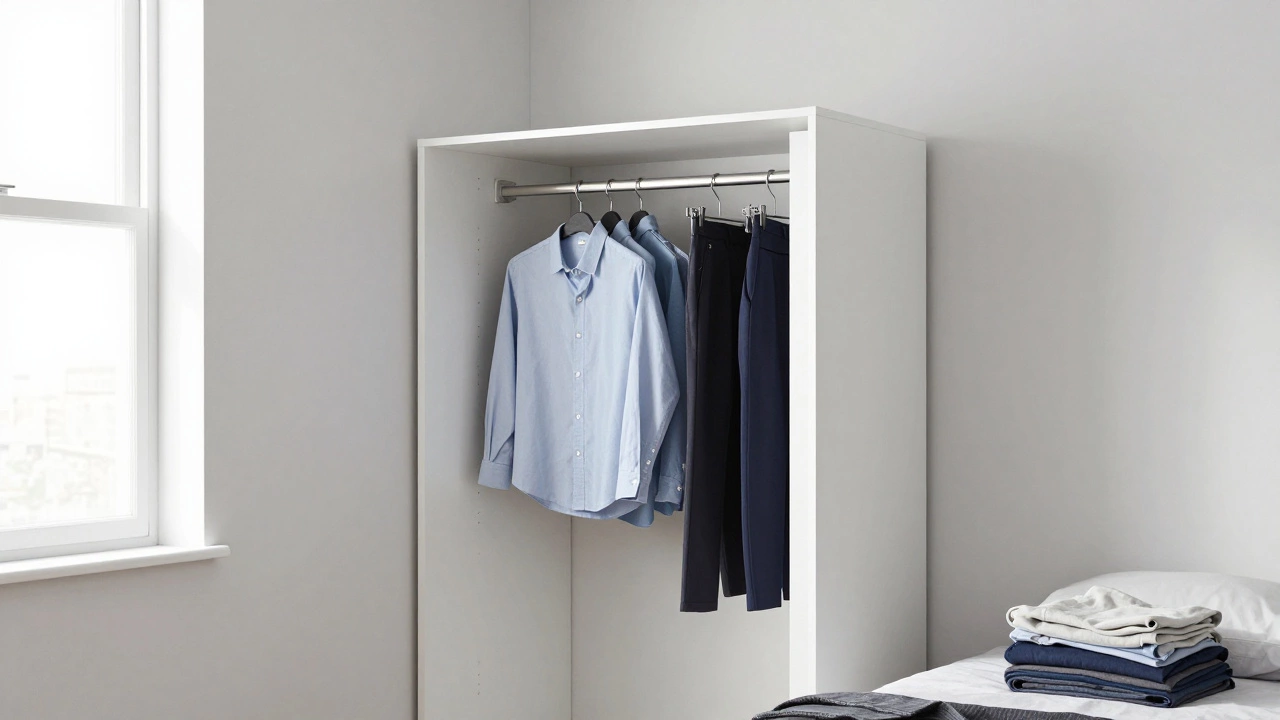
A wardrobe is, at its core, a storage unit for clothes. It’s designed for one thing: holding garments. Most wardrobes have hanging rods, shelves, and sometimes drawers. They’re often tall, narrow, and made from wood, MDF, or metal. Think of them as the no-frills cousin of the armoire.
Modern wardrobes come in all shapes - sliding door, hinged door, open shelving, or even modular systems. Some are built into walls. Others are freestanding. The key? They prioritize function over form. You won’t find carved legs or ornate detailing on a basic wardrobe. It’s meant to disappear into the corner and do its job quietly.
Wardrobes are common in apartments, dorm rooms, and small homes where space is tight. They’re also popular in Scandinavia and Japan, where minimalism drives design. A typical wardrobe is 60 to 80 inches tall, 20 to 30 inches deep, and 30 to 60 inches wide. That depth is critical - anything less than 22 inches won’t fit hangers properly.
Armoire: Decorative, Historical, and Multi-Purpose
An armoire is a wardrobe’s older, more elegant sibling. Originating in 17th-century France, the armoire was originally a cabinet for storing armor - hence the name, from the French armoire, meaning “armor.” Over time, it evolved into a fancy clothes chest, then a TV cabinet, and now often doubles as a home office or media storage unit.
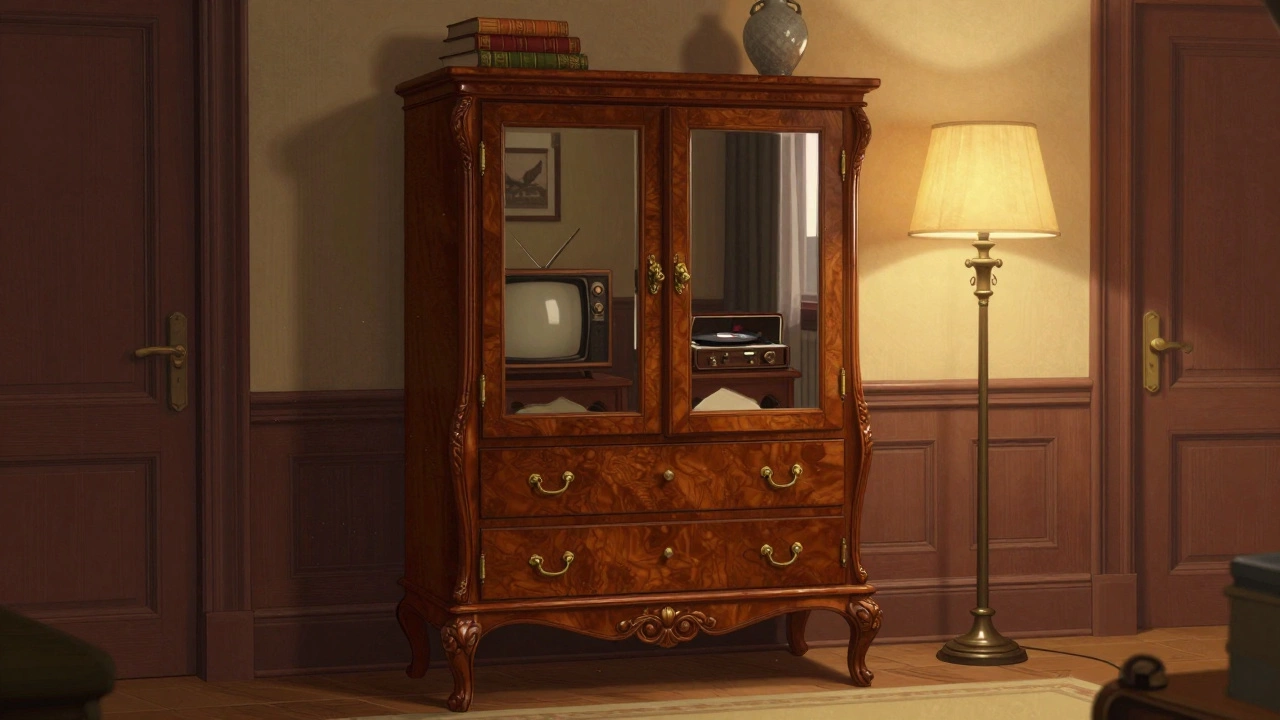
Armoires are heavier, more decorative, and usually made from solid wood like walnut, oak, or mahogany. They feature carved details, brass hardware, glass panels, or mirrored doors. Unlike wardrobes, armoires are built to be seen. They’re statement pieces - often placed in the center of a room, not tucked into a corner.
Depth matters here too, but differently. Armoires are often deeper - 24 to 30 inches - because they’re not just for clothes. You’ll find them holding electronics, books, or even a small desk inside. Many have adjustable shelves, hidden compartments, and built-in lighting. Some even include a pull-out ironing board or a secret drawer.
Key Differences at a Glance
Here’s how they stack up side by side:
| Feature | Wardrobe | Armoire |
|---|---|---|
| Primary Purpose | Storage only - clothes | Multi-use - clothes, electronics, books, office gear |
| Design Style | Minimalist, functional | Decorative, ornate, traditional |
| Typical Materials | MDF, particle board, laminate | Hardwood, solid wood, veneer |
| Depth | 20-28 inches | 24-32 inches |
| Weight | Light to medium | Heavy - often over 100 lbs |
| Placement | Corner, against wall | Center of room, as focal point |
| Price Range | $150-$600 | $500-$2,500+ |
When to Choose a Wardrobe
Go for a wardrobe if you need:
- Maximum storage in a small space
- A budget-friendly solution
- Easy assembly and mobility
- A modern, clean look
- Just to hang shirts, pants, and jackets
Wardrobes are perfect for renters, college students, or anyone who doesn’t care about furniture as decor. IKEA’s KUNGSBACKA or the PAX system are classic examples. They’re practical, modular, and easy to reconfigure. If your goal is to get clothes off the floor and out of the laundry basket, a wardrobe does the job without drama.
When to Choose an Armoire
Choose an armoire if you want:
- A piece that doubles as art
- Storage for more than clothes - think TVs, record players, or office supplies
- Long-term value and heirloom quality
- A vintage or traditional aesthetic
- A statement piece for a master bedroom or sitting room
Armoires work well in older homes, heritage properties, or spaces with high ceilings and ornate moldings. They’re also great for people who collect vintage items or love the look of antique furniture. A solid oak armoire from the 1920s can last generations - and often appreciates in value.
Common Misconceptions
Many people think “armoire” just means “fancy wardrobe.” That’s not true. A fancy wardrobe is still a wardrobe. An armoire is a different category entirely - one built with craftsmanship, not just function.
Another myth: “Armoires are outdated.” Not true. In 2025, armoires are making a comeback - especially as home offices and media centers. People are tired of cluttered desks and exposed electronics. An armoire with doors that close hides the mess and adds elegance.
Also, don’t assume all armoires are heavy. Modern versions use lighter woods and engineered materials. You can find a sleek, mid-century armoire that weighs under 80 lbs - but it still has the style, the depth, and the multi-use design.
Real-Life Examples
Take Sarah, a 32-year-old in Chicago. She lives in a 500-square-foot studio. She bought a 30-inch-wide, 72-inch-tall wardrobe from Wayfair for $220. It holds all her clothes, has a mirror on the door, and slides neatly into the corner. She didn’t need it to look like a museum piece - she needed it to work.
Now consider James, 58, who inherited his grandfather’s 1940s mahogany armoire. It’s 40 inches deep, has a pull-out writing desk inside, and a hidden compartment for cigars. He uses it as a TV cabinet now, but the doors hide the wires, the speakers, and the streaming boxes. He doesn’t care about cost - he cares about legacy.
One is practical. One is personal. Both are right - for their owners.
Final Tip: Measure Before You Buy
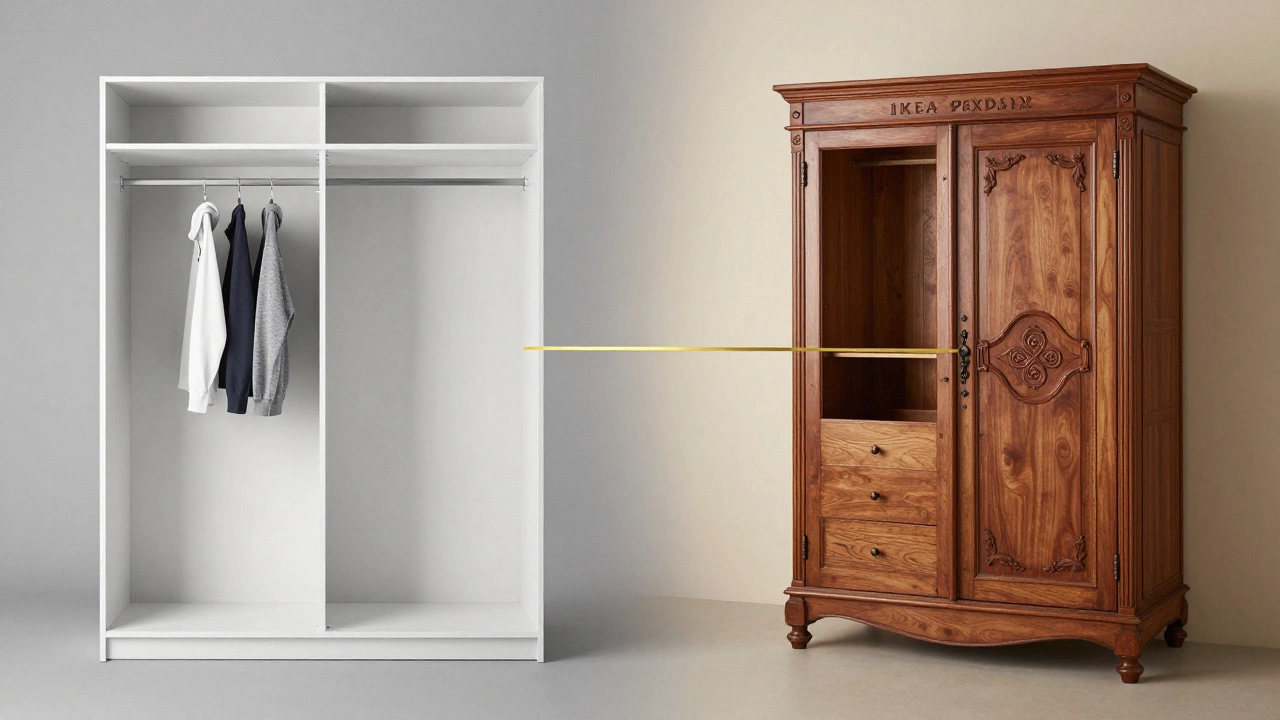
No matter which you pick, measure your space. A wardrobe that’s too shallow won’t hold coats. An armoire that’s too wide won’t fit through your doorway. Check ceiling height too - tall armoires can brush the ceiling in rooms with 8-foot ceilings.
Also, think about how you use your clothes. If you hang 90% of your outfits, you need depth and a long rod. If you mostly fold sweaters and jeans, shelves matter more. Wardrobes give you flexibility. Armoires give you character - and sometimes, both.
Can an armoire be used as a wardrobe?
Yes, absolutely. An armoire works perfectly as a wardrobe - and often better than a basic one. Its deeper interior, sturdier construction, and often more hanging space make it ideal for storing clothes. Many people use armoires specifically because they want a more elegant, durable solution than a flat-pack wardrobe.
Is a wardrobe cheaper than an armoire?
Generally, yes. Basic wardrobes start around $150 and rarely exceed $600. Armoires, especially those made of solid wood or with antique details, typically start at $500 and can go over $2,000. The price difference comes from materials, craftsmanship, and design complexity - not just size.
Do armoires require more maintenance than wardrobes?
Not necessarily, but they can. Solid wood armoires benefit from occasional polishing and protection from direct sunlight to prevent fading. Wardrobes made of laminate or MDF are easier to clean and less sensitive to humidity. If you’re in a dry or humid climate, check the material before buying.
Can I convert a wardrobe into an armoire?
You can add decorative touches - like new hardware, a mirror, or painted trim - but you can’t truly convert a basic wardrobe into a true armoire. Armoires are built with thicker wood, deeper interiors, and structural details that can’t be added after the fact. It’s like trying to turn a plastic toy car into a vintage Mustang.
Which one takes up less space?
A wardrobe usually does. Because it’s designed purely for storage, it’s often slimmer and more compact. Armoires tend to be wider and deeper to accommodate extra uses like electronics or desks. If space is tight, go for a wardrobe with sliding doors - they don’t swing open and save floor space.
Next Steps: What to Do Now
Start by asking yourself: Do I need storage, or do I need style? If you’re renting, on a budget, or just want to organize your clothes - get a wardrobe. If you’re buying for keeps, love vintage design, or want to hide a TV and speakers with elegance - choose an armoire.
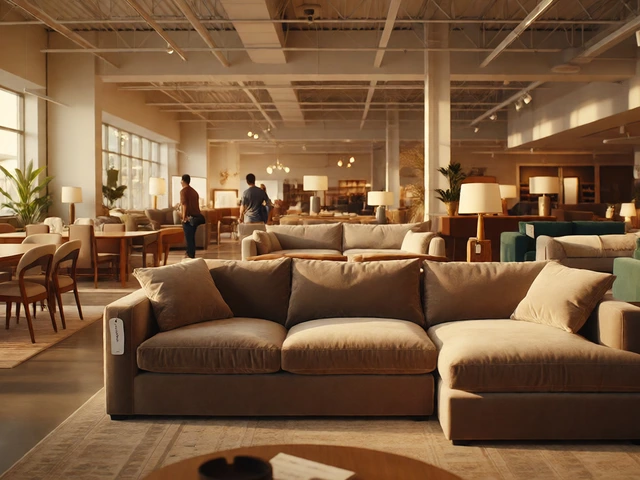
Visit a local furniture store. Open both types. Feel the weight. Check the depth. See how the doors close. Notice how the light hits the wood. The right one will feel obvious - not because it’s fancy, but because it fits your life.