TV Size Difference: What Really Matters for Your Viewing Experience
When you're shopping for a new TV, the TV size difference isn't just about how big the screen looks in the store—it’s about how it fits your space, your eyes, and your daily habits. A 55-inch TV might seem perfect until you realize you're sitting six feet away, making the image feel small. Or worse, a 75-inch screen dominates your living room and forces you to constantly turn your head. The right size isn’t about the biggest number on the box—it’s about balance. TV size difference, the measurable variation in screen dimensions that affects viewing comfort and immersion. Also known as screen size impact, it directly influences how your brain processes motion, detail, and color in your favorite shows and movies.
It’s not just the inches that count. Your viewing distance, the space between your seating and the TV screen that determines optimal visual clarity matters just as much. Sitting too close to a large screen strains your eyes. Sitting too far from a small one makes you miss details. Experts suggest multiplying your viewing distance in feet by 1.6 to get the ideal screen size in inches. So if you sit 8 feet away, a 65-inch TV hits the sweet spot. But that’s not the whole story. The TV placement, where the TV is positioned in relation to furniture, lighting, and sightlines affects glare, neck strain, and even how the TV stand color, the hue of the base or cabinet that blends with or contrasts against your walls and decor makes the whole setup feel finished. A black stand disappears against a dark wall. A white one pops against beige. And if you pick the wrong one, your TV looks like an afterthought—not the centerpiece it should be.
People think bigger is always better, but that’s not true if the TV overwhelms the room or forces you to sit too close. It’s also not about resolution alone. A 4K TV at 32 inches won’t show you more detail than a 1080p at 55 inches if you’re sitting 10 feet away. The real win comes from matching size to space, not to specs. And if you’re mounting it on the wall or putting it on a stand, you’re not just choosing a screen—you’re choosing how your whole living room flows. That’s why the posts below cover everything from how to mount a TV without a stand, to why TV stand color makes a difference, to how to avoid common mistakes that make your setup feel off. You’ll find real advice from people who’ve been there—no fluff, no marketing hype. Just what works.
-
Quentin Melbourn

- 7 December 2025
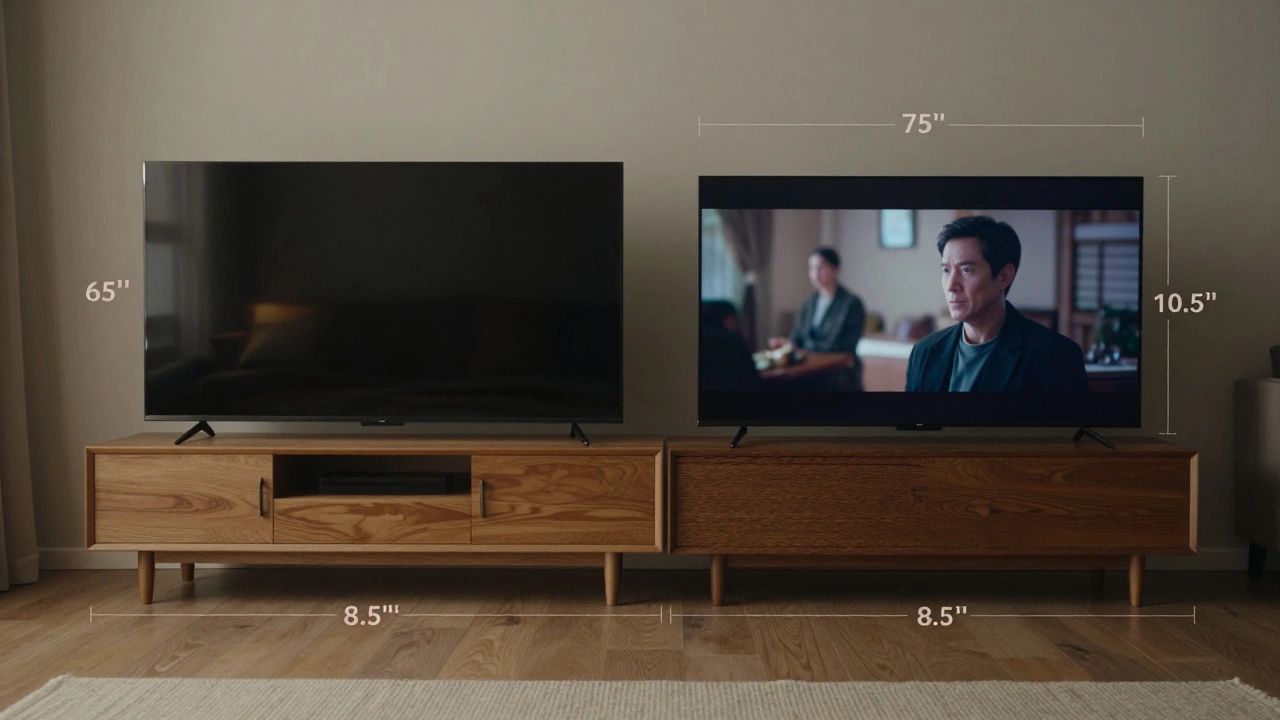
How Much Bigger Is a 75-Inch TV Than a 65-Inch? Size, Space, and Stand Fit Explained
A 75-inch TV is significantly larger than a 65-inch model, with an 8.5-inch wider screen and 44% more viewing area. Learn how this affects TV stand size, weight limits, viewing distance, and room layout.
Popular Posts





Categories
Tag Clouds