TV Size Comparison Calculator
Input Your Setup
75-inch TV Requirements
Width: 65.5 inches
Recommended Stand Width: 69.5 inches (requires 65.5" + 4" clearance)
Weight Range: 60-75 lbs
Recommended Viewing Distance: 10 feet
VESA Pattern: 600x400 mm or larger
When you’re deciding between a 75-inch TV and a 65-inch TV, it’s not just about picture quality or price-it’s about space. You might think the difference is small, but the jump from 65 to 75 inches changes everything: how far you sit, what stand you need, and even how the room feels. Let’s break down exactly how much bigger a 75-inch TV really is-and why that matters for your TV stand and viewing setup.
What Does TV Size Actually Mean?
TV size is measured diagonally, from one corner of the screen to the opposite corner. That means a 65-inch TV has a diagonal screen of 65 inches, and a 75-inch TV has one that’s 75 inches long. It doesn’t measure width or height directly, but those numbers matter more when you’re placing it on a stand.
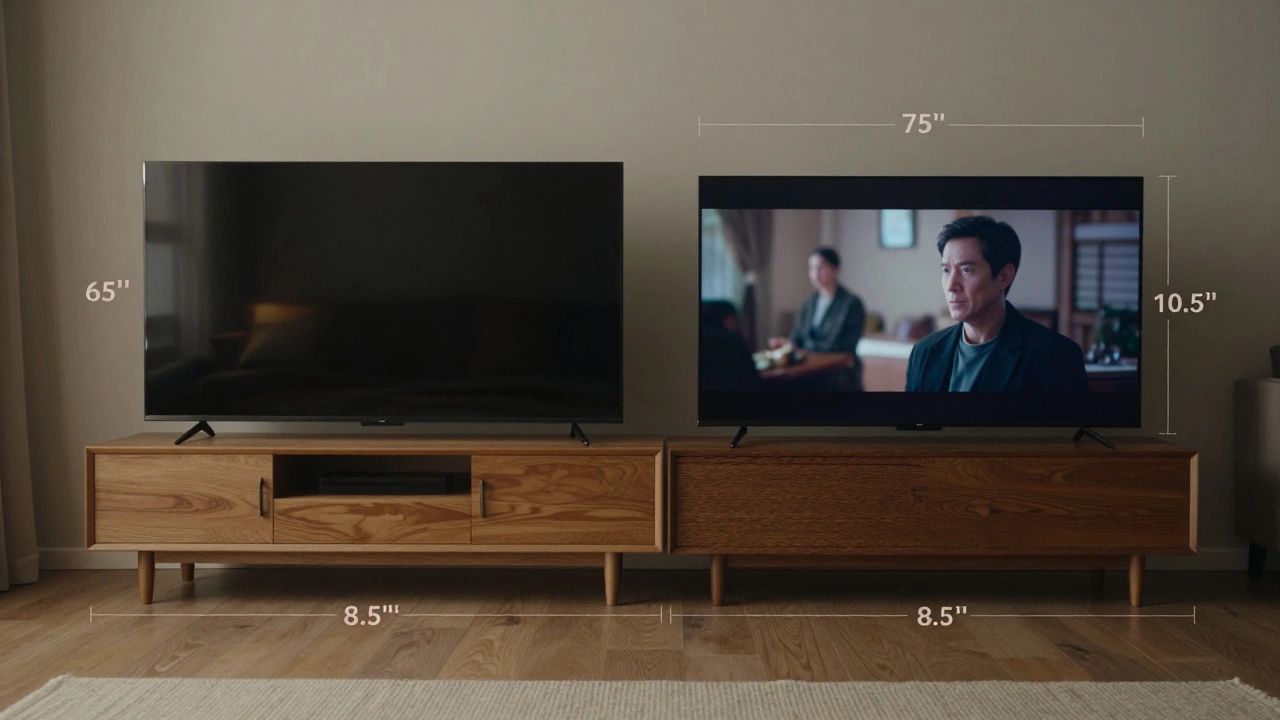
For a 65-inch TV, the typical width is about 57 inches. For a 75-inch TV, it’s around 65.5 inches. That’s an 8.5-inch difference in width alone. In terms of height, the 65-inch model is roughly 32.5 inches tall, while the 75-inch version stands at 38 inches. That’s a 5.5-inch increase in height.
That extra width and height isn’t just numbers-it’s physical space. If your current TV stand is designed for a 65-inch TV, it might be too narrow for the 75-inch model. You could end up with the TV hanging over the edges, which looks bad and risks tipping if it’s not stable.
How Much Bigger Is the Screen Area?
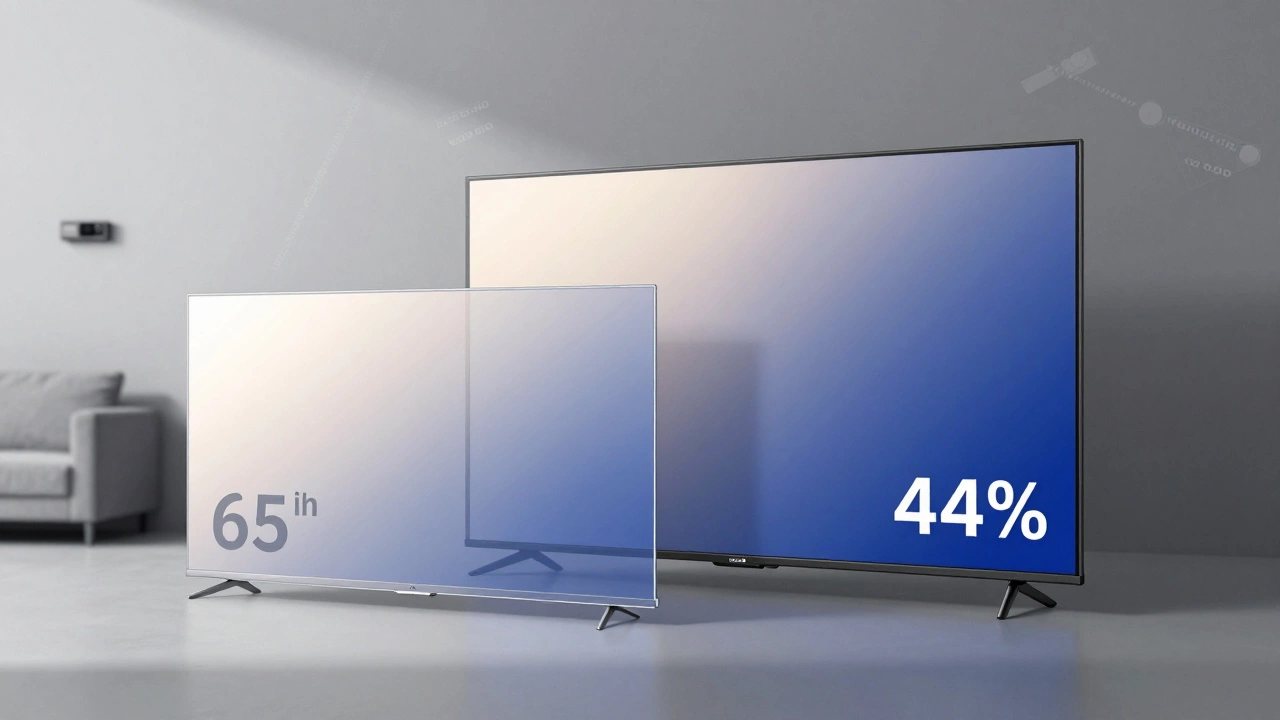
Size isn’t just about inches-it’s about surface area. A 65-inch TV has a screen area of about 1,800 square inches. A 75-inch TV? That jumps to 2,600 square inches. That’s a 44% increase in visible screen space. You’re not just getting a little bigger picture-you’re getting almost half again as much.
Think of it like upgrading from a 13-inch laptop to a 17-inch one. The difference isn’t subtle. Everything feels more immersive: movies, sports, games. But that bigger screen also means you need to sit farther back. The recommended viewing distance for a 65-inch TV is about 8 feet. For a 75-inch, you should be at least 10 feet away. If your couch is only 7 feet from the wall, the 75-inch TV might feel overwhelming-or worse, cause eye strain.
TV Stand Requirements: What Fits What?
Your TV stand needs to support the width of the TV, not just the diagonal. Most stands list a maximum TV size they can handle. A stand rated for 65 inches usually has a top surface width of 60 to 62 inches. A 75-inch TV, at 65.5 inches wide, will stick out by 3 to 5 inches on each side. That’s not just awkward-it’s unsafe.
Stand manufacturers recommend leaving at least 2 inches of clearance on each side. So if your TV is 65.5 inches wide, your stand should be at least 69.5 inches wide. That means a stand built for a 65-inch TV won’t cut it. You’ll need one rated for 75 inches or larger.
Also check the weight. A 65-inch TV weighs around 45 to 55 pounds. A 75-inch model can be 60 to 75 pounds. If your stand isn’t built for heavier loads, it could sag, crack, or worse-collapse. Always match the stand’s weight limit to your TV’s actual weight, not just the size rating.
Wall Mounting? Watch the Depth Too
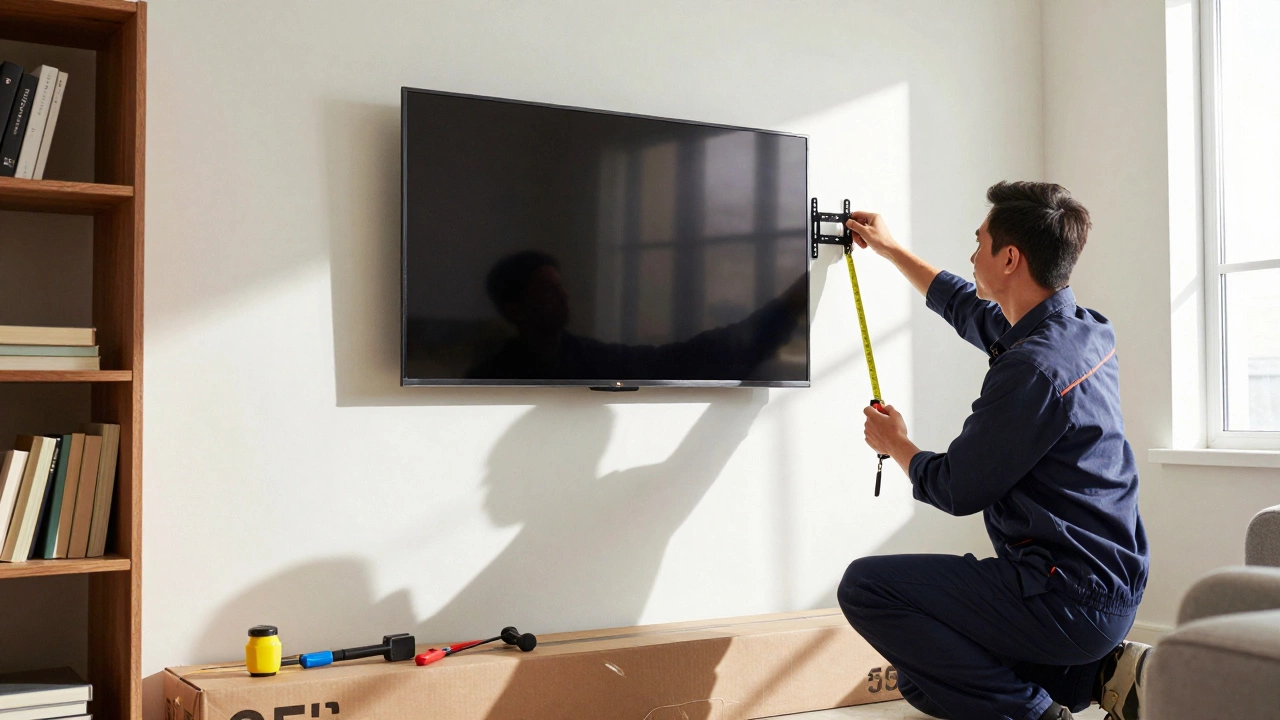
If you’re mounting the TV on the wall, the depth matters. A 65-inch TV usually sticks out 3 to 4 inches from the wall. A 75-inch model? It can extend 4.5 to 6 inches. That extra depth might seem minor, but if your wall has a shelf, cabinet, or lighting right behind it, you’ll run into clearance issues.
Also, the mounting holes on the back of the TV-the VESA pattern-change with size. A 65-inch TV often uses a 400x400 mm pattern. A 75-inch TV might use 600x400 mm or even 800x400 mm. Your wall mount must match the pattern. Using the wrong one can damage the TV or cause it to fall.
What About Room Layout?
Bigger isn’t always better if your room doesn’t fit it. Measure your wall space before buying. Leave at least 6 inches on each side for ventilation and cables. If you have a fireplace, bookshelf, or window next to the TV, make sure the 75-inch model won’t block anything.
Also think about lighting. A larger screen reflects more light. If your room has windows on the side, glare might become a bigger problem with the 75-inch model. You might need blackout curtains or an anti-glare screen protector.
And don’t forget the sound. Bigger TVs often have better speakers, but they still can’t replace a soundbar. If you’re upgrading the TV, consider upgrading the audio too. A 75-inch TV deserves a proper audio setup.
Is the Upgrade Worth It?
Here’s the real question: Do you need that extra size? If you’re watching from 10 feet or more, and you have the wall space, a 75-inch TV gives you a theater-like experience. It’s especially great for sports, action movies, and gaming.
But if your room is small-say, under 15 feet wide-or your current stand can’t handle the width and weight, then the 75-inch TV is a mistake. You’ll end up with a TV that doesn’t fit, risks damage, and feels too big to enjoy.
Most people who switch from 65 to 75 inches say they wish they’d done it sooner. But those who bought one without checking the space say they regret it. The difference isn’t just in pixels-it’s in planning.
Quick Size Comparison Table
| Feature | 65-inch TV | 75-inch TV | Difference |
|---|---|---|---|
| Screen Width | ~57 inches | ~65.5 inches | +8.5 inches |
| Screen Height | ~32.5 inches | ~38 inches | +5.5 inches |
| Screen Area | ~1,800 sq in | ~2,600 sq in | +44% |
| Typical Weight | 45-55 lbs | 60-75 lbs | +15-30 lbs |
| Recommended Viewing Distance | 8 feet | 10 feet | +2 feet |
| Stand Width Needed | 60-62 inches | 69-72 inches | +9-12 inches |
| VESA Pattern | 400x400 mm | 600x400 mm or larger | Check specs |
What to Do Next
If you’re thinking of upgrading to a 75-inch TV:
- Measure your current TV stand’s width and weight limit.
- Check the exact width and weight of the 75-inch model you want.
- Measure your wall space-leave room on both sides.
- Measure how far your couch is from the wall.
- Look up the VESA pattern for your chosen TV and confirm your mount supports it.
- If your stand doesn’t fit, buy a new one rated for 75 inches or larger.
Don’t assume your old stand will work. Most won’t. And don’t skip the weight check-TVs get heavier as they get bigger, and stands aren’t always built to handle it.
Frequently Asked Questions
Can I put a 75-inch TV on a 65-inch stand?
It’s not recommended. A 75-inch TV is about 8.5 inches wider than a 65-inch model. Most stands designed for 65-inch TVs are too narrow, leaving the TV unstable. It could tip, scratch your floor, or damage the TV’s edges. Always use a stand rated for the TV’s actual width and weight.
How much space do I need for a 75-inch TV?
For the TV itself, you need at least 66 inches of wall width. Add 6 inches on each side for ventilation and cables, so plan for 78 inches total. Your couch should be 10 to 12 feet away for comfortable viewing. If your room is smaller than 15 feet wide, a 75-inch TV may feel too large.
Do 75-inch TVs need a special wall mount?
Yes. Most 75-inch TVs use a VESA pattern of 600x400 mm or larger, while 65-inch models often use 400x400 mm. You need a mount that matches the pattern and can hold 60-75 pounds. Never use a mount rated for a smaller TV-it could fail under the weight.
Is a 75-inch TV too big for a bedroom?
It depends on the room size. If your bedroom is 10x12 feet and your bed is 6 feet from the wall, a 75-inch TV will feel overwhelming. A 65-inch is usually better for bedrooms. Save the 75-inch for living rooms or home theaters where you can sit farther back.
Will a 75-inch TV fit in a standard SUV?
Most 75-inch TVs come in boxes that are about 70 inches long and 42 inches wide. They won’t fit flat in most SUVs unless you fold down the back seats. Always check the box dimensions before buying. Some stores offer delivery or assembly services-consider using them to avoid damage.