Screen Size Comparison: What Size Really Matters for Your Space
When you buy a new screen size, the physical dimension of a display, measured diagonally in inches, that affects how content is viewed and how it fits in a room. Also known as display size, it's not just about how big the screen looks on the box—it’s about how it feels when you’re sitting on your couch, working at your desk, or watching TV in the dark. A 55-inch TV might look perfect in a showroom, but in your 10-foot-wide living room? It could overwhelm the space. On the flip side, a 32-inch monitor might feel tiny if you’re using it for gaming or editing videos all day. The right screen size isn’t about specs—it’s about balance.
Here’s the thing: viewing distance, how far your eyes are from the screen, which directly impacts comfort, clarity, and immersion matters more than you think. If you sit too close to a big screen, you’ll strain your eyes. Too far, and you’ll miss details. For most people, the sweet spot is 1.5 to 2.5 times the screen’s diagonal measurement. So for a 65-inch TV, sit between 8 and 14 feet away. For a 27-inch monitor, 2 to 3 feet is ideal. This isn’t guesswork—it’s based on how human vision works. And it’s why a 75-inch TV in a small bedroom feels like a billboard, not a TV.
room layout, the arrangement of furniture, lighting, and space that determines how a screen integrates into daily life also plays a huge role. Is your TV facing a window? Then brightness and glare matter more than size. Is it tucked in a corner? A smaller screen might be all you need. Are you using it for work, movies, or gaming? Each use case has different demands. A 43-inch screen might be perfect for a home office, but too small for movie nights with the family. And don’t forget the mounting height, where the center of the screen sits relative to your eye level when seated. A screen that’s too high or too low causes neck strain, no matter how big it is.
People often think bigger is better—but that’s a trap. A 70-inch TV doesn’t make your living room feel more luxurious if you’re sitting 6 feet away. It just makes you feel like you’re in a theater with bad seats. Meanwhile, a 50-inch screen in the same spot might feel just right. The same goes for monitors. A 32-inch ultrawide might seem like a dream for multitasking, but if your desk is narrow and your chair doesn’t move far enough, you’re just turning your neck all day.
What you’ll find in the posts below isn’t a list of the biggest screens on the market. It’s real talk about what works in real homes. From why your legs ache when you sit too close to a TV, to how the color of your TV stand changes how you perceive screen size, to whether a 4K resolution even matters if you’re 10 feet back—these posts cut through the noise. You won’t find marketing fluff here. Just clear, practical advice based on how people actually live with screens every day.
-
Quentin Melbourn

- 7 December 2025
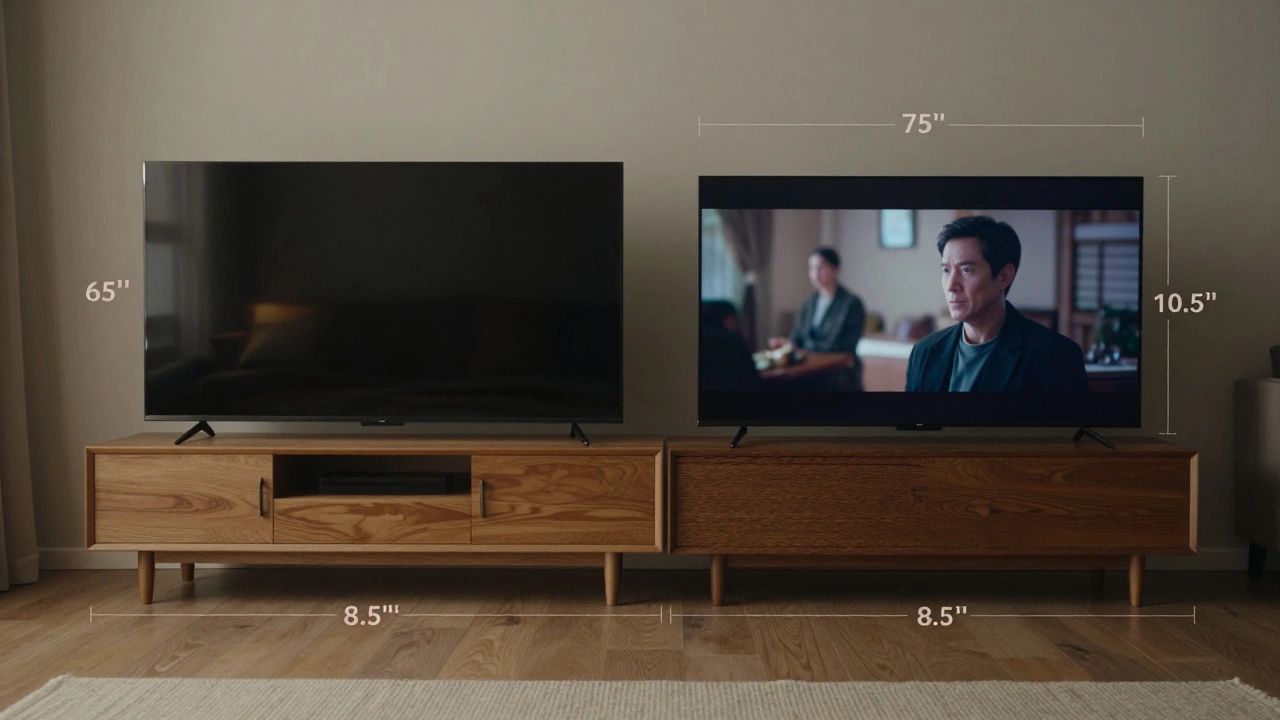
How Much Bigger Is a 75-Inch TV Than a 65-Inch? Size, Space, and Stand Fit Explained
A 75-inch TV is significantly larger than a 65-inch model, with an 8.5-inch wider screen and 44% more viewing area. Learn how this affects TV stand size, weight limits, viewing distance, and room layout.
Popular Posts





Categories
Tag Clouds