Small Living Room Corner Sofa Fit Checker
Enter your room and sofa dimensions below to check for fit issues, walkway clearance, and visual bulk warnings.
Fit Verdict
Visual Bulk Analysis
Top Down View Simulation
Blue area represents the sofa footprint. Green area indicates remaining walkway space.
Recommendations
You walk into your living room, look at the empty corner, and think: "What if I put that massive L-shaped beast in there?" It’s a common temptation. A corner sofa, also known as an L-shaped sectional, is often marketed as the ultimate solution for maximizing seating without eating up floor space. But does it actually work in a cramped apartment, or does it just make the room feel like a shoebox?
The short answer is yes, but with major caveats. A corner sofa can transform a tiny living area from a cluttered mess into a cozy, functional hub. However, get the dimensions wrong by even two inches, and you’ll block your walkway or swallow the room whole. This guide breaks down exactly when a corner sofa makes sense for small spaces, how to measure correctly, and which styles won’t make your apartment feel smaller than it is.
Why Corner Sofas Are Popular for Tight Spaces
Traditional sofas take up linear wall space. If you have a narrow room, pushing a three-seater against one wall leaves awkward gaps on the sides or forces you to leave the other walls bare. A corner sofa utilizes dead space-the actual corner of the room-which is often wasted otherwise.
Think about the geometry. In a rectangular room, corners are hard to use with standard furniture. A sectional fits snugly into that angle, anchoring the room visually while freeing up the center floor area. This creates a natural conversation pit, encouraging people to face each other rather than staring at a TV screen lined up against a distant wall.
Beyond aesthetics, there’s the sheer utility factor. For renters or homeowners in cities like Mississauga or Toronto, where square footage comes at a premium, every inch counts. A corner unit provides more seating capacity per square foot than any other configuration. You can fit four adults comfortably on a compact chaise sectional, whereas a standard loveseat might only squeeze in two.
The Risks: When a Corner Sofa Fails
It’s not all sunshine and extra legroom. The biggest mistake people make is buying a sofa based on total length rather than depth and projection. Many modern corner sofas are deep-sometimes over 40 inches. In a room that’s only 12 feet wide, a 40-inch deep sofa leaves less than 30 inches for walking past it. That’s tight.
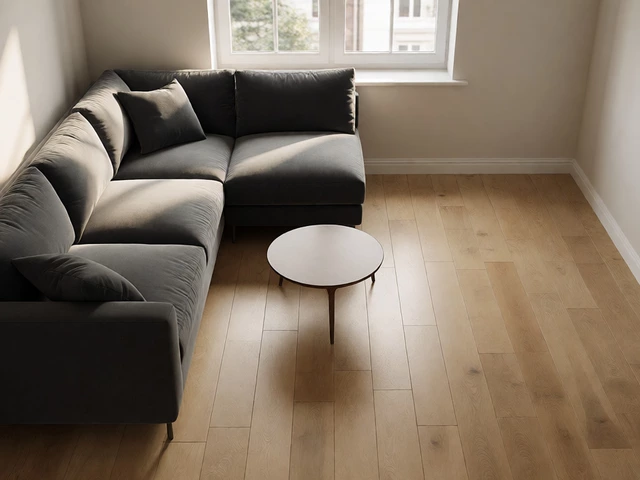
Another issue is visual bulk. A large, boxy sectional with high backs can dominate a small room, making ceilings feel lower. If you choose a dark fabric and a bulky frame, the sofa becomes a monolith that sucks light out of the space. You want airiness, not a fortress.
Also, consider access. Can you actually get the thing through your front door, around the stairwell, and into the elevator? Many modular sectionals are designed to be assembled in-room, but fixed-frame corner sofas are notoriously difficult to maneuver in older buildings. Always check the delivery path before falling in love with a style.
How to Measure Your Space Correctly
Before you swipe your credit card, grab a tape measure. Don’t rely on eye-balling it. Here’s the step-by-step process to ensure a fit:
- Measure the Walls: Record the exact length of both walls forming the corner. Subtract 6-12 inches from each side to allow for breathing room and curtains.
- Check the Depth: Measure from the back of the sofa (where it touches the wall) to the front edge. Ensure you have at least 30-36 inches of clearance for traffic flow.
- Map the Doorways: Measure the width and height of every doorway, hallway turn, and stair landing the sofa must pass through. Compare this to the manufacturer’s shipping box dimensions, not the final sofa size.
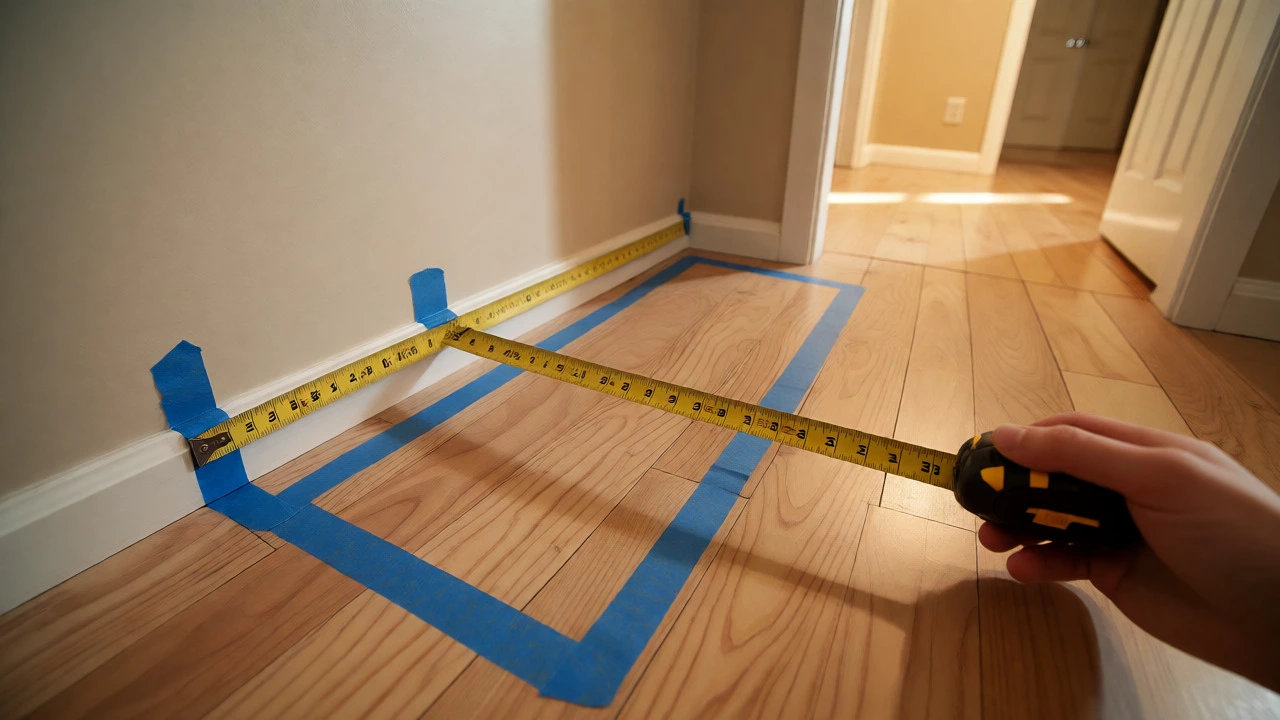
- Visualize with Tape: Use blue painter’s tape to outline the footprint of the potential sofa on your floor. Walk around it. Does it feel cramped? Sit in the imaginary spot. Does it block your view of the window?
A pro tip: Consider the "return." Most corner sofas have a long side and a shorter return (the part sticking out). In a small room, you might want the return to be on the side with less traffic, perhaps facing away from the main entry point.
Best Styles for Small Living Rooms
Not all corner sofas are created equal. Some designs are inherently better suited for compact areas. Here’s what to look for:
| Sofa Type | Best For | Pros | Cons |
|---|---|---|---|
| Chaise Sectional | Rooms under 150 sq ft | Compact footprint; single armrest saves space; versatile orientation. | Less formal seating; limited guest capacity. |
| Modular Sectional | Irregular layouts or future moves | Customizable shape; easy to move piece-by-piece; adapts to room changes. | Can look disjointed if not arranged well; higher cost per seat. |
| Curved Sectional | Open-plan apartments | Softens harsh angles; promotes flow; elegant look. | Takes up more central floor space; harder to find compact sizes. |
| Reversible Chaise | Renters who rearrange often | Switch left/right orientation easily; no need to buy new furniture. | Mechanism can wear out; fewer design options. |
Chaise Sectionals are the MVPs for small rooms. They consist of a main sofa and a chaise lounge attached at one end. Because they usually lack a second armrest on the chaise side, they save valuable inches. Plus, many models let you flip the chaise from left to right, giving you flexibility if you decide to rearrange the room later.
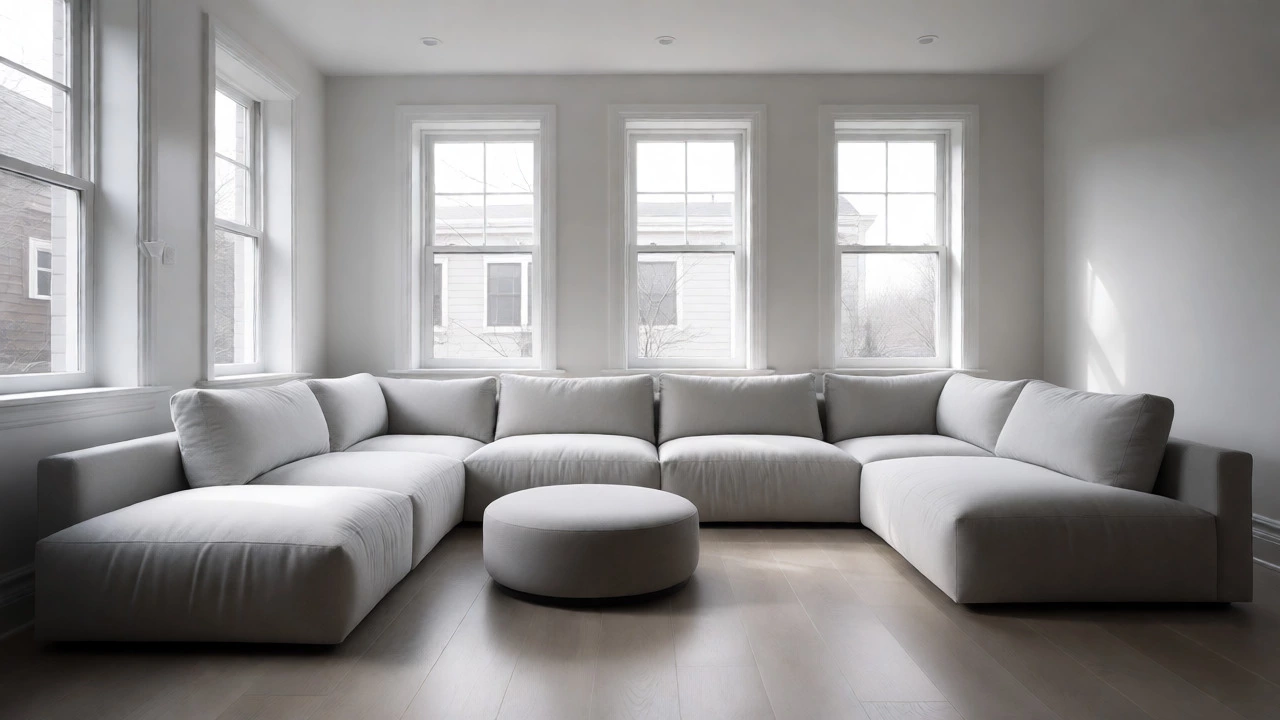
Modular Sectionals offer the ultimate adaptability. If your living room has weird angles or you plan to move to a different apartment next year, modules are a smart investment. You can start with two pieces and add more as your needs change. Just be careful not to over-buy; adding too many modules defeats the purpose of saving space.
Design Tricks to Make the Sofa Feel Smaller
Even if the measurements fit, the visual weight matters. You can hack perception with these simple strategies:
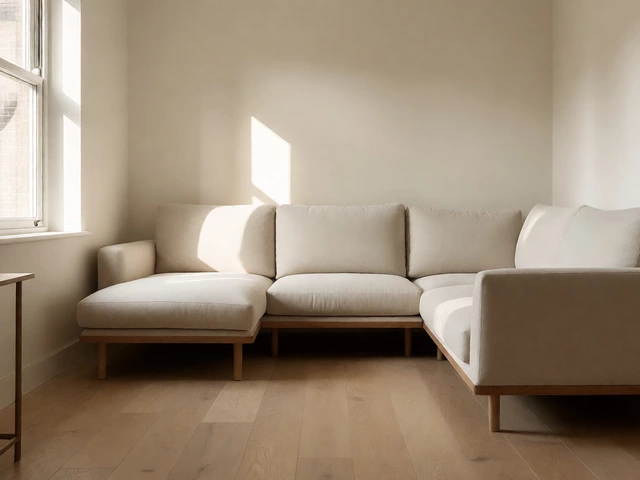
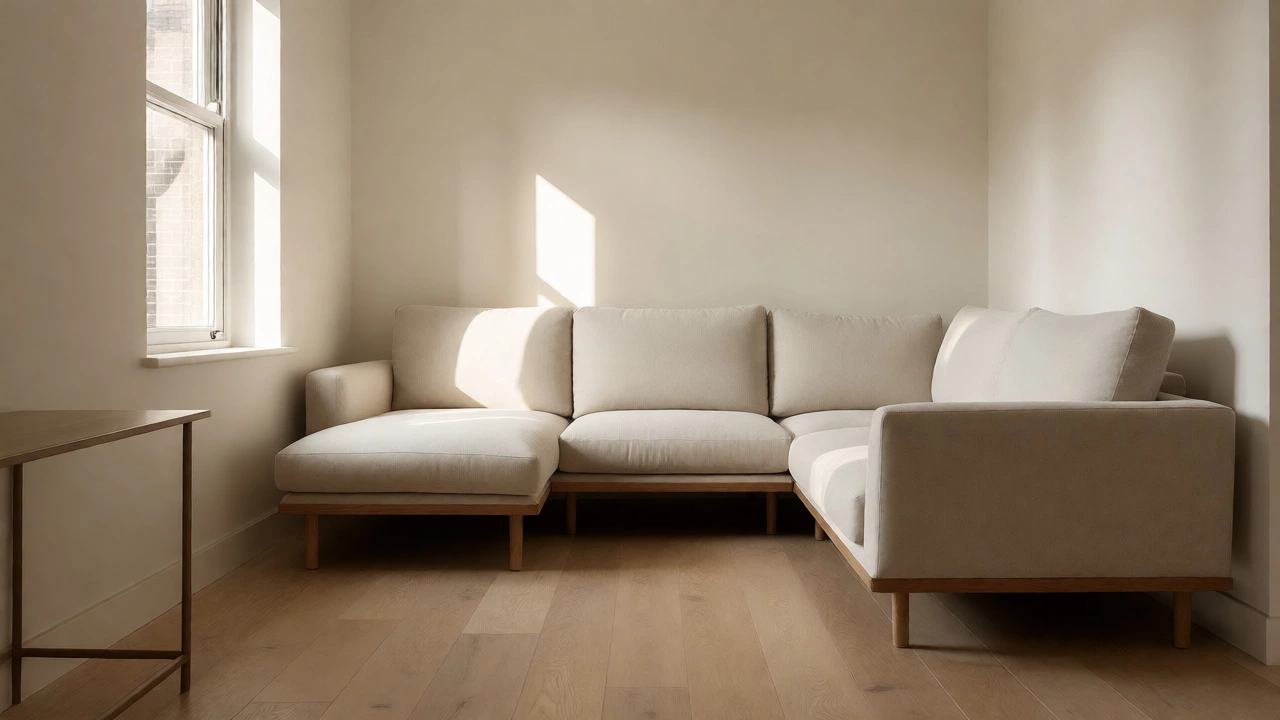
- Go Leggy: Choose a sofa raised on legs. Seeing the floor continue underneath the furniture creates an illusion of openness. Skirted sofas that touch the ground tend to look heavier and bulkier.
- Light Colors: Stick to neutrals like beige, gray, white, or soft pastels. Dark navy or charcoal absorbs light and shrinks the room visually. If you love dark colors, keep the rest of the room very bright.
- Low Profiles: Opt for low-back designs. High backs block sightlines across the room, making it feel segmented. A low profile keeps the room feeling unified and spacious.
- Legs and Arms: Thin arms and exposed legs reduce visual clutter. Avoid overstuffed, rolled arms which consume horizontal space.
Placement is key, too. Pull the sofa slightly off the wall-even just two inches-to create a shadow gap that suggests depth. Don’t push it flush unless you’re absolutely certain about the dust trap behind it.
Alternatives to Consider
If a corner sofa feels too risky, consider these alternatives that offer similar benefits:
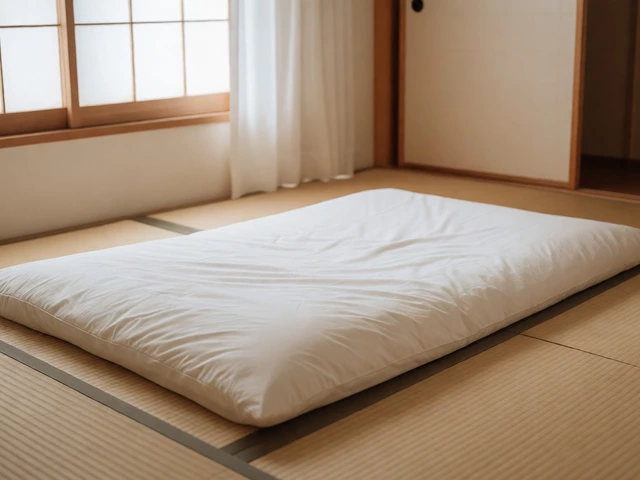
Futons: A high-quality futon with a wooden frame looks like a regular sofa during the day and converts to a bed at night. They are typically slimmer and lighter than upholstered sectionals.
Love Seat + Accent Chair: Sometimes, splitting the seating into two separate pieces gives you more flexibility. You can tuck a slim accent chair into the corner and place a loveseat opposite it. This arrangement often feels less imposing than one giant L-shape.
Ottoman Combo: Pair a standard sofa with a large ottoman. You can move the ottoman around depending on whether you need footrests, extra seats, or a coffee table substitute. It’s dynamic and less permanent.
Real-World Example: The 10x12 Foot Room
Let’s say you have a 10-foot by 12-foot living room. That’s 120 square feet. Typical constraints include a door on one wall and a window on the adjacent wall.
A standard 84-inch corner sofa would likely protrude too far into the room. Instead, look for a 70-inch chaise sectional. Place the long back against the 12-foot wall, with the chaise extending along the 10-foot wall. This leaves roughly 40 inches of open floor in the center-enough for a slim console table or a rug, but not enough for a large coffee table. You’d opt for nesting tables instead.
In this scenario, a curved sectional would fail because it bulges into the center. A modular setup could work if you limit it to three pieces. The key takeaway? Scale down the expectations. Small rooms require compact furniture, not scaled-down versions of large-room setups.
Final Verdict: To Buy or Not to Buy?
So, is a corner sofa good for a small living room? Yes, if you prioritize efficiency and choose the right type. It maximizes seating, defines the space, and uses otherwise dead corners. No, if you value flexible layouts, have extremely narrow pathways, or struggle with moving heavy furniture.
Your decision should hinge on three factors: accurate measurements, visual weight management, and lifestyle needs. If you host frequently, the extra seats are worth the trade-off in floor space. If you live alone and prefer minimalism, a smaller loveseat might serve you better.
Does a corner sofa make a room look bigger?
It depends on the design. A light-colored, low-profile sectional with exposed legs can make a room look larger by utilizing vertical space efficiently and keeping sightlines open. However, a bulky, dark, high-backed sectional will likely make a small room feel smaller and more enclosed.
How much space do I need between a corner sofa and a coffee table?
You should aim for 14 to 18 inches between the edge of the sofa and the coffee table. This allows people to reach their drinks comfortably while still providing enough room to walk around the table without bumping into the sofa cushions.
Can I put a corner sofa in the middle of the room?
In a small living room, floating a corner sofa in the middle is rarely recommended because it consumes significant floor area and can disrupt traffic flow. It works best when anchored against walls or windows to define a zone without blocking pathways.
Are modular sofas better than fixed corner sofas for small spaces?
Modular sofas are generally better for small spaces because they offer flexibility. You can configure them to fit odd angles, remove pieces if you need more floor space, and transport them easier through narrow doors and stairwells compared to rigid, fixed-frame sectionals.
What color corner sofa is best for a small room?
Light, neutral colors such as cream, light gray, beige, or soft white are best for small rooms. These shades reflect light and recede visually, making the furniture appear less intrusive. Dark colors absorb light and can make the sofa feel like a heavy block in the space.