Sofa Quality Evaluator
Select the specifications of the sofa you are considering to determine its estimated quality grade and longevity.
Key Takeaways for Quick Shopping
- Frame: Always look for kiln-dried hardwood over plywood or particle board.
- Suspension: Eight-way hand-tied springs are the gold standard for durability.
- Cushions: High-resiliency (HR) foam wrapped in down or polyester prevents sagging.
- Fabric: Check the "double rub" count; 15,000 is the minimum for daily use.
- Joints: Look for double-dowelled or corner-blocked joints rather than just staples and glue.
The Skeleton: Why the Frame Matters Most
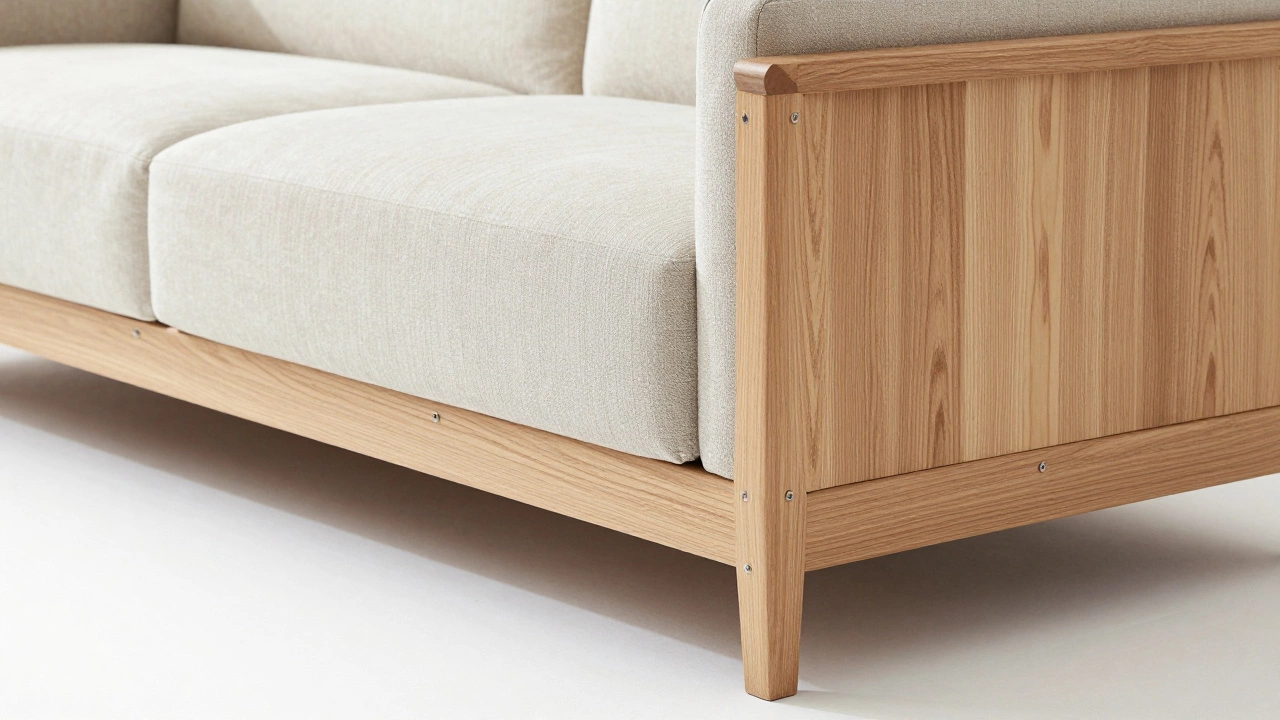
The frame is the backbone of your sofa. If the frame warps or cracks, no amount of expensive fabric can save it. Most cheap sofas use Particle Board or MDF (Medium Density Fiberboard), which are essentially glued sawdust. These materials swell with humidity and snap under pressure.
You want a frame made of Kiln-Dried Hardwood. The kiln-drying process removes moisture from the wood, making it dimensionally stable. This means it won't warp or shrink over time. Common high-quality woods include oak, maple, or ash. If a salesperson says it's "solid wood," ask them specifically if it's hardwood or a soft wood like pine, which is more prone to denting and splitting.
How do you check this in a store? Give the sofa a "stress test." Grip the back and the arm and give it a firm shake. A quality sofa shouldn't creak, groan, or wiggle. If you feel a shift in the structure, the joints are weak. Look for Corner Blocks-triangular pieces of wood screwed into the corners to reinforce the frame. If a sofa is just held together by staples and glue, it's a short-term purchase.
The Support System: Springs and Webbing
Ever sat on a sofa that felt like a hammock? That's a failure of the suspension system. The suspension is what distributes your weight and keeps the sofa from sagging. The lowest quality option is simple zigzag springs (also called sinuous springs) attached to the frame with thin clips. While common, they can lose tension quickly if the gauge of the steel is too thin.
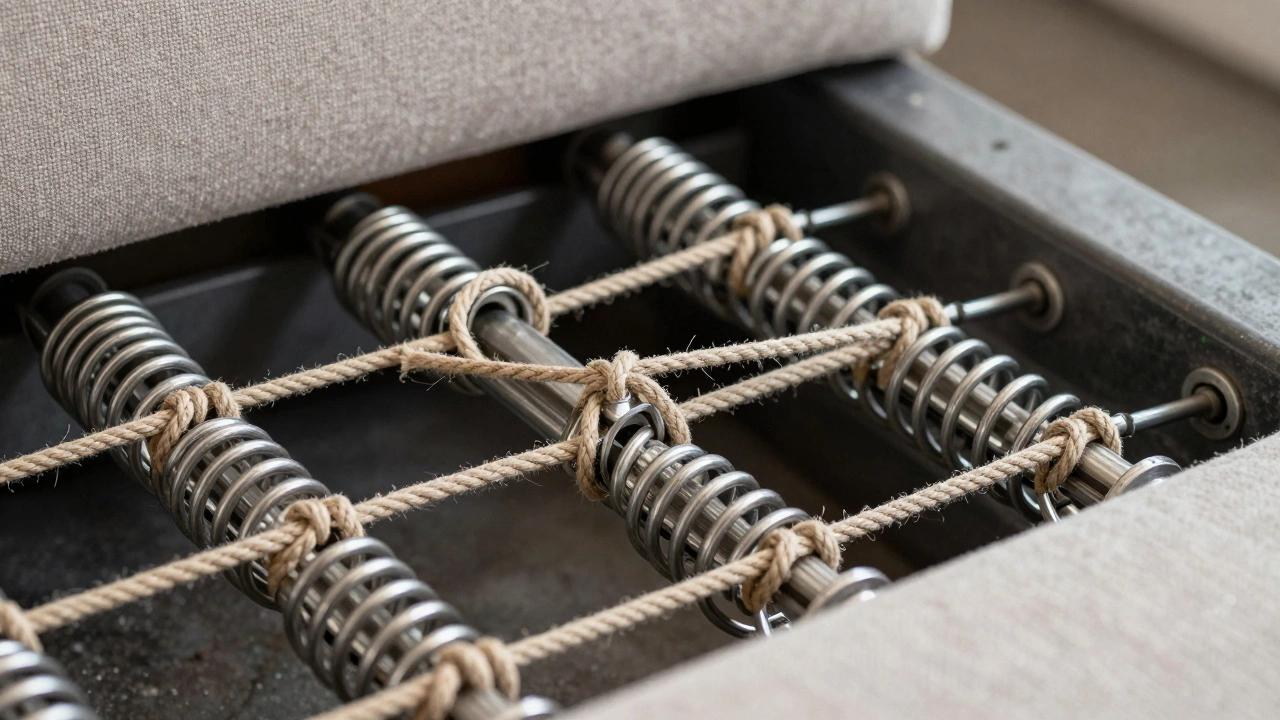
For a truly long-lasting piece, search for Eight-Way Hand-Tied Springs. In this method, springs are wound from eight different directions and tied by hand to the frame and each other. This creates a supportive "web" that doesn't shift and provides a consistent level of tension across the entire seat. It's the most labor-intensive method, which is why it's usually found in higher-end furniture.
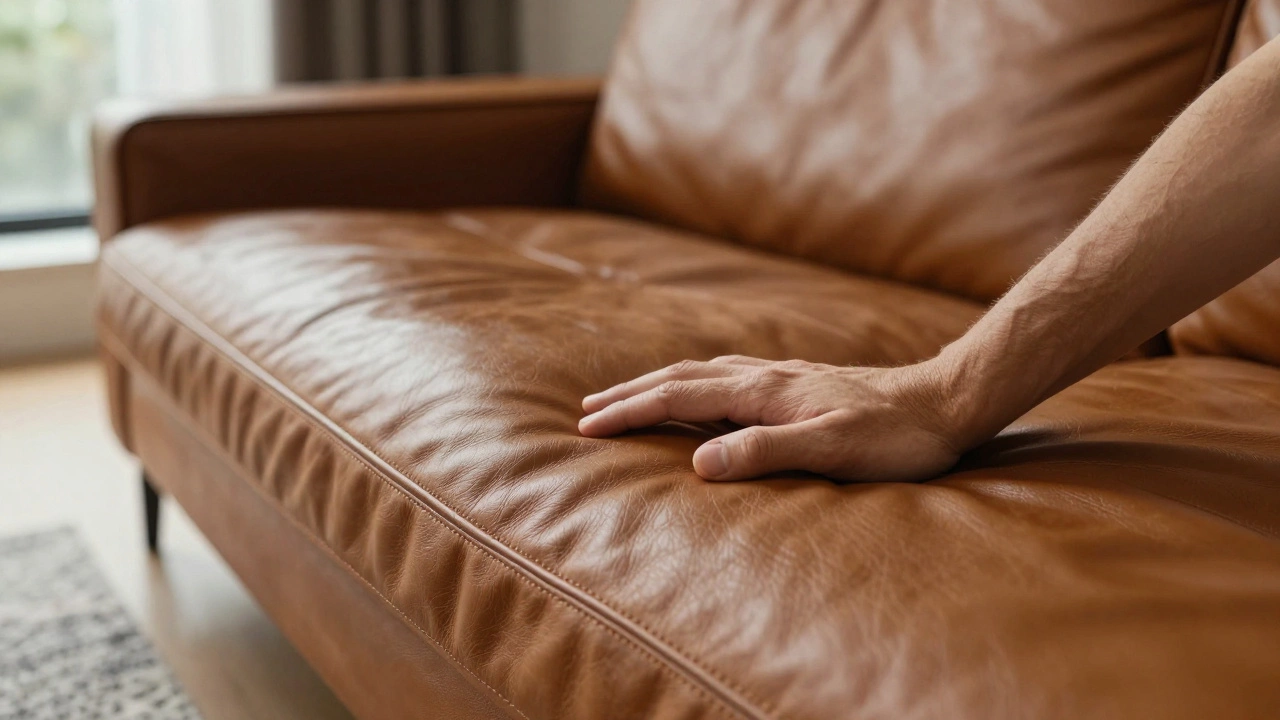
If you're looking at a more modern, low-profile design, you might see Webbing. High-quality webbing is made of heavy-duty elasticized fabric. If the webbing feels thin or looks like it's stretching just by looking at it, walk away. A good rule of thumb: press your hand firmly into the center of the seat. It should bounce back immediately. If there's a lingering dip, the suspension is insufficient.
| Component | Budget Quality (Avoid) | Standard Quality (Acceptable) | Premium Quality (Best) |
|---|---|---|---|
| Frame | Particle Board / MDF | Softwood / Plywood | Kiln-Dried Hardwood |
| Suspension | Thin Sinuous Springs | Heavy-gauge Sinuous | 8-Way Hand-Tied Springs |
| Cushion Core | Low-density Polyfoam | High-Density Foam | HR Foam + Down Wrap |
| Joints | Staples & Glue | Screws & Glue | Double-Dowelled / Blocked |
Cushioning: Foam vs. Down
The comfort of a sofa is determined by the core of the cushion. Most budget sofas use low-density polyurethane foam. This feels great for the first month, but it develops "permanent indentations" quickly. You want High-Resiliency (HR) Foam. HR foam has a higher density and a faster "recovery rate," meaning it pushes back against your weight more effectively.
Then there's the debate between foam and Down Fill. Down (feathers) is incredibly luxurious and soft, but it has zero structural support. If you have a 100% down sofa, you'll spend your entire life fluffing the cushions to keep them from looking like flattened pancakes. The best approach is a "down-wrapped" core: a layer of high-density foam in the center for support, surrounded by a thick layer of down or polyester fiber for that soft, cloud-like feel.
Check the cushion covers. If the sofa has "loose cushions," make sure they have zippers. This allows you to replace the foam core in ten years without buying a new sofa. If the cushions are sewn-in (tight-back), you're locked into whatever quality of foam is inside for the life of the piece.
Decoding the Fabric: Rub Counts and Weaves
You can have the best frame in the world, but if the fabric pilled after three months, the sofa looks old. When choosing Upholstery Fabrics, don't just feel the texture; ask about the "double rub count." This is a standardized test (Wyzenbeek test) that measures how many times a piece of fabric can be rubbed before it wears through.
For a sofa used every day in a family room, look for a count of at least 15,000 to 30,000 double rubs. If you have pets or kids, you might want "performance fabrics" like Crypton or treated polyesters that resist stains and liquids. These fabrics are woven more tightly, which prevents dirt from penetrating the fibers.
If you're choosing Top Grain Leather, be careful of "bonded leather" or "faux leather." Bonded leather is made from leather scraps glued together with polyurethane; it peels in sheets after a few years. Genuine top-grain leather is breathable, durable, and develops a patina over time. To test it, press your finger into the leather. If it wrinkles naturally and bounces back, it's real. If it feels like plastic or doesn't wrinkle, it's likely a synthetic blend.
The Final Inspection: Small Details That Signal Quality
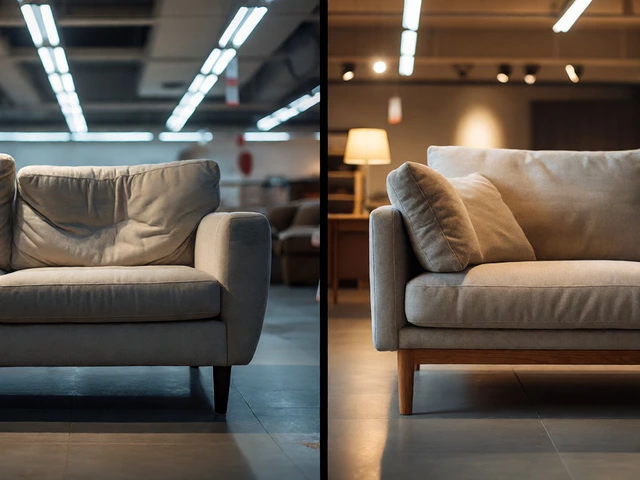
Beyond the big components, there are small "tells" that reveal the manufacturer's attention to detail. Look at the stitching. Are the seams straight? Is there any loose thread or "bird-nesting" at the corners? Poor stitching is a sign of rushed production and low quality control.
Check the alignment. Stand back and look at the sofa from a distance. Are the arms perfectly level? Is the back straight? If the sofa looks slightly crooked, it means the frame was built poorly or the fabric was pulled unevenly. This isn't just an aesthetic issue; it often indicates internal structural misalignment.
Finally, feel the weight. High-quality materials-hardwoods, heavy-gauge springs, and high-density foam-are heavy. If a large three-seater sofa feels surprisingly light, it's a red flag. It likely means the frame is hollow or made of lightweight engineered woods that won't stand up to years of lounging.
Is a more expensive sofa always better quality?
Not necessarily. You often pay for the brand name, the showroom's overhead, or a trendy design. A very expensive sofa might have a beautiful fabric but a cheap plywood frame. Always verify the materials (kiln-dried hardwood, 8-way hand-tied springs) regardless of the price tag.
How long should a high-quality sofa last?
A well-made sofa with a kiln-dried hardwood frame and premium suspension should easily last 10 to 15 years before needing significant refurbishment. Budget sofas typically begin to sag or creak within 2 to 5 years.
What is the difference between top-grain and bonded leather?
Top-grain leather is the outermost layer of the hide, offering the most durability and natural beauty. Bonded leather is a composite made of leather shreds and plastic; it is significantly cheaper but prone to peeling and cracking quickly.
Can I replace the cushions if they sag?
Yes, if the sofa has removable cushions with zippers. You can take the old foam to a local upholstery shop and have them cut high-density foam replacements to the exact dimensions of your cushions.
Why is kiln-drying so important for wood?
Kiln-drying removes the moisture from the wood in a controlled environment. This prevents the wood from warping, cracking, or shrinking as it adjusts to the climate inside your home, which keeps the frame stable for years.
Next Steps for Your Purchase
If you're currently shopping, start by making a checklist of the "non-negotiables." If you have a high-traffic household, prioritize the double-rub count of the fabric and HR foam. If you prioritize long-term investment, focus on the kiln-dried hardwood and 8-way hand-tied springs.
When you're at the store, don't be afraid to ask the salesperson for the "spec sheet." A reputable company will be happy to tell you exactly what the frame is made of. If they give you vague answers like "it's a high-quality mix," they are likely hiding the use of particle board. Take your time, shake the frame, and check the seams-your back (and your wallet) will thank you in five years.