
Spending eight hours a day in a chair shouldn’t leave you with a sore back, stiff shoulders, or numb legs. Yet millions of people do exactly that-because they picked an office chair based on looks, price, or what was on sale. A good office chair isn’t a luxury. It’s a health tool. And choosing one the right way can stop chronic pain before it starts.
Start with your body, not the brand
Don’t jump to brands like Herman Miller or Steelcase just because they’re popular. Those are great chairs-but only if they fit you. The first thing to ask: What’s your height? Your weight? Do you sit for more than six hours a day? If you’re under 5’5” or over 6’2”, many standard chairs won’t work without serious adjustments. Same if you weigh under 120 lbs or over 250 lbs. Most office chairs are designed for a 5’7” to 6’0”, 150-200 lb range. If you’re outside that, look for chairs with extended weight limits or adjustable seat depth.Try this: Sit in a chair and check if your feet rest flat on the floor with your knees at a 90-degree angle. If your feet dangle or your thighs are squished against the seat edge, that chair won’t work. No matter how expensive it is.
Lumbar support isn’t optional-it’s mandatory
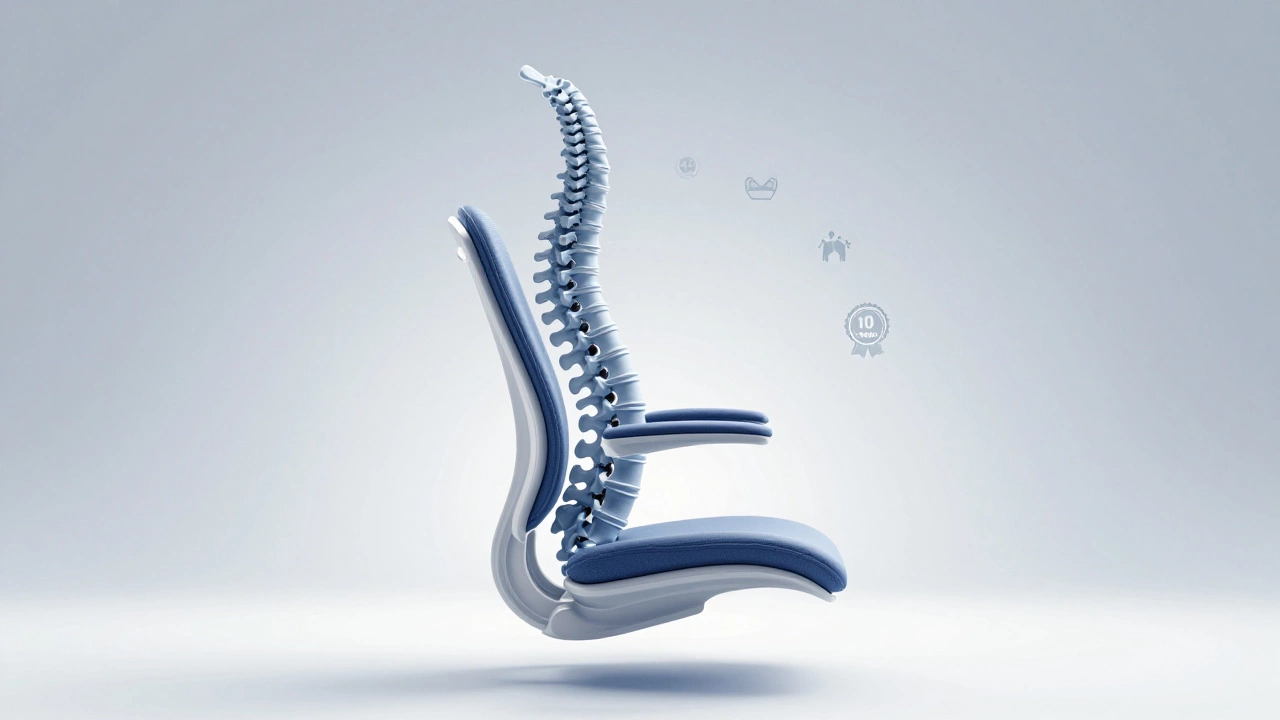
Your lower back has a natural curve. A good office chair supports it. Not just pushes against it. Many chairs have a fixed lumbar pad that’s too high, too low, or too stiff. The best ones let you adjust the height, depth, and firmness. Look for a chair with a dynamic lumbar system-something that moves with your spine as you lean back. Brands like Humanscale and Haworth use this tech. Even some budget chairs now have adjustable lumbar straps you can slide up or down.Here’s a quick test: Sit in the chair and lean back slightly. If your lower back feels like it’s floating or being pressed into a brick wall, keep looking. The right support should feel like your spine is being gently cradled, not shoved.
Seat depth and width matter more than you think
Too much seat depth means your knees press into the front edge of the seat. That cuts off blood flow and causes numbness. Too little, and your thighs aren’t supported, leading to poor posture. The ideal seat depth lets you sit back fully with 1-2 inches of space between the edge of the seat and the back of your knees.Width is just as important. If your hips rub against the sides, you’ll shift constantly. That’s tiring. Most standard seats are 17-20 inches wide. If you’re broader, look for chairs labeled “wide seat” or “plus size.” Some, like the Steelcase Leap v2, offer up to 22 inches. Don’t guess-measure your hips while sitting and add an inch.
Armrests should help, not hurt
Armrests are often an afterthought. But if they’re too high, your shoulders hike up. Too low, and your wrists strain. The best armrests adjust in four ways: height, width, angle, and depth. You should be able to rest your forearms parallel to the floor while typing, with your shoulders relaxed.Some chairs have no armrests at all. That’s fine if you use a standing desk or switch positions often. But if you sit for long stretches, removable or adjustable arms are a must. Avoid fixed plastic arms-they’re rigid and break fast.

Recline and tension control aren’t gimmicks
A chair that doesn’t recline is a chair that forces you to sit upright all day. That’s not ergonomic-it’s punishing. Look for a chair with a synchronized tilt mechanism. That means when you lean back, the seat and backrest move together to keep your spine aligned. You should also be able to adjust how easy or hard it is to recline. Too loose, and you sink too far. Too tight, and you can’t lean back at all.Test it: Sit in the chair and lean back slowly. Can you find a sweet spot where your back is supported without your feet lifting off the floor? If not, skip it. Also, check if the chair locks in upright position. You need that for typing.
Material isn’t just about looks
Mesh backs are popular because they breathe. But not all mesh is equal. Cheap mesh sags over time. Look for high-quality, woven polyester mesh with a weave pattern that follows your spine’s curve. It should feel firm, not stretchy.Leather or faux leather looks nice but traps heat. If you live in a warm climate or tend to get sweaty, avoid it. Fabric is a good middle ground-durable, breathable, and easy to clean. Avoid vinyl. It cracks after a year or two.
Seat cushioning matters too. High-density foam lasts longer than low-density. If the seat feels like it’s collapsing after a few months, you’ll regret it. Some chairs use gel inserts or memory foam for extra comfort. Those are worth it if you sit for more than six hours daily.
Adjustability is your best friend
A good chair has at least five key adjustments:- Seat height (pneumatic lever)
- Lumbar support (height and depth)
- Seat depth
- Armrest height, width, and angle
- Recline tension and lock
If a chair doesn’t have all five, it’s not a full ergonomic chair. Some have six or seven. That’s fine. But don’t settle for one with only two or three. You can’t fix bad design with a pillow.
What to avoid
Here are the most common mistakes people make:- Buying a chair without trying it first
- Choosing based on color or brand name alone
- Ignoring weight limits
- Assuming a more expensive chair is always better
- Skipping the return policy
Some of the worst chairs on the market are sold as “ergonomic” by big retailers. They have a small lumbar pillow glued on, and call it a day. That’s not ergonomic. That’s marketing.
Real-world test: Try before you buy
If you can, visit a store. Sit in the chair for at least 15 minutes. Do your normal work: type, lean back, reach for your coffee, shift positions. Does it still feel good? Or do your shoulders tighten up? Does your lower back start to ache? If you can’t test it in person, look for retailers with generous return policies-like 30 days or more. Some companies, like Secretlab and Autonomous, even offer free returns.One person in Mississauga bought a $400 chair online, tried it for a week, and returned it because the armrests were too narrow. She got a full refund. That’s how it should work.
Price range: What you actually need to spend
You don’t need to spend $1,000. A solid ergonomic chair starts around $300. Here’s what you get at different levels:- $150-$250: Basic adjustments, decent mesh, good for 4-6 hours/day. Brands: Herman Miller Aeron (refurbished), Autonomous ErgoChair Pro.
- $250-$500: Full adjustability, better materials, longer warranty. Brands: Steelcase Leap, Humanscale Freedom, Haworth Fern.
- $500+: Premium materials, advanced mechanics, lifetime warranty. Brands: Herman Miller Aeron (new), Steelcase Leap v2.
Refurbished Aeron chairs from authorized dealers are a smart buy. They cost half the price and come with a 12-year warranty. Many look brand new.
Warranty tells you more than price
A good chair should last 10+ years. That’s why warranty matters more than the sticker price. Look for at least a 10-year warranty. Herman Miller and Steelcase offer 12. If a company offers only 1 or 2 years, they know the chair won’t hold up. Walk away.Check what’s covered: Frame? Mechanism? Fabric? Some warranties exclude lumbar pads or armrests. That’s a red flag.
Final checklist before you buy
Use this before clicking “Buy”:- Can I adjust the seat height so my feet are flat and knees at 90°?
- Does the lumbar support fit my lower back without pushing too hard?
- Is there 1-2 inches of space between the seat edge and my knees?
- Can my arms rest comfortably without shrugging?
- Can I recline and lock the chair upright?
- Is the warranty at least 10 years?
- Can I return it if it doesn’t work?
If you answered yes to all of those, you’ve found a good chair. Not the best. Not the fanciest. Just the right one for your body.
Your chair isn’t just furniture. It’s the platform for your workday. Get it right, and you’ll feel better, move better, and work longer. Get it wrong, and you’ll pay for it in pain, doctor visits, and lost productivity. Don’t treat it like a disposable item. This is your body’s foundation.