Bookshelf Styling Calculator
Measure Your Shelf
Styling Recommendations
Based on the article's principles:
Recommended Books: 18-21 titles (average 20cm width)
Recommended Decor Objects: 3-5 items
There’s no furniture piece that says "I have taste" quite like a well-styled bookshelf. But let’s be honest-most bookshelves end up looking like storage units with books stacked haphazardly, dusty trinkets gathering cobwebs, and mismatched decor that screams "I gave up after the first try." Making a bookshelf look classy isn’t about buying expensive things. It’s about intention. It’s about rhythm. It’s about knowing what to leave out as much as what to put in.
Start with the shelf itself
A classy bookshelf begins with the right foundation. You can’t make a cheap, particleboard shelf look luxurious no matter how many candles you add. If you’re starting from scratch, go for solid wood-oak, walnut, or even dark stained pine. Look for clean lines, minimal hardware, and a finish that feels rich, not glossy. Brands like IKEA have improved dramatically, but if you’re on a budget, find a secondhand wooden shelf and refinish it yourself. Sand it down, apply a matte oil-based finish, and let it breathe for a day. That alone will make it look like it cost three times what you paid.Height matters too. Floor-to-ceiling shelves feel more intentional than short ones. If yours is too short, stack two identical units vertically (with proper wall anchoring) or add a thin, floating shelf on top. The vertical line draws the eye upward and adds gravitas.
Organize books by color, not size
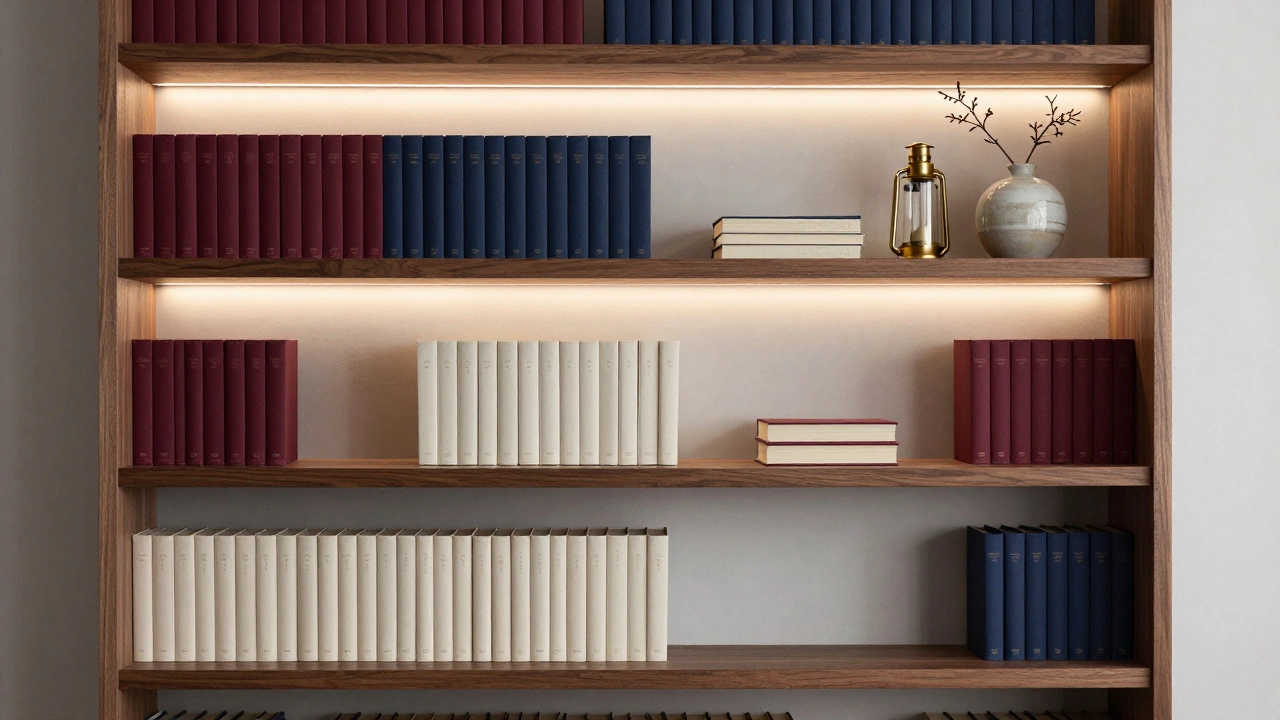
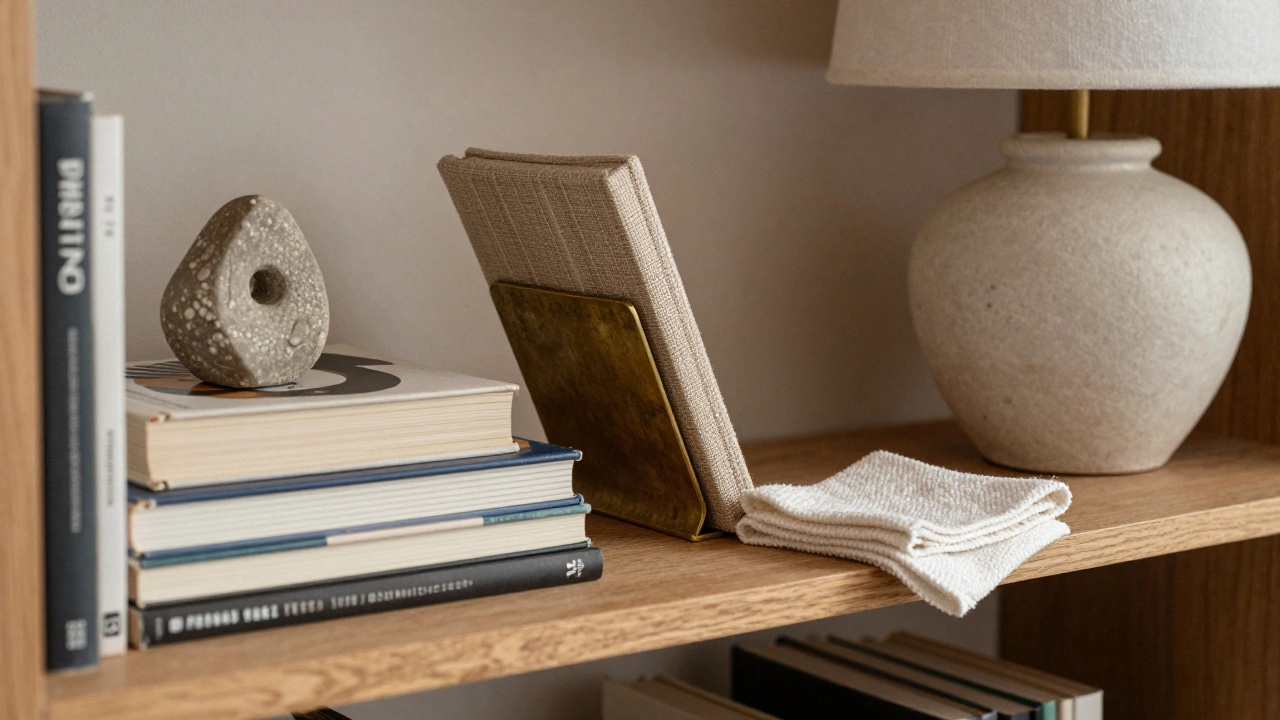
The biggest mistake people make? Arranging books by size. It creates visual chaos. Classy bookshelves use color as their organizing principle. Group books by hue-deep burgundies next to navy blues, creams beside warm taupes. You don’t need every book to match perfectly. Just create blocks of color that flow like a watercolor palette.Place the tallest books vertically along the back wall for structure. Lay some horizontally to break the rhythm-these are perfect for stacking a few objects on top. Use bookends made of brass, ceramic, or stone. Avoid plastic or novelty ones. They kill the vibe.
Leave breathing room
A classy shelf is never full. It’s curated. Think of it like a gallery wall-you don’t hang art edge to edge. Leave at least 30% empty space. That emptiness isn’t wasted space. It’s breathing room. It lets the eye rest. It makes the objects you do display feel more important.Try this trick: After you’ve placed your books and decor, step back and squint. If everything blends into a blurry mess, you’ve added too much. Remove one item. Then another. You’ll be surprised how much more elegant it looks with less.
Layer in objects with purpose
Books alone are boring. But too many knickknacks feel cluttered. The sweet spot? Three to five meaningful objects per shelf. Choose items that tell a story, not just look pretty.- A small ceramic vase with a single dried branch
- A vintage brass lantern (even if it doesn’t work)
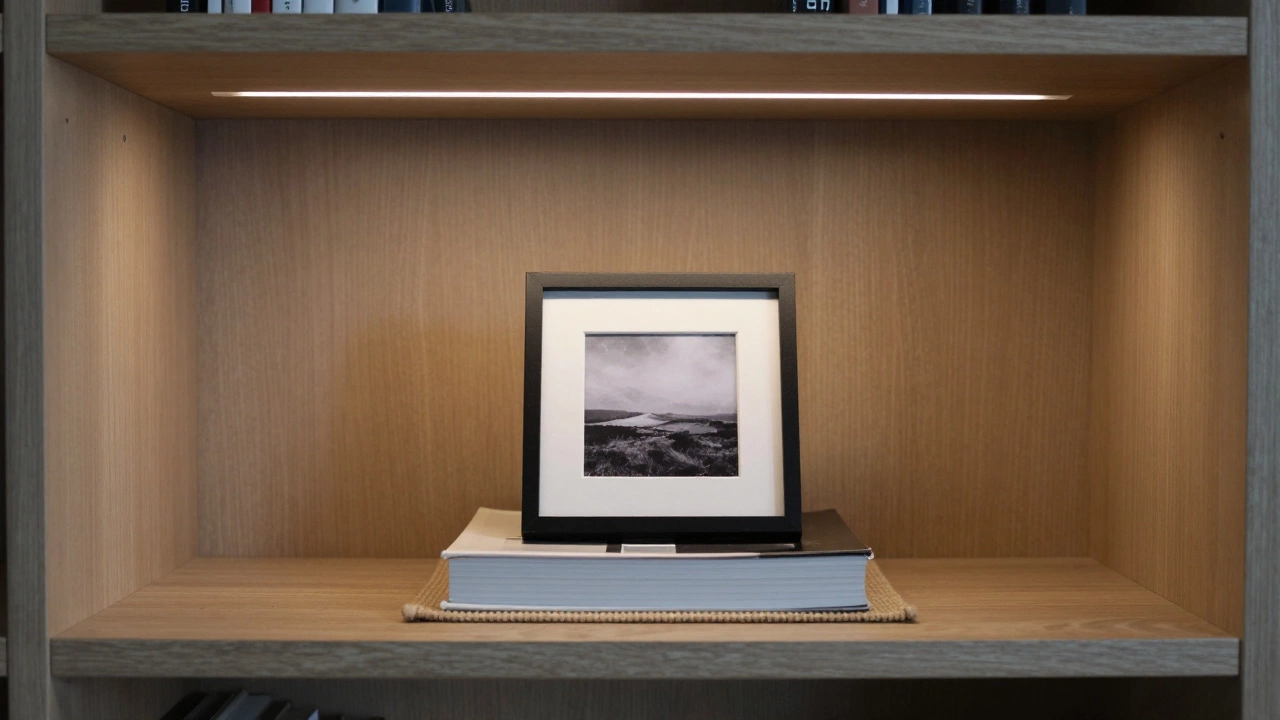
- A framed black-and-white photo of a place you love
- A stack of three art books with bold covers
- A small sculpture in stone or metal
Place taller items at the back, shorter ones in front. Mix materials-wood, ceramic, metal, glass. Avoid plastic, cheap resin, or anything that looks like it came from a tourist shop. If you wouldn’t carry it in your suitcase home from a trip, don’t put it on your shelf.
Lighting makes all the difference
Most people forget that lighting transforms a bookshelf from functional to fabulous. A single LED strip along the top edge-warm white, 2700K-casts a soft glow that makes everything feel intentional. You don’t need a fancy system. Stick-on LED strips from Amazon cost under $20 and install in minutes.Alternatively, place a small table lamp beside the shelf. A ceramic base with a linen shade adds warmth and draws attention to the space. Avoid overhead lights. They flatten everything and kill depth.
Use texture to add depth
Classy doesn’t mean sleek and cold. It means layered and tactile. Add texture through woven baskets for magazines, linen book covers, or a small wool throw draped over the bottom shelf. Even a single piece of textured paper-like handmade washi-tucked behind a book can add quiet elegance.Try placing a small woven mat under a stack of books or a sculpture. It grounds the object and adds subtle contrast. Avoid glass or mirrored surfaces unless they’re truly high-end. Cheap mirrors reflect clutter and make the shelf look messy.
Keep it clean
A classy bookshelf is always clean. Dust collects fast. Wipe shelves weekly with a microfiber cloth. Use a soft brush to clean book spines. Don’t let dust become part of the aesthetic-it’s not vintage, it’s neglected.Rotate items seasonally. Swap out a summer beach book for a winter novel. Change the branch in the vase. Move the photo to a different shelf. This keeps the space feeling alive, not frozen in time.
Don’t copy Pinterest
Pinterest is full of perfectly styled bookshelves that look like museum exhibits. But real elegance isn’t about replication. It’s about reflection. Your bookshelf should feel like you. If you collect vinyl records, display them. If you travel, put your favorite guidebook front and center. If you’re into plants, add a small snake plant in a ceramic pot. Authenticity beats perfection every time.The goal isn’t to impress strangers. It’s to create a space that makes you pause when you walk by. That quiet moment of satisfaction? That’s what classy looks like.
What not to do
- Don’t use plastic bookends
- Don’t stack books vertically only-mix horizontal and vertical
- Don’t overcrowd with figurines or teddy bears
- Don’t use fluorescent lighting
- Don’t leave sticky notes, pens, or remotes on display
These aren’t hard rules-they’re red flags. They scream "I didn’t think about this." And that’s the opposite of classy.
Final checklist
Before you call it done, run through this quick test:- Are books grouped by color, not size?
- Is at least 30% of the shelf empty?
- Are there 3-5 intentional objects, not 10?
- Is there a light source highlighting the shelf?
- Do the materials feel natural-wood, stone, ceramic, linen?
- Does it look like you, not a catalog?
If you answered yes to all six, you’ve got it.
Can I make a cheap bookshelf look classy?
Absolutely. The material matters less than the styling. Refinish a particleboard shelf with matte paint or wood stain. Use color grouping, leave space, add a single LED strip, and display only meaningful objects. A $50 shelf can look like a $500 one with the right approach.
How many books should I display on a classy bookshelf?
There’s no magic number. But aim for 60-70% of shelf space to be filled with books. The rest should be open space or non-book objects. Too many books look cluttered. Too few look empty. Balance is key.
Should I use bookends?
Yes, but choose them wisely. Avoid plastic or cartoonish designs. Go for brass, stone, ceramic, or solid wood. Bookends don’t just hold books-they add structure and style. A single pair can anchor an entire shelf.
What’s the best way to light a bookshelf?
Use warm white LED strips (2700K) along the top edge. They’re invisible when off and cast a soft glow when on. Avoid overhead lights-they flatten the space. A small table lamp beside the shelf also works well and adds a cozy, lived-in feel.
How often should I update my bookshelf styling?
Every season is ideal. Swap out books for seasonal themes, change the branch in the vase, or rotate a photo. This keeps the space feeling fresh without requiring a full overhaul. It’s like changing your pillowcases-small effort, big impact.