Posture Score Calculator
How's Your Office Chair Posture?
Take this 30-second assessment to see how your sitting habits affect your belly fat prevention.
Your Posture Assessment
Personalized Recommendations
Ever wonder if the way you slump into your office chair is a piece of furniture designed for sit‑down work could be adding inches to your waist? The truth is, the everyday posture you adopt at a desk can either keep your midsection in check or let it creep outward. Below we break down the exact sitting habits that help you stay trim, plus easy tweaks you can make right now.
Why Sitting Posture Influences Belly Fat
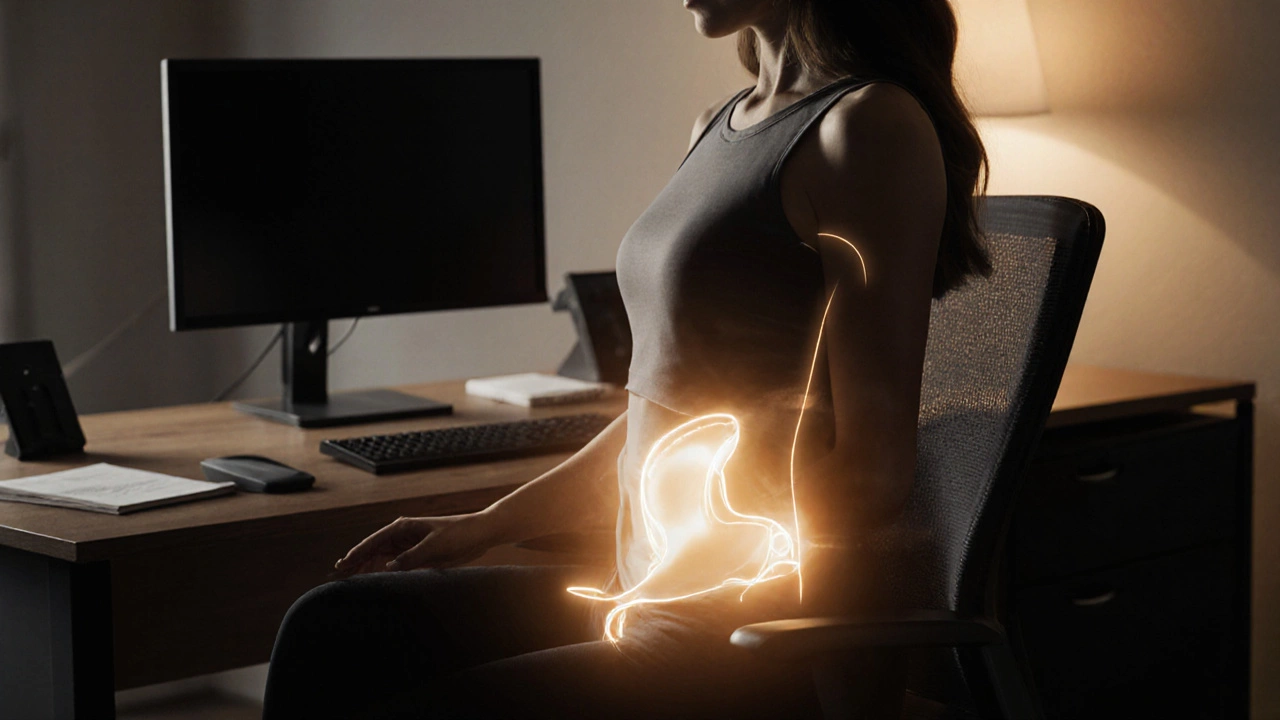
Most people think belly fat is only about what you eat, but the muscles that support your spine also play a role in calorie burn. When you sit in a slouched position, your core muscles the abdominal and lower‑back group that stabilizes the torso stay relaxed. A relaxed core burns almost zero energy. Sit upright with a slight forward tilt and those muscles engage just enough to keep the spine stable, nudging your basal metabolic rate up a few extra calories per hour.
Research from the University of Queensland (2023) showed that participants who maintained an ergonomic sitting angle burned up to 15% more calories over an eight‑hour workday compared with those who slouched. That extra burn adds up over weeks and can help prevent that stubborn belly plateau.
Key Elements of a Belly‑Friendly Office Chair Posture
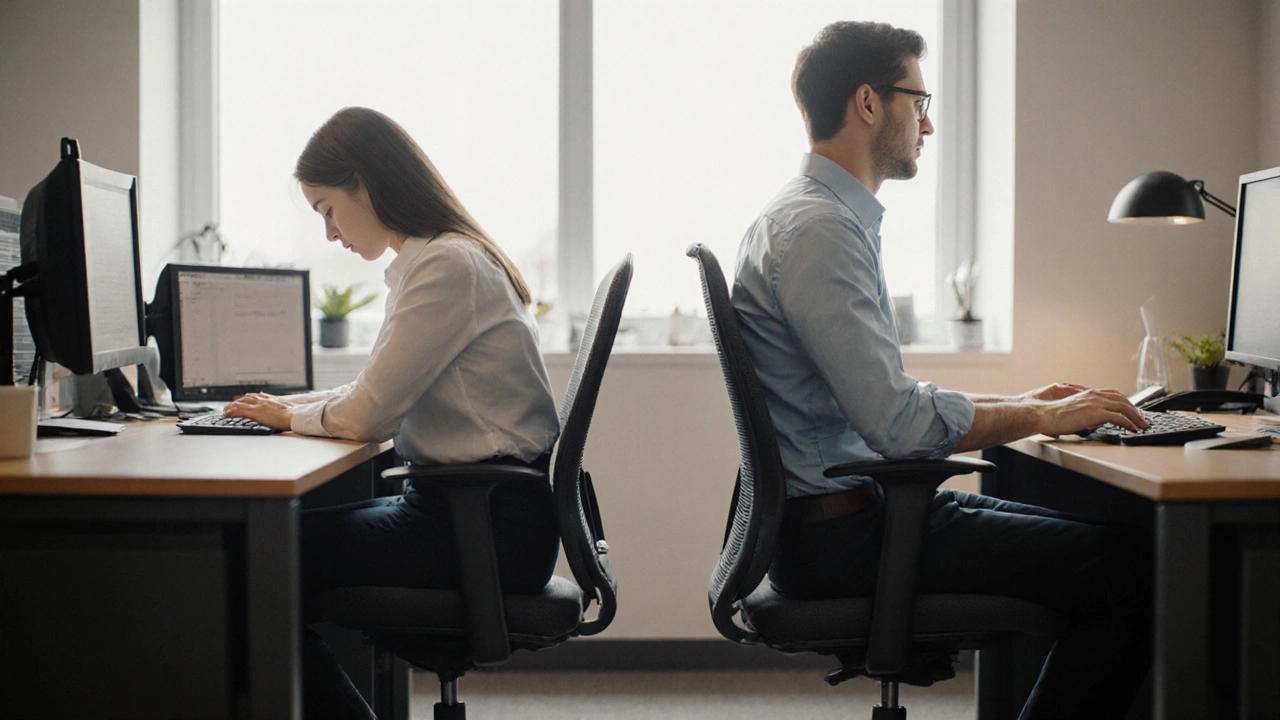
- Feet flat on the floor: Your knees should form a 90‑degree angle. This keeps the hips aligned and prevents the pelvis from tilting forward, which crowds the abdomen.
- Hip‑knee alignment: Your hips should be level with or slightly higher than your knees. This encourages a neutral lumbar curve.
- Small lumbar support: A rolled towel or the built‑in lumbar pad (if your chair has one) should sit in the small of your back, filling the natural dip.
- Monitor at eye level: When the top of the screen is at eye height, you won’t need to crane your neck, which forces you to lean forward and compress the belly.
- Shoulder blades gently squeezed together: This opens the chest and activates the upper back, balancing the forward pull of the hips.
Putting all these pieces together creates what ergonomists call the "neutral posture" - the sweet spot where your posture the alignment of head, spine, and pelvis while sitting supports the core rather than letting it slack.
Simple Desk‑Side Adjustments You Can Make Today
- Raise or lower the chair so that your elbows rest at a 90‑degree angle when typing.
- Slide the seat forward or back until your hips sit just behind the knee joint.
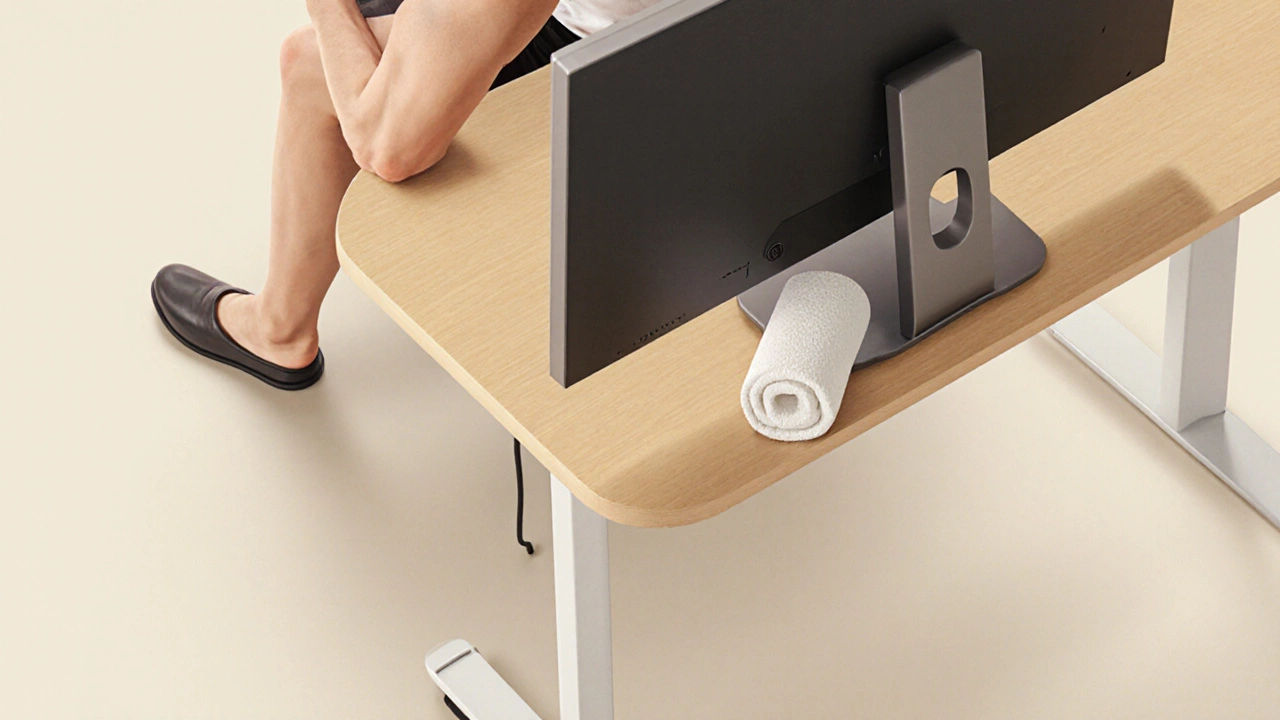
- If your chair lacks lumbar support, place a small pillow or rolled towel at the curve of your lower back.
- Check the desk height the vertical distance from the floor to the work surface. The ideal height lets your forearms hover parallel to the floor.
- Use a monitor riser or stack a few books so the top of the screen aligns with your eyes.
These tweaks take less than five minutes and instantly improve the quality of your office chair posture, letting your core stay mildly active even while you stare at spreadsheets.
Core‑Activation Tricks While You Work
Even with perfect posture, spending eight hours glued to a chair still means low overall movement. Insert these micro‑exercises into your routine to keep the belly in check:
- Seated pelvic tilts: Sit tall, then gently rock your pelvis forward and back ten times. This engages the transverse abdominis.
- Hip abduction: With feet flat, press one knee outward against an imaginary resistance band for five seconds, then switch. Do three sets per hour.
- Shoulder blade squeezes: Pull your shoulder blades together, hold for three seconds, release. Repeat twelve times.
- Deep diaphragmatic breaths: Inhale through the nose expanding the belly, exhale slowly. This trains the core to stay engaged.
Each movement takes under a minute, but the cumulative effect improves circulation, reduces the “couch‑potato” feeling, and burns a few extra calories.
Common Mistakes That Sabotage Belly‑Fat Control
- Crossing legs: This tilts the pelvis, compresses the abdomen, and forces the lower back into a rounded position.
- Leaning excessively on one side: Creates uneven muscle activation and encourages the belly to shift.
- Using a chair without back support: Forces the core to work harder for stability, leading to fatigue and slouching later.
- Desk too high or too low: Triggers shoulder hunching or wrist extension, both of which promote forward neck posture that pushes the belly inward.
Spotting these habits early helps you correct them before they become ingrained.
Quick Sitting‑Posture Checklist
- Feet flat, knees at 90°.
- Hips level with or slightly above knees.
- Lumbar support filling the natural lower‑back curve.
- Monitor top at eye level.
- Elbows at 90°, forearms parallel to floor.
- Shoulder blades gently together.
- Perform a micro‑core exercise every hour.
Comparison of Sitting Angles and Core Activation
| Angle (°) from horizontal | Core Activation Level | Recommended Use |
|---|---|---|
| 90 (upright) | Low‑moderate | All‑day work, best for posture maintenance |
| 100-110 (slight forward tilt) | Moderate‑high | When you need extra core engagement (e.g., after meals) |
| >110 (deep recline) | Very low | Relaxation breaks only; avoid for prolonged periods |
Frequently Asked Questions
Does sitting upright really burn more calories?
Yes. A study from the University of Queensland measured a 15% increase in calorie expenditure for participants who kept a neutral, slightly forward‑tilted sitting angle compared to a slouched posture over an eight‑hour workday.
Can a cheap office chair still help prevent belly fat?
Absolutely, as long as you can adjust height, provide lumbar support, and maintain a neutral posture. Adding a simple pillow or rolled towel can turn an inexpensive chair into a supportive one.
How often should I do the micro‑core exercises?
Aim for one set of any micro‑exercise every hour. Over a typical nine‑hour day you’ll accumulate around nine sets, which is enough to keep the muscles lightly engaged without fatigue.
Is it safe to use a standing desk to avoid belly fat?
Standing burns more calories, but transitioning too quickly can cause joint strain. Combine a sit‑stand desk with proper sitting posture for the best balance.
What’s the ideal monitor height?
The top edge of the screen should be at or just below eye level when you sit upright. This keeps the neck neutral and discourages forward‑leaning that compresses the belly.