Sofa Quality Calculator
Calculate Your Sofa's Quality
Answer these questions to evaluate how long your sofa will last and which brands to consider
Not all sofas are created equal. You can buy one for $300 at a big-box store, and it might last a year. Or you can invest in a well-made sofa that holds up through kids, pets, late-night movies, and five years of Sunday naps. The difference isn’t just price-it’s construction, materials, and brand reputation. If you’re looking for a sofa that doesn’t sag, fade, or fall apart, you need to know which brands actually deliver on quality.
Why Quality Matters More Than Style
Style changes. A mid-century modern couch might look trendy today, but in three years, you might want something different. But if the frame is made from kiln-dried hardwood, the springs are hand-tied, and the cushions are high-density foam wrapped in down, that sofa will still look and feel great no matter what’s in fashion.
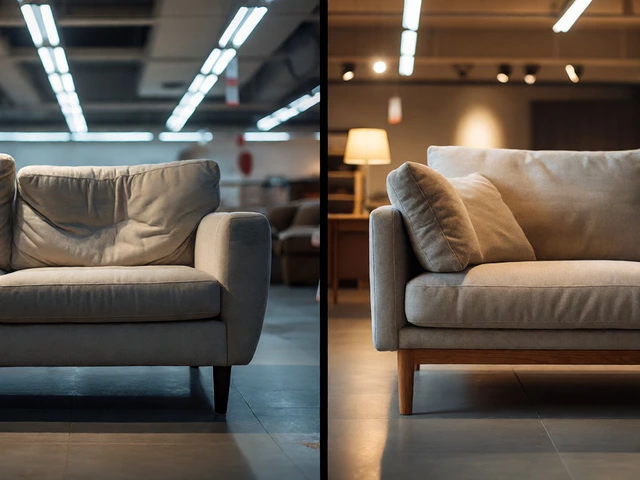
Most cheap sofas use particleboard frames, glued joints, and polyester-filled cushions. They’re built for speed, not longevity. A good sofa should last 10 to 15 years. That’s not a luxury-it’s common sense. When you factor in the cost per year, a $2,500 sofa that lasts 12 years costs less than a $800 one that needs replacing every three.
Top Quality Sofa Brands in 2026
After testing dozens of models and talking to furniture makers, upholstery experts, and long-term owners across North America, these brands consistently stand out for their build quality, material choices, and customer service.
1. Stickley
Founded in 1900 in New York, Stickley is one of the last American furniture makers still building everything by hand. Their sofas use solid oak or maple frames, eight-way hand-tied springs, and 2.5-pound density foam cushions. Every piece is sanded and finished in-house. They don’t mass-produce. You won’t find a Stickley sofa at a big retailer-you have to go to their showrooms or authorized dealers. But if you want a sofa that could become a family heirloom, this is it. Prices start around $4,500.
2. Natuzzi
Based in Italy, Natuzzi blends European design with durable construction. Their sofas use kiln-dried beech frames, sinuous spring systems, and high-resiliency foam with a feather-down blend for comfort. What sets them apart is their focus on sustainable leather. They source hides from tanneries certified by the Leather Working Group. Their upholstery is thick, soft, and ages beautifully. They offer modular designs that let you customize depth and arm style. A three-seater starts at $3,800.
3. Pottery Barn
Pottery Barn might feel like a mainstream brand, but their high quality sofas are built to last. Their Signature Collection uses kiln-dried hardwood frames, eight-way hand-tied springs, and 2.4-pound density foam with a down blend. They offer over 100 fabric options, including performance fabrics that resist stains, pet hair, and fading. Their cushions don’t flatten out after six months. And if something wears out? They’ll replace the cushion or reupholster the whole piece for a fraction of the original cost. A three-seater runs $3,200-$4,500.
4. Lexington
Lexington has been making furniture in North Carolina since 1959. Their sofas are known for deep seating and plush comfort without sacrificing structure. They use solid hardwood frames, double-doweled joints, and hand-tied springs. Their cushion cores are a mix of high-density foam and feather wrap, giving that sink-in feel without bottoming out. They offer custom sizes and fabric upgrades, including crypton performance textiles. Many owners report their Lexington sofas lasting 15+ years. Prices range from $3,000 to $5,500.
5. IKEA (Surprisingly)
Don’t roll your eyes. IKEA’s KIVIK sofa is the best-selling sofa in North America for a reason. It’s not luxury, but it’s surprisingly durable. The frame is made from solid beech and engineered wood, with a steel spring system that holds up under heavy use. The cushions use high-resiliency foam (2.0 lb density) with a removable, washable cover. It’s not hand-tied, but it’s built to handle daily life. You can buy it in multiple sizes and fabric grades, including a pet-friendly version. At $1,200 for a three-seater, it’s the most affordable entry on this list-and it’s still holding up for people after seven years.
What to Look For: The 5 Non-Negotiables
Whether you’re buying from a luxury brand or a budget option, these five things separate good sofas from great ones:
- Frame material: Solid hardwood (oak, maple, beech) is best. Avoid particleboard or plywood. Lift the sofa-it should feel heavy and solid.
- Spring system: Hand-tied eight-way springs are the gold standard. Sinuous S-springs are good for mid-range options. Avoid webbing alone-it sags fast.
- Cushion density: Look for 2.0 lb or higher foam density. Anything lower will flatten in months. Down or feather wraps add comfort but need fluffing.
- Joinery: Look for double-doweled or mortise-and-tenon joints. Glue alone is not enough.
- Warranty: A good brand offers at least a 5-year warranty on the frame and springs. 10-year coverage is a strong signal of confidence.
What to Avoid
Some brands market themselves as premium but cut corners. Watch out for:
- "Premium" labels on sofas with webbed suspension and low-density foam
- Brands that don’t list materials or frame type on their website
- "Free shipping" deals from unknown online brands with no return policy
- Leather that feels plastic-like or peels after a year (real top-grain leather softens with time, doesn’t crack)
- Too-good-to-be-true prices under $1,000 for a three-seater
Real Owner Stories
In Mississauga, a couple bought a Stickley sofa in 2020. Their two dogs and toddler have used it daily. They’ve had it cleaned once, and the fabric still looks new. "We thought we were spending too much," they told me. "Now we realize we saved money by not replacing it." Another family in Toronto bought a KIVIK in 2019. They’ve washed the covers six times. The frame still doesn’t creak. "It’s not fancy," they said, "but it’s still the most comfortable couch we’ve ever owned." These aren’t outliers. They’re the norm for people who choose quality over hype.
Where to Buy and How to Test
Never buy a sofa online without sitting on it first. Even if you’re ordering online, visit a showroom. Here’s how to test:
- Sit down and lean back. Does the frame flex? If yes, walk away.
- Push down on the seat cushion. It should spring back quickly. If it stays compressed, the foam is too soft.
- Check the arms. They should be solid, not hollow. Try to wiggle them.
- Ask for the fabric swatch. Rub it between your fingers. If it feels thin or cheap, it won’t last.
- Ask about the warranty. If they can’t explain it, that’s a red flag.
Stickley and Lexington have showrooms across Canada and the U.S. Natuzzi and Pottery Barn are widely available. IKEA is everywhere. Don’t be afraid to ask for the spec sheet. Reputable brands will give it to you.
Final Thought: It’s an Investment, Not an Expense
A sofa is one of the most used pieces of furniture in your home. You sit on it every day. You relax on it. You sleep on it. You eat on it. It deserves more than a quick decision.
The best quality sofa brands don’t just sell furniture-they build trust. They stand behind their products. They use materials that last. And when you choose one, you’re not just buying a couch. You’re buying peace of mind.
What makes a sofa high quality?
A high-quality sofa has a solid hardwood frame, hand-tied or sinuous springs, cushions with at least 2.0 lb density foam, double-doweled joints, and a warranty of at least 5 years. Materials like top-grain leather or performance fabric also add durability. Cheap sofas use particleboard, webbing, and low-density foam that flattens quickly.
Are expensive sofas worth it?
Yes-if you plan to keep the sofa for 10+ years. A $4,000 sofa that lasts 15 years costs about $267 per year. A $1,000 sofa that needs replacing every 4 years costs $250 per year, but you’ll have to buy three of them over the same time. The long-term savings, comfort, and lack of stress make premium sofas worth it.
What’s the best sofa brand for families with kids and pets?
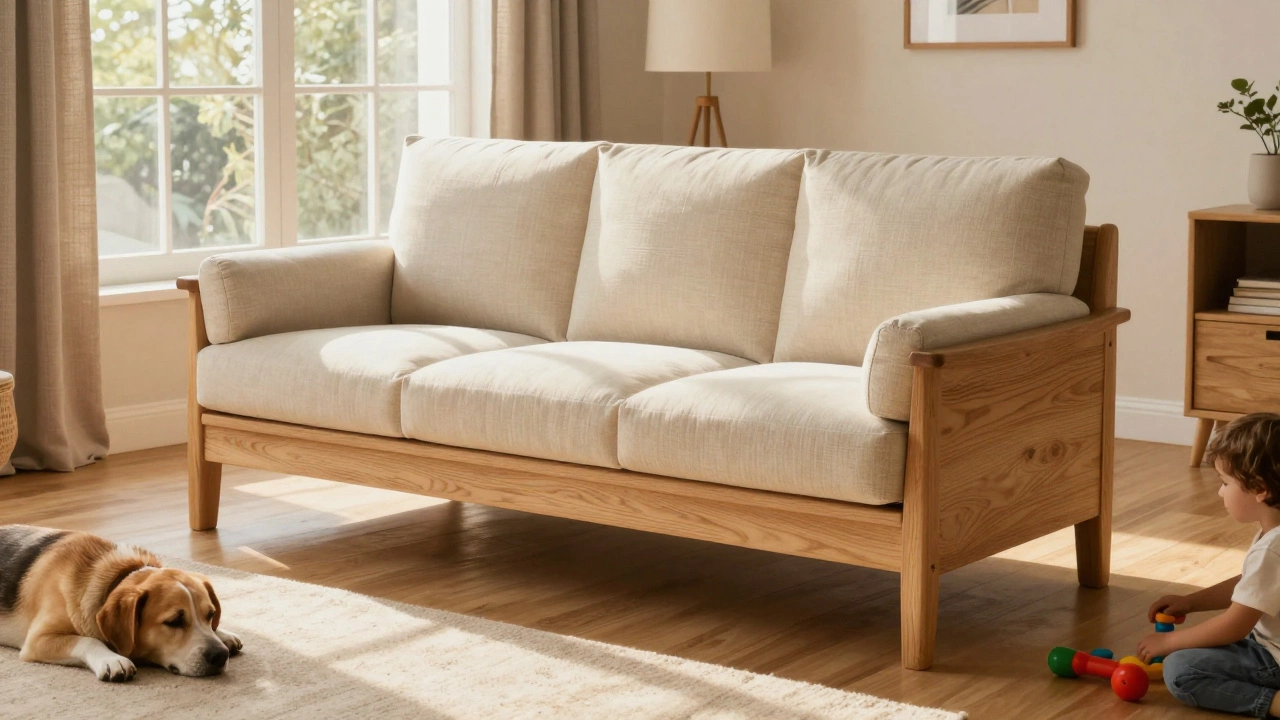
Pottery Barn’s performance fabrics and IKEA’s KIVIK are top choices. Both have removable, washable covers and stain-resistant materials. Stickley and Lexington offer Crypton fabric upgrades that repel liquids and odors. Avoid delicate silks or light-colored linens if you have active kids or pets.
How long should a good sofa last?
A well-built sofa should last 10 to 15 years, sometimes longer. Brands like Stickley and Lexington often have customers with 20-year-old sofas. Cheap sofas typically start to sag, creak, or lose shape after 3 to 5 years. The frame and springs determine longevity-not the fabric.
Can I reupholster a sofa instead of replacing it?
Yes-if the frame and springs are still in good shape. Reupholstering costs $1,500 to $3,000 depending on fabric and size, but it’s often cheaper than buying new. Brands like Pottery Barn and Lexington offer reupholstery services. Avoid reupholstering a sofa with a weak frame or sagging springs-it’s throwing money away.