Recliner Chair Posture: How to Sit Right and Avoid Pain
When you sink into a recliner chair posture, the way your body aligns in a reclined position. Also known as seated spinal alignment, it’s not just about comfort—it’s about whether your spine, hips, and legs are getting the support they need. Too many people think recliners are safe because they feel good at first. But if your knees are higher than your hips, your lower back is unsupported, or your legs are dangling, you’re setting yourself up for trouble.
Back pain from recliner, discomfort caused by improper spinal alignment in a reclined chair isn’t random. It’s often the result of sitting too far back, letting your pelvis tilt, or letting your head slump forward. Studies show that people who sleep in recliners every night report more stiffness and nerve pressure over time. And it’s not just your back—leg pain from recliner, aching or numbness caused by compressed nerves or poor circulation is a common complaint. That’s because your thighs press into the seat edge, cutting off blood flow to your calves and feet. Your knees may bend too sharply, or your ankles may hang loose, stressing your joints.
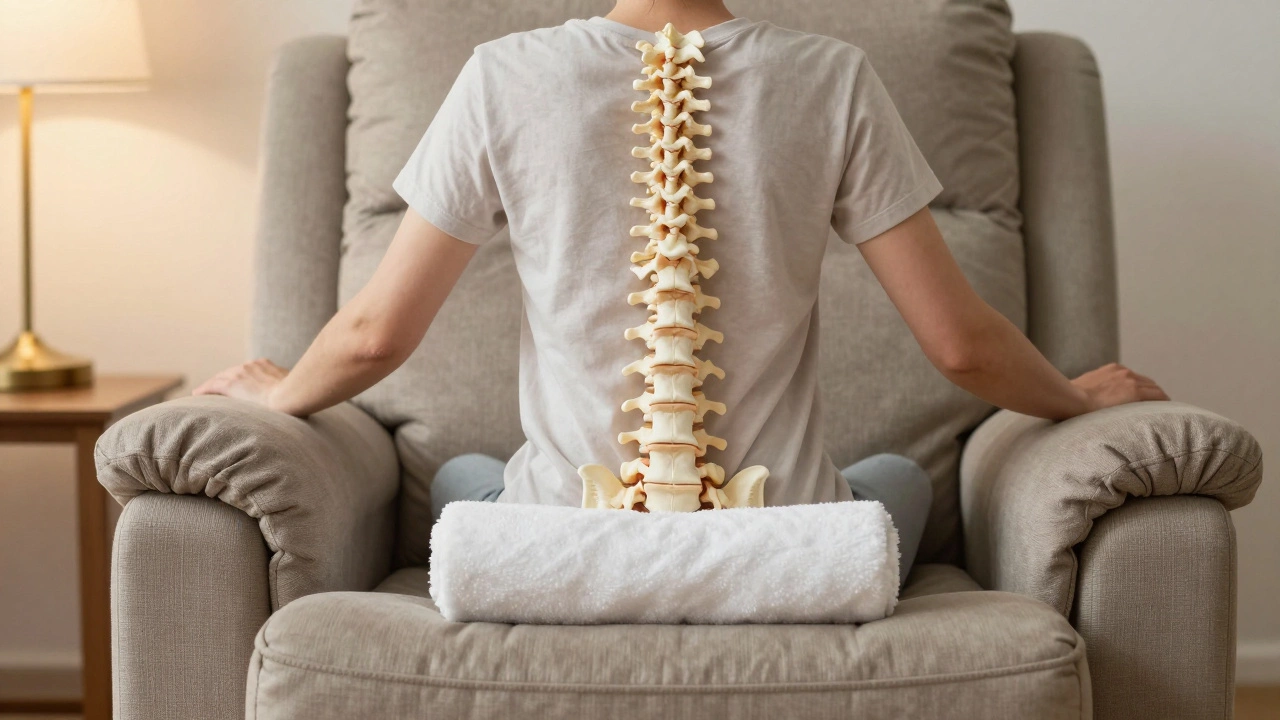
What makes this worse? Many recliners don’t adjust enough to fit real human bodies. If you’re tall, short, or carry extra weight, the default settings won’t work. You need to find the sweet spot: feet flat or supported, knees slightly lower than hips, lower back fully pressed into the lumbar curve. A pillow behind your lower back can help. So can raising your feet on a footrest—not just the built-in one, but something that matches your leg length.
It’s not just about sitting. It’s about how long you stay there. Sitting in any chair all day—even a fancy recliner—slows your metabolism, weakens your core, and tightens your hips. The fix isn’t buying a new chair. It’s moving more. Stand up every 30 minutes. Stretch your legs. Walk around. If you use a recliner for pain relief, like from degenerative disc disease, make sure it has adjustable lumbar support and a lift mechanism. Don’t just lean back and hope for the best.
People ask, "Is it okay to sleep in a recliner?" The answer depends on your posture. If your spine stays neutral, your head isn’t tilted, and your legs aren’t compressed, then maybe. But if you wake up stiff, numb, or in pain, your chair isn’t helping—it’s hurting you. That’s why experts warn against nightly use unless you’re under medical supervision.
Below, you’ll find real advice from people who’ve been there: how to stop sliding down, why your legs ache, what Medicare covers, and when it’s time to swap the recliner for something better. No fluff. Just what works.
-
Quentin Melbourn

- 4 December 2025
What Is the Healthiest Way to Sit in a Recliner?
Learn the healthiest way to sit in a recliner to avoid back pain, improve posture, and protect your spine. Simple adjustments make all the difference.
Popular Posts


Categories
Tag Clouds