Recliner Posture Assistant
Posture Check Tool
Check if your recliner setup follows spinal health guidelines from the article
Most people think recliners are just for napping. But if you sit in one for hours-whether watching TV, reading, or working-you’re putting your spine through a slow grind. The problem isn’t the recliner itself. It’s how most people sit in it.
Why Your Recliner Is Hurting You
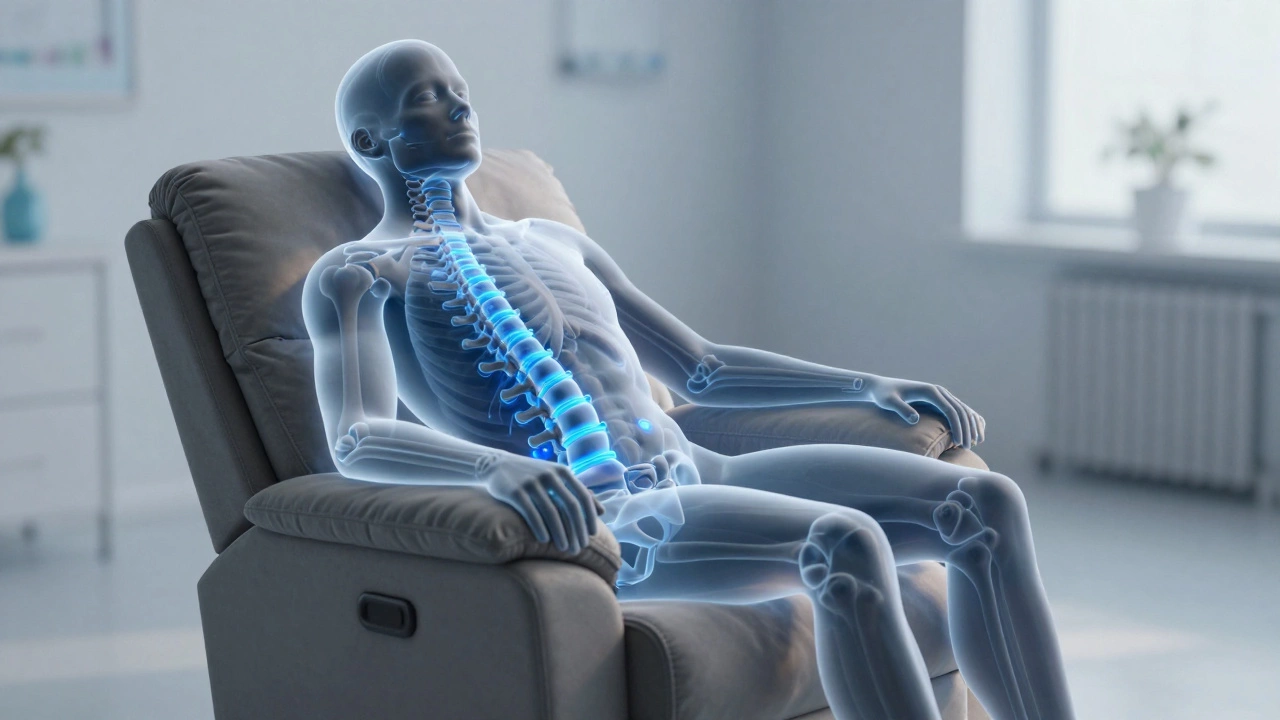
Recliners are designed to relax you, not support you. The moment you lean back and let your lower back sink into the curve, your spine loses its natural S-shape. Your pelvis tilts backward, your lumbar curve flattens, and your neck juts forward to see the screen. This isn’t relaxation-it’s spinal compression.
A 2023 study from the University of Toronto’s Human Movement Lab found that people who sat in standard recliners for more than 90 minutes without adjusting their position showed a 40% increase in lower back pressure compared to sitting upright in a chair with lumbar support. That’s not just discomfort. That’s tissue strain, nerve irritation, and long-term degeneration waiting to happen.
The Three Rules of Healthy Reclining
There’s no single perfect position. But there are three non-negotiable rules if you want to sit in a recliner without wrecking your back.
- Keep your hips higher than your knees. When your knees are higher than your hips, your pelvis rolls backward. That flattens your lower back. Your recliner should let your thighs slope slightly downward, so your hips are the highest point. If you can’t reach this position, add a cushion under your thighs.
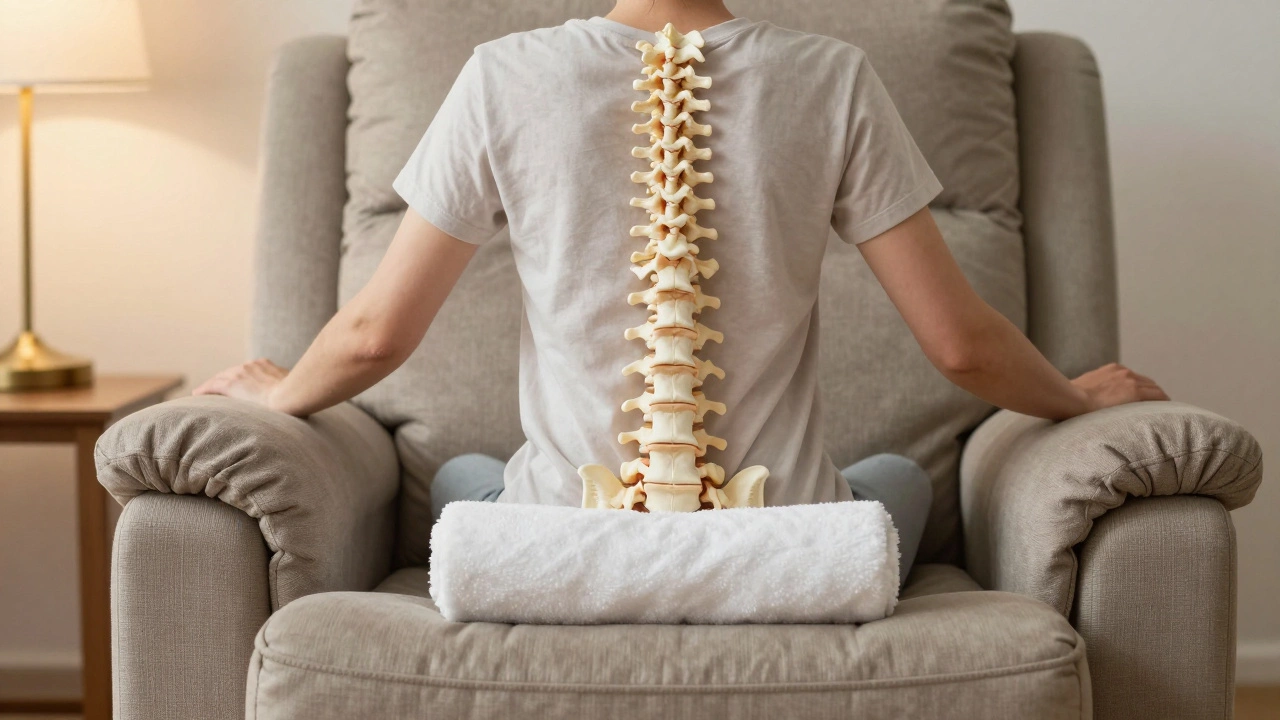
- Support your lower back. Most recliners have a shallow lumbar curve-or none at all. Your spine needs a gentle push in the small of your back. Roll up a towel, use a small pillow, or buy a memory foam lumbar insert. Slide it into the gap between your lower back and the chair. You should feel a light, consistent pressure-not a sharp poke.
- Keep your screen at eye level. If you’re watching TV or using a tablet, your head should be centered over your spine. If you have to crane your neck down, you’re adding 10 extra pounds of strain on your cervical spine. Raise your device on a stand. Move the TV up. Or lean forward slightly-don’t let your head drift forward.
What Happens When You Get It Wrong
Bad posture in a recliner doesn’t just cause aches. It changes your body over time.
People who sit with their knees above their hips for long periods often develop anterior pelvic tilt. That’s when your pelvis tips forward, your butt sticks out, and your lower back arches unnaturally. It looks like you’re trying to show off your abs-but it’s actually a muscle imbalance caused by sitting too far back.
Another common issue is forward head posture. Your neck muscles stretch, your upper traps tighten, and your shoulders roll forward. That’s why you feel stiff after 20 minutes of "relaxing." Your body isn’t resting. It’s fighting gravity.
And then there’s the circulation problem. When you slump with your legs bent and feet dangling, your hamstrings get compressed. Blood flow slows. Your legs go numb. That’s not "tingles"-that’s your nerves being pinched.
How to Adjust Your Recliner for Better Posture
Not all recliners are built the same. Here’s how to fix yours:
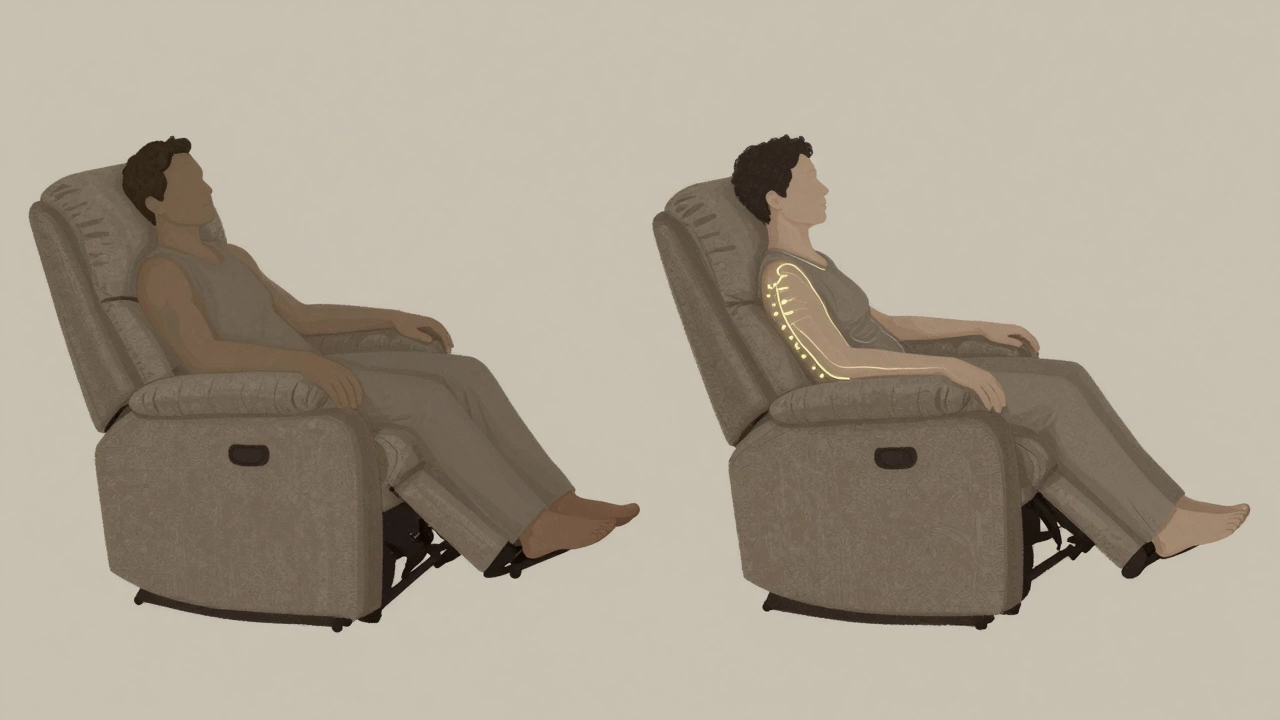
- Adjust the footrest. Your feet should rest flat on the footrest, not dangle. If the footrest is too high, your knees will lift above your hips. Too low, and your legs get stretched unnaturally. Find the middle ground where your knees are slightly lower than your hips.
- Use the recline angle. The ideal recline angle is between 110 and 135 degrees. Anything beyond 135 degrees turns your spine into a hammock. Anything less than 110 is just a chair with a footrest. Use the lever or button to lock it in that sweet spot.
- Check the armrest height. Your arms should rest naturally, with your elbows at 90 degrees. If the armrests are too low, you’ll shrug your shoulders. Too high, and you’ll strain your neck. Adjust them-or add foam pads if they’re fixed.
What to Avoid at All Costs
These are the top five mistakes people make in recliners-and they’re all avoidable.
- Don’t curl up. No fetal position. No hugging a pillow with your legs tucked under you. That twists your spine and compresses your discs.
- Don’t let your head flop. Your neck needs support, even when you’re relaxed. Use a neck pillow or a rolled-up blanket behind your neck. Don’t rely on the chair’s headrest-it’s usually too far back.
- Don’t sit for more than 45 minutes without moving. Even perfect posture gets bad if you stay still too long. Set a timer. Stand up, stretch your hips, walk around for 2 minutes. Your discs need movement to stay hydrated.
- Don’t use the recliner as a bed. Sleeping in a recliner for hours? You’re not resting. You’re misaligning your spine while your muscles go limp. If you need to nap, do it in a bed.
- Don’t ignore pain. If your lower back, neck, or hips hurt after sitting, it’s not "just a bad day." It’s your body screaming for a change.
Best Recliners for Spinal Health
If you’re shopping for a new recliner, look for these features:
- Adjustable lumbar support-not just a fixed curve. You want to move it up and down to match your spine.
- Zero-gravity positioning-this lifts your legs above your heart, reducing pressure on your spine. Brands like La-Z-Boy and Human Touch offer this.
- Memory foam cushions-they mold to your body and don’t collapse after a few months.
- Footrest with independent adjustment-so you can fine-tune leg position without changing the back angle.
Models like the La-Z-Boy Delmar is a recliner with adjustable lumbar support and zero-gravity positioning designed for spinal alignment or the Human Touch Perfect Chair is a massage recliner with customizable posture settings for chronic back pain relief are built with posture in mind-not just comfort.
What to Do If You Already Have Back Pain
Let’s say you’ve been sitting wrong for years. Your back hurts every time you stand up. What now?
First, stop sitting in the recliner for more than 20 minutes at a time. Second, start doing simple mobility drills:
- Seated pelvic tilts. Sit upright. Gently rock your pelvis forward and back. Do 10 reps. This wakes up your core and reminds your spine how to move.
- Wall angels. Stand with your back against a wall. Slowly raise your arms overhead like a snow angel. Keep your lower back pressed flat. Do 5 reps. This opens up your chest and shoulders.
- Hamstring stretches. Sit on the edge of a chair. Extend one leg straight. Lean forward slightly until you feel a stretch behind your thigh. Hold 30 seconds. Repeat on the other side.
These take five minutes. Do them every time you get up from the recliner. Within two weeks, you’ll notice less stiffness.
Final Thought: Recliners Aren’t the Enemy
You don’t need to throw out your recliner. You just need to use it differently. Think of it like a car seat-you wouldn’t drive with your seat tilted all the way back and no headrest. Your body is the same. It needs structure, even when you’re relaxing.
Healthy reclining isn’t about being stiff. It’s about being supported. It’s about letting your body rest without breaking down. And if you follow these simple rules, your back will thank you-for years to come.
Is it bad to sit in a recliner all day?
Yes. Sitting in a recliner for hours without movement or proper support increases pressure on your spine, compresses your discs, and tightens your hip flexors. Even with good posture, you should get up and move every 45 minutes to keep your joints lubricated and your muscles active.
Should my feet be flat on the footrest?
Yes. Your feet should rest flat on the footrest with your knees slightly lower than your hips. If your feet hang off or your knees are higher than your hips, your pelvis tilts backward, flattening your lower back and straining your spine.
Do I need a lumbar pillow in my recliner?
If your recliner doesn’t have built-in adjustable lumbar support, yes. Your lower back needs a gentle curve to maintain spinal alignment. A rolled towel or memory foam pillow placed in the small of your back can reduce pressure and prevent long-term pain.
Can recliners cause sciatica?
Poor posture in a recliner can contribute to sciatica. Slouching or sitting with your legs elevated too high puts pressure on the sciatic nerve roots in your lower spine. If you have sciatica, avoid recliners that force your pelvis into a posterior tilt and always support your lower back.
What’s the best recliner angle for your back?
The ideal recline angle is between 110 and 135 degrees. At 110 degrees, your spine is slightly reclined but still supported. At 135 degrees, your body weight is distributed more evenly, reducing disc pressure. Anything beyond 135 degrees turns your spine into a hammock and increases strain.
Is zero-gravity positioning better for your back?
Yes. Zero-gravity positioning elevates your legs above your heart, reducing pressure on your lower spine by up to 60%. This position mimics the weightlessness astronauts experience and helps relieve disc compression, making it ideal for people with chronic back pain or after long days on their feet.
Next Steps
If you’ve been ignoring back pain from your recliner, start today. Adjust your footrest. Add a pillow behind your lower back. Set a timer to get up every 45 minutes. Do three simple stretches. You don’t need a new chair. You just need to stop treating your body like an afterthought.
Recliners are meant to help you rest-not break you down. Use them right, and they’ll be your best friend. Use them wrong, and they’ll be the reason you’re seeing a physiotherapist next year.