Recliner and Spinal Health: How Sitting Right Keeps Your Back Strong
When you sit in a recliner, a chair designed to lean back and support the body in a relaxed position. Also known as reclining chair, it’s meant to offer comfort—but not all recliners are built to protect your spine. Too many people assume comfort equals support, but that’s not true. A poorly designed recliner can push your lower back into a rounded shape, strain your neck, and make existing back pain worse. The right one? It keeps your spine in a neutral position, reduces pressure on your discs, and lets your muscles relax without collapsing.
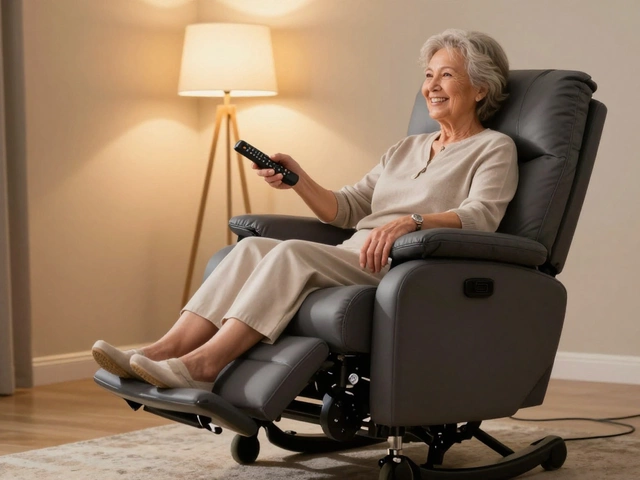
Spinal alignment, the natural curve of your spine from neck to tailbone matters more than you think. When you slump in a recliner, your lumbar curve flattens. Over time, that leads to muscle fatigue, disc compression, and even nerve irritation. A good recliner doesn’t just tilt you back—it supports your lower back with a contoured lumbar cushion, keeps your knees slightly higher than your hips, and lets your head rest without jutting forward. That’s why senior recliner, a chair designed with added support for older adults, often featuring lift mechanisms and adjustable positioning models are so popular. They’re not just for mobility—they’re for long-term spinal health. People over 60 aren’t the only ones who benefit. Anyone who sits for hours, whether watching TV, reading, or recovering from injury, needs a chair that works with their body, not against it.
It’s not just about the chair’s shape. The materials matter too. A recliner with a firm, supportive frame and high-density foam won’t sink out from under you like cheap models. Adjustable headrests, reclining angles, and footrests that extend smoothly let you fine-tune your position. And don’t ignore the height. If your feet don’t rest flat or your knees are too high, your pelvis tilts, throwing off your whole spine. You don’t need a luxury model to get this right—just one that fits your body. Look for chairs that let you test the angle, check the lumbar support, and sit for at least 10 minutes before deciding.
There’s a reason so many of the posts here focus on recliner safety for seniors, how to stop sliding, and what features actually help. It’s because the wrong chair doesn’t just make you uncomfortable—it makes your back worse over time. The good news? You don’t need to spend thousands to get it right. You just need to know what to look for. Below, you’ll find real guides on choosing the right recliner, understanding what makes one better for your spine, and how to use it safely every day. No fluff. No marketing hype. Just what works.

-
Quentin Melbourn

- 11 November 2025
Are Recliners Bad for Degenerative Disc Disease? What Experts Say
Recliners aren't automatically bad for degenerative disc disease-when chosen and used correctly, they can reduce spinal pressure and ease pain. Learn what features to look for and how to avoid common mistakes.
Popular Posts


Categories
Tag Clouds