Best Sleep Position: What Works for Your Body and Why
When it comes to best sleep position, the way you lie down at night directly impacts your spine, breathing, and overall rest quality. Also known as sleep posture, it’s not just about comfort—it’s about how your body recovers while you’re unconscious. If you wake up with a stiff neck, sore back, or numb arm, your sleep position might be the culprit. It’s not magic. It’s physics. Your spine has natural curves, and when you sleep in a way that flattens or overarches them, you’re asking for trouble.
Most experts agree that sleeping on your back, a position that keeps your head, neck, and spine aligned is the healthiest for most people. It reduces pressure on joints and minimizes acid reflux. But if you snore or have sleep apnea, sleeping on your side, especially the left side can be better—it opens your airway and helps your digestive system work while you rest. Sleeping on your stomach? That’s the worst for your neck and lower back. It twists your spine and forces your head to one side for hours.
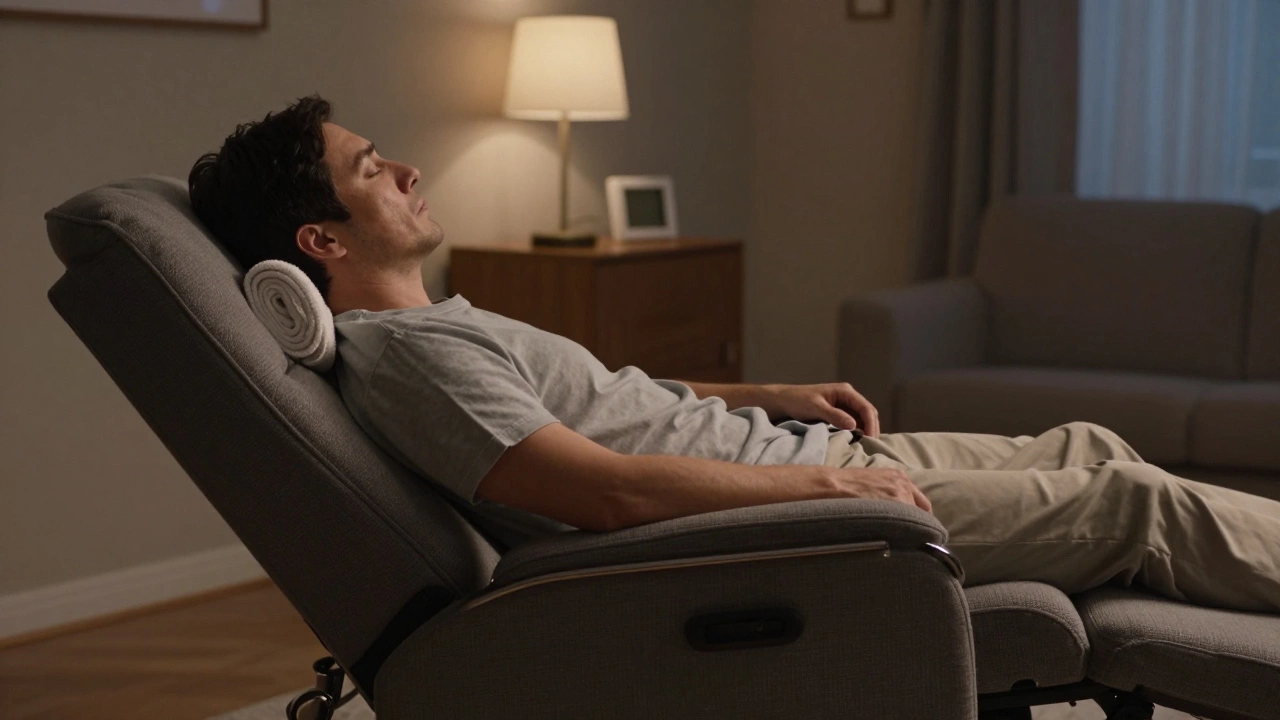
And then there’s the recliner. If you’ve ever fallen asleep in one and woken up feeling worse than when you sat down, you’re not alone. recliner sleep, a common habit for people with back pain or reflux might feel like relief at first, but it’s not a long-term fix. Your body needs full spinal support, not a half-reclined angle that locks your hips and strains your lower back. Some people use recliners because they can’t sleep flat—but that’s a sign you might need better bedding, not just a different chair.
What you sleep on matters just as much as how you sleep. A mattress that’s too soft lets your hips sink, throwing your spine out of line. One that’s too hard doesn’t cushion your shoulders or hips. And pillows? They’re not just for your head. If you sleep on your side, you need one between your knees. If you sleep on your back, a small pillow under your knees helps. Your pillow should keep your neck neutral—not jutting forward or tucked into your chest.
There’s no single perfect position for everyone. But there are clear patterns in what works. People with back pain often feel better on their back. Those with acid reflux sleep better on their left side. Snorers benefit from side sleeping. And anyone who wakes up with numb hands or tingling arms? You’re probably sleeping on your arm—or your pillow is too high.
The posts below dig into real-world cases: why sleeping in a recliner might help for a while but hurt in the long run, how Japanese bedding changes the game by putting you flat on the floor, and what to do if your legs ache after sitting in a recliner all night. You’ll find out what experts say about degenerative disc disease and sleep, how to stop sliding down in a recliner if you’re helping an elderly loved one, and why your mattress choice isn’t just about softness—it’s about alignment.
It’s not about chasing trends. It’s about listening to your body. The right sleep position doesn’t need fancy gear or expensive gadgets. It just needs to keep your spine in line, your airway open, and your joints relaxed. Start there, and the rest follows.
-
Quentin Melbourn

- 4 December 2025
Can Sleeping in a Recliner Cause Back Problems?
Sleeping in a recliner can offer temporary relief for back pain or breathing issues, but doing it nightly may cause long-term spinal problems. Learn how to use it safely-or switch to a better solution.
Popular Posts

Categories
Tag Clouds